Complete Hanfu Ensembles: Styling With Jade Hair Accessories
The Crown of the East: Jade's Role in Hanfu Styling
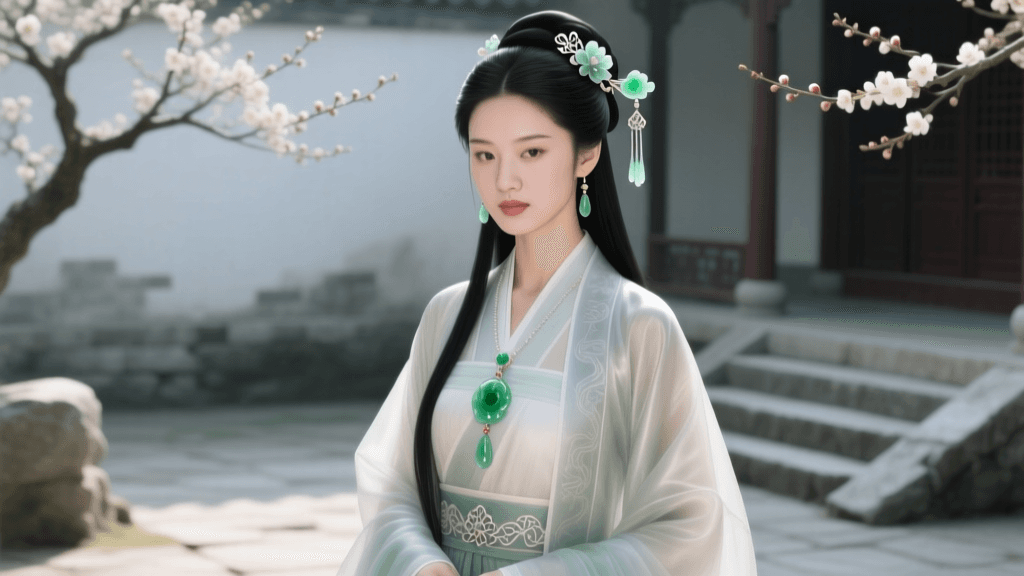
The modern Hanfu revival is not merely about slipping into a beautifully woven silk robe; it is about achieving a historically grounded, complete silhouette. For traditional Chinese dress, the ensemble is never truly finished without the crowning touch of hair accessories. Among the myriad materials used throughout China's dynastic history—gold, silver, enamel, and silk—jade remains the most culturally revered. Integrating jade hair accessories into your Hanfu wardrobe elevates an outfit from a simple costume to a profound cultural homage.
In traditional Chinese philosophy, jade is inextricably linked to moral integrity. Confucius famously compared jade to the virtues of a gentleman, noting its warmth, translucence, and resonant sound. When you secure a jade hairpin into a complex updo, you are participating in a sartorial tradition that spans over three millennia. According to The Metropolitan Museum of Art's Heilbrunn Timeline of Art History, jade has been worked in China since the Neolithic period, evolving from ritualistic objects to deeply personal adornments that signaled status, refinement, and spiritual protection.
Understanding Traditional Jade Hair Accessories
Before building your ensemble, it is crucial to understand the specific terminology and structural differences of traditional Chinese hairpieces. The Hanfu community generally categorizes these accessories into three main types:
- Zan (簪): The single-pronged hairpin. This is the foundational piece of any updo, used to secure the bulk of the hair. Jade Zan are often carved with motifs like lotus flowers, bamboo, or ruyi (scepters) at the head.
- Buyao (步摇): Translating to 'step-shake,' these are elaborate hairpins featuring dangling ornaments. As the wearer walks, the jade beads or carved pendants sway gently. Historically, the rhythmic swaying was meant to encourage a measured, graceful gait.
- Shu (梳) and Guan (冠): Jade combs (Shu) are decorative pieces inserted into the front or side of the hair, while Guan refers to structured crowns or diadems that encapsulate a topknot, often seen in Ming Dynasty formal wear.
Actionable Guide: Sourcing and Verifying Authentic Jade
When investing in jade for your Hanfu ensemble, you will encounter two distinct minerals: Nephrite (historically known as Hetian jade) and Jadeite (Feicui). Nephrite is the jade of ancient China, prized for its creamy, mutton-fat white or deep spinach green hues. Jadeite, introduced in large quantities during the Qing Dynasty, offers vibrant, glassy emerald and lavender tones.
To avoid purchasing dyed quartz or resin replicas, follow these practical verification steps:
- The Temperature Test: Authentic jade is exceptionally dense and conducts heat slowly. It should feel distinctly cool to the touch and take several seconds to warm up in your palm. Glass and plastic will warm almost instantly.
- The Acoustic Test: Gently tap two pieces of jade together (or tap a jade bangle with a jade bead). Authentic jade produces a clear, resonant, bell-like chime that lingers. Imitations yield a dull thud.
- Gemological Certification: For high-value investment pieces, always request a certificate from a reputable laboratory. The Gemological Institute of America (GIA) provides comprehensive identification reports that confirm whether a stone is natural (Type A), bleached and polymer-impregnated (Type B), or dyed (Type C). For historical Hanfu accuracy, seek untreated Type A Nephrite or Jadeite.
Building the Complete Hanfu Ensemble
Matching the correct jade accessory to your specific Hanfu style is vital for historical coherence and aesthetic balance. Below is a structured guide to pairing garments with jade hairpieces, including estimated budgets for authentic, entry-level stones.
| Hanfu Style | Hairpiece Recommendation | Jade Type & Motif | Estimated Budget (USD) |
|---|---|---|---|
| Tang Dynasty Qixiong Ruqun (Chest-high skirt) | Elaborate Buyao (Step-shake) and floral combs | Type A Jadeite (carved peony or phoenix motifs) to match the opulence of the era. | $150 - $400 |
| Song Dynasty Beizi (Parallel-collar outer robe) | Minimalist Zan (Single pin) and subtle hair sticks | Hetian Nephrite (plain or lightly carved bamboo/plum blossom) reflecting Song minimalism. | $80 - $250 |
| Ming Dynasty Mamianqun (Horse-face skirt) | Structured Guan (Crown) or paired Zan with pearl accents | White Mutton-Fat Nephrite set in gold or silver filigree, emphasizing Ming formality. | $250 - $600+ |
Proportions and Placement: The Art of the Updo
A common mistake among beginners in the Hanfu community is treating jade pins as mere decorations rather than structural tools. Authentic jade is heavy; a solid Nephrite Buyao can weigh upwards of 80 grams. If not secured properly, it will slip out or cause headaches.
Step-by-Step Structural Styling:
- Build the Foundation: Never rely on the jade pin to hold the weight of your hair. Use a hair donut or a tightly rolled base of braided hair, secured with bobby pins and a snag-free elastic.
- The U-Pin Technique: For heavy jade Buyao, use a metal U-pin. Insert the U-pin into the base of the jade ornament's stem, then drive both the jade stem and the U-pin through the hair base at a 45-degree downward angle. The U-pin acts as an anchor against the scalp.
- Weight Distribution: If wearing a heavy Ming-style Guan or multiple Buyao, balance the weight by placing a secondary, lighter jade Zan on the opposite side of the updo. This prevents the hairstyle from sagging on one side.
'The wise find pleasure in water; the virtuous find pleasure in hills. The wise are active; the virtuous are tranquil. The wise are joyful; the virtuous are long-lived.' — Just as jade represents tranquility and longevity, your styling should reflect a balanced, unhurried elegance. Do not rush the placement of your stones.
Caring for Your Jade and Silk Investments
Maintaining the integrity of your accessories is just as important as styling them. Jade is a durable stone, but it is not indestructible. Nephrite and Jadeite have a Mohs hardness of 6 to 7, meaning they can be scratched by harder gemstones like diamonds or sapphires. Always store your jade hairpins wrapped in soft microfiber or silk pouches, separate from metal hairpieces that could mar their polish.
Cleaning Protocol:
- Never use ultrasonic jewelry cleaners on jade, especially if the stone has natural internal fractures or is set with organic materials like pearls or kingfisher feather replicas (tian-tsui). The high-frequency vibrations can shatter the stone.
- Instead, use a soft, lint-free cloth dampened with distilled water. If the jade has accumulated hair oils or styling waxes, a drop of mild, pH-neutral baby shampoo on a soft-bristled toothbrush can gently lift the grime from carved crevices. Rinse with distilled water and dry immediately.
Conclusion: The Final Silhouette
Building a complete Hanfu ensemble is a journey into the material culture of Asia. By understanding the historical weight of jade, learning to identify authentic stones, and mastering the mechanics of traditional updos, you transform your wardrobe. The cool touch of a Nephrite Zan against the silk of a Mamianqun is not just a fashion statement; it is a living, breathing connection to the artisans, scholars, and wearers of centuries past.