Heian to Edo: Evolution of the Traditional Japanese Kimono
Introduction to Japanese Dynasty Fashion
The evolution of traditional Japanese clothing is a fascinating journey through shifting political powers, changing social hierarchies, and profound aesthetic revolutions. While the modern world often uses the word 'kimono' as a catch-all term for Japanese garments, the historical reality is far more nuanced. From the opulent, multi-layered court robes of the Heian period to the sleek, boldly patterned silk garments of the Edo period, Japanese dynasty fashion reflects the soul of its respective eras. For historians, textile collectors, and cultural enthusiasts, understanding these transitions is essential. This guide explores the historical periods that shaped the Japanese silhouette and provides actionable advice for experiencing, measuring, and acquiring these historical garments today.
The Heian Period (794–1185): The Era of the Junihitoe
The Heian period represents the zenith of Japanese courtly culture, characterized by a deliberate turning away from Chinese Tang Dynasty influences in favor of a uniquely Japanese aesthetic known as miyabi (courtly elegance). The quintessential garment of this era for aristocratic women was the junihitoe, or 'twelve-layer robe.' In reality, the number of layers could vary, but the ensemble was extraordinarily heavy, sometimes weighing up to 20 kilograms (44 pounds).
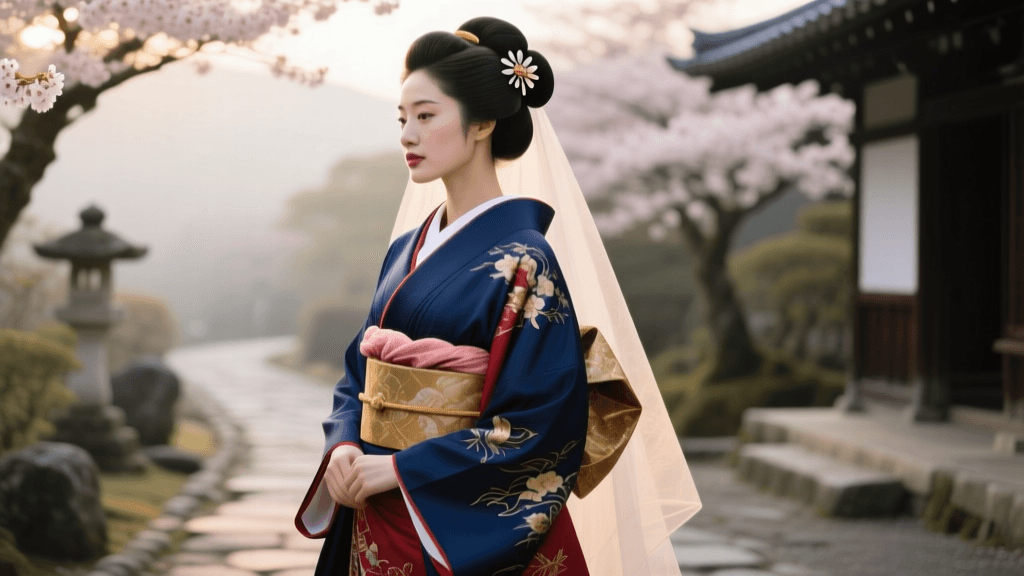
The foundation of the Heian silhouette relied on the itsutsuginu (five-layer robe), worn over a basic kosode (a garment with small sleeve openings). Over these layers, court ladies wore the karaginu (a short, Chinese-style jacket) and the mo (a long, pleated skirt-like train). According to the The Metropolitan Museum of Art, the true artistry of the Heian period did not lie in tailoring or fitted silhouettes, but in the exquisite color combinations visible at the sleeves, hems, and necklines.
Kasane no Irome: The Art of Color Layering
Heian courtiers were judged heavily on their taste in kasane no irome (layered color combinations). These combinations were strictly dictated by the seasons. For example, a spring combination might feature layers of pale green, cherry blossom pink, and deep crimson, mimicking the budding of plum blossoms. The silk was woven and dyed to achieve these specific, subtle gradients, making the Heian period a golden age of textile weaving rather than surface decoration.
The Kamakura and Muromachi Periods: The Rise of the Kosode
As political power shifted from the aristocratic court in Kyoto to the warrior class (samurai) in Kamakura and later Muromachi, fashion underwent a radical simplification. The heavy, impractical junihitoe was abandoned in favor of mobility and martial readiness. The kosode, which had previously been worn as an undergarment by both men and women, emerged as the primary outer garment.
During the Muromachi period (1336–1573), women began to wear the kosode without the traditional hakama (pleated trousers) underneath. To secure the garment, a narrow sash called an obi was tied at the front or side. This period also saw the introduction of surface decoration techniques, such as surihaku (gold leaf application) and tsujigahana (tie-dyeing combined with ink drawing), setting the stage for the explosive creativity of the subsequent Edo period.
The Edo Period (1603–1867): The Golden Age of the Kimono
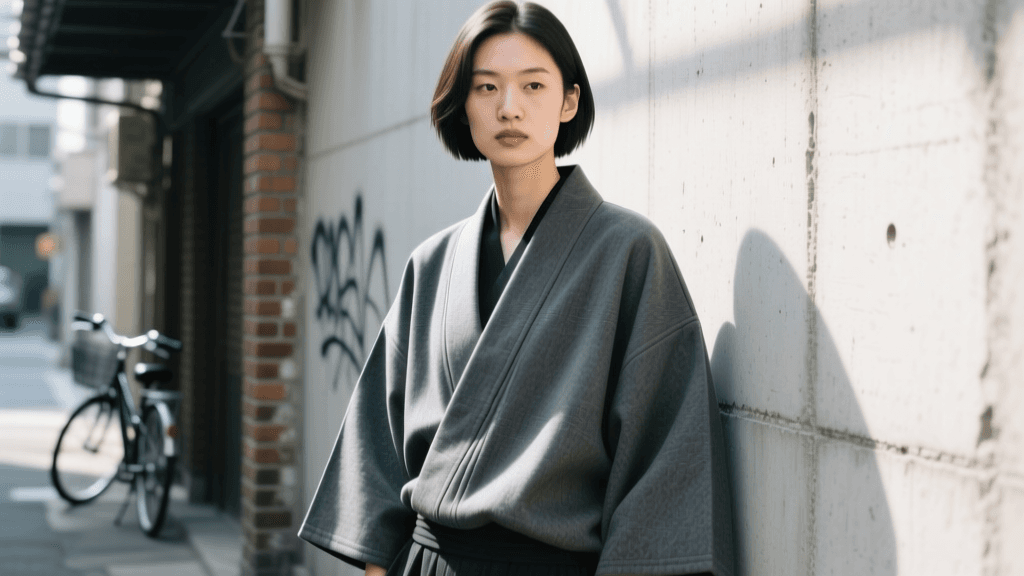
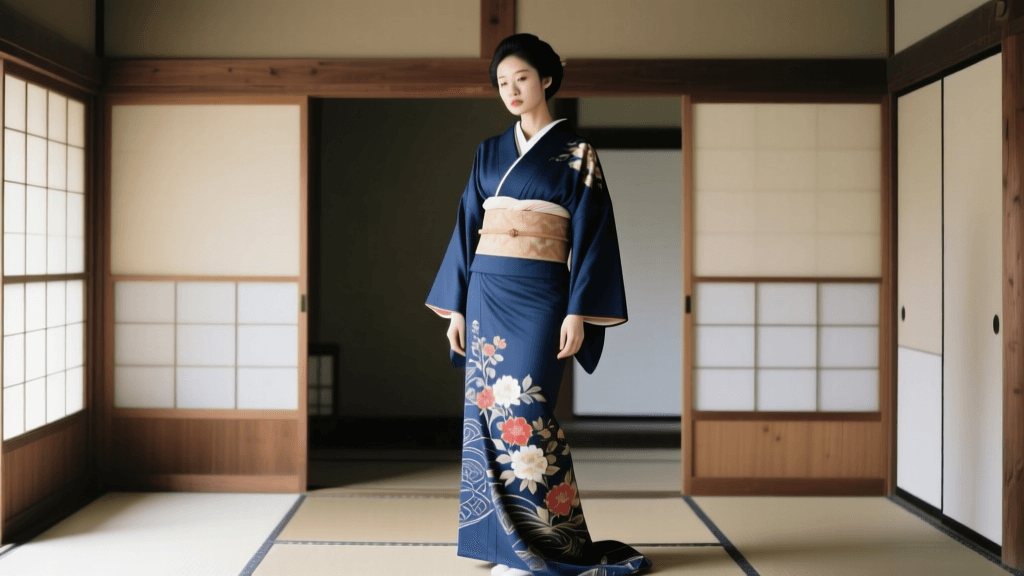
The Edo period, governed by the Tokugawa shogunate, brought over 250 years of relative peace and economic prosperity. A wealthy merchant class (chonin) emerged in cities like Edo (Tokyo), Kyoto, and Osaka. Though they held the lowest social rank, their financial power allowed them to become the primary patrons of the arts and fashion. The kosode evolved into what we now recognize as the modern kimono.
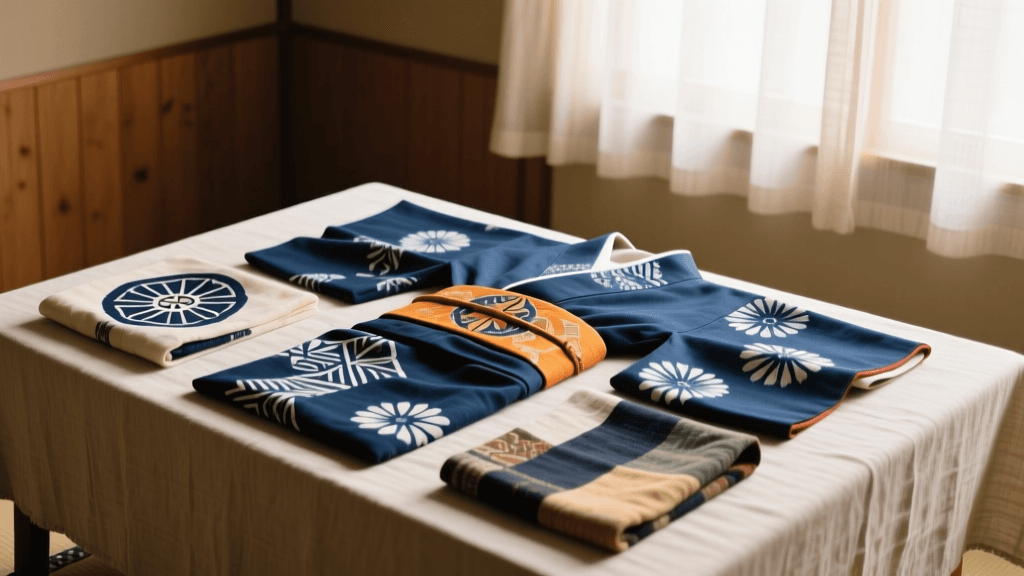
The most significant technological advancement of this era was the invention of yuzen dyeing in the late 17th century. As highlighted by the Victoria and Albert Museum, yuzen allowed artisans to draw intricate, painterly designs directly onto silk using a resist-paste technique, bypassing the strict sumptuary laws that banned lavish brocades and tie-dyes. Furthermore, the obi transformed from a thin, functional cord into a wide, heavily brocaded sash tied in elaborate knots at the back, fundamentally altering the garment's silhouette and restricting the wearer's stride to a refined, gliding walk.
Comparison Chart: Heian vs. Edo Silhouettes
| Feature | Heian Period (Court) | Edo Period (Merchant/Samurai) |
|---|---|---|
| Primary Garment | Junihitoe (Multi-layered robes) | Kosode (Single-layer outer robe) |
| Sleeve Style | Large, open, unsewn underarm | Small openings, varying depths (Furisode for unmarried women) |
| Fastening | None (held by layers and weight) | Wide Obi (brocade sash) |
| Decoration | Woven patterns, layered color contrasts | Surface dyeing (Yuzen), embroidery, gold leaf |
| Average Weight | 10 - 20 kg | 1.5 - 3 kg |
Practical Guide: Experiencing Historical Japanese Fashion Today
For collectors, reenactors, and cultural enthusiasts, engaging with historical Japanese garments requires specific knowledge regarding measurements, sourcing, and budgeting. Whether you are looking to rent a Heian reproduction for a photoshoot in Kyoto or commission a bespoke Edo-style silk kimono, here is the actionable advice you need.
Understanding Historical Measurements (Kitsuke)
Unlike Western tailoring, which cuts fabric to fit the body's contours, traditional Japanese garments are constructed from straight, uncut bolts of fabric (tanmono). If you are commissioning a historical reproduction, you must provide specific traditional measurements:
- Yuki (Shoulder to Wrist): Measured from the center back of the neck, over the shoulder, and down to the wrist bone. For an authentic Edo-period kosode, the sleeves should cover the wrists when the arms are resting at the sides.
- Mitake (Back Length): Measured from the base of the neck to the ankle. Historical Edo garments are made longer than the wearer's body to allow for the ohashori (the waist fold), which adjusts the hemline and provides a pocket for carrying small items.
- Okumi (Front Panel Width): Standard width is usually around 15 cm, but historical garments for larger court figures in the Heian era required wider panels to ensure the robes draped elegantly over the floor.
Costs and Sourcing for Historical Reproductions
Acquiring authentic historical garments or high-quality reproductions is a significant investment. Here is a breakdown of what to expect in the current market:
- Heian Junihitoe Rentals (Kyoto): If you wish to experience the weight and majesty of the junihitoe, several specialized studios in Kyoto (such as Okamoto or Gion) offer full dressing experiences. Expect to pay between ¥15,000 and ¥25,000 ($100–$170 USD) for a 3-hour rental, including professional kitsuke (dressing) and photography.
- Vintage Edo-Period Kosode: Purchasing an authentic, surviving Edo-period garment from antique dealers in Tokyo's Oedo Antique Market or Kyoto's Toji Temple flea market typically costs between ¥50,000 and ¥300,000 ($350–$2,000 USD), depending on the condition of the silk and the presence of yuzen or surihaku work.
- Custom Nishijin-ori Commissions: For a newly woven, historically accurate Edo-style brocade obi or kimono, you must commission weavers in Kyoto's Nishijin district. Costs start at ¥500,000 ($3,500 USD) and can exceed ¥2,000,000 ($14,000 USD). Timing: You must allow a minimum of 6 to 12 months for the weaving, dyeing, and tailoring process.
Museum Resources for Study
To study the transition of these silhouettes in person, plan a visit to the Kyoto National Museum, which houses an unparalleled collection of Heian and Kamakura-era textiles, including national treasures that showcase the evolution of the kosode. Additionally, their rotating exhibitions often feature Edo-period merchant class garments, allowing you to observe the stitch work and dye resist techniques up close.
Conclusion
The transition from the Heian junihitoe to the Edo kosode is more than a shift in fabric and剪裁; it is a reflection of Japan's journey from an insular, aristocratic court society to a vibrant, urbanized, and merchant-driven culture. Understanding the historical context, the intricate layering techniques, and the precise measurements of these garments allows modern enthusiasts to appreciate the kimono not merely as a static costume, but as a dynamic, living archive of Japanese history. Whether you are studying the color theory of Heian sleeves or investing in a bespoke Nishijin-woven obi, the legacy of Japanese dynasty fashion continues to captivate and inspire.