Japanese Wedding Kimono Guide: Shiromuku and Uchikake
The Timeless Elegance of Japanese Bridal Wear
The Japanese wedding kimono is a masterpiece of textile art, cultural symbolism, and meticulous craftsmanship. Unlike Western wedding dresses, which often follow a single silhouette, Japanese bridal wear encompasses a highly structured wardrobe change system known as iro-naoshi (color changing). This tradition allows the bride to transition through different garments, each signifying a specific phase of the wedding day, from the sacred Shinto ceremony to the festive reception. According to the Metropolitan Museum of Art, the evolution of the kimono from everyday wear to highly specialized ceremonial garments reflects centuries of shifting social hierarchies, sumptuary laws, and aesthetic philosophies in Japan.
For modern brides, whether of Japanese descent or those embracing traditional Asian ceremonies, understanding the nuances of bridal kimono is essential. This guide explores the primary ceremonial garments—the shiromuku, uchikake, and irochikake—along with practical advice on fittings, costs, and etiquette.
Shiromuku: The Pure White Ceremony Kimono
The shiromuku is the most formal and sacred of all Japanese bridal garments, worn exclusively during the wedding ceremony itself, typically held at a Shinto shrine. The word translates to 'pure white' (shiro meaning white, and muku meaning pure). Historically, white in Japanese culture symbolizes both purity and the end of one's former life. By wearing all white, the bride signifies her willingness to be 'dyed' in the colors and traditions of her new husband's family.
A complete shiromuku ensemble is remarkably heavy and complex, often weighing between 10 to 15 kilograms (22 to 33 pounds). It consists of multiple layers:
- Kakeshita: The base kimono, usually made of pristine white rinzu (silk damask) featuring subtle woven patterns of cranes, pine trees, or plum blossoms.
- Uchikake: The outer robe, also pure white, worn open at the front. It features a thick, padded hem (fukikaeshi) that allows the garment to trail elegantly on the floor without the need for a train.
- Obi: A stiff, woven silk sash, tied in a formal box-like knot at the back.
- Wataboshi or Tsunokakushi: The traditional headwear. The wataboshi is a white cotton hood that acts as a veil, while the tsunokakushi (horn-hider) is a white band worn to symbolically hide the bride's 'horns' of jealousy and ego, representing her commitment to being a gentle and obedient wife.
Uchikake and Irochikake: Vibrant Reception Attire
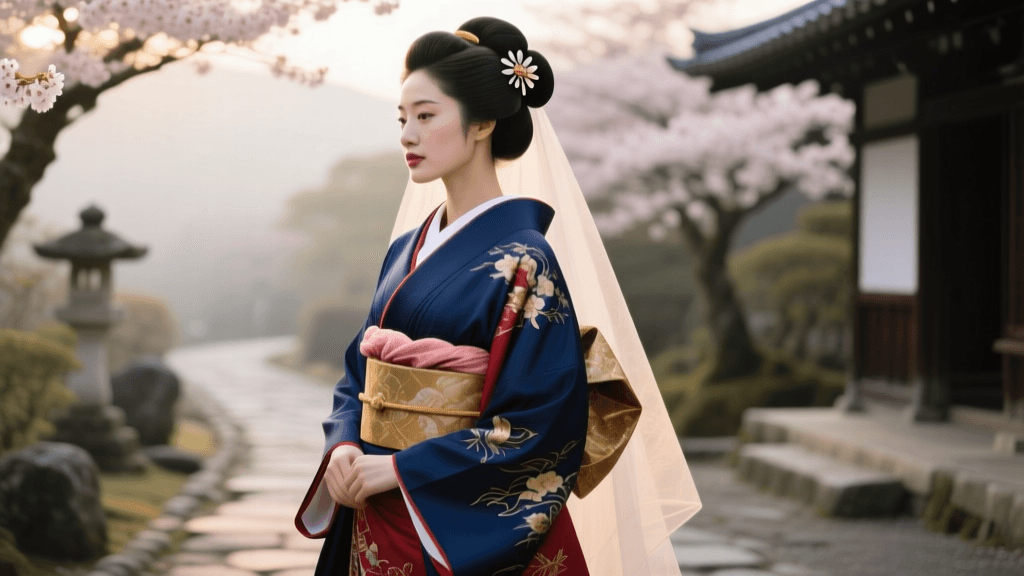
Following the solemnity of the shrine ceremony, the bride typically changes into an irochikake (colored uchikake) or a heavily embroidered uchikake for the wedding reception. This change of attire, part of the iro-naoshi tradition, symbolizes the bride's transition from a sacred, untouched maiden to a vibrant, integrated member of her new family and society.
The uchikake is characterized by its lavish surface decoration. Techniques such as shishu (silk embroidery), surihaku (gold leaf application), and yuzen (resist dyeing) are used to create breathtaking motifs. Popular motifs include the tsuru (crane) for longevity, botan (peony) for prosperity, and matsu (pine) for endurance. The irochikake introduces brilliant background colors like deep crimson, royal purple, or black, which serve as a striking canvas for gold and silver embroidery.
Unlike standard kimono, the uchikake is never tied with an obi at the waist. Instead, it is draped over the base kimono and obi, held in place by the bride's hands or the structural folds created by the kitsuke (kimono dresser). The padded hem is designed to be 5 to 10 centimeters thick, providing weight that keeps the garment sweeping the floor gracefully as the bride walks.
Essential Bridal Accessories and Hair Styling
No Japanese wedding kimono is complete without its specialized accessories. The visual impact of the ensemble relies heavily on the details:
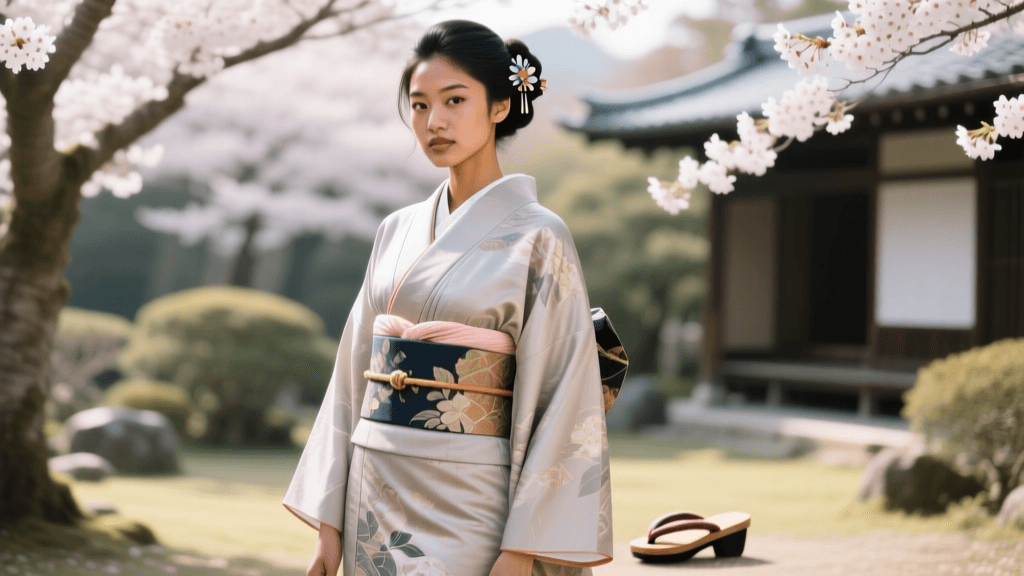
- Kanzashi: Traditional hair ornaments. Brides often wear elaborate sets featuring tortoiseshell, pearls, and silk flowers. For the shiromuku, white and gold kanzashi are preferred; for the irochikake, vibrant, colorful kanzashi are selected to match the kimono's palette.
- Sensu: A decorative folding fan, often adorned with gold leaf and auspicious motifs, held by the bride during formal photographs and ceremonies.
- Zori and Tabi: The bride wears pure white tabi (split-toe socks) and formal zori (sandals) with thick, padded soles. The zori straps are typically white or gold brocade.
- Bunkin-takashimada: Because modern hair is rarely long or structured enough to support heavy kanzashi, most brides rent a traditional bridal wig styled in the high takashimada topknot, which provides the perfect architectural base for the ornaments.
Comparison Chart: Shiromuku vs. Uchikake
| Feature | Shiromuku | Uchikake / Irochikake |
|---|---|---|
| Occasion | Shinto Shrine Ceremony | Wedding Reception & Banquet |
| Primary Color | Pure White (with subtle woven patterns) | Vibrant Colors (Red, Black, Gold) or heavily embroidered white |
| Headwear | Wataboshi (hood) or Tsunokakushi (band) | Elaborate Kanzashi hair ornaments (no hood) |
| Hemline | Padded, trailing on the floor | Thickly padded (fukikaeshi), trailing heavily |
| Average Rental Cost (USD) | $800 - $1,500 | $1,000 - $2,500 |
Practical Guide: Renting, Buying, and Fitting
Acquiring and wearing a Japanese wedding kimono requires significant logistical planning. Due to the specialized nature of the garments and the expertise required to dress the bride, renting is the most common and practical route, even within Japan.
Timing and Booking
Brides should begin researching and booking their kimono rental packages 6 to 8 months before the wedding date. High-end rental boutiques in cities like Kyoto, Tokyo, or specialized international vendors require ample time to reserve specific antique or high-silk-content garments. If you are planning a destination wedding and need to ship a rental internationally, factor in an additional 2 months for customs, shipping, and insurance.
The Kitsuke (Dressing) Process
Putting on a bridal kimono is not a DIY task. It requires a licensed kitsuke-shi (kimono dresser). The process takes between 90 to 120 minutes for the shiromuku, and another 30 minutes for the hair and makeup. The dresser uses a variety of padding, towels, and silk cords (koshihimo) to reshape the bride's natural silhouette into the traditional cylindrical, straight-lined form required for kimono. Brides should eat a light, high-protein meal before dressing, as the obi is tied extremely tightly, making a heavy meal uncomfortable.
Cost Breakdown and Budgeting
When budgeting for traditional Japanese bridal wear, consider the following average costs (in USD) for a comprehensive rental package in a major metropolitan area:
- Shiromuku Full Set Rental: $800 – $1,500 (Includes base kimono, uchikake, obi, innerwear, zori, and basic accessories).
- Irochikake Full Set Rental: $1,000 – $2,500 (Price scales with the quality of embroidery and silk origin).
- Professional Kitsuke & Hair Styling: $300 – $600 (Often bundled with the rental, but charged separately if hiring an independent artist).
- Wig Rental (Bunkin-takashimada): $150 – $300.
- Purchase Alternative: Buying a brand-new, custom-tailored bridal kimono ensemble can range from $5,000 to over $20,000, depending on whether the embroidery is done by hand or machine. As noted by the Victoria and Albert Museum, authentic hand-woven and hand-dyed silk kimono represent a significant investment in Japanese artisanal heritage.
Etiquette and Movement in Bridal Kimono
Wearing a shiromuku or uchikake fundamentally changes how a bride moves. The tight binding of the obi restricts deep breathing and bending at the waist, while the heavy, padded hem requires careful navigation.
- Walking: The bride must take small, sliding steps, keeping her toes pointed slightly inward. When walking up stairs or navigating uneven shrine gravel, the bride or her attendant must gently lift the front of the heavy uchikake to prevent tripping or soiling the pristine silk.
- Sitting: Because the obi extends high up the back and the wig is voluminous, the bride cannot lean back in a chair. She must sit on the edge of the seat, keeping her spine perfectly straight.
- Posture: The aesthetic of the kimono relies on a straight, elongated neck and dropped, relaxed shoulders. The bride should practice this posture in the weeks leading up to the wedding to avoid muscle fatigue on the big day.
Conclusion
Choosing to wear a shiromuku or uchikake is a profound commitment to honoring Japanese heritage and textile artistry. While the logistics of renting, fitting, and moving in these magnificent garments require careful planning and a healthy budget, the result is a breathtaking visual narrative of purity, transition, and celebration. As Japan Guide notes regarding traditional ceremonies, the meticulous attention to detail in a Japanese wedding creates an atmosphere of deep reverence and timeless beauty. By understanding the distinct roles of the shiromuku and the vibrant irochikake, brides can ensure their wedding day is not only culturally authentic but also a deeply personal and unforgettable experience.