Guizhou Miao Pleated Skirts: Craft, Cost, and Styling Guide
Introduction to Miao Folk Dress in Guizhou
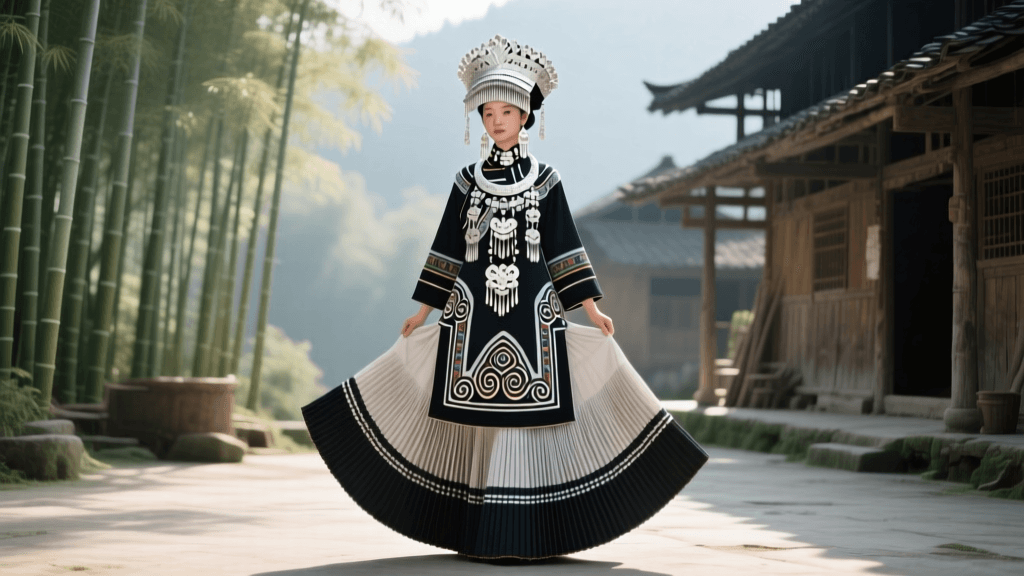
The mountainous province of Guizhou in southwestern China is home to a rich tapestry of ethnic minority cultures, with the Miao (Hmong) people representing one of the most visually striking and culturally profound groups. Among the diverse array of Asian traditional garments, the Miao pleated skirt—known as the Baizhequn—stands out as a masterpiece of regional folk and provincial dress. Unlike the flowing silks of Han dynasty Hanfu or the tailored structure of the Manchu Qipao, the Miao skirt is a triumph of structural textile manipulation, deep indigo dyeing, and ancestral symbolism. For collectors, cultural enthusiasts, and sustainable fashion advocates, understanding the craftsmanship, cost, and styling of these garments offers a gateway into one of Asia's most enduring textile traditions.
The Anatomy of the Miao Pleated Skirt (Baizhequn)
The traditional Miao pleated skirt is not merely a piece of clothing; it is a wearable archive of a people who historically lacked a written language. The patterns, folds, and colors encode stories of migration, mythology, and clan lineage. Structurally, the skirt is a wrap-around garment that relies on hundreds of meticulously folded pleats to create its signature bell-like silhouette.
According to cultural anthropologists and institutions like the Metropolitan Museum of Art, Miao textiles are celebrated for their complex geometric abstraction and labor-intensive creation. A standard artisan skirt requires between 15 to 20 meters of hand-woven cotton or hemp fabric, which is then reduced through pleating to a wearable waist circumference. The density of the pleats is a direct indicator of the garment's quality and the maker's skill, with master weavers achieving up to 500 micro-pleats in a single skirt.
The Art of Indigo Batik and Wax-Resist Dyeing
Before the pleating begins, the fabric must be dyed. The Miao of Guizhou are legendary for their mastery of indigo, extracted from the Strobilanthes cusia plant. The dyeing process is deeply tied to the agricultural calendar, typically occurring in the late summer and early autumn when the indigo leaves are most potent.
The intricate wax-resist dyeing, commonly known as batik, is a hallmark of the region, as documented in encyclopedic records of Asian folk art (Britannica). Artisans use a specialized copper tool called a ladao to draw intricate geometric and floral motifs onto the raw fabric using melted beeswax. The fabric is then submerged in vats of fermented indigo for up to a month, being removed and oxidized in the air multiple times a day to build a deep, colorfast blue. Once the desired depth of blue-black is achieved, the fabric is boiled to melt away the wax, revealing crisp, white patterns against the dark indigo background.
The Pleating Technique: A Test of Patience
The pleating process is where the Baizhequn earns its name and its value. This is not done with modern heat-pressing machines. Instead, the artisan uses their fingernails or a smooth piece of bamboo to fold the heavy, indigo-dyed fabric into uniform, razor-sharp pleats.
To set the pleats, the fabric is lightly misted with water and a natural starch derived from rice or mallow root. The folded skirt is then bound tightly with cotton thread and left to dry and set in a cool, shaded area for several weeks. This natural setting process ensures that the pleats remain bouncy and resilient, allowing the skirt to flare out dramatically during the rhythmic stomping of traditional Miao festival dances.
Silver Ornaments: The Crown of Miao Attire
No discussion of Guizhou Miao dress is complete without addressing the staggering silver jewelry that accompanies the pleated skirt during festivals and weddings. For the broader ethnic context, the Miao people comprise several distinct subgroups, but the Southeast Guizhou branches (such as those in Leishan and Taijiang) are famous for their heavy silverwork.
Silver represents light, purity, and protection against evil spirits. A full festival silver set can include a towering horned headdress, multiple layered neck rings, a heavy chest plate, and silver combs.
- Weight: A complete bridal or festival silver set can weigh anywhere from 5 to 15 kilograms (11 to 33 lbs).
- Cost: Authentic, hand-forged silver sets are priced by weight and craftsmanship. Expect to pay between 15,000 and 80,000 RMB ($2,000 to $11,000 USD) for a master-crafted heirloom set.
- Timing: Commissioning a bespoke set from a village silversmith in Kaili or Xijiang requires a lead time of 2 to 4 months.
Regional Variations in Skirt Styling
Guizhou is highly mountainous, leading to distinct provincial variations in folk dress:
- Leishan County: Famous for the 'short skirt' Miao. The skirts here are often mini-length (around 40cm) but feature incredibly dense, stiff pleats, worn with heavily embroidered aprons.
- Danzhai County: The epicenter of Miao batik. Skirts here are longer (midi to maxi, 65cm-85cm) and prioritize the complexity of the wax-resist indigo patterns over heavy surface embroidery.
- Taijiang County: Known for the 'Shidong' style, where the indigo pleated skirt is almost entirely covered by layers of vibrant, silk-thread embroidered panels depicting mythical dragons and water buffalo.
Buyer’s Guide: Sourcing Authentic Miao Garments
For collectors and enthusiasts looking to acquire an authentic Baizhequn, it is crucial to distinguish between mass-produced tourist souvenirs and genuine artisan textiles. Below is a comparison to guide your purchasing decisions.
| Feature | Mass-Produced Tourist Skirt | Authentic Artisan Skirt |
|---|---|---|
| Material | Cotton-polyester blend or synthetic chiffon | 100% hand-spun hemp or organic cotton |
| Dye | Chemical synthetic indigo or black dyes | Natural fermented Strobilanthes cusia indigo |
| Pleats | Machine-pressed, easily fall out after washing | Hand-folded, starch-set, highly resilient |
| Cost (USD) | $20 - $50 | $200 - $700+ |
| Lead Time | Immediate (off-the-rack) | 3 to 6 weeks (often made-to-order) |
Actionable Sourcing Advice: To purchase authentic pieces, bypass the main commercial streets of Xijiang Miao Village. Instead, visit the Sunday morning markets in Kaili or Shiqiao Village in Danzhai, where local women sell their own handiwork. Look for the distinct, earthy scent of natural indigo and slight irregularities in the batik lines, which prove human craftsmanship over machine printing.
Care and Maintenance for Indigo and Silver
Owning a piece of Miao provincial dress requires specific care to preserve its integrity:
- Washing Indigo: Natural indigo will bleed. Never machine wash or use hot water. Hand wash gently in cold water with a pH-neutral, eco-friendly detergent. Add a half-cup of white vinegar to the final rinse to help lock the dye.
- Drying: Never wring the fabric, as this will destroy the hand-set pleats. Gently squeeze out excess water and hang to dry in the shade. Direct sunlight will fade the natural indigo to a dull gray.
- Silver Polish: Miao silver is intentionally left with an oxidized patina in the crevices to highlight the intricate repoussé patterns. Do not use harsh chemical silver dips. Instead, use a soft, dry polishing cloth on the raised surfaces only, preserving the dark contrast in the engravings.
Conclusion
The Guizhou Miao pleated skirt is a profound expression of regional folk identity, merging structural ingenuity with deep cultural symbolism. Whether you are studying the textile traditions of Asia, sourcing sustainable artisan fashion, or simply marveling at the dedication required to fold 500 pleats by hand, the Baizhequn remains a testament to the enduring legacy of China's ethnic minorities.