Iconic Tang Dynasty Hanfu: Dressing Like Wu Zetian & Yang Guifei
The Golden Age of Chinese Fashion
The Tang Dynasty (618–907 AD) is universally celebrated as the golden age of Chinese art, culture, and fashion. Characterized by unprecedented cosmopolitanism, the Silk Road brought an influx of foreign textiles, motifs, and tailoring techniques to the imperial capital of Chang'an. Within this vibrant sartorial landscape, two historical figures stand out not only for their political and cultural influence but for their iconic, trend-setting wardrobes: Wu Zetian, the only female emperor in Chinese history, and Yang Guifei, one of the Four Beauties of ancient China and the beloved consort of Emperor Xuanzong.
According to the Metropolitan Museum of Art's Heilbrunn Timeline of Art History, Tang dynasty clothing was marked by its bold colors, voluminous silhouettes, and the integration of Central Asian influences. For modern hanfu enthusiasts and historical fashion recreateors, studying the specific garments worn by Wu Zetian and Yang Guifei offers a masterclass in using clothing to project authority, romance, and cultural supremacy. This guide breaks down their iconic outfits and provides actionable advice on how to source, measure, and style these historical garments today.
Wu Zetian: The Empress’s Imperial Authority
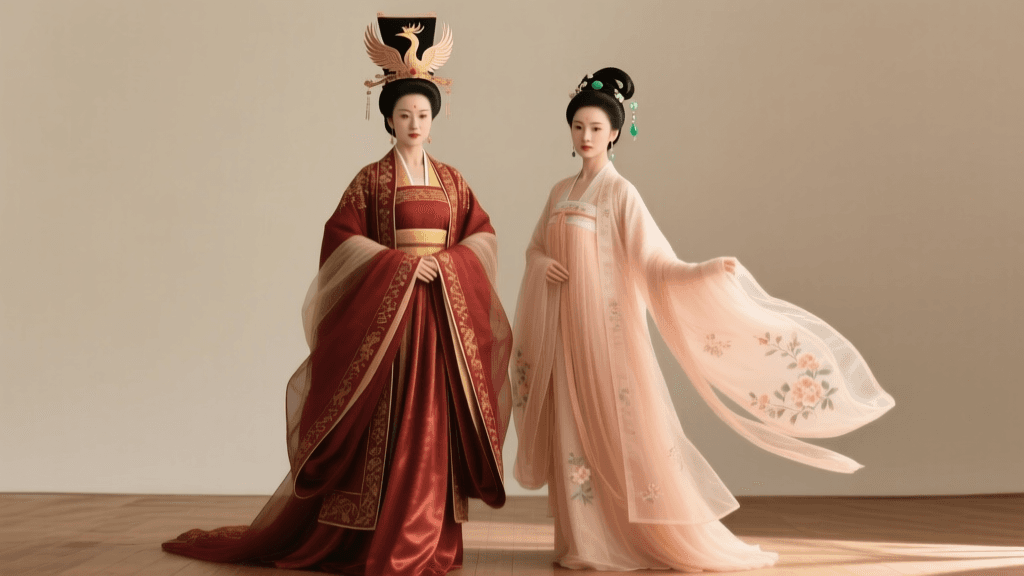
Wu Zetian’s wardrobe was a calculated tool of statecraft. As she ascended from a lower-ranking concubine to the Empress Regnant of the Zhou Dynasty, her clothing transitioned from elegant court wear to commanding imperial regalia. Her signature silhouette heavily featured the Qixiong Ruqun (chest-high skirt) paired with structured outer layers.
Key Garments and Styling
- Qixiong Ruqun (Chest-High Skirt): Unlike waist-high skirts, the Qixiong skirt ties above the bust, creating an elongated, statuesque silhouette that commands respect. Wu Zetian favored heavy, structured silk brocades in imperial yellow, deep crimson, and gold.
- Banbi (Half-Sleeve Jacket): Often worn over a long-sleeved inner shirt (Shan), the Banbi is a short, waist-length jacket with half-sleeves. It adds structural volume to the shoulders and upper torso, projecting a broad-shouldered, authoritative stance.
- Imperial Motifs: Her garments were heavily embroidered with phoenixes, dragons, and peonies, utilizing gold-wrapped threads to catch the light during court audiences.
Actionable Recreation Advice
To recreate Wu Zetian's authoritative look, focus on structure and opacity. Avoid sheer fabrics. When purchasing a Qixiong Ruqun set, ensure the skirt length is measured from your underarm to the floor (typically 120cm to 135cm for most adults). The skirt must have a wide waistband (at least 15cm) to prevent it from slipping down. Look for 'Tang Dynasty Banbi reproduction' on specialized hanfu retail platforms. Budget approximately $80 to $150 for a high-quality cotton-linen blend, or upwards of $300 for authentic mulberry silk brocade with metallic embroidery.
Yang Guifei: The Consort’s Romantic Elegance
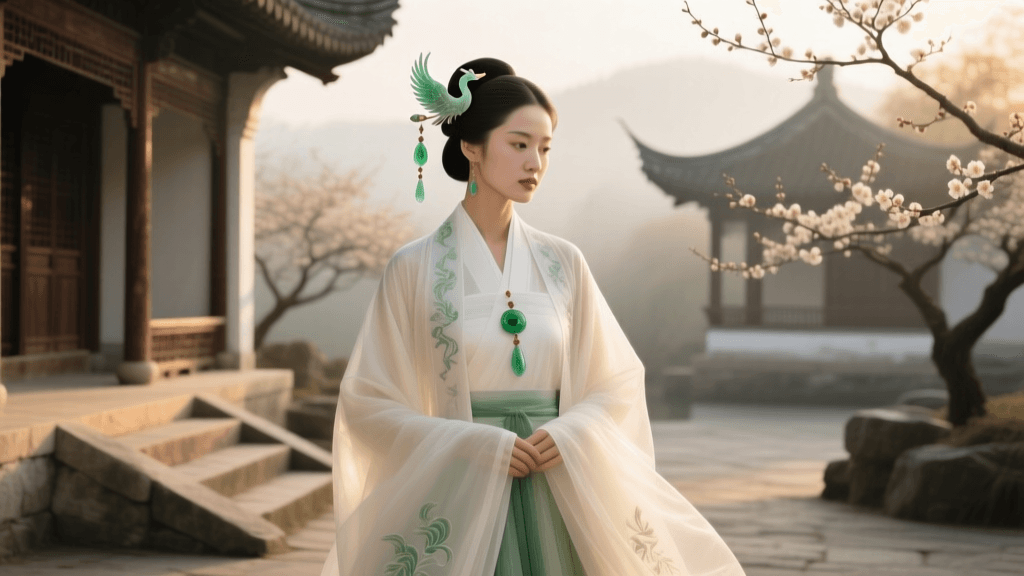
If Wu Zetian’s style was about power, Yang Guifei’s aesthetic was the epitome of romantic elegance, luxury, and sensual fluidity. Known for her fuller figure, which set the beauty standard of the era, Yang Guifei popularized garments that draped softly and moved gracefully with the body. Her influence is deeply tied to the Da Xiu Shan (large-sleeve robe) and the ethereal Pibo (silk shawl).
Key Garments and Styling
- Da Xiu Shan (Large-Sleeve Robe): This formal outer robe features dramatically wide sleeves that can exceed 60cm in width at the cuff. It is typically left open at the front to reveal the intricate layers of the skirt and undergarments beneath.
- Pibo (Silk Shawl): A long, sheer scarf draped over the shoulders and arms. Yang Guifei’s Pibo would have been made of ultra-fine silk gauze, dyed in soft peony pinks, jade greens, and sunset oranges, often featuring hand-painted or woven floral motifs.
- Makeup and Accessories: Her look was completed with the 'Huadian' (forehead floral applique), elaborate high-bun hairstyles secured with gold and jade hairpins, and a heavily powdered, rosy complexion.
Actionable Recreation Advice
Recreating Yang Guifei’s look requires mastering the art of sheer layering. The Pibo is the most crucial accessory; purchase a silk organza or chiffon Pibo measuring approximately 300cm in length and 60cm in width. This length allows it to drape past the elbows and trail elegantly behind you when walking. For the Da Xiu Shan, seek out lightweight silk jacquard or chiffon to prevent the massive sleeves from becoming too heavy. Expect to spend $40 to $80 on a genuine silk Pibo and $200 to $450 for a well-tailored Da Xiu Shan.
Comparison Chart: Imperial vs. Consort Aesthetics
Understanding the functional and aesthetic differences between these two historical figures helps modern wearers choose the right style for their specific event or photoshoot.
| Feature | Wu Zetian (Imperial Authority) | Yang Guifei (Romantic Elegance) |
|---|---|---|
| Primary Silhouette | Structured, broad-shouldered, elongated | Flowing, draped, voluminous sleeves |
| Core Garments | Qixiong Ruqun, Banbi (Half-sleeve jacket) | Da Xiu Shan (Large-sleeve robe), Pibo (Shawl) |
| Fabric Choices | Heavy silk brocade, opaque weaves, gold thread | Silk gauze, organza, sheer chiffon, soft jacquard |
| Color Palette | Imperial yellow, crimson, deep purple, black | Peony pink, jade green, soft coral, pastel hues |
| Best Modern Occasion | Formal banquets, stage performances, winter festivals | Spring garden photoshoots, evening galas, weddings |
Actionable Guide: Sourcing and Styling Tang Dynasty Hanfu
Navigating the modern hanfu market requires specific knowledge, as the evolution of Chinese dress means that not all 'ancient' styles are historically accurate to the Tang era. Here is a practical guide to building your wardrobe.
Where and When to Buy
While international vendors like Newhanfu or Hanfu City offer curated selections, the widest variety of historically informed Tang reproductions are found on Chinese e-commerce platforms like Taobao and Weidian. Search using specific terms: 'Tang Dynasty Qixiong Ruqun' (唐制齐胸襦裙) or 'Tang Da Xiu Shan' (唐制大袖衫).
Timing: Artisan hanfu shops operate heavily on pre-order cycles. If you are planning to wear these outfits for major events like the Lunar New Year, the Mid-Autumn Festival, or the Xitang Hanfu Culture Week, you must place your orders 4 to 8 weeks in advance. Custom embroidery and silk weaving cannot be rushed.
Cost Breakdown
- Entry-Level ($40 - $70): Polyester blends and cotton. Excellent for beginners, casual wear, and hot weather. Lacks the historical drape of silk but is easy to machine wash.
- Mid-Tier ($80 - $180): Rayon, viscose, and linen blends. Offers a much better drape and breathability. The Banbi and Qixiong skirts in this tier often feature machine-embroidered motifs that mimic historical patterns.
- High-End ($250 - $600+): 100% mulberry silk, real silk brocade, and hand-woven textiles. Reserved for the Da Xiu Shan and formal court wear. Requires specialized dry cleaning.
Styling and Proportions
The most common mistake modern wearers make with Tang hanfu is incorrect proportioning. The Tang aesthetic favored abundance. When tying your Qixiong Ruqun, ensure the skirt is pleated densely. A standard Tang skirt should have a hem width of at least 3 to 4 meters to achieve the sweeping, bell-like shape seen in historical murals. Use a 'hidden knot' tying technique to secure the chest-high skirt, wrapping the ties around the back and tying them flatly in the front to avoid bulky knots that ruin the smooth bodice line.
Caring for Your Tang-Style Garments
Given the delicate nature of the fabrics used to replicate Yang Guifei's sheer shawls and Wu Zetian's heavy brocades, proper maintenance is essential.
- Sheer Silks and Organza (Pibo & Inner Shan): Hand wash in cold water using a pH-neutral silk detergent. Never wring or twist the fabric. Roll it in a clean, dry towel to press out excess water, then lay it flat to dry away from direct sunlight to prevent yellowing.
- Heavy Brocades (Banbi & Outer Skirts): Avoid washing unless absolutely necessary. Spot clean with a damp cloth. For deep cleaning, professional dry cleaning is mandatory to preserve the metallic threads and structural integrity of the weave.
- Storage: Never hang heavy Tang skirts by their straps, as the weight of the fabric will stretch and tear the silk over time. Fold them neatly using acid-free tissue paper to buffer the creases, and store them in breathable cotton garment bags with cedar blocks to deter moths.
By understanding the distinct sartorial legacies of Wu Zetian and Yang Guifei, modern enthusiasts can do more than just wear historical costumes; they can embody the profound cultural narratives, political ambitions, and artistic triumphs of China's most glamorous dynasty.