Jade Hair Accessories & Hanfu Ensembles: The Ultimate Styling Guide
Introduction to Hanfu and the Art of Jade Adornment
The global resurgence of Hanfu (traditional Han Chinese clothing) has evolved far beyond simply wearing beautiful silk robes. Today's enthusiasts and cultural preservationists understand that a truly authentic and complete ensemble requires meticulous attention to accessories. Among the most revered and historically significant of these accessories is jade. In traditional Chinese culture, jade is not merely a decorative stone; it is a profound symbol of moral integrity, purity, and spiritual protection. Integrating jade hair accessories into your Hanfu wardrobe elevates your outfit from a simple costume to a deeply respectful cultural expression. This comprehensive guide will walk you through the historical significance of jade, the essential types of hair ornaments, and practical advice for building complete, dynasty-accurate Hanfu ensembles.
The Cultural Significance of Jade in Chinese History
To properly style jade within a Hanfu ensemble, one must first understand its cultural weight. As detailed in Britannica's historical overview of Chinese Jade, the stone has been carved in China for over 7,000 years. Confucius famously compared the qualities of jade to the virtues of a *junzi* (a noble person or gentleman), associating its smoothness with benevolence, its density with wisdom, and its sharp edges that do not cut with justice. When you wear a jade hairpin, you are invoking these ancient virtues. In the context of traditional Chinese clothing, jade was historically reserved for the elite and the scholarly class, serving as a marker of refined taste and high social standing. Understanding this context allows modern wearers to approach their styling with a sense of reverence and intentionality.
Essential Jade Hair Accessories for Your Wardrobe
Building a collection of jade hair accessories requires knowing the specific terminology and functional differences between each piece. Here are the foundational items every Hanfu enthusiast should consider:
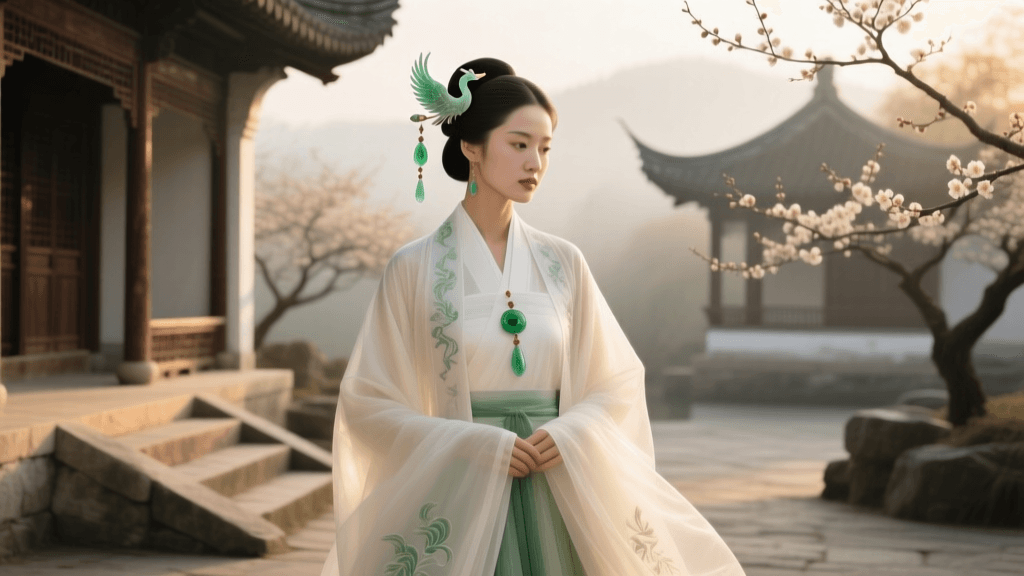
- Zan (Single-Prong Hairpin): The most versatile and common hair accessory. A standard jade *zan* measures between 12 to 16 centimeters in length. It is used to secure the primary bun and is often carved with motifs like lotus flowers, bamboo, or phoenixes at the head.
- Chai (Double-Pronged Hairpin): Featuring two prongs, the *chai* provides superior grip for heavier, more elaborate updos. The head of a *chai* is typically wider and more ornate, making it a focal point of the hairstyle.
- Buyao (Step-Shake): Translating to 'step and shake', these intricate ornaments feature dangling elements—often small jade beads or carved leaves suspended on delicate metal wires. They are designed to sway gently with the wearer's movements. For a complete ensemble, limit yourself to one or two *buyao* pieces to maintain elegance without overwhelming the silhouette.
- Shuhuan and Jade Combs: Crescent-shaped jade combs (*shubi*) or decorative hair ties (*shuhuan*) are used at the base of the bun. They are particularly popular in Song and Ming dynasty styling, where hair was often kept closer to the head and heavily ornamented at the crown.
Building a Complete Hanfu Ensemble: Coordinating with Jade
Pairing jade accessories with the correct Hanfu silhouette and color palette is crucial for visual harmony. According to resources on traditional Chinese clothing aesthetics, color and fabric weight must dictate your accessory choices.
Ming Dynasty Ensembles (Mamianqun and Aoqun)
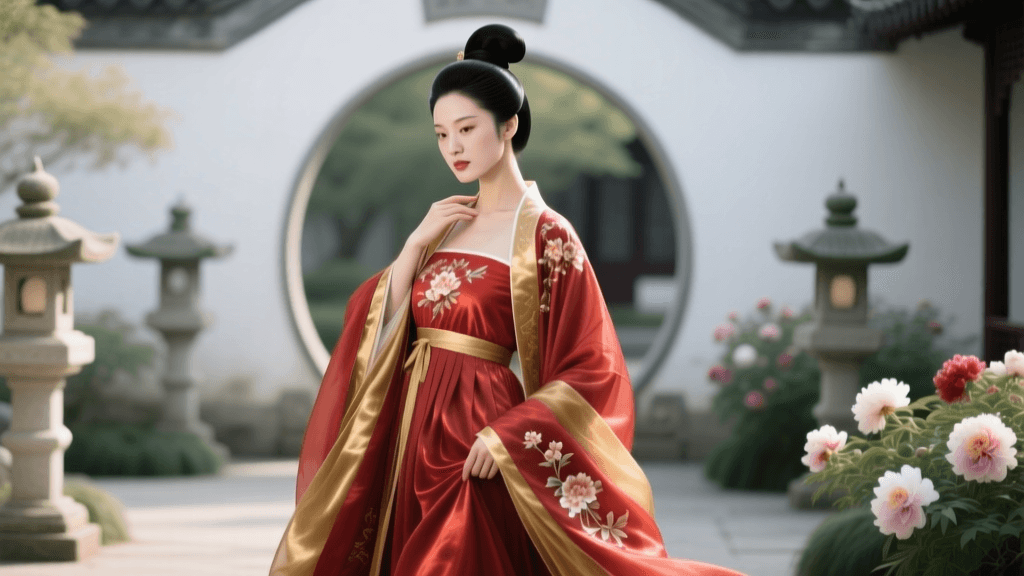
The Ming dynasty favored structured, heavy fabrics, high collars, and the iconic *Mamianqun* (horse-face skirt). For this regal silhouette, opt for deep green Hetian nephrite or white mutton-fat jade. The high collars of Ming tops (*ao*) mean that necklaces are often hidden; therefore, the hair becomes the primary canvas for jewelry. Pair a deep emerald jade *chai* with a crimson and gold-embroidered Mamianqun for a striking, high-contrast look that photographs beautifully.
Song Dynasty Ensembles (Beizi and Songku)
Song dynasty fashion was characterized by minimalism, slender silhouettes, and muted, elegant colors like celadon, pearl white, and soft lavender. Your jade accessories should reflect this understated elegance. Choose pale, translucent Xiuyan jade or light celadon-toned stones. A simple, unadorned jade *zan* paired with a delicate pearl hair tie perfectly complements the flowing, open-front *Beizi* (long outer jacket) and narrow-sleeved tops of the Song era.
Tang Dynasty Ensembles (Qixiong Ruqun)
The Tang dynasty was an era of cosmopolitan opulence. Tang styling often features the high-waisted *Qixiong Ruqun* (chest-high skirt) and elaborate, towering hairstyles like the 'Flying Fairy' bun. Tang-era jade ornaments were frequently inlaid with gold or paired with vibrant coral and turquoise. To recreate this, use multiple jade *buyao* and larger, heavier jade combs to anchor the voluminous hairpieces typical of this period.
Buyer's Guide: Sourcing Authentic Jade vs. Alternatives
When shopping for jade hair accessories, buyers must navigate a market flooded with imitations. True jade refers to either Nephrite (historically favored in China, especially Hetian jade) or Jadeite (imported from Myanmar, highly prized for its vivid colors). However, for daily Hanfu wear, high-quality alternatives are often more practical. Below is a comparison to help you make informed purchasing decisions.
| Material | Authenticity | Average Price (USD) | Weight & Durability | Best Hanfu Match |
|---|---|---|---|---|
| Hetian Nephrite | 100% Authentic (Top Tier) | $300 - $2,000+ | Heavy, extremely durable, cold to touch | Ming Dynasty formal wear, wedding ensembles |
| Burmese Jadeite | 100% Authentic (High Tier) | $150 - $800 | Medium weight, glassy luster, brittle | Tang and Song dynasty vibrant pastels |
| Xiuyan Jade | Authentic (Lower Tier Nephrite) | $40 - $120 | Lighter, slightly waxy luster, softer | Everyday Song dynasty minimalism |
| Dongling Jade (Quartz) | Semi-Authentic (Cousin stone) | $20 - $50 | Lightweight, sparkly inclusions | Casual Hanfu, modern fusion styling |
| Resin / Glass | Imitation | $5 - $25 | Very light, fragile (glass) or scratch-prone | Cosplay, stage performances, beginners |
For beginners building their first complete ensemble, Xiuyan jade or high-grade Dongling quartz offers the best balance of aesthetic authenticity and affordability. As noted in Britannica's comprehensive guide on Jade, the cultural appreciation of the stone often transcends its strict mineralogical definition, focusing instead on the stone's visual温润 (warm, moist luster) and carving quality.
Practical Styling Tips for Modern Hanfu Enthusiasts
Jade is a dense, heavy stone. Securing jade hairpins without damaging your hair or losing the accessory requires specific techniques and tools.
- Prep with a Hair Donut: Never rely solely on the jade pin to hold the weight of your hair. Create a secure base using a foam hair donut or a braided bun base. Wrap your natural hair tightly around this base and secure it with U-pins and bobby pins that match your hair color.
- The Angle of Insertion: When inserting a jade *zan*, do not push it straight in. Pierce the outer edge of the bun, angle the tip down toward your scalp, and then push it through the center of the bun and out the other side. This creates a locking mechanism that prevents the heavy jade head from drooping.
- Use Metal Backings: Many high-quality jade *buyao* and combs come with a metal (usually brass or silver-plated) base that the jade is glued or wired into. Ensure the metal prongs are slightly textured; completely smooth metal prongs will slip out of silky hair. You can gently rough up the prongs with a nail file for extra grip.
- Weight Distribution: If you are wearing a heavy Ming-style jade comb at the front of your updo, balance the weight by inserting a sturdy, plain metal or wooden stick pin at the back of the bun. This prevents the hairstyle from pulling uncomfortably on your scalp during long convention days or photoshoots.
Conclusion
Mastering the integration of jade hair accessories into your Hanfu ensembles is a rewarding journey that bridges the gap between ancient artistry and modern fashion. By understanding the historical context, selecting the right stone for your specific dynasty silhouette, and employing practical styling techniques, you honor the rich tapestry of Asian traditions. Whether you are attending a Hanfu convention, participating in a traditional tea ceremony, or simply enjoying a styled photoshoot, the quiet elegance of jade will ensure your ensemble is both culturally resonant and breathtakingly beautiful.