Yang Guifei's Iconic Ruqun: Tang Dynasty Hanfu Guide
The Legend of Yang Guifei and Tang Dynasty Aesthetics
Yang Yuhuan, universally celebrated as Yang Guifei (Consort Yang), remains one of the most captivating and influential figures in Chinese history. As the beloved consort of Emperor Xuanzong of Tang, she was not only a muse for poets and painters but also a supreme trendsetter whose sartorial choices defined an entire era. The Tang Dynasty (618–907 CE) was a golden age of cosmopolitanism, wealth, and artistic flourishing. According to the Metropolitan Museum of Art's Heilbrunn Timeline of Art History, the Tang era was characterized by an unprecedented openness to foreign influences, which deeply impacted its textiles, silhouettes, and beauty standards.
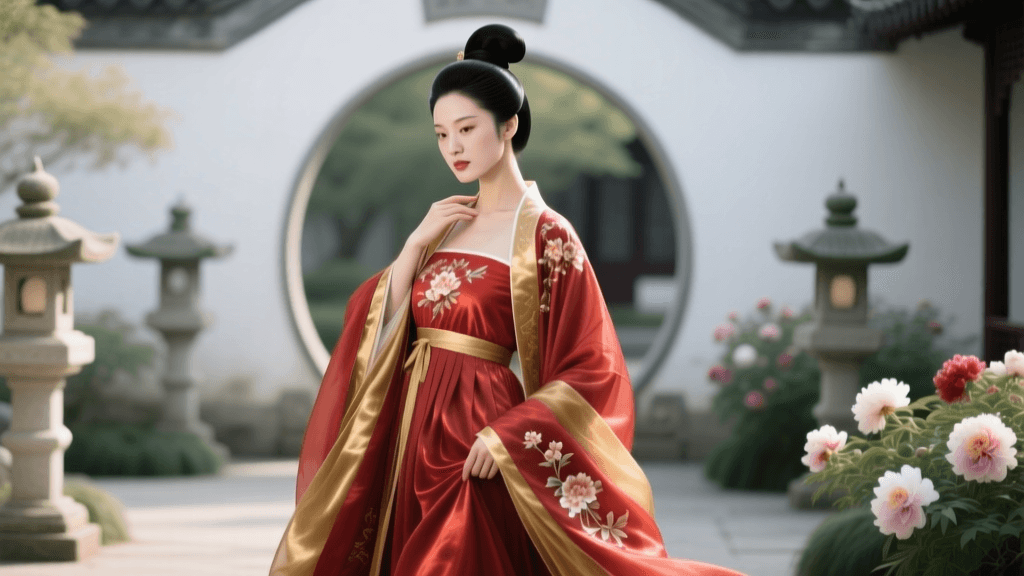
Unlike later dynasties that favored modest, restrictive silhouettes, Tang Dynasty fashion was bold, vibrant, and unapologetically luxurious. The beauty standard of the time celebrated fuller figures, and the clothing was designed to drape elegantly over curves while allowing for freedom of movement. At the very heart of this aesthetic was the Qixiong Shanqun (chest-high skirt and shirt ensemble), an iconic silhouette that Yang Guifei famously elevated to the pinnacle of imperial court fashion. Today, as the Hanfu revival movement sweeps across the globe, recreating Consort Yang's legendary look offers modern enthusiasts a tangible connection to China's most glamorous historical epoch.
Anatomy of the Qixiong Shanqun
To accurately recreate Yang Guifei's iconic outfit, one must understand the structural layering of the Tang Dynasty ruqun. The ensemble is deceptively simple in its construction but requires precise proportions to achieve the historical silhouette. Below is a breakdown of the core components:
| Garment Layer | Historical Tang Name | Modern Hanfu Equivalent | Function & Styling Notes |
|---|---|---|---|
| Upper Shirt | Shan (衫) | Duijin or Jiaoling Ru | Lightweight, breathable top layer with wide sleeves. Tucked into the skirt. |
| Chest Skirt | Qixiong Qun (齐胸裙) | Chest-High Wrap Skirt | High-waisted skirt tied securely above the bust, creating an elongated lower body. |
| Shawl | Pibo (披帛) | Silk Pibo / Stole | A long, sheer silk ribbon draped over the arms and shoulders for dynamic movement. |
'Clouds think of her clothes, flowers think of her face; the spring breeze brushes the sill, revealing the dew's rich grace.' — Li Bai, praising Yang Guifei's ethereal, cloud-like garments in 'Clear Peaceful Tune'.
Practical Guide: Sourcing and Sizing Your Ruqun
While the chest-high ruqun is visually stunning, it is notoriously difficult for modern wearers to keep in place without the proper measurements and fabric choices. If you are looking to purchase or commission a Tang-style Hanfu, follow these actionable guidelines to ensure a flawless fit.
Measurements That Matter
The most common complaint among Hanfu beginners is the skirt slipping down. To prevent this 'wardrobe malfunction,' the sizing must be exact.
- Skirt Top Circumference: The top edge of the wrap skirt must be at least 1.5 times your actual upper bust measurement. This allows for a complete overlap of the fabric at the back or side, which is crucial for friction and security.
- Skirt Length: For a historically accurate floor-sweeping look that hides the shoes, measure from your armpit down to the floor, then subtract 2 cm to prevent tripping. For a modern wearer of 165 cm (5'5'), a skirt length of 120 cm to 125 cm is typically ideal.
- Sleeve Length: Tang Dynasty court sleeves were expansive. Look for 'Da Xiu' (large sleeves) where the sleeve length extends past the fingertips by at least 15 cm, creating the elegant, drooping effect seen in historical murals.
Fabric Selection by Season
The luxurious silks that defined Yang Guifei’s wardrobe were the result of centuries of refinement, a craft now recognized by UNESCO as Intangible Cultural Heritage. When choosing fabrics for your own ensemble, consider the climate and the desired drape:
- Summer (Breathability): Opt for 8mm to 12mm Habotai silk or high-quality chiffon for the Shan (shirt) and Pibo (shawl). The skirt should be a lightweight cotton-linen blend or rayon to provide enough weight to keep the skirt anchored without causing heat exhaustion.
- Winter (Structure and Warmth): Choose 19mm to 30mm Silk Crepe de Chine or heavy Jacquard brocade for the skirt. The heavier weight naturally pulls the garment down, securing it against the chest. Pair with a lined, thicker silk shirt and a velvet or faux-fur trimmed half-sleeve vest (Ban Bi) for layering.
Budgeting and Brand Recommendations
The modern Hanfu market offers options for every budget. For entry-level enthusiasts, brands like Shisanyu (十三余) and Ting Yue Xuan offer beautiful, mass-produced Tang-style sets ranging from $45 to $90 USD. These sets usually include the shirt, skirt, and a matching Pibo, often featuring machine-embroidered motifs inspired by Tang murals. For those seeking museum-grade accuracy and premium natural silks, bespoke tailors or high-end brands like Zhong Ling (钟灵记) offer hand-woven brocade sets that can range from $180 to over $350 USD. When purchasing online, always check the 'flat lay' measurements rather than relying on standard S/M/L sizing, as traditional garments are cut very differently from modern Western apparel.
Styling, Draping, and Historical Etiquette
Wearing the garment is only half the battle; styling it correctly is what truly brings the historical figure to life.
The Art of the Knot
To secure a chest-high skirt without modern safety pins, utilize the traditional double-loop tie method. Wrap the skirt tightly around your chest, ensuring the inner layer is smooth. Take the two long ties, cross them in the front, and pull them tightly behind your back. Cross them again at the back, bring them to the front, and tie a secure square knot just off-center. Tuck the trailing ends of the ribbon neatly into the top edge of the skirt. For added security, many modern Hanfu wearers sew a small strip of silicone grip tape along the inside top hem of the skirt—a modern hack that preserves historical aesthetics while ensuring peace of mind.
Hair, Makeup, and the Huadian
Yang Guifei was famous for her elaborate hairstyles and striking makeup. To complete the look, hair should be swept up into a high bun, such as the Yuhuan Ji (a double-looped topknot). Adorn the hair with gold or jade Buyao (step-shake hairpins) that sway gently with movement.
The makeup must feature the iconic Huadian (forehead flower). Historically made of gold leaf, jade, or painted directly onto the skin, the Huadian sits between the eyebrows. Today, you can purchase reusable adhesive Huadian stickers made of mother-of-pearl or velvet for under $5 online. Pair this with heavily flushed cheeks and a bold, cherry-red lip to emulate the 'drunk on peach blossoms' aesthetic favored by Tang court ladies.
The Enduring Legacy of Consort Yang
Yang Guifei’s influence on Asian traditional garments extends far beyond her tragic demise during the An Lushan Rebellion. She codified a silhouette that celebrated femininity, luxury, and artistic expression. By understanding the precise measurements, respecting the historical textiles, and mastering the draping techniques of the Qixiong Shanqun, modern wearers do more than just play dress-up. They participate in a living, breathing continuation of Tang Dynasty artistry, ensuring that the clouds and flowers of Li Bai's poetry continue to inspire the world of traditional Asian fashion today.