Regional Japanese Garments: Okinawan Ryusou to Ainu Attus
Beyond the Mainland: Japan’s Prefectural Sartorial Diversity
When most people envision traditional Japanese clothing, the mind immediately conjures images of the mainland kimono, heavily influenced by the historical sartorial codes of Kyoto and Edo (modern-day Tokyo). However, Japan is a vast archipelago with distinct microclimates, indigenous populations, and historical trade routes that have fostered incredibly diverse regional garments. From the tropical, breathable weaves of Okinawa to the rugged, animistic bark-cloth garments of the Ainu in Hokkaido, regional Japanese textiles offer a masterclass in environmental adaptation and cultural storytelling.
For collectors, textile enthusiasts, and cultural historians, understanding these prefectural variations is essential. This guide explores the unique garments of Okinawa, Hokkaido, and the Tohoku region, providing actionable advice on sourcing, sizing, and preserving these extraordinary pieces of Asian heritage.
Okinawa: The Tropical Elegance of Ryusou and Bingata
The Ryukyu Kingdom (modern-day Okinawa) was a vital maritime hub connecting Japan, China, and Southeast Asia. This rich trade history birthed the Ryusou, the traditional garment of the Ryukyuan people, which differs significantly from the mainland kimono in both silhouette and material.
Materials and Construction
Unlike the heavy silks of mainland Japan, traditional Ryusou is crafted from Bashofu (banana fiber cloth) or Karamushi (ramie). These plant-based fibers are exceptionally breathable, making them ideal for Okinawa’s subtropical humidity. The silhouette is looser, with wider sleeves and a thinner, softer collar. Instead of the rigid, heavily padded mainland obi, Ryusou is secured with an Ushin—a wide, softly tied sash that allows for greater airflow and mobility.
Okina is also world-renowned for Bingata, a vibrant resist-dyeing technique. According to the Japan Traditional Crafts Aoyama Square, Bingata utilizes a rice-paste resist and soybean milk to set brilliant pigments of yellow, red, and blue, often featuring motifs of local flora, fauna, and Chinese-inspired clouds and dragons.
Sourcing and Costs
Authentic, hand-woven Bashofu is one of the rarest and most expensive textiles in Japan. A single vintage or newly woven Bashofu kimono can easily exceed 1,000,000 JPY (approx. $6,800 USD) due to the painstaking process of extracting fibers from banana stalks. For a more accessible entry point, collectors often seek Bingata obis or stoles. A modern, hand-dyed Bingata silk obi typically ranges from 80,000 to 300,000 JPY ($550 - $2,000 USD). When purchasing, look for the shikko (seal) of the master dyer on the reverse side of the fabric to verify authenticity.
Hokkaido: The Resilient Craftsmanship of Ainu Attus
Moving to the northernmost prefecture of Hokkaido, we encounter the indigenous Ainu people, whose traditional garments are deeply intertwined with their animistic beliefs and the harsh, snowy environment. The most iconic Ainu garment is the Attus, a robust workwear robe woven from the inner bark of the Japanese elm tree (ohyo).
The Art of Attus and Moreu
Creating Attus is a labor-intensive process. The bark is stripped, boiled, and torn into fine threads, which are then woven on a backstrap loom. The resulting fabric is incredibly durable, water-resistant, and insulating. Over the Attus, Ainu artisans traditionally wear garments adorned with Moreu (appliqué and embroidery). The swirling, thorn-like patterns of Moreu are not merely decorative; they serve as spiritual talismans placed at the garment's openings (neck, cuffs, and hem) to ward off malevolent spirits.
The National Ainu Museum and Park (Upopo) in Shiraoi, Hokkaido, remains the premier institution for preserving and promoting these techniques. Visitors and collectors can observe master weavers and purchase ethically sourced, contemporary Ainu crafts directly from indigenous cooperatives.
Collecting Ainu Textiles
Vintage, fully intact Attus robes from the 19th century are largely held in museums or private ethnographic collections, with auction prices starting around 500,000 JPY ($3,400 USD). However, contemporary Ainu artisans create stunning modern adaptations. A hand-embroidered Moreu cotton jacket or sash can be acquired for 25,000 to 60,000 JPY ($170 - $400 USD). When buying, ensure the seller is an authorized Ainu cooperative to support the living community rather than purchasing mass-produced tourist souvenirs.
Tohoku vs. Kyoto: Utility and Opulence in Mainland Japan
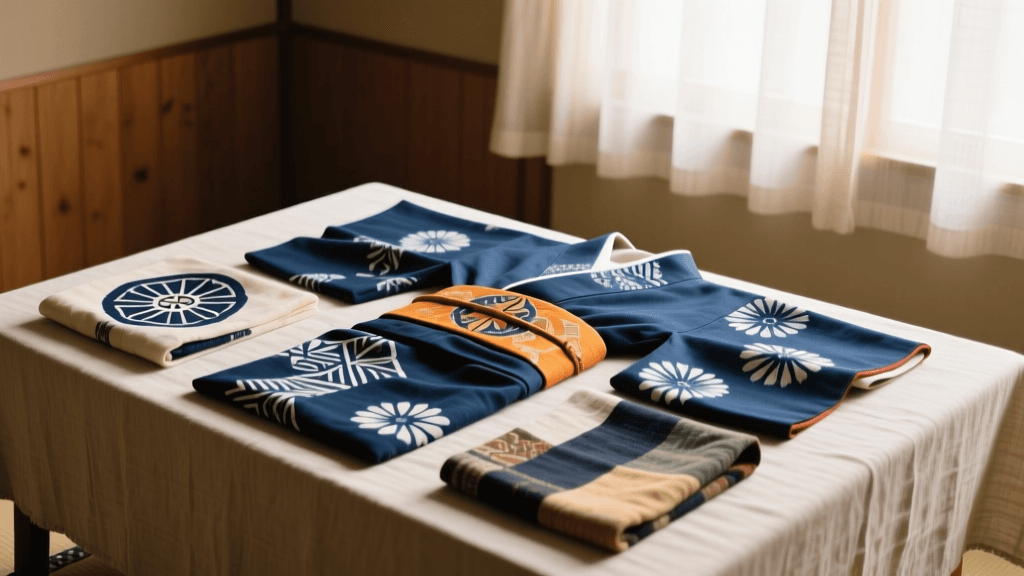
Even within mainland Japan, prefectural variations are stark. In the snowy, agrarian Tohoku region (northern Honshu), peasants developed Kogin-zashi and Sashiko. Because the ruling samurai class forbade peasants from wearing cotton or silk, locals wore rough, freezing hemp. To survive the brutal winters, women developed Kogin-zashi—a technique of running white cotton thread through dark indigo-dyed hemp to create dense, geometric patterns (modoko) that trapped body heat and reinforced the fabric. Vintage Tohoku Donja (thick, multi-layered winter coats) are highly sought after by folk-art collectors, costing between 50,000 and 150,000 JPY ($340 - $1,000 USD).
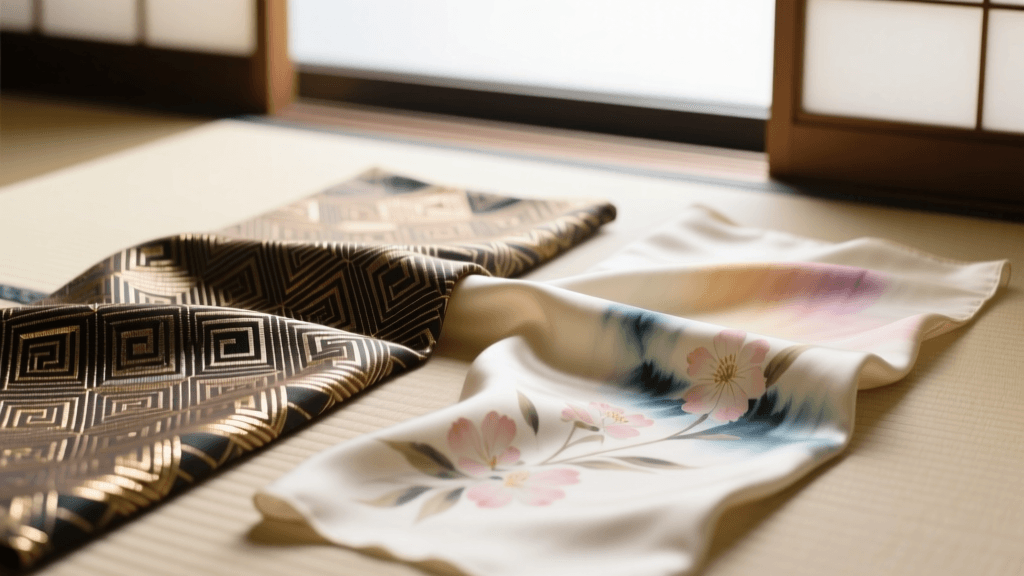
In stark contrast, the Nishijin Textile Center in Kyoto represents the pinnacle of mainland opulence. Kyoto’s Nishijin-ori utilizes gold and silver threads, pre-dyed silk, and complex Jacquard looms to create the heavy, brocaded maru obi worn by geisha and brides. While Tohoku textiles celebrate the beauty of survival and utility, Kyoto textiles celebrate aristocratic wealth and courtly aesthetics.
Regional Garment Comparison Chart
| Region | Garment / Textile | Primary Material | Best Season | Avg. Cost (JPY) |
|---|---|---|---|---|
| Okinawa | Ryusou / Bashofu | Banana Fiber / Ramie | Summer / Humid | 500,000+ |
| Okinawa | Bingata Obi | Silk / Cotton | Year-round (Festivals) | 80,000 - 300,000 |
| Hokkaido | Attus Robe | Elm Bark | Autumn / Winter | 500,000+ (Vintage) |
| Tohoku | Kogin-zashi Donja | Indigo Hemp / Cotton | Deep Winter | 50,000 - 150,000 |
| Kyoto | Nishijin-ori Maru Obi | Silk / Gold Thread | Year-round (Formal) | 300,000 - 1,000,000+ |
Practical Guide to Collecting and Wearing Regional Textiles
Integrating regional Japanese garments into a modern wardrobe or a serious textile collection requires an understanding of traditional measurements, seasonal timing, and specialized care.
Measurements and Sizing
Unlike Western clothing, traditional Japanese garments are not cut to individual body shapes. They are constructed from standard bolts of fabric called tanmono. A standard mainland tanmono is approximately 12 meters long and 38 centimeters (15 inches) wide. The garment is then folded and wrapped (kitsuke) to fit the wearer.
However, regional variations exist. Okinawan Ryusou fabric bolts are often slightly wider (up to 42 cm) to accommodate the looser, tropical drape. When purchasing vintage regional textiles, always measure the yuki (the distance from the center of the back neck, over the shoulder, to the wrist). A standard modern yuki is 64-68 cm; vintage Tohoku workwear often features shorter yuki measurements (58-62 cm) due to the historically smaller stature of agrarian workers.
Timing Your Purchases
The Japanese textile market is highly seasonal. If you are hunting for Okinawan Bashofu or Bingata, the best time to browse antique markets (such as the Kyoto Toji Temple flea market or specialized Tokyo antique fairs) is in late spring (May), just before the summer season when demand peaks. Conversely, heavy Tohoku Kogin-zashi coats and Ainu Attus garments appear more frequently in estate sales and vintage shops during the late autumn and early winter months (November to January), when northern estates are traditionally cleared and appraised.
Care and Maintenance
Regional textiles require highly specific care regimens:
- Bashofu and Ramie (Okinawa): These plant fibers are prone to yellowing if exposed to direct sunlight or harsh alkaline detergents. Hand wash in cool water using a neutral pH textile soap, and dry flat in the shade.
- Attus (Hokkaido): Elm bark cloth should never be submerged in water, as it can cause the fibers to stiffen and crack. Instead, use a soft, dry brush to remove dust, and air the garment out in a dry, well-ventilated room away from humidity.
- Kogin-zashi (Tohoku): Vintage indigo-dyed hemp is notoriously colorfast, but the white cotton embroidery threads can trap dirt. Spot clean the embroidered areas with a damp cloth and avoid machine washing, which will destroy the tension of the modoko geometric patterns.
By looking beyond the mainstream kimono, collectors and enthusiasts can uncover the profound regional diversity of Japan’s sartorial history. Whether it is the sun-drenched brilliance of Okinawan Bingata or the stoic, snow-defying warmth of Tohoku Kogin-zashi, these prefectural garments are wearable testaments to human ingenuity and environmental harmony.