Nishijin-Ori vs Yuzen: The Ultimate Kimono Silk Fabric Guide
The Heart of the Kimono: Woven vs. Dyed Silk
The kimono is far more than a simple garment; it is a meticulously crafted canvas that reflects centuries of Japanese aesthetic philosophy, regional terroir, and artisanal mastery. When collectors, practitioners, and cultural enthusiasts delve into the world of traditional Japanese clothing, the most critical distinction they must understand is the difference between woven and dyed textiles. The two undisputed titans of Japanese silk craftsmanship are Nishijin-ori (woven brocade) and Kyo-Yuzen (resist-dyed silk). Understanding the nuances of these fabric types is essential for anyone looking to purchase, wear, or preserve authentic kimono.
According to the Victoria and Albert Museum, the evolution of the kimono from the utilitarian kosode of the Muromachi period to the highly decorative garments of the Edo period was driven entirely by advancements in silk weaving and dyeing techniques. Today, choosing between a woven masterpiece and a dyed masterpiece depends on the occasion, the season, and the wearer's personal aesthetic. This guide breaks down the craftsmanship, practical sourcing, and care requirements for these two legendary textile traditions.
Nishijin-Ori: The Pinnacle of Woven Silk Craftsmanship
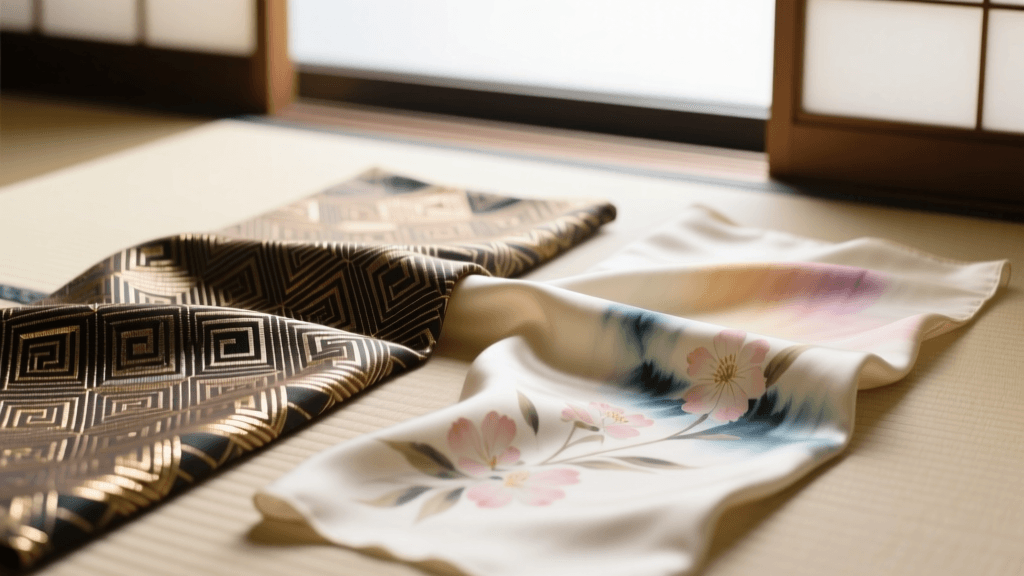
Nishijin-ori refers to the luxurious, multi-colored woven textiles produced in the Nishijin district of Kyoto. Unlike dyed fabrics where the pattern is applied to a finished white cloth, Nishijin-ori patterns are created by interlacing pre-dyed silk threads, often incorporating precious metals. The Nishijin Textile Center notes that this craft requires over twenty distinct specialized steps, from raw silk boiling and thread dyeing to the programming of Jacquard looms and the final weaving.
The hallmark of Nishijin-ori is its structural complexity and opulent texture. Artisans frequently use Kinran (gold brocade) and Ginran (silver brocade) techniques, weaving strips of gold-leafed paper or metallic threads directly into the silk warp and weft. Because the pattern is woven into the very structure of the fabric, Nishijin textiles are incredibly durable, heavy, and possess a distinct reversible quality. While Nishijin-ori is most famously used for obi (the wide sash worn with kimono), it is also used for formal outer garments like the uchikake (wedding overcoat) and high-end haori jackets.
Kyo-Yuzen: The Art of Resist-Dyeing
If Nishijin-ori is the triumph of structural engineering, Kyo-Yuzen is the pinnacle of surface painting. Developed in the late 17th century by Miyazaki Yuzensai, this resist-dyeing technique allowed artisans to paint intricate, pictorial designs directly onto silk, bypassing the strict sumptuary laws of the Edo period that restricted commoners from wearing luxurious woven brocades.
The Yuzen process is astonishingly labor-intensive. It begins with a temporary blue spiderwort dye (aobana) sketch on plain white silk. Artisans then apply a sticky rice-paste resist (itome-nori) along the outlines of the design to prevent colors from bleeding. Once the paste dries, the interior of the design is hand-painted with vibrant pigments. The fabric is then steamed to set the colors, washed in cold running water (historically in the Kamo River), and finally embellished with gold leaf or embroidery. The Ministry of Economy, Trade and Industry (METI) officially recognizes Kyo-Yuzen as a Traditional Craft Product of Japan, protecting its rigorous artisanal standards. Yuzen is primarily used for the main body of the kimono, particularly for formal wear like the furisode (long-sleeved kimono for unmarried women) and houmongi (visiting wear).
Comparison Chart: Nishijin-Ori vs. Kyo-Yuzen
| Feature | Nishijin-Ori (Woven) | Kyo-Yuzen (Dyed) |
|---|---|---|
| Primary Technique | Jacquard looming, interlacing pre-dyed threads | Rice-paste resist, hand-painting, steaming |
| Texture & Drape | Stiff, heavy, highly structured, textured | Soft, fluid, lightweight, drapes elegantly |
| Primary Garment Use | Obi (sashes), Haori, Uchikake | Kimono body (Furisode, Houmongi, Tomesode) |
| Design Reversibility | Often reversible or shows negative pattern on back | Front only; back shows faint color bleed |
| Bespoke Production Time | 3 to 6 months | 4 to 8 months |
Practical Guide to Sourcing, Sizing, and Pricing
For collectors and buyers, navigating the kimono market requires an understanding of traditional measurements and modern pricing structures. Whether you are buying vintage at a Kyoto flea market or commissioning a bespoke piece, keep these practical details in mind.
Understanding Tanmono Measurements
All traditional kimono are cut from a single bolt of fabric known as a tanmono. A standard silk tanmono measures exactly 38 centimeters (approx. 15 inches) in width and 12 meters (approx. 13.1 yards) in length. Because the kimono is constructed using straight-line cuts with zero fabric waste, the 38cm width dictates the maximum hip size for the wearer. If a wearer's hips exceed roughly 100cm, a standard tanmono will not provide enough overlap at the front. When sourcing vintage kimono, always measure the mihaba (the width of the back panel plus the front panel overlap) to ensure a proper fit.
Cost Breakdown and Investment
- Vintage Nishijin Obi: High-quality, pre-owned maru-obi or fukuro-obi (woven brocade sashes) typically range from $150 to $800 USD at antique markets like Toji Temple in Kyoto. Rare, unwoven gold-thread pieces from the Showa era can exceed $2,000.
- New Bespoke Kyo-Yuzen Kimono: Commissioning a hand-painted Yuzen houmongi directly from a Kyoto atelier is a major investment. Expect to pay between $4,000 and $15,000+ USD, depending on the complexity of the pictorial design and the amount of metallic embroidery.
- Tango Chirimen Base Silk: If you are buying undyed crepe silk (Tango chirimen) from the Tango peninsula to take to a dyer, a standard 12-meter bolt costs between $300 and $600 USD.
Timing Your Purchase
If you are commissioning bespoke craftsmanship, timing is everything. Artisans are heavily booked during the lead-up to Japan's major coming-of-age ceremonies (Seijin no Hi in January) and the spring wedding season. To ensure your garment is ready, place custom Yuzen or Nishijin orders at least 8 to 10 months in advance. For vintage buyers, the best time to find high-quality silk at discounted rates is during the summer months (July-August), when many Japanese households air out their storage and sell off unworn heirlooms to second-hand dealers.
Seasonality: Matching Fabric Weight to the Calendar
Japanese silk craftsmanship is deeply tied to the natural calendar. Wearing the wrong fabric weight is considered a major faux pas in traditional dressing. When sourcing your fabrics, you must categorize them into three distinct seasonal types:
- Awase (Lined): Worn from October through May. These kimono feature an outer layer of Yuzen or woven silk lined with a separate layer of plain silk or synthetic habutae for warmth.
- Hitoe (Unlined): Worn exclusively in June and September. The tanmono is made of a slightly thicker, tightly woven silk crepe to provide structure without the need for a lining.
- Usumono (Sheer): Worn during the peak humidity of July and August. Crafted from highly specialized, ultra-sheer woven silks like ro (leno weave) or sha (gauze weave). Nishijin artisans weave intricate, breathable patterns into these sheer fabrics, allowing the under-kimono (nagajuban) to show through elegantly.
Care and Maintenance for Silk Kimono
Preserving the integrity of Nishijin-ori and Kyo-Yuzen requires specialized care. Never attempt to wash a silk kimono at home. Water will cause the rice-paste resist remnants in Yuzen to reactivate, and it will ruin the tension of a Nishijin Jacquard weave.
Instead, utilize a traditional Japanese dry-cleaning service known as Maru-arai. This process involves carefully unstitching the kimono back into its original rectangular tanmono panels, washing the entire bolt in specialized solvents, stretching it on bamboo frames to dry, and then re-sewing it. A standard Maru-arai service in Japan costs between 10,000 and 15,000 JPY ($70 to $100 USD) and takes approximately 3 to 4 weeks. For minor stains on heavy Nishijin obi, spot-cleaning (shimi-nuki) is preferred to avoid disturbing the metallic threads. Always store your silk garments flat in a cool, dark place, wrapped in acid-free tatou-shi paper, and avoid using cedar chests directly, as the acidic oils in cedar can yellow white Yuzen silk over time.