Yunjin Drawloom Weaving: Ancient Chinese Silk Tech 2026
The Engineering Marvel of the Da Hua Lou
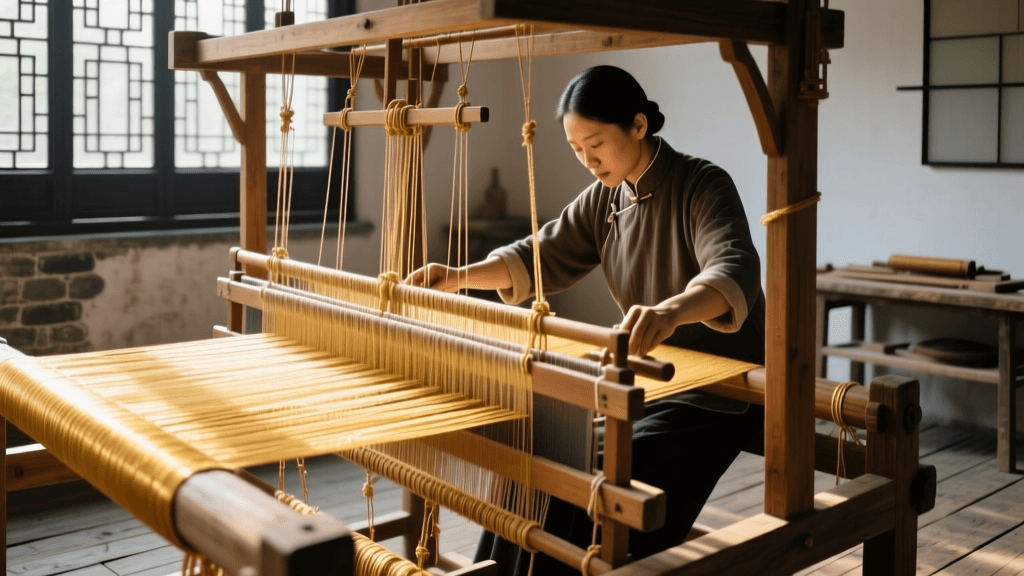
In the heart of Nanjing, a rhythmic clatter of wood and silk continues to echo through specialized ateliers, defying the relentless pace of modern automation. This is the sound of the Da Hua Lou, the traditional Chinese drawloom used to weave Yunjin, or 'Cloud Brocade.' As we navigate the fashion landscape of 2026, the Xin Zhongshi (new Chinese style) movement has sparked an unprecedented renaissance for these ancient textiles. Designers and collectors alike are looking past mass-produced jacquards, seeking the unparalleled depth, texture, and cultural resonance that only a hand-operated drawloom can produce.
Recognized by the UNESCO Intangible Cultural Heritage registry, the Nanjing Yunjin brocade technique represents the pinnacle of ancient Chinese silk technology. Unlike standard looms where a single weaver operates the pedals and shuttle, the Da Hua Lou is a massive, two-story wooden structure measuring roughly 4 meters long, 3 meters high, and 1.5 meters wide. It requires a highly synchronized duo: the Zhuaihua (pattern puller) who sits atop the loom to manually manipulate the warp threads according to a complex knotted cord program, and the Zhiji (weaver) who sits below, passing the shuttle and beating the weft into place.
Decoding the 'Tongjing Duandao' Technique
The true magic of Yunjin lies in a weaving methodology known as Tongjing Duandao, which translates to 'continuous warp, discontinuous weft.' While the foundational warp threads run the entire length of the fabric, the weaver introduces the decorative weft threads only in the specific areas where a pattern is required. This allows for an astonishing level of detail and color variation without the structural limitations of traditional continuous weft weaving.
In 2026, master weavers utilize an array of specialized materials to create the signature 'cloud-like' luminosity of the brocade. Beyond premium mulberry silk, artisans incorporate peacock feather filaments, silver foil, and Bianjin (gold thread). The creation of Bianjin is a meticulous sub-craft in itself: ultra-thin sheets of 24-karat gold are hand-cut into microscopic strips and tightly wrapped around a silk core. According to archival research highlighted by the Metropolitan Museum of Art's Heilbrunn Timeline of Art History, this integration of metallic threads has been a hallmark of Chinese luxury textiles since the Ming Dynasty, and the 2026 revival strictly adheres to these historical metallurgical standards.
The 2026 Xin Zhongshi Movement and Modern Adaptation
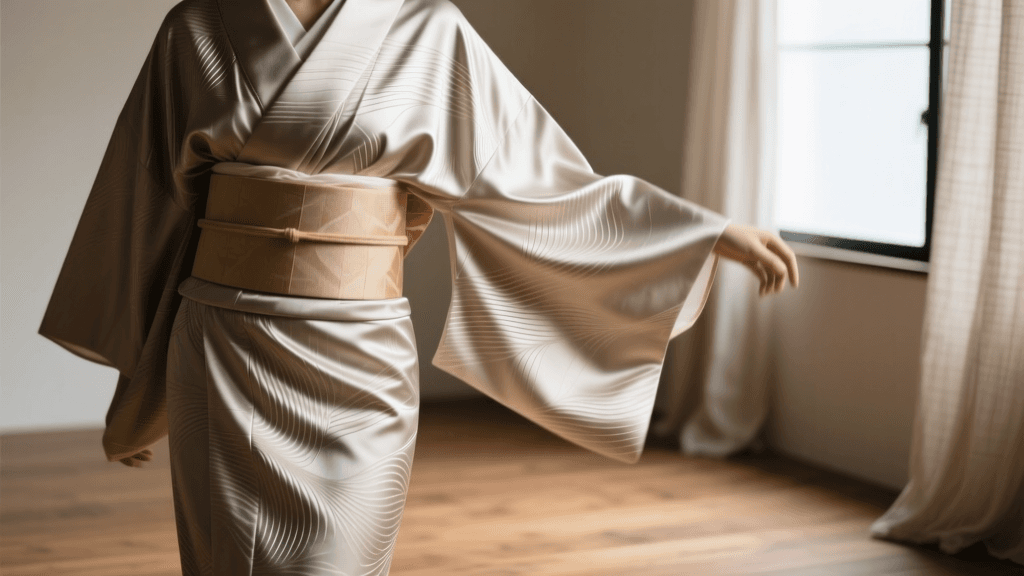
The Xin Zhongshi movement of 2026 is characterized by a desire for 'quiet luxury' rooted in heritage. Rather than producing full, heavy brocade garments that feel costumey, contemporary designers are utilizing Yunjin as strategic accents. A structured blazer might feature Yunjin lapels, or a minimalist silk slip dress might be anchored by a hand-woven brocade obi-style belt.
To meet this modern demand without compromising the integrity of the craft, Nanjing's weaving institutes have introduced a hybrid approach to pattern design. While the physical weaving remains 100% manual to preserve the UNESCO heritage status, the initial Huaben (pattern drafting) is now frequently assisted by AI-driven textile software. This allows designers to visualize complex auspicious motifs—such as the five-clawed dragon or the phoenix—and calculate the exact knotted cord sequences for the drawloom puller in a fraction of the time it would have taken a master drafter in the 19th century.
Comparative Analysis: Traditional Drawloom vs. 2026 Digital Jacquard
For collectors and designers sourcing materials in 2026, understanding the distinction between authentic Da Hua Lou weaving and modern digital imitations is critical. Below is a comparative breakdown of the two production methods currently dominating the market.
| Feature | Traditional Da Hua Lou (Hand-Woven) | 2026 AI-Assisted Digital Jacquard |
|---|---|---|
| Production Speed | 5 to 6 centimeters per day | Up to 50 meters per day |
| Material Integration | Seamless integration of peacock feather and thick gold foil threads | Limited to standard metallic yarns; fragile threads break under high tension |
| Texture and Drape | Heavy, sculptural, with a distinct three-dimensional relief | Flat, uniform, lacking the micro-variations of human tension |
| Market Cost (Per Meter) | 15,000 RMB - 45,000 RMB ($2,080 - $6,250 USD) | 800 RMB - 2,500 RMB ($110 - $345 USD) |
| Primary 2026 Use Case | Bespoke bridal wear, haute couture accents, museum archives | Ready-to-wear Xin Zhongshi apparel, home decor, accessories |
Sourcing Authentic Yunjin: A 2026 Buyer’s Guide
If you are looking to invest in authentic, hand-woven Yunjin for a design project or personal collection, provenance is everything. In 2026, the Ministry of Culture and Tourism in China has tightened the certification process for master weavers. When sourcing, always request the official 'Nanjing Yunjin Geographical Indication' certificate, which includes a scannable NFC chip embedded in the textile's selvedge, linking directly to the specific atelier, the master weaver, and the exact dates of production.
When examining the fabric, look for the 'backside test.' Because of the discontinuous weft technique, the reverse side of authentic Yunjin will show loose, unbound threads where the colored silks and gold foils were not needed for the top-side pattern. Digital jacquards, conversely, will have a clean, tightly bound reverse side. Furthermore, authentic gold threads will not tarnish or oxidize over time, maintaining a warm, subdued luster that differs vastly from the sharp, reflective glare of synthetic Lurex yarns.
Archival Storage and Maintenance for Heavy Brocades
Yunjin is an investment that requires meticulous care. The heavy metallic threads and dense silk warp create a fabric that is highly susceptible to gravity-induced distortion and humidity damage. To preserve these garments in 2026, collectors must adhere to strict archival protocols.
- Climate Control: Store the garments in a climate-controlled environment maintaining a strict relative humidity of 45% to 55%. Fluctuations beyond this range can cause the silk core of the gold threads to expand and contract, eventually snapping the metallic foil wrapping.
- Support and Folding: Never hang a heavy Yunjin jacket or robe on a standard hanger; the weight of the brocade will tear the warp threads at the shoulders. Instead, store the garment flat in an archival-grade Tyvek sleeve.
- Padding: If folding is absolutely necessary, pad every fold with unbuffered, acid-free tissue paper to prevent sharp creases from permanently breaking the metallic weft threads.
- Light Exposure: While silk is relatively resilient, the organic dyes used in traditional Yunjin (such as indigo and safflower) are highly photosensitive. Limit display lighting to UV-filtered LEDs at a maximum of 50 lux.
Preserving the Legacy for the Next Generation
The survival of the Da Hua Lou is not merely about preserving a method of textile production; it is about safeguarding a tangible link to China's imperial past. As institutions like the Victoria and Albert Museum's Asian textile archives continue to study historical brocades, the living tradition in Nanjing provides an invaluable, breathing counterpart to museum artifacts. The 2026 Xin Zhongshi movement has proven that ancient technologies are not obsolete relics, but rather foundational pillars that can elevate contemporary fashion into the realm of enduring art. By understanding the mechanics, supporting the artisans, and properly caring for these masterpieces, we ensure that the clouds of Nanjing will continue to shimmer for centuries to come.