Kyoto Kimono Apprenticeships 2026: Top Schools Guide
The Renaissance of Traditional Japanese Textile Education in 2026
The art of kimono making is undergoing a profound transformation as of 2026. Faced with an aging demographic of master artisans, Japan has actively restructured its traditional fashion education and apprenticeship systems to attract a new generation of domestic and international craftspeople. The Japanese government, alongside private heritage foundations, has introduced expanded visa pathways and substantial stipends for students dedicating themselves to intangible cultural properties. For those passionate about Asian traditions, entering a Japanese fashion education school or a traditional deshi (apprentice) program has never been more accessible, yet it remains as rigorous and deeply spiritual as it was centuries ago.
According to the Ministry of Economy, Trade and Industry (METI), the designation of Traditional Craft Products continues to protect and promote over 200 distinct regional techniques. In 2026, special grants have been allocated specifically to Kyoto and surrounding prefectures to modernize apprenticeship housing and provide language support for international students, ensuring that ancient techniques like Nishijin weaving and Kyo-Yuzen dyeing survive and evolve in the global fashion landscape.
Top Kyoto Schools for Kimono Craftsmanship and Nishijin Weaving
Kyoto remains the undisputed heart of Japanese textile arts. Prospective artisans in 2026 generally choose between university-level degree programs and intensive vocational training schools. Both routes offer distinct advantages depending on your career goals and current skill level.
Kyoto City University of Arts (Kyoto Geidai)
For those seeking a comprehensive academic foundation alongside hands-on studio practice, Kyoto Geidai offers a prestigious Textile Design program. The curriculum in 2026 brilliantly merges historical preservation with contemporary design thinking. Students spend their first two years mastering the fundamentals of silk reeling, natural dye extraction, and traditional loom threading. By their third and fourth years, they are encouraged to innovate, creating avant-garde garments that respect the structural integrity of the tanmono (the standard 36cm wide, 12-meter long silk bolt used for kimono). Admission is highly competitive, requiring a rigorous portfolio review and the standard Japanese university entrance examinations.
Nishijin Textile Industry Vocational Training School
Located in the historic weaving district of Kamigyo Ward, this vocational school is the premier destination for dedicated weavers. Supported by the Nishijin Textile Center, the school offers one-year and two-year intensive courses specifically focused on brocade weaving, jacquard loom operation, and yarn dyeing. The 2026 curriculum has been updated to include CAD (Computer-Aided Design) pattern drafting, which is then translated into physical punch cards or digital files for modern jacquard looms, while still requiring students to master the manual hand-weaving techniques necessary for repairing antique textiles and creating bespoke obi (sashes).
The Modern Deshi (Apprentice) Experience
The traditional deshi system historically required a young apprentice to live in the master's household, performing menial chores for years before ever touching a loom or a dye brush. In 2026, this system has evolved into a more structured, hybrid model that respects the student's time and well-being while maintaining the strict discipline required to master Japanese fashion customs.
Modern apprenticeships in Kyoto's dye houses and weaving studios typically operate on a three-to-five-year contract. Apprentices receive a modest monthly living stipend—averaging around 180,000 JPY in 2026—supplemented by government heritage grants. The daily schedule is grueling but deeply rewarding. A typical day in a Kyo-Yuzen dyeing atelier begins at 7:30 AM with the preparation of the rice-paste resist (itome-nori). By 9:00 AM, apprentices are meticulously applying the resist to silk stretched on bamboo frames in the courtyard, relying on the specific humidity and sunlight of the Kyoto morning to ensure the paste dries without cracking. Afternoons are dedicated to the painstaking application of synthetic and natural dyes using specialized brushes, followed by evening hours spent cleaning tools and studying historical pattern archives.
2026 Cost Breakdown and Financial Aid for International Students
Financing a traditional arts education in Japan requires careful planning. Below is a comparative breakdown of the estimated costs for international students pursuing kimono craftsmanship in the 2026 academic year.
| Institution / Pathway | Duration | Estimated Annual Tuition (2026) | Living Costs (Kyoto) | Available Financial Aid / Stipends |
|---|---|---|---|---|
| Kyoto City University of Arts | 4 Years | 535,800 JPY | 1,200,000 JPY | MEXT Scholarship, University Grants |
| Nishijin Vocational School | 1 - 2 Years | 350,000 JPY | 1,200,000 JPY | Local Chamber of Commerce Subsidies |
| Private Atelier Deshi (Apprentice) | 3 - 5 Years | No Tuition (Free) | Covered by Stipend | Monthly Stipend (approx. 180,000 JPY) |
| Short-Term Cultural Workshops | 1 - 3 Months | 150,000 - 400,000 JPY | 300,000 JPY | Self-Funded / Private Arts Grants |
For international applicants, the Japanese Ministry of Education, Culture, Sports, Science and Technology (MEXT) offers specialized scholarships for students focusing on the preservation of Asian traditions and intangible cultural heritage. Additionally, many private Nishijin weaving houses now offer tuition-free apprenticeships in exchange for a commitment to work in the studio for a minimum of three years post-graduation.
Mastering the Core Techniques: Yuzen, Shibori, and Nishijin
Students entering these programs must eventually specialize in one of the core disciplines of Japanese garment creation. Each requires a vastly different sensory experience and technical aptitude.
Kyo-Yuzen Resist Dyeing
Yuzen is the pinnacle of Japanese silk dyeing, allowing for pictorial, highly detailed designs that resemble paintings on fabric. Apprentices must develop an incredibly steady hand and a deep understanding of chemistry. The 2026 curriculum emphasizes the balance between traditional natural dyes (like indigo, madder, and safflower) and modern, colorfast synthetic alternatives. The sensory experience of a Yuzen studio is defined by the smell of steaming silk and the rhythmic scraping of the hera (spatula) used to apply the resist paste.
Kyo-Shibori Tie-Dyeing
Unlike the flat application of Yuzen, Shibori relies on the physical manipulation of the fabric—folding, twisting, and binding—to create patterns. Mastering Kanoko Shibori (fawn-spot tie-dye) requires binding thousands of microscopic dots of silk with thread before dyeing. It is a test of extreme patience and finger strength. Apprentices often spend their first six months solely practicing the tension of the binding thread, as a millimeter of variance can ruin the geometric precision of the final kimono pattern.
Nishijin Brocade Weaving
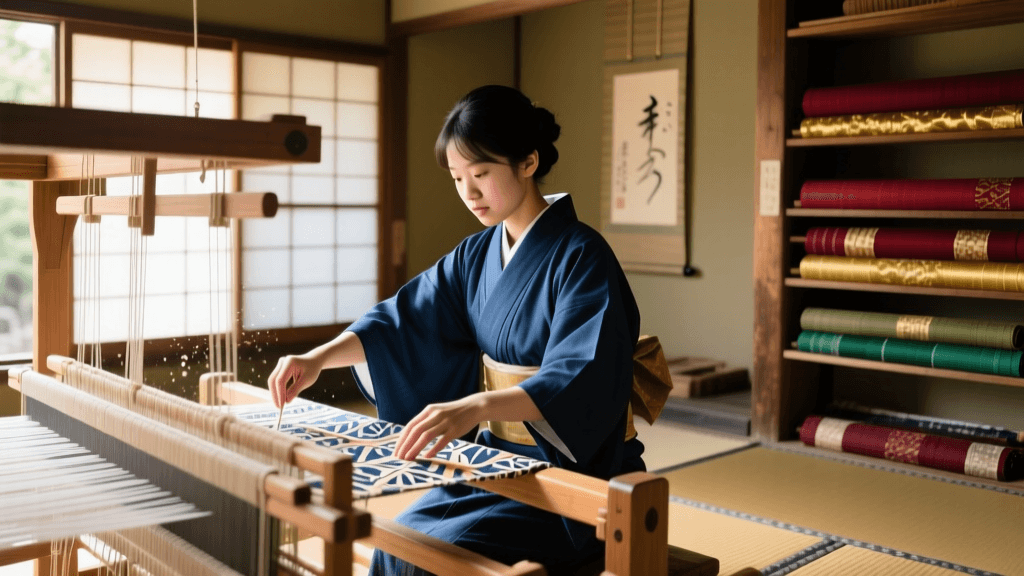
Nishijin weaving is an architectural marvel of threads. Recognized globally for its complexity, the technique often involves precious metals. As documented by heritage organizations like UNESCO's Intangible Cultural Heritage registries for Japanese silk technologies, the preparation of the threads is just as vital as the weaving. Apprentices learn to slice gold leaf into micro-millimeter strips and wrap them around silk cores. The deafening clack of the wooden shuttle and the physical exertion required to operate the traditional soroban (beating reed) make Nishijin weaving a deeply physical endeavor.
Step-by-Step Guide to Applying for an Apprenticeship in 2026
If you are determined to immerse yourself in Japanese fashion education, follow these actionable steps to secure your place in a 2026 cohort:
- Achieve JLPT N3 or Higher: While some university programs offer English support, traditional atelier masters and vocational schools conduct instruction entirely in Japanese. Passing the Japanese Language Proficiency Test (JLPT) at the N3 level is the absolute minimum requirement to understand nuanced technical instructions and historical terminology.
- Build a Material-Focused Portfolio: Japanese masters care less about digital fashion renderings and more about your understanding of materials. Include photographs of your hands working with natural fibers, detail shots of your stitching, weaving, or dyeing experiments, and a written philosophy on your approach to sustainable, slow fashion.
- Secure the Correct Visa: University students will apply for a standard Student Visa. However, those entering private ateliers must apply for the Cultural Activities Visa or the newly expanded Designated Activities (Traditional Arts) Visa introduced in late 2025, which specifically caters to heritage craft apprentices.
- Attend the Kyoto Crafts Matchmaking Fair: Held every spring, this event connects international and domestic students with aging masters who are actively seeking successors. It is the most direct route to securing a private deshi position.
- Prepare for the Physical Demands: Begin conditioning your hands, back, and eyes. The physical toll of sitting at a floor loom or hunched over a dye vat for eight hours a day is significant. Many 2026 programs now include mandatory weekly sessions in traditional Japanese stretching and posture correction to prevent artisan burnout.
Conclusion
The path to mastering traditional Japanese clothing is not merely an educational pursuit; it is a spiritual commitment to preserving the soul of Asian traditions. The schools and apprenticeships of Kyoto in 2026 offer an unprecedented bridge between the ancient masters of the Edo period and the global artisans of tomorrow. Whether you find yourself threading a gold-wrapped shuttle in a Nishijin studio or carefully painting a resist line on stretched silk, you are participating in a living, breathing lineage that continues to define the pinnacle of global textile artistry.