Hanfu Undergarments & Layers: The Structural Foundation
The Philosophy of Hanfu Layering
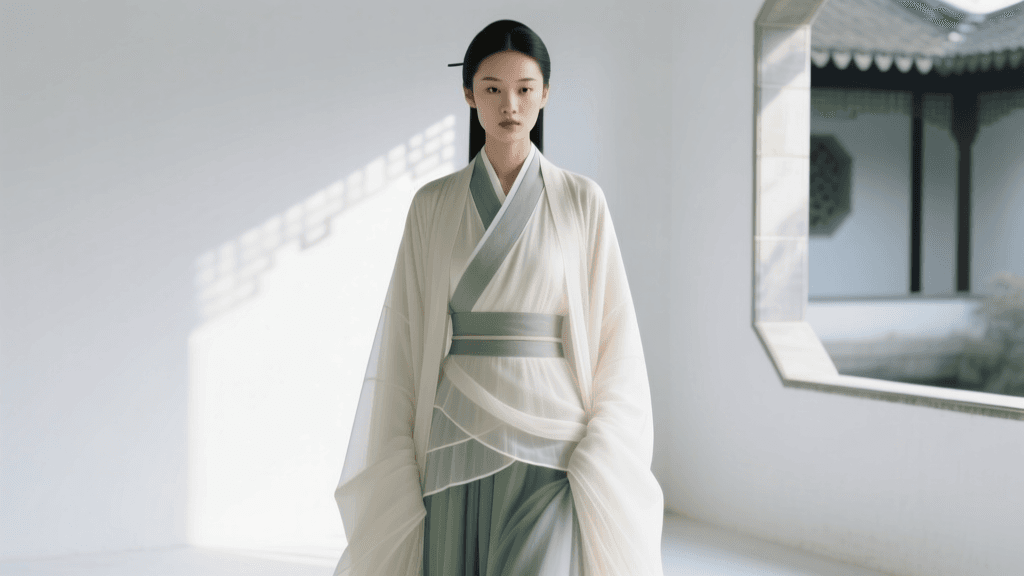
When observing traditional Chinese clothing, the untrained eye might only notice the flowing sleeves and vibrant embroidery of the outer robes. However, the true elegance and structural integrity of Hanfu rely entirely on what lies beneath. Unlike modern Western fashion, which often relies on tailoring, darts, and elastic to conform to the body's shape, Hanfu achieves its majestic silhouette through a meticulous system of layering. This structural foundation not only dictates the drape and movement of the garment but also adheres to centuries-old cultural philosophies regarding modesty, climate adaptation, and social etiquette.
Understanding the undergarments and middle layers of Hanfu is essential for any enthusiast, historian, or modern wearer. According to Britannica's historical overview of Chinese dress, the layering system was deeply tied to the Confucian ideals of propriety and the natural order, where every layer served a distinct physical and symbolic purpose. In this comprehensive guide, we will deconstruct the core layers of Hanfu, explore the structural rules that govern them, and provide practical advice for modern wearers.
The Three Pillars: Neiyi, Zhongyi, and Waiyi
The Hanfu dressing system is broadly categorized into three foundational tiers: the inner layer (Neiyi), the middle layer (Zhongyi), and the outer layer (Waiyi). Each tier interacts with the others to create the final silhouette.
Neiyi (Inner Garments)
The Neiyi is the layer that sits directly against the skin. Its primary functions are modesty, sweat absorption, and protecting the more expensive outer silks from body oils. For women, the most common Neiyi is the Moxiong (a tube top or bustier) or a lightweight Danyi (a single-layer short-sleeved shirt). For men, it typically consists of a simple cotton undershirt and loose-fitting trousers (Ku).
Practical Sizing Tip: When purchasing a traditional tie-back Moxiong, accurate measurements are critical. Unlike modern elasticized tube tops, a traditional Moxiong relies on the friction of woven fabric and the tension of the ties. You must measure your upper bust and add exactly 2 to 4 centimeters for ease and overlap. If the garment is too tight, the ties will dig into your skin; if too loose, the structural support for the outer layers will fail.
Zhongyi (Middle Garments)
If the outer garment is the masterpiece, the Zhongyi is the canvas. The Zhongyi is the middle layer, almost always featuring a distinct collar that peeks out from beneath the outer robe. This creates the highly prized Cengling (layered collar) effect, a hallmark of Hanfu aesthetics that signifies refinement and attention to detail.
The Zhongyi is typically white, off-white, or a very pale pastel. It is usually made of crisp cotton, linen, or a lightweight silk blend. The collar of the Zhongyi must be stiff enough to stand up neatly but soft enough to curve around the neck without buckling. The Metropolitan Museum of Art's Heilbrunn Timeline notes that during the Ming Dynasty, the contrast between the stark white middle collar and the richly colored outer robes was a defining feature of elite dress.
Waiyi (Outer Garments)
The Waiyi encompasses the visible outer layers, such as the Ruqun (blouse and skirt), Aoqun (lined jacket and skirt), or Shenyi (deep robe). Because the Neiyi and Zhongyi provide the structural base and absorb friction, the Waiyi can be crafted from delicate, unlined silks, heavy brocades, or flowing gauzes without worrying about transparency or sweat damage.
Structural Basics: The Jiaoling Youren Principle
No discussion of Hanfu structure is complete without addressing Jiaoling Youren, the golden rule of traditional Chinese clothing. This principle dictates that the left side of the garment must always cross over and cover the right side. The collar forms a 'y' shape when viewed from the front.
'The crossing of the left over the right is not merely a stylistic choice; it is a profound cultural marker of life, civilization, and respect for the natural order. To reverse this is to invite profound cultural taboo.'
This rule applies to almost every layer, from the innermost Danyi to the outermost cloak. The only historical exception to Jiaoling Youren is in the dressing of the deceased for burial, where the right side crosses over the left (Youren Jiaoling). For modern wearers, mastering the left-over-right wrap is the first and most crucial step in achieving an authentic Hanfu silhouette.
Fabric Selection and Climate Adaptation
China's vast geography encompasses freezing northern winters and sweltering, humid southern summers. The Hanfu layering system is inherently modular, allowing wearers to add or remove layers and swap fabrics based on the climate. Below is a structured guide to layering based on seasonal needs.
| Layer | Garment Type | Primary Function | Ideal Fabric | Est. Cost (USD) |
|---|---|---|---|---|
| Inner (Summer) | Moxiong / Danyi | Sweat absorption, cooling | Bamboo rayon, light cotton | $15 - $25 |
| Inner (Winter) | Thermal Danyi | Heat retention | Merino wool blend, fleece | $30 - $50 |
| Middle (All) | Zhongyi | Collar structure, modesty | 60s combed cotton, linen | $25 - $45 |
| Outer (Summer) | Banbi / Ruqun | Sun protection, drape | 12-16 momme silk, chiffon | $60 - $150 |
| Outer (Winter) | Lined Ao / Doupeng | Windproofing, warmth | Wool, heavy brocade, faux fur | $120 - $300+ |
As noted by The Victoria and Albert Museum's Asian collections, historical garments were often unlined in the summer and heavily padded or lined with animal furs in the winter. Today, modern Hanfu brands utilize innovative fabric blends, such as cotton-linen for the Zhongyi to ensure the collar remains crisp even in high humidity.
Practical Tips for Modern Hanfu Wearers
Transitioning into wearing Hanfu requires a shift in how you think about getting dressed. Here are actionable tips to ensure your layers function correctly:
- The Collar Gap: When tying your Zhongyi, ensure the collar sits exactly 1.5 to 2 centimeters higher than your outer Waiyi collar. If it is too low, it will disappear; if too high, it will choke you and look disproportionate.
- Sleeve Management: If you are wearing a wide-sleeved outer garment (Daxiushan), your Zhongyi should have narrower, tapered sleeves. This prevents the middle layer from bunching up inside the outer sleeve and ruining the smooth drape of the silk.
- Skirt Tying Tension: When wearing a Mamianqun (horse-face skirt) or a standard pleated skirt over your inner layers, tie the ribbons tightly at the natural waist. The weight of the outer skirt can pull down the Moxiong if the waist tension is not properly distributed.
- Invest in Quality Zhongyi: Do not cheap out on the middle layer. A poorly constructed Zhongyi with a flimsy collar will ruin the look of a $300 silk outer robe. Look for sellers who use interfacing or double-layered cotton for the collar band.
Conclusion
The beauty of Hanfu is not just in its visual splendor, but in its architectural approach to clothing. The Neiyi protects, the Zhongyi structures, and the Waiyi expresses. By understanding and respecting the foundational layers of traditional Chinese dress, modern wearers do more than just put on a costume; they participate in a living, breathing sartorial tradition that has evolved over millennia. Whether you are dressing for a summer festival or a formal winter ceremony, mastering the art of the layer is the key to unlocking the true majesty of Hanfu.