Decoding Kimono Silk: Yuki Tsumugi vs Chirimen Fabrics
The Soul of the Silkworm: An Introduction to Kimono Textiles
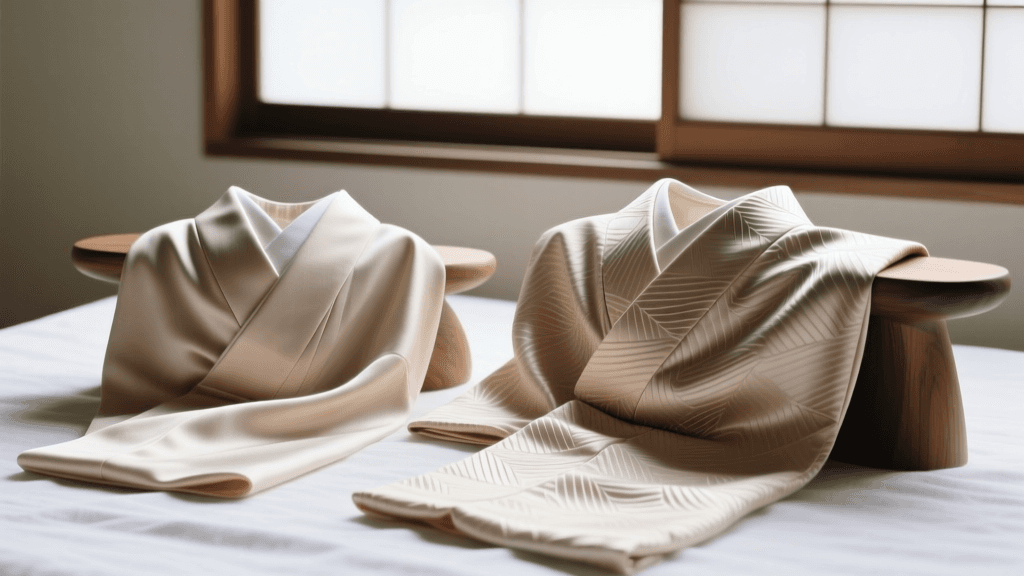
The true essence of a traditional Japanese kimono lies not merely in its iconic T-shaped silhouette, but in the meticulous, centuries-old craftsmanship of its textiles. While the garment's structure remains largely unchanged across the eras, the fabrics tell vivid stories of regional heritage, technological innovation, and artistic devotion. For collectors, practitioners of kitsuke (the art of dressing), and textile enthusiasts, understanding the nuances of kimono fabrics is essential. Among the vast lexicon of Japanese textiles, two silk varieties stand out for their contrasting beauty and profound cultural significance: Yuki Tsumugi and Chirimen.
This comprehensive guide decodes the craftsmanship, structural differences, and practical considerations of these two legendary silks, providing actionable insights for purchasing, measuring, and preserving these wearable masterpieces.
The Heritage of Yuki Tsumugi (結城紬)
Originating from the Yuki region in Ibaraki Prefecture, Yuki Tsumugi is widely considered the pinnacle of Japanese pongee (a type of silk fabric characterized by its slubbed, matte texture). Its cultural importance is so profound that it was inscribed on UNESCO's Intangible Cultural Heritage registry in 2010. Unlike the glossy, reflective silks used in formal court wear, Yuki Tsumugi is prized for its understated elegance, remarkable warmth, and lightweight durability.
The Craftsmanship: From Floss to Fabric
The creation of authentic Yuki Tsumugi involves over forty distinct, highly specialized steps, primarily executed by hand. The process begins with mawata—silk floss harvested from imperfect or double cocoons that cannot be reeled into continuous threads. Artisans hand-spin this floss into yarn by drawing it out and twisting it gently, a technique that traps air and gives the final fabric its renowned insulating properties.
The defining visual characteristic of Yuki Tsumugi is its kasuri (ikat) patterns. Before dyeing, weavers meticulously tie thousands of microscopic bundles of thread with cotton string to resist the indigo dye. This requires a mathematical precision that borders on the superhuman; a single misalignment can blur the intricate geometric or floral motifs. Finally, the silk is woven on a jibata, a traditional backstrap loom where the weaver uses their body weight to control the tension of the warp threads. Because the weaver can only produce a few centimeters a day, a single tanmono (fabric bolt) of high-grade Yuki Tsumugi can take up to a year to complete.
The Elegance of Chirimen (縮緬) Crepe Silk
If Yuki Tsumugi is the embodiment of rustic, matte sophistication, Chirimen is the epitome of fluid luxury and vibrant artistry. Chirimen is a traditional Japanese crepe silk, beloved for its pebbled texture, known as shibo, and its exceptional ability to take on brilliant, complex dyes. As noted by the Victoria and Albert Museum in their extensive textile archives, the drape and light-catching qualities of crepe silks made them the preferred canvas for the elaborate yuzen dyeing techniques of the Edo period.
The Craftsmanship: The Science of Shibo
The magic of Chirimen lies in the physics of yarn tension and heat. Unlike standard flat-weave silks, Chirimen utilizes an untwisted warp thread but a heavily twisted weft thread. The weft yarn is subjected to an astonishing 2,000 to 3,000 twists per meter, alternating between S-twists (right-handed) and Z-twists (left-handed) every few picks.
After the fabric is woven in its raw, stiff state, it undergoes a rigorous degumming process. The fabric is boiled in an alkaline solution to remove the natural sericin (silk gum). As the gum washes away, the highly twisted weft threads violently contract and untwist. Because the S and Z twists alternate, they push against each other, creating the microscopic, pebbled three-dimensional ridges known as shibo. This texture not only gives Chirimen its signature tactile feel but also makes the fabric highly resistant to wrinkling and gives dyed colors a deep, velvety richness.
Comparative Guide: Yuki Tsumugi vs. Chirimen
Choosing between these two fabrics requires an understanding of their structural behaviors, formality levels, and seasonal applications. The following table provides a direct comparison to aid collectors and wearers in making informed decisions.
| Feature | Yuki Tsumugi (Pongee) | Chirimen (Crepe Silk) |
|---|---|---|
| Weave Structure | Plain weave, hand-spun silk floss | Plain weave, highly twisted weft yarn |
| Texture & Drape | Matte, slubbed, lightweight, structured drape | Pebbled (shibo), fluid, heavy, elegant drape |
| Formality Level | Informal to Semi-Formal (Everyday luxury) | Versatile (Ranges from casual to formal furisode) |
| Primary Decoration | Kasuri (ikat), Tsumugi (woven patterns) | Yuzen (hand-painted), Embroidery, Shibori |
| Price Range (New) | $5,500 – $20,000+ USD | $350 – $2,500 USD |
| Vintage Market Price | $150 – $800 USD | $50 – $300 USD |
| Best Season | Autumn, Winter, Early Spring (Insulating) | Year-round (Weight varies by sub-type) |
Practical Guide: Buying, Measuring, and Sizing
Whether you are commissioning a bespoke piece or navigating the vintage markets of Kyoto's Toji Temple flea market, understanding the metrics of kimono fabrics is crucial.
The Tanmono Standard
Traditional kimono fabric is sold in a bolt called a tanmono. Unlike Western fabrics that are cut from wide rolls, a standard silk tanmono is woven to exact dimensions to eliminate waste during the T-shaped construction of the garment.
- Width: Exactly 38 cm (approx. 15 inches). This dictates the maximum hip width of the kimono; larger individuals require custom-woven, wider bolts.
- Length: Typically 12.5 meters (approx. 41 feet), which is enough to create a full kimono, an under-kimono (nagajuban), or a haori jacket.
Authentication and Purchasing Advice
When investing in Yuki Tsumugi, authentication is paramount due to its high cost. Authentic pieces will feature a certification mark from the Yuki Tsumugi Cooperative Association, often stamped on the fabric bolt or accompanied by a paper certificate detailing the artisan's name and the specific techniques used (e.g., hand-tied kasuri vs. machine-assisted). For Chirimen, inspect the shibo closely; high-quality Chirimen will have a uniform, deep pebbling that feels slightly springy to the touch, whereas cheaper synthetic blends will feel flat and artificially textured.
Care and Maintenance: Preserving the Silk
The longevity of a silk kimono depends entirely on its maintenance. According to conservation guidelines highlighted by the Metropolitan Museum of Art, organic silk fibers are highly susceptible to environmental fluctuations, light damage, and protein-eating insects. Implementing a strict care regimen will ensure these garments survive for generations.
Seasonal Airing (Mushi-boshi)
Kimono should be aired out, a process called mushi-boshi, at least twice a year—ideally in late autumn and early spring. Choose a dry, breezy day with low humidity. Hang the kimono on a specialized bamboo pole indoors or in deep shade for 2 to 3 hours. Never expose silk to direct sunlight, as UV rays will rapidly degrade the protein structure and fade natural dyes.
Proper Folding and Storage
Never store a silk kimono on a Western hanger; the weight of the fabric will distort the shoulders and warp the weave. Instead, fold the garment along its original seam lines.
- Tatoushi: Wrap the folded kimono in tatoushi, a specialized acid-free Japanese washi paper. This paper regulates moisture and prevents the silk from developing permanent creases or yellowing.
- Avoid Plastic: Never store silk in plastic bags or vinyl covers. Plastic traps moisture, leading to mold growth, and off-gasses chemicals that stain silk.
- Pest Prevention: Place natural shouyou (camphor) or specialized kimono desiccants (shikkui) in the corners of your wooden storage drawer (tansu). Ensure the pest deterrent does not directly touch the silk, as chemical reactions can cause localized bleaching.
"To wear a kimono is to wrap oneself in the geography and history of Japan. The slubs of a Tsumugi speak of the rural looms of antiquity, while the ripple of Chirimen echoes the bustling, dye-rich rivers of Kyoto." — Textile Conservation Proverb
Conclusion
The dichotomy between Yuki Tsumugi and Chirimen perfectly encapsulates the breadth of Japanese textile artistry. Yuki Tsumugi offers an intimate connection to the land and the painstaking, meditative labor of rural artisans, providing a matte, insulating embrace ideal for quiet, understated elegance. Conversely, Chirimen represents the technical triumph of the weaving mills, offering a vibrant, fluid canvas that brings the dynamic art of Japanese dyeing to life. By understanding the specific measurements, costs, and rigorous care requirements of these fabrics, collectors and wearers can deeply appreciate and preserve the living heritage of the kimono.