Miao Silver and Pleated Skirts: Guizhou Minority Dress Guide
The Living Textile Heritage of the Miao People
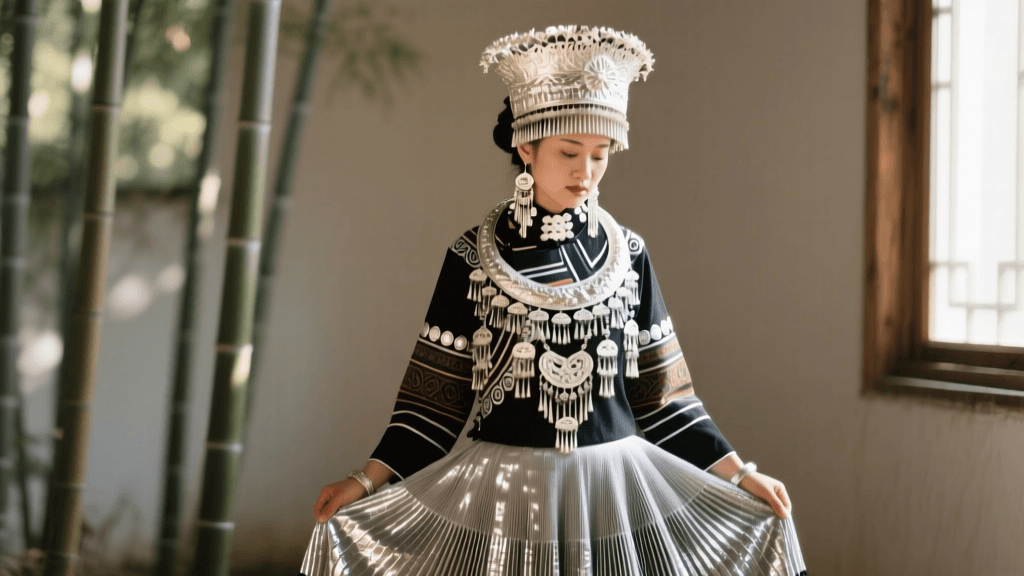
The Miao people, one of China's largest and most culturally diverse ethnic minorities, possess a sartorial heritage that is as complex as it is breathtaking. Concentrated primarily in the mountainous regions of Guizhou, Hunan, and Yunnan provinces, the Miao have historically used clothing not merely as adornment, but as a vital system of communication. Without a traditional written language for much of their history, Miao women encoded their myths, migration routes, and clan identities into the intricate embroidery and structural designs of their garments. Today, the traditional dress of the Miao—characterized by deeply pleated indigo skirts and staggering amounts of hammered silver—remains a pinnacle of Asian textile artistry. For collectors, cultural enthusiasts, and sustainable fashion advocates, understanding the nuances of Miao clothing offers a profound glimpse into the intersection of identity, craftsmanship, and resilience.
The Anatomy of the Baidiequn (Pleated Skirt)
At the heart of many Miao women's ensembles is the baidiequn, or hundred-pleat skirt. This garment is a marvel of textile engineering. Creating a single authentic pleated skirt requires between 10 to 15 meters of hand-woven cotton or hemp. The fabric is first dyed using a fermented indigo process, which can take months of repeated dipping and oxidizing to achieve a deep, lustrous midnight blue. In some villages, the fabric is even polished with egg whites or buffalo hide glue to give it a stiff, water-resistant sheen.
The pleating process itself is a masterclass in precision. Artisans use their fingernails or specialized bamboo tools to fold the damp, dyed fabric into hundreds of micro-pleats—often exceeding 500 pleats per skirt. The skirt is then tightly bound with cotton thread and left to set for weeks. When released, the skirt flares out dramatically, holding its structured accordion shape through the sheer tension of the weave and the natural starches applied during the dyeing phase.
Actionable Sourcing Details for Pleated Skirts
- Measurements: A traditional skirt is usually 60 to 75 cm in length, designed to be worn with elaborate leg wraps (puttee) and embroidered shoes.
- Cost: Authentic, hand-dyed, and hand-pleated skirts range from $300 to $800 USD, depending on the fineness of the weave and the age of the textile.
- Timing: Commissioning a bespoke skirt requires patience. The indigo fermentation and pleat-setting process takes a minimum of 4 to 6 weeks.
The Weight of Tradition: Miao Silver Jewelry (Yinshi)
No Miao festival outfit is complete without its accompanying armor of silver. Miao silver jewelry, or yinshi, is not simply decorative; it is a display of familial wealth, spiritual protection, and social status. A full festival ensemble can include a massive horned headdress, multiple layered necklaces, chest plates, and heavy bracelets, weighing anywhere from 5 to 15 kilograms (11 to 33 lbs) in total.
The silversmithing techniques passed down through Miao patriarchal lines include repoussé, filigree, and granulation. Motifs frequently feature dragons, phoenixes, butterflies (referencing the Miao creation myth of the Butterfly Mother), and native flora. When sourcing Miao silver, it is crucial to distinguish between traditional pure silver and modern tourist-market alloys.
Buyer's Guide to Miao Silver
- Purity: Traditional Miao silver is often 99% pure (999 silver), making it softer and highly malleable for intricate filigree. Modern commercial pieces are usually 925 sterling silver.
- Pricing: Authentic hand-hammered silver is priced by weight plus craftsmanship. Expect to pay $1.50 to $3.00 USD per gram for artisan work. A standard 200-gram necklace will cost between $300 and $600 USD.
- Verification: Pure Miao silver has a distinct duller, matte finish compared to the high-shine polish of commercial sterling. It should also lack the harsh 'ping' sound when tapped, emitting a softer thud instead.
The Language of Embroidery
Beyond the pleats and silver, Miao embroidery is a cornerstone of the garment. Artisans utilize over a dozen distinct stitching techniques, including bianxiu (plaited stitch) and zhouxiu (seed or knot stitch). The seed stitch is incredibly labor-intensive, requiring the embroiderer to wrap the silk thread around the needle multiple times before piercing the fabric, creating a raised, three-dimensional texture that resembles tiny beads. A single jacket sleeve featuring dense seed stitch can take an artisan upwards of three months to complete. These embroidered panels often depict the 'River of the Ancestors,' a motif representing the Miao people's historical flight across the Yellow and Yangtze rivers to escape ancient persecution.
Subgroup Variations: A Comparative Guide
The term 'Miao' is an umbrella classification encompassing dozens of distinct subgroups, each with highly specific sartorial codes. Anthropologists and Encyclopedia Britannica records note that these variations are often named after the most prominent feature of their women's dress or their geographical location. Below is a comparison of four prominent Miao subgroups found in Guizhou.
| Subgroup Name | Skirt Style | Primary Colors | Silver Headdress | Key Region |
|---|---|---|---|---|
| Long Skirt Miao (Changqun Miao) | Floor-length, 80+ cm | Indigo, Black, subtle red embroidery | Wide, flat silver horns | Danzhai, Guizhou |
| Short Skirt Miao (Duanqun Miao) | Micro-mini, 15-20 cm | Vibrant pinks, greens, heavy cross-stitch | Tall, towering silver spikes | Rongjiang, Guizhou |
| Black Miao (Hei Miao) | Calf-length, heavily pleated | Deep black, indigo, minimal bright thread | Silver combs and floral pins | Xijiang / Kaili |
| White Miao (Bai Miao) | A-line, unpleated or box-pleated | White hemp base, geometric batik patterns | Minimal silver, focus on embroidered caps | Anshun, Guizhou |
Sourcing Authentic Garments: Where and When to Go
For serious collectors and cultural researchers, purchasing mass-produced replicas in major cities like Beijing or Shanghai is highly discouraged. To acquire genuine Miao textiles and silver, one must visit the source. The city of Kaili, the capital of the Qiandongnan Miao and Dong Autonomous Prefecture, is the undisputed hub for minority textiles. The Kaili Ethnic Minority Museum and the surrounding Sunday markets offer access to vintage and newly commissioned pieces.
Timing your visit to coincide with local festivals is the best way to see these garments in their intended context. The Sisters' Meal Festival (held in the fourth lunar month, usually April or May) in Taijiang County is a premier event where young women don their most elaborate silver and pleated skirts to court suitors. During this time, local markets are flooded with high-quality silver and antique embroidery panels. Institutions like the Metropolitan Museum of Art have long recognized the value of these regional textiles, often acquiring pieces directly from Guizhou artisans to preserve the craft for future generations.
Caring for Indigo and Silver
Owning a piece of Miao heritage requires specialized care, as the materials are entirely organic and reactive.
Indigo and Hemp Maintenance
- Washing: Never use modern alkaline detergents or warm water, as these will strip the natural indigo and break down the starches holding the pleats. Hand wash in cold water with a pH-neutral soap.
- Drying: Dry flat in the shade. Direct sunlight will bleach the indigo to a pale, uneven grey.
- Pleat Preservation: Store pleated skirts tightly rolled or bound in their traditional cotton ties to prevent the accordion folds from relaxing over time.
Silver Polishing
- Tarnish Removal: Miao silver is meant to have a slightly oxidized, antique patina that highlights the repoussé details. Avoid chemical dips. Use a soft, dry microfiber cloth to gently buff only the raised edges.
- Storage: Wrap individual silver pieces in anti-tarnish tissue paper and store them in a low-humidity environment to prevent aggressive sulfur oxidation.
"To wear the silver and the indigo is to wear the history of our ancestors' migrations. Every stitch is a map, and every silver horn is a tribute to the spirits of the mountains that protected us." — Oral tradition of the Guizhou Miao silversmiths.
The Future of Miao Textile Crafts
As globalization encroaches on rural China, the painstaking crafts of indigo dyeing and micro-pleating face the threat of attrition. However, a new wave of cultural preservation is underway. Global heritage organizations, including those maintaining UNESCO's Intangible Cultural Heritage lists, are increasingly partnering with local cooperatives to ensure fair-trade compensation for Miao artisans. By investing in authentic, ethically sourced Miao garments, collectors do more than acquire a beautiful textile—they become active participants in the survival of one of Asia's most magnificent sartorial traditions.