Murasaki Shikibu’s Fashion Legacy: The Junihitoe Layering Art
The Heian Era's Ultimate Fashion Icon
When discussing the foundational pillars of traditional Japanese clothing, few historical figures cast as long and elegant a shadow as Murasaki Shikibu (c. 973 – c. 1014). Best known as the author of The Tale of Genji, often cited as the world's first novel, Murasaki was also a lady-in-waiting at the Imperial Court in Kyoto during the Heian period (794–1185). Beyond her literary genius, she was an acute observer and arbiter of Heian-period court fashion. In both her fictional masterpieces and her personal writings, The Diary of Lady Murasaki, she meticulously documents the sartorial elegance, textile obsessions, and complex layering systems that defined the aristocracy.
Murasaki's fashion legacy is inextricably linked to the Junihitoe, the legendary twelve-layer robe worn by high-ranking court women. Through her writings, she immortalized the aesthetic of miyabi (courtly elegance) and the subtle, poetic communication achieved through the layering of silk sleeves. According to the Metropolitan Museum of Art's Heilbrunn Timeline, the Heian period was characterized by a profound refinement in the arts, where clothing became a primary medium for expressing seasonal awareness, emotional states, and social hierarchy. Murasaki Shikibu did not just wear these garments; she codified their cultural meaning for centuries to come.
Deconstructing the Junihitoe: The Architecture of Silk
The term Junihitoe translates literally to 'twelve-layer robe,' though the actual number of layers could vary based on the season, the wearer's rank, and the specific court occasion. The ensemble is a marvel of textile engineering, designed not for mobility, but for static, breathtaking beauty. A fully assembled Junihitoe can weigh between 15 to 20 kilograms (33 to 44 lbs), requiring immense physical endurance from the wearer.
To understand the genius of this layering system, one must look at the specific garments that build the silhouette from the skin outward:
- Kosode and Nagabakama: The foundational layer. The kosode is a short-sleeved silk under-robe, while the nagabakama are exceptionally long, flowing silk trousers that trail behind the wearer, often dyed in deep crimson or sea-green.
- Hitoe: An unlined silk robe that serves as the base for the visible color layering. It is slightly larger than the kosode, ensuring its edges peek out at the collar and cuffs.
- Itsutsuginu: The iconic 'five-layered robe.' This consists of five distinct, unlined silk robes worn over the hitoe, each progressively slightly smaller to create a cascading waterfall of color at the sleeves and hem.
- Uchiginu: A stiffened, heavily layered silk lining worn over the itsutsuginu to give the outer garments structure and volume.
- Uwagi: The primary outer robe, usually featuring intricate woven patterns or embroidery, representing the pinnacle of the wearer's wealth and taste.
- Karaginu: A Chinese-inspired, short-waisted jacket with a stiff, sweeping collar, worn near the top of the ensemble.
- Mo: The final piece, an apron-like train attached at the waist and trailing down the back, often dyed with auspicious motifs and adorned with metallic threads.
Kasane no Irome: The Color Code of the Heian Court
Murasaki Shikibu frequently wrote about the intense scrutiny court ladies faced regarding their sleeve colors. The practice of kasane no irome (layered color combinations) was a strict, poetic code. The contrast between the surface color of the outer robe (uwagi) and the lining or underlying layers (hitoe) was meant to evoke specific natural phenomena, seasons, and flora. A mismatched sleeve could result in social disgrace, while a perfectly timed color combination could inspire poetry and romantic pursuits.
Below is a structured guide to the traditional kasane no irome combinations that Murasaki and her contemporaries utilized to signal the changing of the seasons:
| Season | Motif Name | Surface Color (Uwagi) | Lining Color (Hitoe) | Visual Effect & Meaning |
|---|---|---|---|---|
| Spring | Cherry Blossom (Sakura) | White or Pale Pink | Deep Crimson | Mimics the white petals with dark bark/centers; symbolizes fleeting beauty. |
| Summer | Wisteria (Fuji) | Light Blue / Lavender | Deep Purple | Evokes the hanging clusters of wisteria flowers against the dark summer canopy. |
| Autumn | Maple Leaves (Momiji) | Crimson / Orange | Bright Yellow | Represents the turning of maple leaves in the crisp autumn sunlight. |
| Winter | Snow on Pine (Matsu no Yuki) | Stark White | Light Green / Teal | Captures the heavy white snow resting on evergreen pine needles. |
Experiencing the Heian Legacy Today: Rentals and Workshops
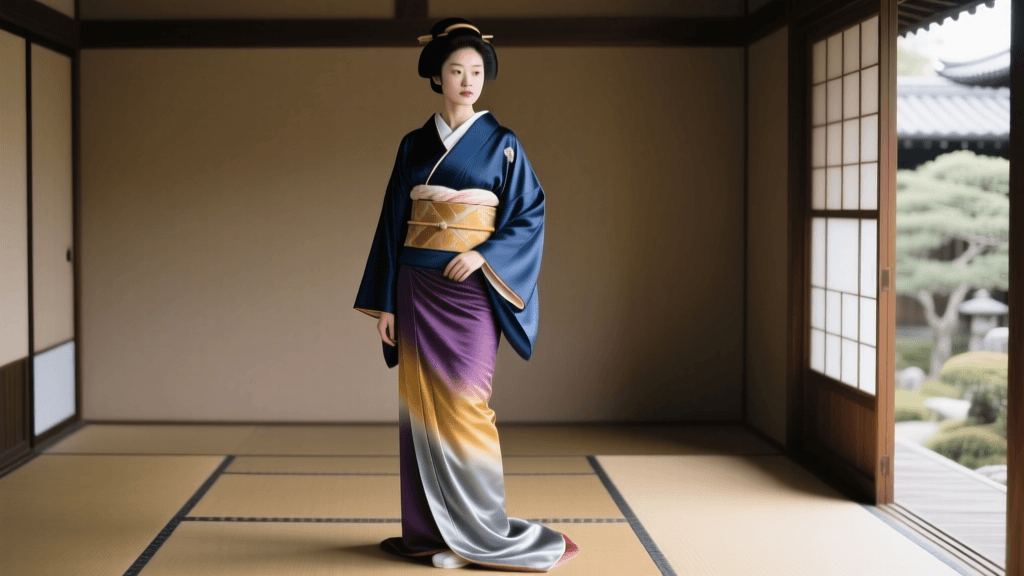
While the Junihitoe is no longer worn in daily life—even by the modern Imperial family, who reserve it strictly for the most formal enthronement ceremonies—Murasaki Shikibu's legacy remains accessible to modern enthusiasts and travelers. For those wishing to physically experience the weight, texture, and grandeur of Heian fashion, specialized rental studios in Kyoto offer immersive photoshoot experiences.
Actionable Advice for Booking a Junihitoe Experience
- Where to Book: Look for specialized historical studios in Kyoto, particularly those near the Kyoto Imperial Palace or Yasaka Shrine. Studios like Yumeyakata or specialized branches of Okamoto Kimono occasionally offer Heian-era packages, though dedicated historical costume museums like the Kyoto Costume Museum (Izuo Senoku Museum) are the best places for guaranteed historical accuracy.
- Costs: A full Junihitoe dressing and photoshoot experience is a premium service due to the rarity of the garments and the expertise required. Expect to pay between ¥25,000 and ¥40,000 ($170 - $270 USD) per person. This typically includes dressing, hair styling in the traditional suberakashi style, and a 30-minute private studio session.
- Timing & Preparation: You must book at least 6 to 8 weeks in advance, as studios only have a limited number of authentic Junihitoe sets and certified kitsuke (dressers). On the day of your appointment, allocate a minimum of 120 minutes just for the dressing process.
- Physical Considerations: Because the garment weighs up to 20kg and restricts the bending of the knees and elbows, eat a light meal beforehand. Wear easy-to-remove slip-on shoes, and be prepared to maintain a rigid, upright posture. The dressing involves tight binding around the chest and waist to create the cylindrical Heian silhouette, which can restrict deep breathing.
Preserving Heian-Inspired Textiles and Modern Care
For collectors, museums, and artisans who maintain these historical garments, the preservation of Heian-style textiles requires rigorous environmental control. As highlighted by the Victoria and Albert Museum's Asian textile archives, historical silks are highly susceptible to light degradation, humidity fluctuations, and protein-eating pests.
If you own modern reproductions of Heian garments or high-end silk kimono inspired by kasane no irome, follow these strict care protocols:
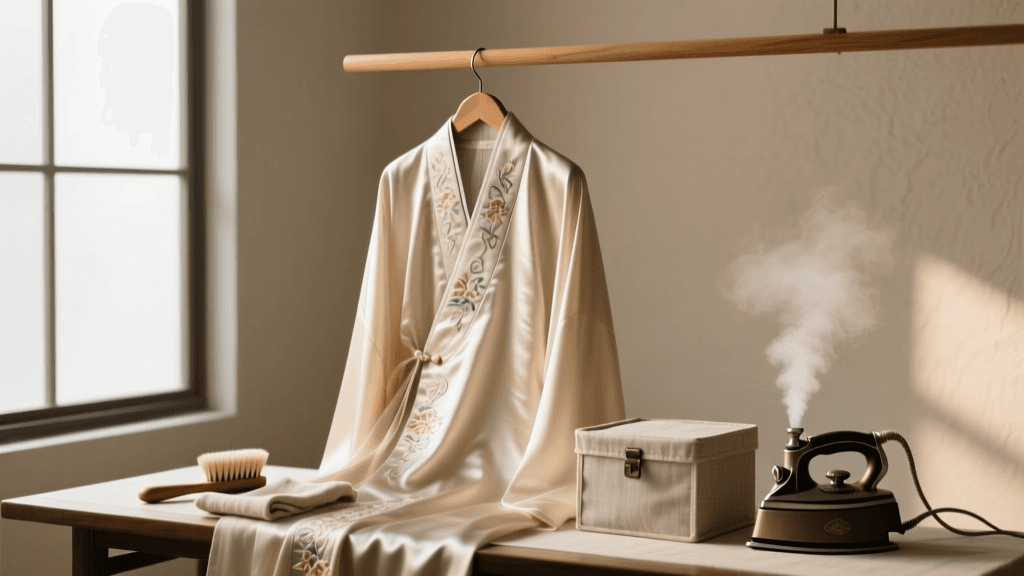
- Storage Vessels: Never store heavy, layered silks in plastic bins, which trap moisture and encourage mold. Use traditional kiribako (paulownia wood boxes). Paulownia naturally expands and contracts with humidity, creating a micro-climate that protects the silk fibers.
- Folding Technique: The heavy uchiginu and uwagi must be folded along their original seam lines to prevent permanent creasing of the metallic threads. Insert acid-free tatoushi (washi paper) between the layers to prevent dye transfer and reduce friction on the delicate weaves.
- Climate Control: Maintain a storage environment at a stable 20°C (68°F) with a relative humidity of exactly 50%. Use desiccants specifically calibrated for textile preservation, replacing them bi-annually.
- Airing (Mushiboshi): Once a year, during the dry, crisp days of late autumn, remove the garments from their boxes and air them in a shaded, well-ventilated room. Direct sunlight will instantly bleach the natural plant dyes used to recreate the Heian color palettes.
Conclusion
Murasaki Shikibu’s legacy extends far beyond the written word. Through her meticulous documentation of court life, she preserved the intricate, poetic, and deeply intentional world of Heian fashion. The Junihitoe is not merely a collection of silk robes; it is a wearable canvas of seasonal poetry, a testament to the artisan weavers of ancient Japan, and a profound expression of cultural identity. Whether studied through the pages of The Tale of Genji, admired in the archives of global museums, or experienced firsthand in a Kyoto studio, the layering art championed by Murasaki continues to drape the modern world in the enduring elegance of the Heian court.