The Ultimate Hanfu Care Guide: Washing, Storing, and Ironing
Introduction to Hanfu Fabric Care
The global hanfu movement has transformed traditional Chinese clothing from a niche historical interest into a vibrant, everyday fashion staple. Whether you are investing in an intricate Ming dynasty mamianqun (horse-face skirt), a flowing Tang dynasty ruqun, or a modern xin zhongshi (New Chinese Style) jacket, proper garment care is essential. Traditional Asian textiles—ranging from delicate mulberry silk and mud-dyed Xiangyunsha to crisp ramie and structured jacquard—require specialized maintenance to preserve their structural integrity, vibrant dyes, and meticulous embroidery.
Improper washing or storage can lead to irreversible damage, such as shattered silk fibers, collapsed pleats, or tarnished metallic threads. This comprehensive guide provides actionable, museum-grade conservation techniques adapted for the modern hanfu enthusiast, ensuring your traditional garments remain pristine for generations.
Decoding Your Hanfu: Fabric Types and Care Codes
Before submerging your garment in water, it is crucial to identify the fabric composition. Modern hanfu manufacturers frequently blend natural and synthetic fibers to balance historical accuracy with modern durability. Below is a structured comparison chart to help you identify the optimal care routine for your specific garments.
| Fabric Type | Common Hanfu Pieces | Washing Method | Ironing Temp | Storage Recommendation |
|---|---|---|---|---|
| Mulberry Silk | Song Beizi, Ming Aoqun | Hand wash (pH-neutral) or Dry Clean | Low (110°C) / Press cloth | Acid-free tissue, padded hanger |
| Xiangyunsha (Gambiered Silk) | High-end Summer Ruqun | Rinse in cold water only | Do not iron; steam lightly | Flat fold, away from light |
| Linen / Ramie | Zhongyi (inner garments) | Machine wash (gentle cycle) | High (200°C) while damp | Folded or wide wooden hanger |
| Polyester / Jacquard | Pleated Mamianqun | Hand wash or delicate machine | Low (110°C) - avoid melting | Hang to preserve pleats |
| Cotton Blends | Everyday Ming Shanqun | Machine wash (cold) | Medium (150°C) | Standard hanger |
Step-by-Step Washing Guide for Delicate Traditional Garments
1. Preparation and Spot Testing
Always perform a colorfastness test before washing. Dampen a cotton swab with cold water and a drop of pH-neutral detergent, then press it against an inconspicuous area (like the inside hem) for 30 seconds. If the dye bleeds, the garment must be dry-cleaned or washed separately in cold water with a color-catching sheet.
2. The Hand-Washing Technique
For delicate silks and heavily embroidered pieces, hand washing is mandatory. Fill a clean basin with cold water (strictly below 30°C / 86°F). Hot water will cause silk fibroin proteins to denature and shrink. Add a capful (approx. 15ml) of a specialized delicate wash like Eucalan Fine Fabric Wash (approx. $13 for 500ml) or The Laundress Delicate Wash. These formulas contain lanolin, which naturally conditions silk and wool fibers.
Submerge the hanfu and gently agitate the water with your hands. Allow the garment to soak for exactly 15 to 20 minutes. Never twist, scrub, or wring the fabric, as wet silk loses up to 20% of its tensile strength and is highly susceptible to tearing.
3. Rinsing and Water Extraction
Drain the soapy water and refill with cold, clean water. Repeat until the water runs clear. To remove excess water without wringing, lay the wet garment flat on a clean, dry, white microfiber towel. Roll the towel and garment together like a sleeping bag, pressing gently to absorb moisture. Unroll and transfer to a drying rack.
Drying and Ironing: Preserving Pleats and Embroidery
Drying Guidelines
Never hang wet silk or heavy jacquard, as the weight of the water will distort the garment's silhouette and stretch the shoulder seams. Lay the garment flat on a mesh drying rack in a shaded, well-ventilated area. Crucial Warning: Never expose silk or Xiangyunsha to direct sunlight. Ultraviolet (UV) radiation rapidly degrades natural protein fibers, leading to yellowing and brittleness.
Ironing the Mamianqun (Horse-Face Skirt)
The mamianqun is famous for its intricate knife and box pleats, which can easily be ruined by improper ironing. To restore pleats:
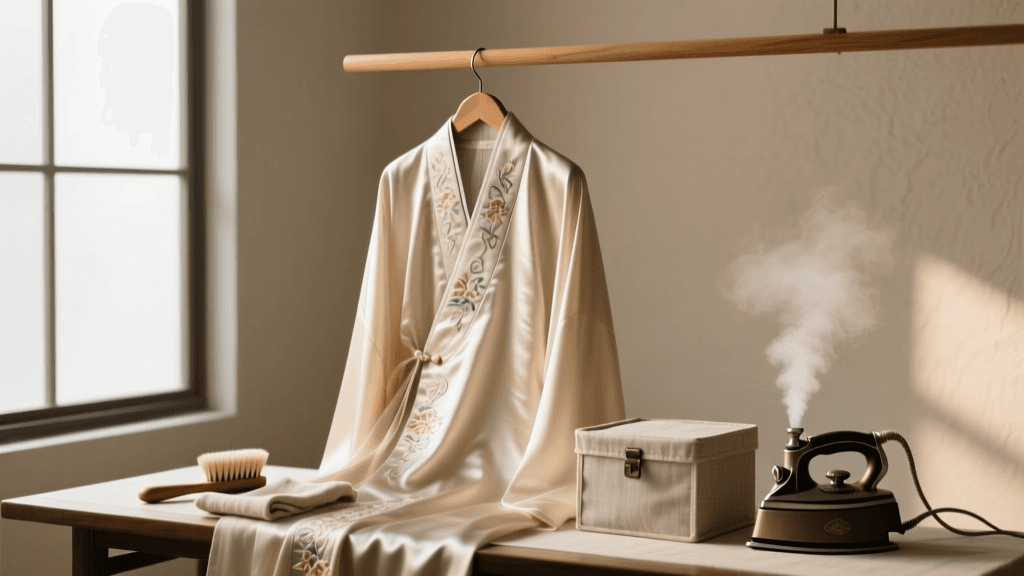
- Hang the skirt on a clip hanger and use a handheld garment steamer (held 5cm away from the fabric) to relax the wrinkles.
- If using a flat iron, set it to the 'Silk' or 'Low' setting (110°C). For synthetic jacquards, high heat will melt the fibers and cause permanent scorch marks.
- Place a 100% cotton press cloth or a Teflon iron shoe (approx. $15) over the pleats. Never let the metal plate of the iron touch the embroidery or metallic threads directly, as this will flatten the dimensional stitching and tarnish the metallic coatings.
- Iron in the direction of the pleats, applying light pressure and steam.
Long-Term Storage Solutions for Seasonal Hanfu
According to the Victoria and Albert Museum's guide on textile conservation, improper storage is the leading cause of deterioration in historical garments. Light, fluctuating humidity, and pests are the primary enemies of your hanfu collection.
Humidity and Climate Control
Maintain a relative humidity (RH) between 45% and 55% in your storage area. High humidity encourages mold growth and causes metallic embroidery threads (often made with silver-gilt) to tarnish or turn black. Low humidity makes silk and linen brittle. Use silica gel desiccant packets or an electronic dehumidifier in your closet to stabilize the environment.
Folding vs. Hanging
The Canadian Conservation Institute's guidelines on caring for textiles recommend folding heavy garments to prevent stress on the shoulders, while lightweight items can be hung.
- Hanging: Use wide, padded wooden or velvet hangers (approx. $20 for a set of 6). Wire hangers will create permanent creases and cause shoulder tearing. Cover the garment with a breathable, unbleached cotton garment bag. Never use plastic dry-cleaning bags, which trap moisture and emit acidic gases that yellow silk.
- Folding: For heavy winter aoqun (padded jackets) or heavily embroidered skirts, fold the garment using acid-free, unbuffered tissue paper (approx. $25 for a pack of 48 sheets from archival suppliers like Archival Methods) to cushion the folds. This prevents sharp creases that can eventually lead to fiber breakage along the fold lines.
Pest Prevention
Moths and carpet beetles are highly attracted to natural protein fibers like silk and wool. Avoid traditional mothballs, which contain toxic chemicals like naphthalene or paradichlorobenzene that can leave a permanent, noxious odor and stain fabrics. Instead, use aromatic cedar blocks or dried lavender sachets. Sand the cedar blocks lightly every six months to refresh their natural pest-repelling oils.
Stain Removal and Emergency Care
Accidents happen, especially during festive occasions like the Mid-Autumn Festival or Lunar New Year when wearing hanfu is customary. If you spill food, tea, or cosmetics on your garment, act immediately.
- Water-Based Stains (Tea, Soy Sauce): Blot—do not rub—with a clean, dry, white cloth. Apply a few drops of cold water and blot again. If the stain persists, use a specialized enzyme cleaner designed for delicate fabrics, testing it on a hidden seam first.
- Oil-Based Stains (Makeup, Hair Oil): Sprinkle cornstarch or talcum powder over the stain to absorb the oil. Let it sit for 30 minutes, then gently brush it off with a soft-bristled makeup brush.
- Sweat Stains: Perspiration is highly acidic and will degrade silk over time, causing yellowing. If you sweat in your hanfu, hang it in a well-ventilated area immediately. For persistent odors, lightly mist the inner lining with a mixture of distilled water and a few drops of vodka (which kills odor-causing bacteria without leaving a scent), then allow it to air dry.
Conclusion
Caring for hanfu and traditional Chinese clothing is an act of cultural preservation. By understanding the unique properties of Asian textiles—from the mud-dyed resilience of Xiangyunsha to the delicate luxury of mulberry silk—you can protect your investments and keep these beautiful garments vibrant. As noted by the Smithsonian Institution's recommendations for costume preservation, preventive care and gentle handling are always superior to aggressive restoration. Treat your hanfu with the respect its history demands, and it will continue to tell its story for decades to come.