Heian to Edo Kimono: Historical Fashion and Modern Wearing Guide
The Evolution of the Japanese Silhouette: From Heian to Edo
The history of traditional Japanese clothing is not a static timeline but a dynamic evolution shaped by court politics, shifting economic power, and strict sumptuary laws. For collectors, historians, and modern enthusiasts of Asian traditions, understanding the transition from the Heian period (794–1185) to the Edo period (1603–1867) is crucial. This shift represents the transformation of Japanese dress from the extravagant, multi-layered court robes of the aristocracy to the streamlined, highly decorated kosode of the urban merchant class. Today, sourcing and wearing garments inspired by these distinct historical periods requires a deep understanding of their construction, cultural context, and the practicalities of the modern antique market.
Heian Period (794–1185): The Art of the Jūnihitoe
The Heian period is synonymous with the zenith of Japanese court culture, isolated from mainland Asian influences and focused on hyper-refined aesthetics. The defining garment of this era for aristocratic women was the jūnihitoe, often translated as the 'twelve-layer robe.' In reality, the number of layers varied, but the visual impact relied heavily on kasane no irome—the meticulous layering of colors to reflect the changing seasons, poetic allusions, and the wearer's rank.
Each layer, or uchigi, was cut to a specific width and length, with the sleeves and hems meticulously arranged so that the underlying colors peeked through the outer layers. The outermost robe, the uchigi or mo, was often adorned with subtle woven patterns, while the inner layers provided the vibrant color contrast. According to the Victoria and Albert Museum, the Heian aesthetic prioritized the unseen and the partially revealed, making the collar and sleeve edges the primary canvas for displaying one's taste and social standing.
Practical Advice: Sourcing Heian-Inspired Garments Today
Authentic Heian garments are museum pieces, but modern reproductions of uchigi are highly sought after for formal Shinto weddings and historical reenactments. When commissioning or purchasing a modern Heian-style layered set, expect to pay between $1,500 and $5,000. Focus on the silk quality; authentic reproductions use nerinuki silk, which has a crisp, slightly stiff texture essential for holding the rigid, geometric silhouette of the Heian court. Avoid soft, drapey modern silks, as they will collapse under the weight of the layers and ruin the historical silhouette.
Edo Period (1603–1867): The Kosode and the Merchant Class
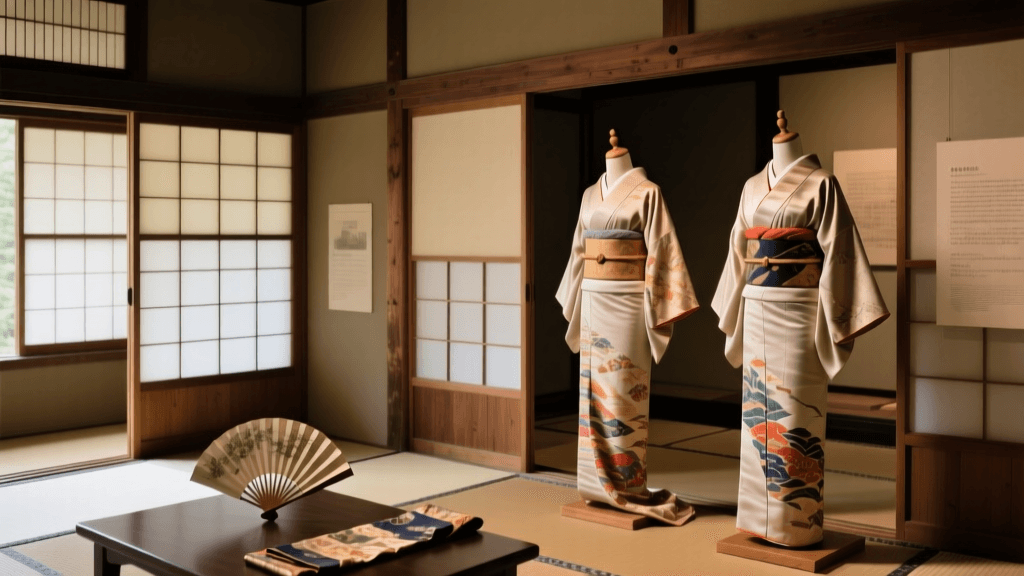
If the Heian period was about layers, the Edo period was about the surface. The kosode (literally 'small sleeve'), which was once considered an undergarment during the Heian and Kamakura periods, emerged as the primary outer garment for both men and women. As noted by the Metropolitan Museum of Art's Heilbrunn Timeline, the kosode evolved into the modern kimono, providing a broad, flat canvas that became the focal point of Japanese textile arts.
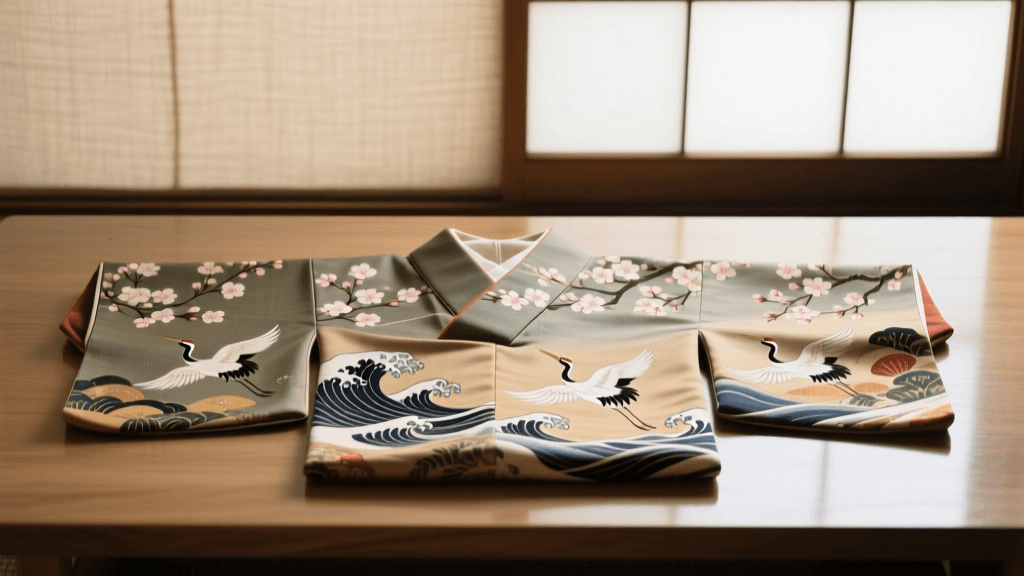
During the Edo period, the Tokugawa shogunate enforced a rigid social hierarchy. The samurai class held political power, but the merchant class (chōnin) accumulated vast wealth. Barred by strict sumptuary laws from wearing ostentatious fabrics or overt displays of wealth, merchants developed the aesthetic of iki—subdued, understated elegance with hidden luxuries. This led to the invention of yuzen dyeing, a resist-dyeing technique that allowed for intricate, painterly designs on silk, and the placement of lavish linings inside otherwise plain garments.
Historical Comparison: Heian Court vs. Edo Townspeople
Understanding the structural and cultural differences between these two eras is essential for collectors and wearers. The following table outlines the primary distinctions in historical fashion and their modern market equivalents.
| Feature | Heian Period (Court Aristocracy) | Edo Period (Urban Merchant Class) |
|---|---|---|
| Primary Garment | Jūnihitoe (Multi-layered robes) | Kosode (Single outer robe with wide obi) |
| Sleeve Style | Open, unseamed underarms, extremely wide | Attached to the body, varying depths (furisode/tomesode) |
| Decoration Focus | Layered color combinations (Kasane no irome) | Surface dyeing, embroidery, and hidden linings |
| Silhouette | Heavy, triangular, floor-dragging | Streamlined, cylindrical, ankle-grazing |
| Modern Sourcing Cost | $1,500 - $5,000+ (Custom reproduction) | $150 - $2,500 (Authentic antiques available) |
Practical Guide: Sourcing and Measuring Antique Edo and Meiji Kimono
While Heian garments must be reproduced, the Edo and subsequent Meiji periods left behind a massive wealth of antique kosode that are actively traded today. Sourcing these historical garments requires knowledge of traditional measurements, market timing, and structural integrity.
Decoding Traditional Measurements
Antique kimono are not sized by modern S/M/L metrics. They are measured flat, and because they are constructed from straight bolts of fabric (tanmono), they can be taken apart and re-tailored. When evaluating an antique kosode, focus on three critical measurements:
- Mihaba (Body Width): Measure from the center back seam to the edge of the front panel. For a proper historical fit with an ohashori (the waist fold), the total circumference should be your hip measurement plus at least 10 to 15 centimeters.
- Nagata (Back Length): Measured from the base of the collar down the center back. The ideal length is your total height minus 10 centimeters. This allows for the waist fold. Garments from the early Edo period were often shorter, meant to be worn without an ohashori, trailing slightly or worn hitched up with an obi.
- Sodehaba (Sleeve Width): The width of the sleeve. Wider sleeves indicate higher formality and a more historical, dramatic silhouette.
Timing and Locations for Sourcing
The most cost-effective and authentic way to source Edo and Meiji period textiles is through Japanese flea markets and specialized antique dealers. The legendary To-ji Temple Flea Market (Kobo-san) in Kyoto is a premier destination. According to Japan National Tourism Organization, this market operates on the 21st of every month. To secure high-quality historical silk before it is picked over by wholesale vintage dealers, you must arrive between 5:00 AM and 6:00 AM. Bring a UV flashlight to check for modern synthetic thread repairs, which severely devalue a historical piece.
Cost Expectations and Buyer's Checklist
When purchasing an antique kosode, prices vary wildly based on condition, technique, and provenance. A standard Meiji-era everyday kimono might cost $50 to $150. However, an Edo-period kosode featuring surihaku (gold leaf application) or intricate shibori (tie-dye) can easily command $1,500 to $3,000.
The Antique Buyer's Checklist:
- Check the Seams: Authentic historical garments are sewn entirely by hand. Look for slight irregularities in the stitching. Machine stitching indicates a mid-20th-century alteration or reproduction.
- Inspect the Linings: Edo merchants hid their wealth in the linings. Carefully pull back the collar and check the inner silk. Red linings (momi) are traditional for women, while patterned linings indicate a high-status merchant garment.
- Smell and Feel: Antique silk should smell faintly of incense, camphor, or old paper. A sharp chemical smell indicates modern dry-cleaning, which can strip historical dyes and degrade the silk fibers.
Wearing Historical Garments Today
Wearing an Edo-period kosode or a Heian-inspired ensemble requires specific undergarments to achieve the correct historical silhouette. For the Edo kosode, the modern padded kimono bra and cylindrical waist pads are anachronistic. Historically, the body was wrapped to create a flat, tubular shape. Use a traditional hadajuban (undershirt) and a susoyoke (half-slip), binding the chest and hips with a datejime tie to flatten the curves. This not only honors the historical aesthetic but also prevents the antique silk from stretching across the bust and hips, which can cause irreversible damage to fragile, centuries-old fibers.
For the obi, avoid modern, stiff maru obi tied in bulky, modern bows like the taiko musubi, which was not popularized until the late Meiji and Taisho periods. Instead, opt for a softer, narrower fukuro obi or an antique chūya obi, tied in a simple bunko (box) or karako knot, which accurately reflects the Edo merchant aesthetic. By respecting the historical context, measurements, and wearing techniques of these garments, collectors and enthusiasts do more than just wear clothing; they actively preserve the living history of Asian textile traditions.