Shichi-Go-San & Seijin No Hi: Japanese Milestone Kimono Guide
Introduction to Japanese Sartorial Milestones
In Japanese culture, clothing is far more than a functional necessity; it is a profound visual language that communicates age, social status, and the celebration of life’s most critical transitions. The journey from childhood to adulthood in Japan is marked by specific sartorial milestones, most notably the Shichi-Go-San (Seven-Five-Three) festival for children and Seijin no Hi (Coming-of-Age Day) for young adults. According to The Metropolitan Museum of Art's Heilbrunn Timeline of Art History, the kimono evolved into a highly codified garment where sleeve length, motif placement, and layering systems explicitly communicate the wearer's stage in life and their family's social standing.
This comprehensive guide explores the traditions, garments, and practical considerations surrounding these milestone celebrations, offering actionable advice for parents, young adults, and cultural enthusiasts looking to understand or participate in these deeply rooted customs.
Shichi-Go-San: The Seven-Five-Three Festival
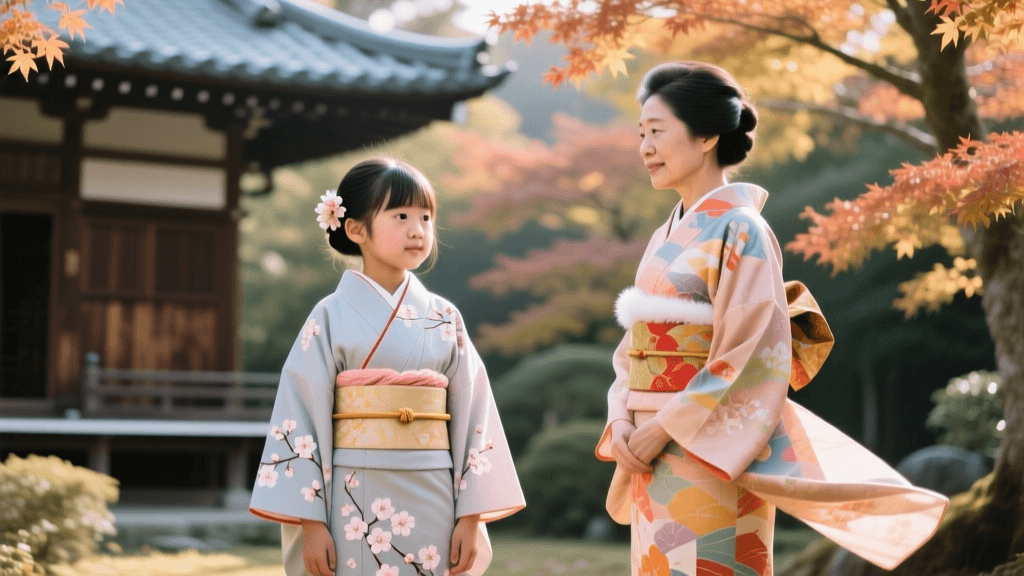
Celebrated annually on November 15th, Shichi-Go-San is a traditional rite of passage for three- and seven-year-old girls and five-year-old boys. Historically, these ages were considered critical thresholds in a child's survival during eras of high infant mortality. Today, families visit Shinto shrines to pray for the health, longevity, and prosperity of their children, dressed in exquisite, age-specific traditional garments.
Age Three: Kamioki (Hair-Placement Ceremony)
At age three, both boys and girls traditionally celebrate Kamioki, which historically marked the time when children were allowed to grow their hair after being shaved as infants. For modern three-year-old girls, the focal point of the outfit is the hifu, a softly padded, sleeveless silk vest worn over a brightly colored kimono. The hifu eliminates the need for a tightly bound obi (sash), ensuring the toddler remains comfortable while maintaining a festive, elegant silhouette. Girls' kimono at this age often feature motifs of rabbits, flowers, or traditional toys, symbolizing innocence and playfulness.
Age Five: Hakamagi (Hakama-Wearing Ceremony)
For five-year-old boys, the milestone is Hakamagi, marking the first time the child wears a hakama (pleated trousers). The ensemble consists of a formal kimono, a stiff silk hakama adorned with the family crest (mon), and a haori (half-coat). The boy typically carries a traditional folding fan (sensu) and wears zori sandals with white tabi socks. The motifs on a boy's haori often include eagles, pines, or samurai helmets, representing strength, resilience, and noble character.
Age Seven: Obitoki (Obi-Tying Ceremony)
At age seven, girls celebrate Obitoki, signifying the transition from wearing simple cord ties to a fully structured, woven obi, much like adult women. The seven-year-old's kimono is a scaled-down version of adult formal wear, featuring long, swinging sleeves (furisode style) and vibrant Yuzen-dyed patterns. The tying of the obi is a complex process, often resulting in a decorative knot (musubi) such as the chocho (butterfly) or fukura suzume (plump sparrow), which requires the assistance of a professional dresser.
Seijin no Hi: The Coming-of-Age Ceremony
Held on the second Monday of January, Seijin no Hi celebrates those who have reached the age of maturity. While Japan's legal age of adulthood was lowered to 18 in 2022, the vast majority of municipalities and cultural institutions continue to hold the sartorial celebrations and ceremonies at age 20, preserving the traditional association with the full furisode kimono.
The Furisode: A Canvas of Youth and Availability
The furisode is the most formal kimono for unmarried young women, instantly recognizable by its dramatically long, swinging sleeves. As highlighted by the Victoria and Albert Museum's extensive Asian textile archives, the sweeping canvases of the furisode allow for continuous, elaborate patterns that cross the back seam, showcasing the highest levels of artisan dyeing and embroidery. There are three sleeve lengths:
- Ofurisode (Large): Sleeves measuring approximately 114 cm. This is the most formal and common choice for Coming-of-Age Day.
- Chufurisode (Medium): Sleeves measuring around 100 cm. Often used for weddings or slightly less formal milestone events.
- Kofurisode (Small): Sleeves measuring about 85 cm. Rarely seen today, mostly reserved for specific historical reenactments or stage performances.
For young men, the traditional coming-of-age attire is a formal black montsuki haori hakama (crested jacket and trousers), though modern interpretations sometimes include Western suits or highly stylized, brightly colored modern kimono ensembles popularized by contemporary fashion subcultures.
Garment Specifications and Cost Breakdown
Navigating the financial aspects of milestone kimono can be daunting. Below is a structured comparison of the expected costs, differentiating between the increasingly popular rental market and traditional purchases.
| Age / Milestone | Ceremony | Primary Garment | Key Accessories | Avg. Rental Cost (JPY) | Avg. Purchase Cost (JPY) |
|---|---|---|---|---|---|
| 3 Years Old | Shichi-Go-San | Kimono with Hifu (vest) | Zori sandals, hair ornaments | ¥10,000 - ¥15,000 | ¥50,000 - ¥80,000 |
| 5 Years Old | Shichi-Go-San | Kimono with Hakama | Haori jacket, fan, hakama | ¥15,000 - ¥20,000 | ¥80,000 - ¥150,000 |
| 7 Years Old | Shichi-Go-San | Full Kimono | Maru obi, obi-age, obi-jime | ¥20,000 - ¥30,000 | ¥150,000 - ¥300,000 |
| 20 Years Old | Seijin no Hi | Furisode | Zori, bag, fur shawl | ¥50,000 - ¥100,000 | ¥400,000 - ¥1,000,000+ |
Practical Guide: Timelines, Fittings, and Etiquette
Successfully executing a milestone kimono appearance requires meticulous planning. The physical act of dressing (kitsuke) and the logistics of securing the garments operate on strict timelines.
1. Booking Timelines
For Seijin no Hi, popular furisode designs from top rental boutiques are often reserved 12 to 18 months in advance. Young adults should begin browsing catalogs and booking salon appointments in the spring of the year prior to their ceremony. For Shichi-Go-San, booking 4 to 6 months in advance (around May or June) is usually sufficient to secure a preferred photographer and shrine time slot.
2. Undergarments and Measurements
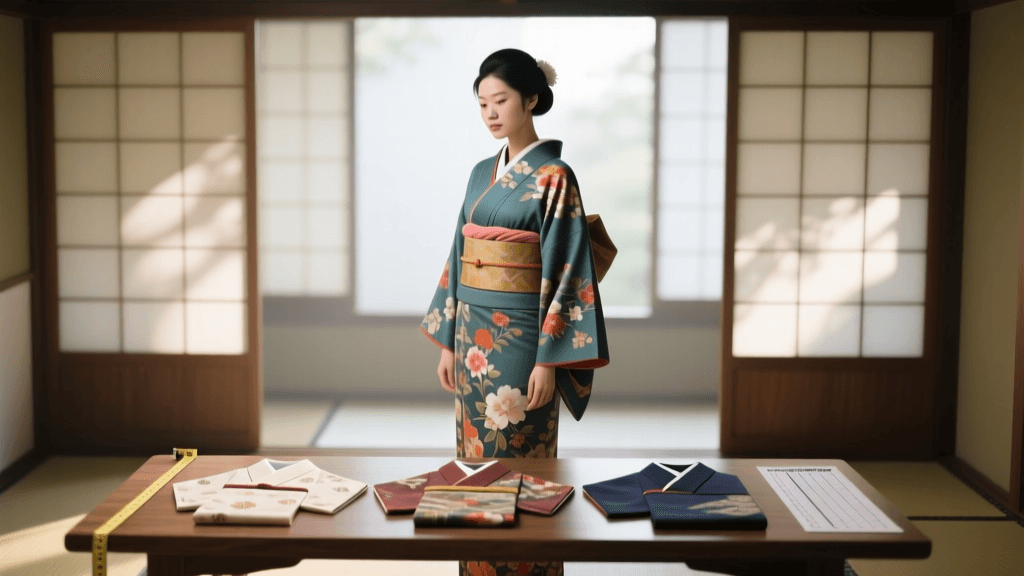
The kimono is a straight-line garment that requires the body to be shaped into a cylinder. This is achieved through specialized undergarments. For women and older girls, this includes the hadajuban (undershirt), susoyoke (half-slip), and various padding (wata) to smooth the waist and hips. When visiting a rental shop, precise measurements of height, arm span (yuki), and hip width are taken to ensure the kimono's hem falls exactly at the ankle and the sleeves cover the wrist bone when the arms are relaxed.
3. The Role of the Kitsuke (Dresser)
Unless a family member is a certified kimono dresser, hiring a professional kitsuke is mandatory for seven-year-olds and young adults. A professional ensures the obi is tied securely enough to support the heavy silk without restricting breathing, and that the collar is pulled back precisely to expose the nape of the neck—a hallmark of traditional Japanese elegance. Expect the dressing process to take between 45 and 90 minutes.
The Rise of the Rental Market and Modern Adaptations
Historically, families would purchase exquisite silk kimono to be passed down through generations as heirlooms. However, the modern realities of urban living, climate control, and the high cost of silk maintenance (which requires specialized dry cleaning known as arai-hari) have shifted the industry. According to cultural overviews provided by the Japan National Tourism Organization, the rental industry has exploded, offering all-inclusive packages that cover the garment, dressing, hair styling, and photography.
This shift has democratized access to high-end textiles. Young adults can now wear vintage, hand-painted Meiji-era furisode or cutting-edge contemporary designs without the burden of long-term storage and pest management. Furthermore, modern rental boutiques increasingly offer "retro" or "Taisho Roman" styles, appealing to a younger generation that views traditional dress through a lens of vintage fashion and individual expression rather than strict conformity.
Conclusion
The traditions of Shichi-Go-San and Seijin no Hi represent the beautiful intersection of familial love, cultural preservation, and textile artistry. Whether it is a three-year-old girl taking her first steps in a padded hifu, or a twenty-year-old woman stepping into adulthood enveloped in the sweeping silk sleeves of a furisode, these garments serve as wearable milestones. By understanding the specifications, costs, and etiquette of these traditions, participants can fully appreciate the weight and beauty of the silk they wear, honoring centuries of Asian sartorial heritage.