Buying Formal Kimono: Furisode, Tomesode & Houmongi
The Language of Formal Japanese Silk
The kimono is far more than a beautiful garment; it is a complex visual language that communicates the wearer's age, marital status, the formality of the occasion, and even the current season. For international collectors, cultural enthusiasts, and those attending formal Japanese events, navigating the hierarchy of formal kimono can be daunting. According to the Metropolitan Museum of Art, the kimono evolved from the simple kosode of the Heian period into a highly structured system of dress by the Edo period, a system that still dictates formal wear today.
Whether you are investing in a vintage silk piece from a Kyoto recycle shop or commissioning a new garment from a traditional department store, understanding the distinctions between the top three tiers of formal womenswear—Furisode, Tomesode, and Houmongi—is essential. This comprehensive buying guide will break down the rules, measurements, and market prices for these exquisite garments.
Furisode: The Unmarried Woman's Showstopper
The Furisode (swinging sleeve) is the most formal kimono reserved exclusively for unmarried women. It is instantly recognizable by its dramatically long sleeves, which historically were used to ward off evil spirits and express deep emotion. Today, it is the standard attire for Seijin no Hi (Coming of Age Day), university graduations, and formal wedding attendance as a guest.
Furisode are categorized by sleeve length:
- Ofurisode (Large): Sleeves measure over 114 cm. Often worn by brides or for highly theatrical stage performances.
- Chufurisode (Medium): Sleeves measure between 100 cm and 114 cm. This is the most common and versatile length for Coming of Age ceremonies.
- Kofurisode (Small): Sleeves measure between 85 cm and 100 cm. Frequently chosen for graduation ceremonies as they are slightly easier to move in.
The patterns on a Furisode are vibrant, youthful, and cover the entire garment. When buying, look for high-quality Yuzen dyeing and intricate gold leaf (kinpaku) or embroidery. Because they are worn only a few times in a woman's life, the vintage market is flooded with Furisode in pristine condition, making them an excellent entry point for collectors.
Tomesode: The Pinnacle of Married Elegance
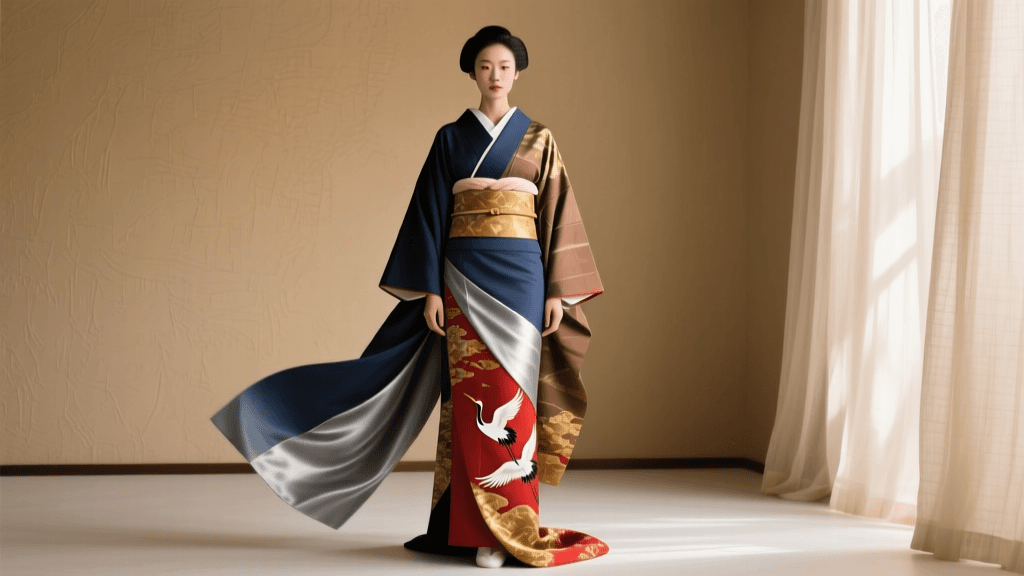
The Tomesode (fastened sleeve) is the most formal kimono for married women. The sleeves are significantly shorter than the Furisode, symbolizing the transition into married life. The defining feature of the Tomesode is its pattern placement: the design is restricted entirely to the lower half of the skirt, below the obi, and the pattern flows continuously across the seams (a technique known as eba-moyo).
There are two distinct types of Tomesode:
- Kurotomesode (Black Tomesode): Made of black silk with five family crests (kamon) placed on the back, chest, and sleeves. It is the absolute highest level of formality, traditionally worn by the mothers of the bride and groom at weddings.
- Irotomesode (Colored Tomesode): Made of colored silk (ranging from pastels to deep jewel tones) and featuring one, three, or five crests. It is worn by married female relatives at weddings or highly formal imperial events.
When purchasing a Tomesode, verify the number of crests. A five-crest Kurotomesode is incredibly formal and may feel out of place at a standard tea ceremony, whereas a one-crest Irotomesode offers more versatility. The Victoria and Albert Museum notes that the formalization of these crested garments solidified during the Tokugawa shogunate, embedding strict sumptuary laws into the fabric of Japanese society.
Houmongi: The Versatile Formal Choice
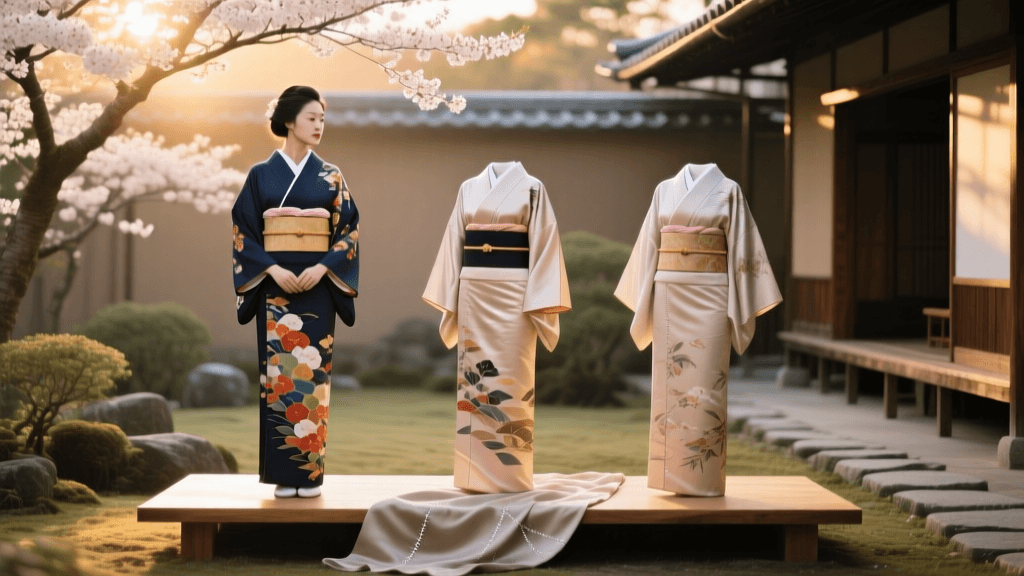
The Houmongi (visiting wear) is the ultimate versatile formal kimono. Unlike the Tomesode, which is restricted by marital status, the Houmongi can be worn by both married and unmarried women. It is appropriate for a wide array of upscale events, including tea ceremonies, formal dinners, gallery openings, and wedding receptions.
The hallmark of the Houmongi is its eba-moyo pattern, which is dyed or embroidered to flow seamlessly across the seams of the skirt, shoulders, and sleeves, creating a single, continuous panoramic picture when the kimono is laid flat. The patterns are generally more subdued and elegant than the explosive designs of a Furisode, often featuring seasonal motifs like autumn grasses, flowing water, or subtle geometric lattices. For international buyers, the Houmongi is the most practical formal investment, as it bridges the gap between ultra-strict traditional rules and modern formalwear needs.
Comparison Chart: Formal Kimono at a Glance
| Kimono Type | Wearer Status | Sleeve Length | Crests (Kamon) | Primary Occasions | Est. Vintage Price (USD) |
|---|---|---|---|---|---|
| Furisode | Unmarried Women | 85 cm - 114+ cm | 0 to 3 | Coming of Age, Graduations | $150 - $800 |
| Kurotomesode | Married Women | ~50 cm | 5 | Weddings (Mothers) | $200 - $1,000 |
| Irotomesode | Married Women | ~50 cm | 1, 3, or 5 | Weddings, Formal Receptions | $150 - $900 |
| Houmongi | Married / Unmarried | ~50 cm - 75 cm | 0, 1, or 3 | Tea Ceremonies, Parties | $100 - $600 |
Sizing and Measurements: Getting the Right Fit
Unlike Western clothing, kimono are not sized by bust, waist, and hip in the traditional sense. They are constructed from bolts of fabric (tanmono) of standard widths, meaning the fit is adjusted during the dressing process (kitsuke) through folding and tying. However, when buying online or from vintage dealers, you must pay attention to two critical measurements:
- Kitake (Total Length): The traditional rule for calculating your required kimono length is: (Your Height x 0.6) + 10 cm. For example, a person who is 160 cm tall needs a kitake of roughly 106 cm. If the kimono is too short, it will ride up; if too long, it will bunch heavily at the hips.
- Ba (Shoulder Span / Hem Width): This is the measurement from the center back seam, across the sleeve, to the wrist. More importantly for modern buyers, it dictates the maximum hip circumference the kimono can wrap around comfortably. A standard vintage kimono has a ba of about 62-64 cm, accommodating hips up to roughly 100 cm. If you have a wider hip measurement, you must specifically search for 'wide-width' or modern custom-tailored kimono.
Pricing Guide: New vs. Vintage vs. Rental
The cost of a formal kimono varies wildly depending on how and where you acquire it. As highlighted by the Japan National Tourism Organization, engaging with traditional culture often involves navigating specialized retail environments.
Buying New: Purchasing a brand new, custom-tailored silk Houmongi or Furisode from a high-end department store like Mitsukoshi or Takashimaya in Tokyo or Kyoto is a luxury investment. Prices typically start at $3,000 USD and can easily exceed $15,000 USD for hand-painted Kaga Yuzen or Nishijin-ori brocade. This route includes professional fitting and the addition of your personal family crests.
Buying Vintage (Recycle Shops): Japan has a massive second-hand kimono market. Stores like Chicago in Harajuku or Tansu-ya in Kyoto offer incredible value. You can find pristine, mid-century silk Furisode and Houmongi for between $80 and $400 USD. The caveat is that vintage pieces may have slight discolorations, hidden stains, or a musty smell that requires professional dry cleaning (arai-hari), which can cost an additional $100 to $200.
Online Proxy Buying: For international buyers, utilizing proxy services like Buyee or ZenMarket to bid on Yahoo! Auctions Japan or Mercari Japan opens up a treasure trove of affordable formal wear. You can often win lots of formal kimono for under $50 USD, though shipping and proxy fees will add to the final cost.
Essential Accessories for a Complete Look
Buying the kimono is only half the battle. A formal kimono cannot be worn without its accompanying accessories, which also adhere to strict rules of formality:
- Obi: For Furisode and Tomesode, a Maru obi or Fukuro obi (heavily brocaded, formal sash) is mandatory. Houmongi can be paired with a slightly less formal Fukuro obi or a high-end Nagoya obi.
- Obiage & Obijime: The silk scarf (obiage) and braided cord (obijime) that secure the obi. For formal wear, these should feature gold or silver threads and subtle, elegant patterns.
- Tabi & Zori: White split-toe socks (tabi) are non-negotiable for formal events. They must be paired with formal Zori sandals, typically featuring brocade or vinyl covers, with thick, padded soles.
- Nagajuban: The under-kimono. For formal silk kimono, a silk nagajuban with a detachable collar (han-eri) is required to protect the outer garment from sweat and oils.
Final Thoughts on Building Your Collection
Investing in formal Japanese silk is an act of cultural preservation. When building your collection, start with a versatile, lightly patterned Houmongi in a neutral or seasonal color like deep plum or sage green. This will allow you to attend formal tea ceremonies and dinners without violating traditional dress codes. As your knowledge of kitsuke (dressing) and textile appreciation grows, you can expand into the dramatic, sweeping sleeves of a vintage Furisode or the austere, majestic beauty of a five-crest Kurotomesode. Always inspect the silk for structural integrity, store your garments flat in acid-free paper, and embrace the profound history woven into every thread.