Kimono Evolution: Heian to Edo Dynasty Fashion Guide
The Living Thread: Tracing Japanese Dynasty Fashion
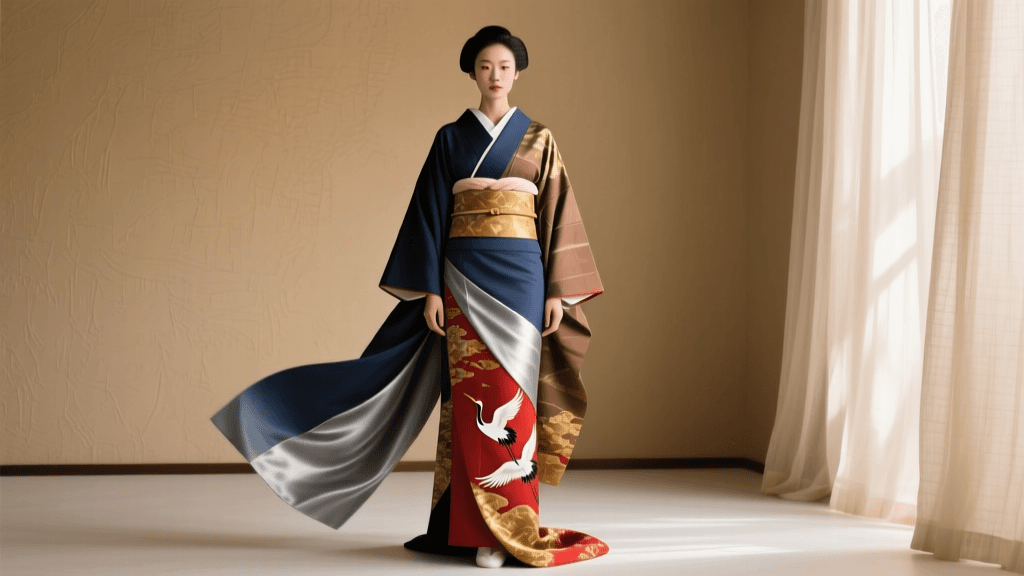
The Japanese kimono is often mistakenly viewed by the Western world as a static, unchanging garment. In reality, the evolution of Japanese dress is a dynamic tapestry woven through centuries of shifting political landscapes, strict social hierarchies, and profound artistic revolutions. From the lavish, multi-layered court robes of the Heian period to the subdued, hidden luxuries of the Edo merchant class, Japanese historical fashion offers a masterclass in textile artistry and cultural expression.
For collectors, historians, and modern wearers, understanding the lineage of the kimono is essential. It transforms the act of wearing or collecting vintage garments from a simple aesthetic choice into a profound engagement with Japanese history. In this comprehensive guide, we explore the defining historical periods of Japanese dynasty fashion and provide actionable advice for sourcing, measuring, and preserving these historical textiles today.
The Heian Period (794–1185): Layered Elegance and the Junihitoe
The Heian period represents the zenith of Japanese courtly refinement. During this era, the aristocracy developed a highly sophisticated aesthetic centered on seasonal awareness, poetry, and color. The defining garment of the female court was the junihitoe, or 'twelve-layer robe.' While the actual number of layers varied, the visual impact relied on the meticulous arrangement of silk sleeves and hems to reveal specific color combinations known as kasane no irome.
These color pairings were strictly codified by season and occasion. For example, a combination of pale green over deep crimson might evoke the plum blossoms of early spring. According to the Victoria and Albert Museum's extensive archives on Japanese dress, the Heian period also solidified the straight-line cutting method. Unlike Western tailoring, which cuts fabric to follow the curves of the body, Japanese garments were constructed from straight bolts of fabric, minimizing waste and allowing the textile's surface design to take precedence.
Modern Application: Achieving the Heian Silhouette
While a true junihitoe weighs upwards of 20 kilograms and is reserved for imperial ceremonies, modern wearers can evoke the Heian aesthetic through strategic layering. By wearing a nagajuban (under-robe) with a contrasting, brightly colored han-eri (half-collar) and allowing the hem of a secondary, lighter robe to peek out beneath the main kimono, you can recreate the kasane layering effect without the physical burden of historical court dress.
The Muromachi and Momoyama Periods (1336–1600): The Rise of the Kosode
As the power of the imperial court waned and the samurai class rose to prominence, Japanese fashion underwent a radical simplification. The elaborate layers of the Heian period were shed in favor of the kosode—a garment with small sleeve openings that was previously worn as an undergarment or by commoners. During the Muromachi and Momoyama periods, the kosode emerged as the primary outer garment for both men and women.
This era was heavily influenced by the performative arts, particularly Noh theater. Noh costumes, with their bold, woven geometric patterns and heavy brocades, began to influence the street fashion of the samurai elite. The Momoyama period, though brief, was characterized by a love for opulent, gold-leafed textiles and daring asymmetrical designs, reflecting the flamboyant personalities of warlords like Oda Nobunaga and Toyotomi Hideyoshi.
The Edo Period (1603–1867): The Golden Age of the Kimono
The Edo period, governed by the Tokugawa shogunate, brought over 250 years of relative peace and economic prosperity. This stability allowed urban merchant classes (the chonin) to amass wealth, leading to an explosion in textile arts. It was during this time that the kosode fully evolved into what we now recognize as the modern kimono.
The invention of Yuzen dyeing in the late 17th century revolutionized fashion. Attributed to Miyazaki Yuzensai, this resist-dyeing technique allowed artisans to paint intricate, pictorial designs directly onto silk, much like a canvas. However, the shogunate frequently enacted sumptuary laws to prevent the wealthy merchant class from flaunting their riches above the samurai class.
'True elegance is found in the unseen.' This philosophy birthed the aesthetic of iki—subdued, understated elegance. Merchants would wear kimonos with muted, austere exteriors but line them with the most exquisite, vibrant, and expensive Yuzen-dyed silks, visible only when the garment moved or was removed.
For a deep dive into the visual culture of this era, the Metropolitan Museum of Art's exhibition on Kimono Style highlights how Edo-period fashion plates and woodblock prints served as the era's fashion magazines, dictating trends across the archipelago.
The Meiji Period (1868–1912): Modernization and Western Influence
The Meiji Restoration opened Japan's borders, leading to a rapid influx of Western culture, technology, and fashion. The government actively encouraged men to adopt Western suits and military uniforms. However, women's fashion adapted more gradually, resulting in fascinating hybrid styles.
The introduction of synthetic aniline dyes from Europe brought striking, colorfast shades like deep purples and vivid crimsons to the Japanese market. Furthermore, the hakama—traditionally worn by samurai men—was adapted into formal and academic wear for women. Female students and teachers began wearing striped silk hakama over their kimonos, paired with Western-style lace-up boots and bowler hats, creating a distinct 'Meiji schoolgirl' silhouette that remains popular in modern graduation ceremonies.
Collector’s Guide: Sourcing and Wearing Historical Kimono
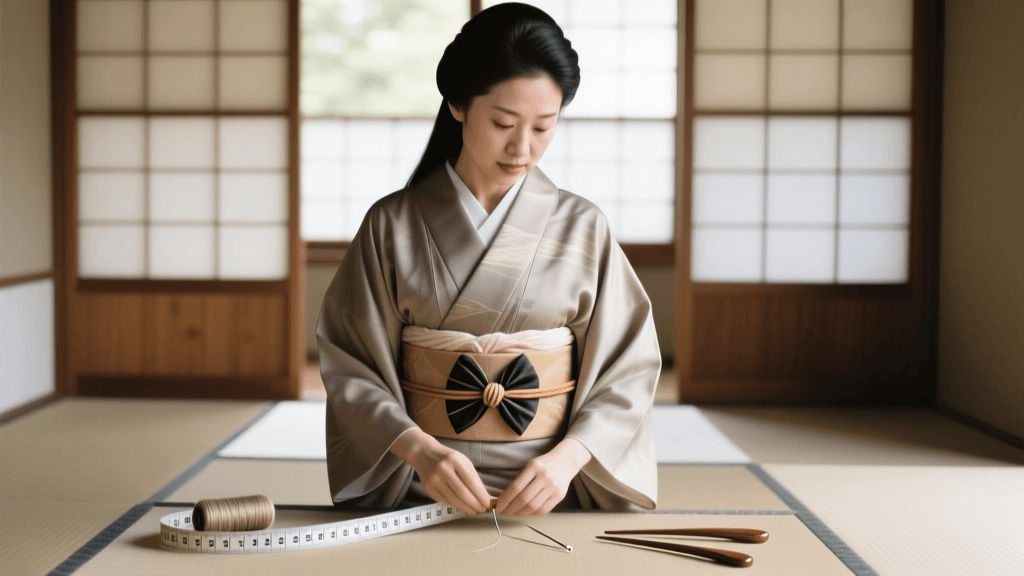
Acquiring a genuine historical kimono is a rewarding endeavor, but it requires specific knowledge regarding measurements, condition, and market timing. Vintage Japanese garments were tailored to a population with a significantly smaller average frame than modern global consumers.
Crucial Measurements for Vintage Buyers
- Yuki (Arm Span): Measured from the center back of the neck, over the shoulder, to the wrist. Vintage Edo and Meiji kimono typically have a yuki of 60-64 cm (23.5-25 inches). Modern Western women often require 68-72 cm. If the yuki is too short, the sleeves will sit awkwardly above the wrist.
- Mitsuhaba (Panel Width): The width of the body panels. Antique kimono are often narrower (around 32 cm per panel) compared to modern standard widths (36 cm+), which can make wrapping the garment securely around a larger waist challenging.
- Sode (Sleeve Drop): The vertical length of the sleeve. Furisode (long sleeves) from the Taisho and early Showa periods can measure over 100 cm, making them highly prized for formal modern wear.
Market Timing and Pricing
The best time to source high-quality antique kimono is during the late autumn and early winter, when Japanese estate liquidations peak. While specialized online auction houses are convenient, physical markets like the Toji Temple Antique Market in Kyoto (held on the 21st of every month) offer the best opportunities to inspect silk integrity in person.
- Edo Period (Antique): $800 to $5,000+. Often fragile, museum-quality pieces. Expect weak silk and metallic thread tarnishing.
- Meiji/Taisho Period (Vintage): $150 to $600. The sweet spot for collectors. Silk is generally stronger, and Yuzen designs are highly artistic.
- Early Showa (Pre-WWII): $50 to $250. Excellent for regular wear, featuring bold, modernist Art Deco influences (Taisho Roman style).
Preservation: The Art of Arai-Hari
Never attempt to wash an antique silk kimono at home. Water can cause irreversible dye bleeding and silk shrinkage. Instead, utilize the traditional Japanese service of arai-hari. This involves completely unspooling the kimono into its original flat panels, washing the silk gently, stretching it on bamboo frames to dry, and re-sewing it by hand. In Japan, this service costs between 25,000 and 40,000 JPY ($170 to $270 USD) and can add decades to the life of a historical garment. The Kyoto National Museum frequently references these traditional conservation techniques in their textile preservation workshops.
Comparative Guide to Historical Japanese Garments
| Historical Era | Defining Garment / Style | Key Textile Technique | Modern Collector Value |
|---|---|---|---|
| Heian (794–1185) | Junihitoe (Layered Robes) | Kasane no Irome (Color Layering) | Museum / Archival Only |
| Muromachi (1336–1573) | Kosode (Small Sleeve) | Surihaku (Gold Leaf Imprint) | $2,000 - $10,000+ |
| Edo (1603–1867) | Kosode / Early Kimono | Yuzen Resist Dyeing | $800 - $5,000 |
| Meiji (1868–1912) | Hakama & Aniline Silks | Synthetic Dyeing / Kasuri | $150 - $600 |
| Taisho (1912–1926) | Modern Kimono / Oshima | Art Deco Yuzen / Pongee | $200 - $800 |
Conclusion
The kimono is far more than a beautiful piece of clothing; it is a wearable archive of Japanese history. From the poetic color combinations of the Heian court to the rebellious, hidden luxuries of the Edo merchants, each stitch and dye line tells a story of its time. By understanding the historical context and mastering the practicalities of vintage sizing and preservation, modern collectors and wearers can keep these magnificent dynasty fashions alive, bridging the gap between ancient artistry and contemporary wardrobes.