Ming Dynasty Hanfu Ensembles & Jade Hair Accessories Guide
The Resurgence of the Complete Ming Hanfu Ensemble
The traditional clothing of the Ming Dynasty (1368–1644) represents a pinnacle of Chinese textile artistry, structural elegance, and cultural symbolism. In recent years, the Hanfu movement has transitioned from a niche subculture to a mainstream cultural phenomenon. According to BBC's coverage of the Hanfu cultural revival, millions of young people are now embracing these historical garments not merely as costumes, but as a living expression of heritage. Among the various historical periods, the Ming Dynasty 'Aoqun' (jacket and skirt) ensemble remains the most coveted for its modesty, structural versatility, and breathtaking accessory pairings, particularly the use of jade hair ornaments.
Anatomy of the Ming Aoqun (Jacket and Skirt)
A complete Ming ensemble is anchored by the Aoqun system. Unlike the flowing, wide-sleeved robes of the Tang or Song dynasties, Ming garments are characterized by structured tailoring, high collars, and intricate pleating.
The Ao (Upper Jacket)
The Ming Ao typically features a standing collar (Piling) or a round collar, fastened with metal or fabric toggle buttons (Zikou). The sleeves are often cut in the 'Pipa' shape—narrow at the wrist and wide at the elbow—allowing for ease of movement while maintaining a dignified silhouette. When commissioning or purchasing an Ao, look for heavy silk satins or woven Song brocades. For winter ensembles, the Ao is lined with cotton or faux fur, and features a white fabric guard (Huling) at the collar to protect the delicate silk from skin oils and cosmetics.
The Mamianqun (Horse-Face Skirt)
The Mamianqun is the undisputed centerpiece of the Ming wardrobe. It consists of two overlapping trapezoidal panels with flat, unpleated sections at the front and back (Guangmian), flanked by deeply pleated sides (Zhe). For premium summer ensembles, enthusiasts often seek out Xiangyunsha (gambiered Cantonese silk), a heritage textile dyed with Shuliang yam juice and mud from the Pearl River Delta, offering a crisp, rustling texture that pairs beautifully with the weight of jade ornaments.
- Measurements: The skirt should sit at the natural waist. For the length, measure from your navel to the floor and subtract 5 to 10 centimeters to prevent the hem from dragging.
- Pleat Depth: Authentic Ming pleats are typically 3 to 5 centimeters deep. Shallower pleats will cause the skirt to flare improperly when walking.
- Waistband: The waistband is traditionally made of white or contrasting cotton/linen, measuring exactly your natural waist circumference plus 2 centimeters for ease, with long ties for securing.
The Crown Jewels: Jade Hair Accessories (Shoushi)
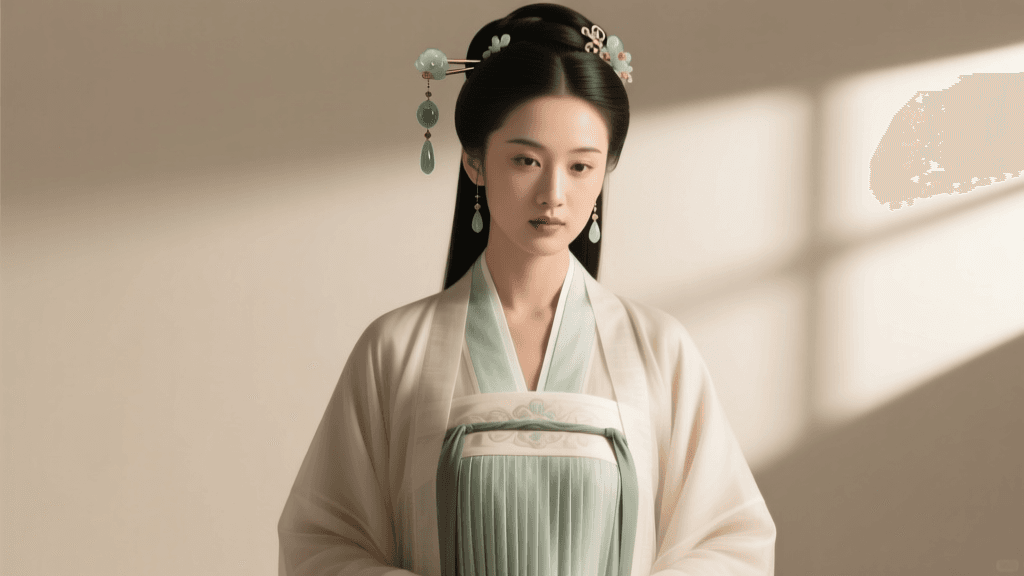
No Ming Hanfu ensemble is complete without an elaborate hairstyle adorned with jade and gold. In traditional Chinese culture, jade is revered above all other gemstones, symbolizing moral integrity, purity, and protection.
Confucius once noted that the virtues of a gentleman are like jade: it is warm, lustrous, and unyielding. Jade embodies this tranquility and virtue, making it the ultimate stone for scholars and nobility alike.
As detailed by the Gemological Institute of America (GIA), understanding the mineralogical differences between nephrite and jadeite is crucial for collectors and enthusiasts seeking authentic historical reproductions. During the Ming Dynasty, Hetian nephrite was the standard for royal and aristocratic hair ornaments, prized for its mutton-fat white translucency and warm, moist luster.
Essential Hair Accessories
- Zan (Single-Prong Pin): Used to secure the primary bun. The head of the Zan is often carved from a single piece of jade into shapes like lotus flowers, magpies, or ruyi clouds.
- Chai (Double-Prong Pin): Provides structural support for heavier hairpieces. Jade-topped Chai often feature gold filigree bases that cradle the stone securely.
- Buyao (Step-Shake): The most dynamic of all accessories. These hairpins feature dangling jade drops or pearl strands that tremble with the wearer's movements. Ming Buyao were strictly regulated by sumptuary laws, with dragon and phoenix motifs reserved for royalty.
- Shu (Decorative Comb): A wide-toothed comb placed horizontally at the front of the hair, often featuring a crescent-shaped jade inlay along the spine.
Comparing Jade Types for Hair Ornaments
When sourcing jade hair accessories for your Hanfu ensemble, you will encounter various materials on the market. Here is a comparative guide to help you make an informed purchase based on historical accuracy, durability, and budget.
| Jade Type | Mineral | Hardness (Mohs) | Historical Accuracy (Ming) | Avg. Cost (Hairpin) |
|---|---|---|---|---|
| Hetian Nephrite | Nephrite | 6.0 - 6.5 | Highest (Aristocratic standard) | $150 - $800+ |
| Xiuyan Jade | Serpentine | 4.5 - 5.5 | Moderate (Commoner/Everyday) | $30 - $90 |
| Burmese Jadeite | Jadeite | 6.5 - 7.0 | Low (Popularized in Qing era) | $100 - $1000+ |
| Dongling / Quartz | Quartz | 7.0 | None (Modern substitute) | $10 - $25 |
Budgeting Your Complete Ensemble
Building a museum-quality Ming Hanfu wardrobe requires strategic budgeting. Below is a cost breakdown for a complete, high-quality ensemble, including garments and jade accessories.
| Component | Budget Tier (USD) | Premium Tier (USD) | Material / Notes |
|---|---|---|---|
| Ao (Jacket) | $60 - $120 | $250 - $500 | Poly-blend brocade vs. 100% Mulberry silk |
| Mamianqun (Skirt) | $50 - $100 | $180 - $400 | Woven patterns vs. hand-embroidered Xiangyunsha |
| Jade Zan & Chai Set | $40 - $80 | $300 - $1,200 | Xiuyan jade/brass vs. Hetian nephrite/gold |
| Buyao (Step-Shake) | $25 - $50 | $150 - $600 | Resin pearls vs. Freshwater pearls & real jade |
| Hairpiece & Base | $15 - $30 | $40 - $80 | Synthetic hair vs. human hair blend |
Step-by-Step Styling: Dressing and Hair Placement
Assembling a Ming Hanfu ensemble is a deliberate, meditative process that typically takes 30 to 45 minutes. Rushing the process can lead to tangled Buyao and misaligned pleats.
Garment Layering
- Base Layers: Begin with a white cotton inner garment (Zhongyi) to absorb sweat and protect the outer silk from body oils.
- The Skirt: Wrap the Mamianqun around your waist, ensuring the flat front panel is perfectly centered with your navel. Cross the ties behind your back and secure them at the front with a firm, flat knot.
- The Jacket: Slip on the Ao, fastening the Zikou buttons from the bottom up. Adjust the collar so the white Huling sits exactly one centimeter above the outer collar, framing the neck elegantly.
Hair and Jade Placement
- Prep the Hair: Gather all natural hair into a high, tight bun at the crown of the head. Secure with a modern elastic and U-pins to create a solid anchor.
- Attach the Base: Place a braided hairpiece (Dianzi) around the base of the bun to add volume and create a ledge for heavy combs.
- Insert the Shu (Comb): Slide the jade-inlaid comb horizontally into the front of the hair, angling it slightly upward to catch the light.
- Anchor with Zan and Chai: Pierce the single-prong Zan horizontally through the center of the bun for structural integrity. Flank it with two double-prong Chai on the left and right sides.
- Balance the Buyao: Insert the step-shake pins at a 45-degree angle on the lower sides of the bun. Ensure the dangling jade drops hang freely without tangling in the collar of your Ao.
Caring for Silk and Jade
Preserving your investment requires specific, mindful care. Silk garments should never be machine-washed; instead, hand-wash the Mamianqun in cold water with a pH-neutral silk detergent, and hang it to dry in the shade to prevent UV fading. The pleats of a Mamianqun can be maintained by hanging the skirt on a clip-hanger and lightly steaming the side pleats to reset the folds.
Jade, while durable, is porous and sensitive to harsh chemicals. Remove all jade hair accessories before showering or applying aerosol hairspray. To maintain the luster of Hetian nephrite, gently wipe the stones with a soft, lint-free microfiber cloth after each wear. The natural oils from your hands will slowly polish the jade, enhancing its patina over time—a deeply traditional process cherished by collectors as 'pan yu' (nurturing the jade).
Conclusion
Curating a complete Ming Dynasty Hanfu ensemble with authentic jade hair accessories is more than an exercise in fashion; it is a profound engagement with Asian material culture. By understanding the precise tailoring of the Aoqun, the mineralogy of traditional jade, and the meticulous art of hair placement, you transform historical artifacts into a living, breathing tradition. Whether you are attending a Hanfu convention, participating in a traditional tea ceremony, or simply honoring your heritage, the harmonious blend of structured silk and luminous jade ensures you carry the elegance of the Ming court into the modern world.