Nishijin vs Yuzen: A Guide to Kimono Fabric Craftsmanship
The Foundation of Japanese Elegance: Understanding Kimono Textiles
The traditional Japanese kimono is a masterclass in structural simplicity and textile complexity. Unlike Western tailoring, which relies on complex pattern cutting to fit the body's curves, the kimono is constructed from a single bolt of fabric known as a tanmono. A standard tanmono measures approximately 36 to 40 centimeters (14 to 15.7 inches) in width and 12 meters (13 yards) in length. This standardized dimension dictates the iconic T-shaped silhouette of the garment, placing the entirety of the garment's aesthetic and cultural weight on the fabric itself.
When exploring high-end traditional Japanese clothing, two distinct pillars of craftsmanship dominate the market: weaving and dyeing. Specifically, the woven mastery of Nishijin-ori and the resist-dyeing artistry of Kyo-Yuzen represent the zenith of kimono fabric production. According to The Metropolitan Museum of Art, the evolution of these techniques during the Edo period transformed the kimono from a simple garment into a canvas for profound artistic expression, reflecting the wearer's social status, season, and aesthetic sensibility.
Nishijin-ori: The Pinnacle of Woven Silk Craftsmanship
Originating in the Nishijin district of Kyoto, Nishijin-ori is a collective term for various advanced weaving techniques. Unlike dyed fabrics where patterns are applied to the surface of a finished cloth, Nishijin textiles are yarn-dyed. This means the silk threads are meticulously dyed before they are loaded onto the loom, allowing the pattern to be structurally integrated into the very fabric of the textile.
Key Weaving Techniques and Materials
- Tsuzure-ori (Tapestry Weave): A highly labor-intensive technique where the weft threads completely conceal the warp threads, creating intricate, painterly patterns with a textured, ribbed surface.
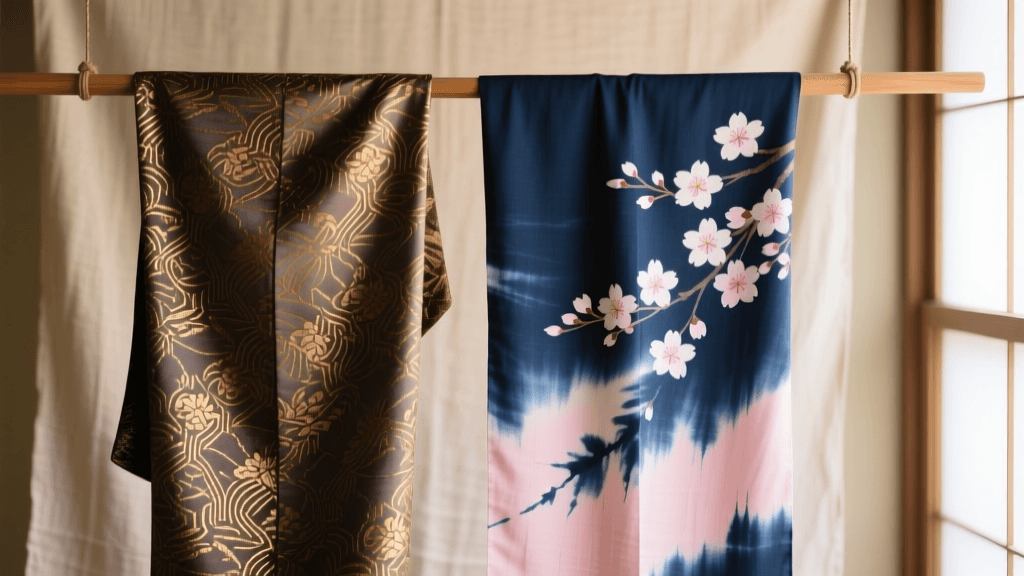
- Kinran and Ginran: Luxurious brocades woven with real gold and silver leaf threads, often wrapped around a core of silk or paper. These are predominantly used for high-end obi (sashes) and formal furisode kimono.
- Rinzu (Satin Damask): A glossy, soft silk weave featuring subtle, tone-on-tone woven patterns that catch the light beautifully, often used as the base fabric for formal garments.
Actionable Guide: Identifying and Buying Nishijin
When authenticating a Nishijin brocade obi, examine the reverse side of the fabric. A true hand-woven tsuzure-ori will display a tapestry-like structure with visible interlocking weft threads, rather than a smooth, printed surface. If you are purchasing vintage Nishijin textiles, expect to pay between $150 and $800 for a high-quality fukuro obi, while brand-new, custom-woven pieces from master artisans can easily exceed $3,000.
Kyo-Yuzen: The Art of Resist Dyeing
While Nishijin focuses on structural weaving, Kyo-Yuzen is the art of surface design. Developed in the late 17th century by Miyazaki Yuzensai, this technique revolutionized Japanese fashion by allowing for free-form, highly detailed, and multi-colored pictorial designs that were previously impossible under the strict sumptuary laws of the Edo period. The Victoria and Albert Museum highlights Yuzen dyeing as a critical innovation that allowed commoners to express exquisite taste and wealth through hidden linings and intricate surface motifs.
The Itome Yuzen Process
The hallmark of Kyo-Yuzen is Itome Yuzen, a resist-dyeing method. Artisans apply a water-resistant rice paste (itome-nori) along the outlines of a design. When the fabric is subsequently dyed, the paste prevents the colors from bleeding into one another, resulting in crisp, delicate lines akin to a fine watercolor painting. After dyeing, the paste is washed away in the flowing waters of Kyoto's rivers, a process historically known as yuzen-nagashi.
Actionable Guide: Selecting and Caring for Yuzen
Yuzen designs are most commonly applied to Chirimen (silk crepe). Chirimen is woven with highly twisted weft threads, giving the fabric a distinctive pebbled texture that absorbs dye brilliantly and resists wrinkling. When shopping for a Yuzen kimono, test the drape; high-quality chirimen should feel heavy, fluid, and slightly textured to the touch. Custom, hand-painted Yuzen kimono are significant investments, typically starting at $5,000 and reaching upwards of $20,000 for pieces featuring extensive gold leaf (kinkoma) embroidery.
Comparative Guide: Woven vs. Dyed Kimono Fabrics
Choosing between Nishijin and Yuzen depends on the formality of the occasion, the desired aesthetic, and the structural requirements of the garment. Below is a structured comparison to aid in your selection process.
| Feature | Nishijin-ori (Woven) | Kyo-Yuzen (Dyed) |
|---|---|---|
| Primary Technique | Yarn-dyeing and complex loom weaving | Rice-paste resist dyeing on finished cloth |
| Base Fabric | Rinzu (damask), Tsumugi (pongee), Sha (gauze) | Chirimen (crepe), Habutae (plain weave silk) |
| Drape and Feel | Stiff, structured, heavy, and crisp | Fluid, soft, heavy, and pliable |
| Visual Aesthetic | Geometric patterns, rich metallic brocades, textured | Pictorial, painterly, flowing nature motifs |
| Best Garment Use | Obi sashes, formal Haori jackets, Furisode | Kurotomesode, Homongi, Edo Komon kimono |
| Average Cost (New) | $1,500 - $5,000+ (for Obi and Kimono sets) | $5,000 - $20,000+ (for full Kimono) |
Seasonal Timing and Fabric Weight Selection
In traditional Japanese dress, wearing the correct fabric weight for the season is just as important as the motif itself. The craftsmanship of the fabric must align with the lunar calendar and seasonal shifts.
Awase (Lined Kimono)
Worn from October through May, awase kimono feature an inner lining of smooth habutae silk. For winter, Nishijin-woven rinzu or heavier Yuzen-dyed chirimen are preferred for their warmth and substantial drape.
Hitoe (Unlined Kimono)
Reserved for the transitional months of June and September, hitoe garments are unlined. Artisans often use medium-weight chirimen or tightly woven tsumugi (slubbed silk) to provide breathability while maintaining a structured silhouette.
Usumono (Sheer Summer Fabrics)
During the peak humidity of July and August, sheer fabrics are mandatory. Nishijin weavers produce ro (gauze with leno weave) and sha (sheer plain weave) specifically for summer. These fabrics require immense technical skill, as the loom must twist warp threads to create open, breathable gaps in the silk without compromising the fabric's structural integrity.
Practical Guide: Sourcing, Costs, and Maintenance
Investing in traditional kimono fabrics requires an understanding of proper maintenance to preserve the silk's integrity and the artisan's work.
The Importance of Maruarai Washing
Never take a high-quality Nishijin or Yuzen silk garment to a standard Western dry cleaner. The harsh chemical solvents used in conventional dry cleaning strip the mika (natural silk gum) from the threads, leaving the fabric brittle, dull, and prone to tearing. Instead, seek out a specialist who performs maruarai, a traditional Japanese washing technique. The garment is carefully unsewn into its original tanmono panels, hand-washed with natural mild soaps, stretched on wooden frames to dry, and then re-sewn. Expect to pay between $80 and $150 for this meticulous service, and plan to have it done only every 3 to 5 years unless heavily soiled.
Storage and Humidity Control
Silk is a protein fiber that is highly susceptible to mold and yellowing. Store your kimono in breathable tatoushi (traditional Japanese paper wrappers) rather than plastic bags. Include silica gel packets to control moisture, and air the garments out in a shaded, well-ventilated room during the dry autumn months to prevent permanent creasing and fiber degradation.
Conclusion
Whether you are drawn to the structural, metallic brilliance of a Nishijin-woven brocade or the fluid, painterly grace of a Kyo-Yuzen dyed crepe, understanding the craftsmanship behind these textiles profoundly enhances the experience of wearing and collecting traditional Japanese garments. By respecting the tanmono dimensions, adhering to seasonal fabric weights, and utilizing specialized maruarai maintenance, collectors and wearers alike can ensure these masterpieces of Asian textile heritage endure for generations to come.