Chinese Haute Couture: Runway Trends And Textile Sourcing
The Global Rise of Chinese Haute Couture
For decades, the international runway viewed Chinese fashion through a lens of superficial Orientalism. However, the paradigm shifted dramatically with landmark exhibitions and the rise of homegrown couturiers who treat traditional Chinese garments not as costumes, but as the foundation of high fashion. The Metropolitan Museum of Art's landmark exhibition, China: Through the Looking Glass, explored how Chinese aesthetics have influenced Western fashion for centuries, while simultaneously paving the way for authentic Chinese voices to reclaim their narrative on the global stage.
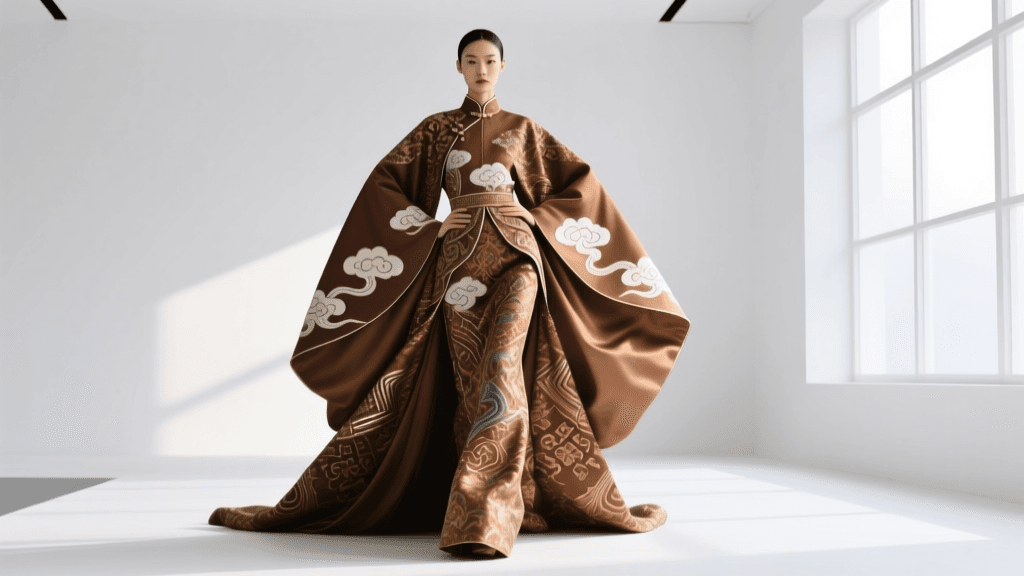
Today, designers like Guo Pei and Iris van Herpen (in collaboration with Chinese artisans) are utilizing centuries-old techniques such as Kesi (cut silk) and Suzhou embroidery to create structural, avant-garde silhouettes. For independent designers, bespoke tailors, and couture enthusiasts, integrating these heritage textiles into modern runway collections requires a deep understanding of material properties, sourcing logistics, and specialized construction techniques.
Key Traditional Textiles in Modern Couture
Translating heritage into haute couture begins with selecting the right textile. Traditional Chinese fabrics are renowned for their complex weaving structures and natural dyeing processes, which offer a depth of color and texture impossible to replicate with mass-produced synthetics. According to the Metropolitan Museum of Art's Heilbrunn Timeline of Art History, Chinese silk craftsmanship has continuously evolved for over five millennia, resulting in highly specialized regional weaves that are now prized by international couture houses.
Textile Comparison Chart for Runway Applications
| Textile Name | Origin & Technique | Approx. Cost (USD/m) | Drape & Structure | Best Runway Application |
|---|---|---|---|---|
| Song Brocade (Song Jin) | Suzhou; complex jacquard weave with metallic threads | $120 - $250 | Medium weight, structured, slight sheen | Tailored jackets, corsetry, structured skirts |
| Xiangyunsha (Gambiered Gauze) | Guangdong; silk dyed with yam juice and river mud | $180 - $350 | Crisp, paper-like rustle, fluid but holds volume | Avant-garde draping, voluminous capes, wide-leg trousers |
| Kesi (Cut Silk Tapestry) | National; woven with discontinuous wefts creating carved look | $800 - $3,000+ | Stiff, heavy, highly textured, zero stretch | Statement bodices, overlay panels, couture accessories |
Sourcing Authentic Couture Materials
Acquiring genuine, couture-grade Chinese textiles requires navigating specialized supply chains. The sericulture and silk craftsmanship of China are recognized globally, with specific regional techniques protected as vital cultural assets, as noted by UNESCO's Intangible Cultural Heritage registry. When sourcing for a runway collection or a bespoke wardrobe, you must plan for significant lead times and minimum order quantities (MOQs).
Actionable Sourcing Guide
- Xiangyunsha Sourcing: Authentic Gambiered Canton Gauze is only produced in specific regions of Guangdong (like Shunde) between April and October due to the reliance on intense sunlight and specific river mud. Lead Time: 6 to 8 months. MOQ: Usually 50 meters for custom dye lots. Cost: Expect to pay $250 per meter for premium 30-momme weight.
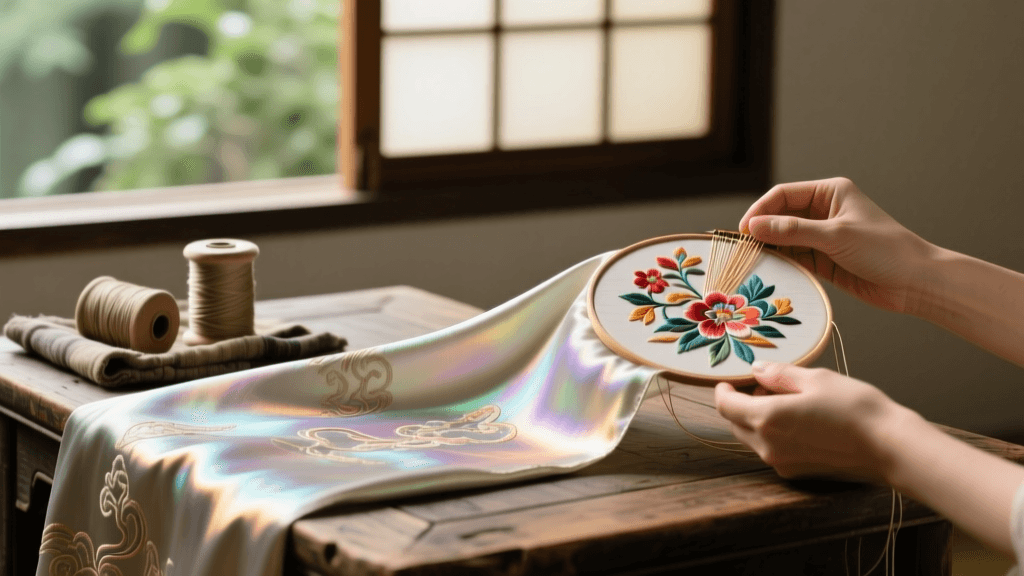
- Suzhou Embroidery (Su Xiu): For custom runway pieces requiring hand-embroidered motifs (e.g., cranes, peonies, or abstract contemporary interpretations), you must contract artisan studios in Suzhou. Timing: A single 12x12 inch panel of double-sided couture embroidery takes 400 to 600 hours. Plan for a 9-month lead time before your runway show.
- Song Brocade: Available through specialized heritage textile dealers in Hangzhou and Suzhou. Look for 'heavyweight' (22-30 momme) variations if you intend to use the fabric for structured bodices without excessive backing.
The Art of Natural Dyeing and Color Theory
In international couture, color is a primary vehicle for emotion and storytelling. Traditional Chinese dyeing techniques rely on botanical and mineral sources, yielding complex, living colors that shift under different lighting conditions—a highly coveted trait on the runway. Unlike flat, synthetic chemical dyes, heritage dyes possess a visual depth that enhances the drape and movement of the garment.
- Indigo (Lan Cao): Traditional Chinese indigo dyeing involves multiple dips and oxidations. For couture, artisans can achieve up to 30 dips, resulting in a near-black blue with a profound, luminous undertone. This is ideal for dramatic evening capes and structured opera coats.
- Pagoda Tree Bud (Huai Mi): Yields a brilliant, colorfast yellow. When layered over an indigo base, it creates a rich, vibrant emerald green that does not fade under the harsh halogen lights of a fashion week venue.
- Madder Root (Qian Cao): Produces a spectrum of reds, from soft terracotta to deep crimson. In Chinese culture, red signifies vitality and joy. On the modern runway, madder-dyed silks offer a more organic, sophisticated alternative to synthetic reds, pairing beautifully with matte black wool or raw leather accents.
When commissioning custom dye lots for a collection, designers must account for the 'living' nature of these colors. A variance of 5-10% between batches is standard and should be embraced as a hallmark of bespoke, artisanal production rather than a manufacturing defect.
Tailoring and Construction for Couture Silhouettes
Working with heritage Chinese textiles demands specialized tailoring techniques. Standard industrial sewing methods will damage these delicate, high-value fabrics. To achieve a flawless runway finish, designers must adapt traditional couture construction methods to accommodate the unique properties of Chinese silks.
Essential Measurements and Structuring
When designing a modern couture piece using traditional fabrics like Song Brocade or Kesi, the internal architecture is just as important as the exterior.
- Needle and Thread Selection: For Xiangyunsha and lightweight silks, use a Microtex 60/8 or 70/10 needle to prevent snagging the dense weave. Always use 100% silk thread or high-grade cotton thread; polyester thread will cut through the natural silk fibers over time due to friction.
- Interlining and Canvas: Never use fusible interfacing on authentic Chinese silks. The heat and adhesive will ruin the natural hand-feel and cause bubbling. Instead, use traditional pad-stitching with silk organza or lightweight horsehair canvas to build structure in collars and bodices.
- The Modern Mandarin Collar: A hallmark of Chinese-inspired couture is the stand collar. For a structured, high-fashion interpretation, draft the collar with a 1.5-inch to 2-inch stand height. Interface the inner stand with bias-cut hair canvas, and use a specialized curved needle to blind-stitch the collar roll, ensuring it hugs the neck without buckling.
- Seam Finishes: Because Kesi and Song Brocade fray easily and are too thick for standard French seams, utilize bound seams (Hong Kong finish) using bias-cut silk charmeuse. This adds a luxurious interior finish suitable for haute couture garments where the inside must be as beautiful as the outside.
Handling Xiangyunsha's Unique Properties
Xiangyunsha, often referred to as 'soft gold,' presents unique challenges and rewards in the atelier. The fabric is coated with tannin-rich yam juice and iron-rich river mud, creating a dual-toned textile: a glossy, dark brown or black on one side, and a matte, earthy ochre on the other. This coating gives the silk a distinct 'crackle' or 'rustle' when the wearer moves, an auditory element that avant-garde designers frequently exploit on the runway.
- Draping and Ease: Because the mud-coating stiffens the silk organza base, Xiangyunsha does not drape like charmeuse or chiffon. It behaves more like taffeta or lightweight leather. When drafting patterns, add an extra 1.5 inches of ease across the back shoulders and armscyes to accommodate the fabric's structural memory and prevent seam tearing during dynamic runway walks.
- Pressing and Steaming: Never use a standard iron directly on the glossy side of Xiangyunsha, as the heat can melt the natural mud-tannin coating, leaving permanent scorch marks. Always use a professional gravity-feed steamer from a distance of at least six inches, and manipulate the seams open using a wooden tailor's clapper to set the stitches without applying direct heat.
- Authenticity Testing: When sourcing, verify the fabric. Genuine Xiangyunsha will exhibit a subtle, irregular crackle pattern on the surface, resembling fine porcelain crazing. Furthermore, a drop of water on the glossy side should bead up momentarily before absorbing, due to the natural tannin barrier, whereas synthetic imitations will either absorb instantly or repel water completely like plastic.
Styling for the International Runway
The key to successfully presenting Chinese-inspired fashion on an international runway is avoiding pastiche. Modern couture thrives on juxtaposition. Pair a heavily embroidered, structured Song Brocade bodice with fluid, minimalist silk crepe trousers. Contrast the dark, earthy tones of Xiangyunsha with stark, architectural hardware or modern neoprene accents. By treating these ancient textiles as the ultimate luxury materials—rather than mere cultural signifiers—designers can create collections that honor Chinese heritage while pushing the boundaries of global haute couture.
True couture is not just about the silhouette; it is about the soul of the fabric. When you drape a garment in Xiangyunsha, you are draping it in the earth, the river, and the sun of the Lingnan region.
As the global fashion industry increasingly values sustainability, craftsmanship, and deep cultural narratives, traditional Chinese textiles offer an unparalleled resource for designers willing to invest the time, capital, and respect required to master them.