Kimono Fit Guide: Styling for All Body Types and Genders
The Evolution of Inclusive Kimono Fashion
For centuries, the kimono has been celebrated as a masterpiece of Japanese textile art, characterized by its straight seams, T-shaped silhouette, and intricate motifs. However, a common misconception is that the kimono is a rigid garment designed only for a specific, standardized body type. In reality, the kimono is inherently adaptable. As global interest in Japanese traditional garments grows, the industry is experiencing a renaissance of inclusivity. Today, stylists, artisans, and renters are actively redefining how the kimono fits diverse body types and breaks traditional gender norms, making this historic garment accessible to everyone.
The Tanmono Constraint and Modern Solutions
Historically, kimonos were constructed from a single bolt of fabric known as a tanmono. A standard tanmono measures approximately 38 centimeters (15 inches) in width and 12 meters in length. This fixed width dictated the maximum circumference of the garment, which naturally limited sizing options for plus-size individuals. However, modern weavers and vintage dealers now offer hirohaba (wide-width) fabrics, and skilled tailors can insert discreet panels to accommodate wider hips, chests, and shoulders. According to the Victoria and Albert Museum, the structural simplicity of the kimono's straight-line cutting actually allows for remarkable alterations compared to Western tailored clothing, provided the fabric width permits.
Decoding Essential Kimono Measurements
Unlike Western clothing, which relies on bust, waist, and hip measurements, kimono fitting revolves around three primary metrics. Understanding these is crucial whether you are renting in Kyoto or buying a vintage piece online:
- Mitake (Back Length): Measured from the base of the neck to the ankle. For women, the kimono is typically worn longer than the mitake and folded at the waist to create the ohashori (waist tuck). For men and modern gender-neutral styling, the mitake matches the exact height from neck to ankle.
- Yuki (Sleeve Length): Measured from the center of the back of the neck, across the shoulder, and down to the wrist bone. A proper yuki ensures the sleeve falls elegantly without restricting arm movement.
- Maehaba and Ushirohaba (Front and Back Width): These determine how the panels wrap around the body. If the front panels do not overlap sufficiently, a wider maehaba is required.
Styling Kimonos for Diverse Body Types
Petite Frames
For individuals under 155 cm (5'1"), the primary challenge is managing excess fabric without looking overwhelmed by the garment. The ohashori (waist tuck) is your best tool here, as it allows you to adjust the hemline perfectly. Opt for smaller, repeating patterns (komon) or vertical motifs like bamboo and flowing water, which elongate the silhouette. Avoid overly bulky obi (sash) knots; a simple taiko musubi (drum knot) or a sleek bunko (bow) keeps the back proportionate.
Plus-Size and Curvy Figures
The kimono is remarkably forgiving and flattering for curvy figures because it wraps and ties rather than clinging. The traditional Japanese aesthetic favors a cylindrical, streamlined silhouette. To achieve this, stylists use datejime (binding sashes) and subtle padding around the waist and hips to smooth the transition between the bust, waist, and hips. This prevents the obi from riding up and ensures the collar lies flat against the chest. If you are purchasing, look for kimonos made from hirohaba fabric, which typically cost between 150,000 and 300,000 JPY for custom tailoring, ensuring the front panels overlap comfortably without pulling.
Tall Individuals
Finding adequate mitake and yuki in standard vintage or rental shops can be challenging for those over 175 cm (5'9"). Tall wearers can beautifully embrace the modern 'no-tuck' (tsuitake) style. By wearing the kimono at ankle-length without the ohashori, tall individuals achieve a striking, avant-garde look that honors the garment's drape while accommodating their height. Pairing a long haori (kimono jacket) over a sleek, un-tucked kimono creates a dramatic, fashion-forward silhouette.
Breaking Gender Norms in Kimono Fashion
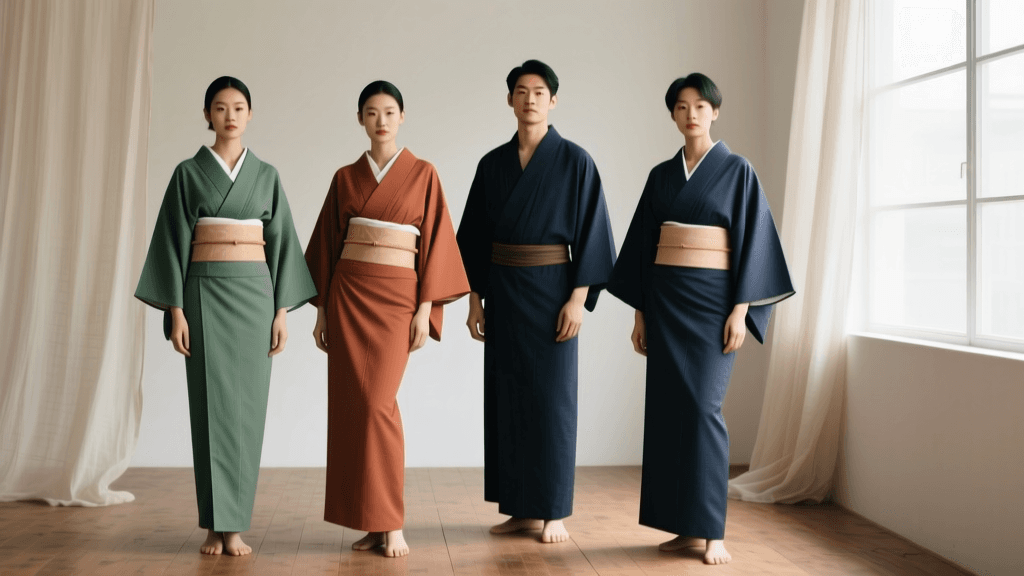
Traditionally, men's and women's kimonos were distinguished by sleeve attachment, color palettes, and the presence or absence of the waist tuck. Men's kimonos are worn straight from the shoulders to the ankles, while women's require the waist fold. Today, however, the lines are beautifully blurring. The rise of genderless fashion in Japan has heavily influenced kimono styling. As noted by The Japan Times, contemporary Japanese fashion is increasingly rejecting rigid binary categories, and traditional wear is no exception.
For non-binary, transgender, or gender-nonconforming individuals, the kimono offers a unique canvas for self-expression. You can mix traditional elements to create a gender-neutral aesthetic. For example, pairing a brightly patterned women's haori with a dark, structured men's hakama (pleated trousers) creates a striking balance. Alternatively, wearing a casual cotton yukata without the waist tuck, secured with a soft, sash-like heko obi, offers an androgynous, relaxed look that transcends traditional gender rules.
Sizing and Measurement Comparison Chart
Use this general guide to understand how kimono measurements translate across different body types. Note that exact measurements will vary based on personal preference and styling choices.
| Size Category | Height Range | Mitake (Length) | Yuki (Sleeve) | Styling Note |
|---|---|---|---|---|
| Petite | Under 155 cm | 150 - 155 cm | 62 - 65 cm | Deep waist tuck required; small motifs preferred. |
| Standard | 155 - 165 cm | 158 - 163 cm | 64 - 67 cm | Fits most vintage and rental shop inventories. |
| Tall | 165 - 180 cm | 165 - 175 cm | 68 - 72 cm | Consider no-tuck styling; seek custom or vintage long-length. |
| Plus-Size | Varies | Standard to Tall | Standard to Tall | Requires wider Maehaba (front width); use of padding for silhouette. |
The Role of Undergarments and Padding
The secret to a flawless kimono fit lies beneath the garment. The hadajuban (under-kimono) and susoyoke (wrap skirt) protect the silk from sweat and oils, but they also serve a structural purpose. For individuals with a pronounced bust or hips, strategic padding (watenuki) is used to fill in the hollows of the body. This might sound counterintuitive to Western fashion, which often seeks to accentuate curves, but in kimono styling, creating a smooth, tubular foundation ensures the silk drapes perfectly and the obi sits securely without digging in or sliding up.
Practical Tips for Renting and Buying
If you are visiting Japan and plan to rent a kimono, it is vital to communicate your height and build in advance. According to the Kyoto City Tourism Association, while most rental shops in hubs like Asakusa and Higashiyama carry a wide array of standard sizes, their inventory typically caters to heights between 150 cm and 165 cm. Rental costs generally range from 3,000 to 8,000 JPY for a standard experience, but plus-size or tall-specific rentals may require a specialized boutique and can cost upwards of 12,000 JPY.
When buying vintage kimonos online or in thrift stores, always ask for the yuki and mitake measurements rather than relying on generic size tags like 'M' or 'L', which do not exist in traditional tailoring. A measuring tape is your most valuable tool in this pursuit.
'The kimono does not conform to the body; the body and the kimono meet in the middle through the art of dressing. It is a dialogue between the wearer and the fabric.' — Traditional Kimono Dressing Proverb
Conclusion
The kimono is far from a relic of a rigid past. It is a living, breathing garment that continues to evolve alongside the people who wear it. Whether you are petite, plus-size, tall, or exploring gender-neutral styling, understanding the fundamental measurements and styling techniques opens the door to a deeply personal and comfortable experience. By embracing modern adaptations and honoring the garment's structural flexibility, anyone can wear the kimono with confidence, grace, and authentic self-expression.