Kimono Styling Guide for Diverse Bodies and Genders
Beyond the Standard: The Inclusive Nature of Kimono
The kimono is frequently misunderstood by international observers as a rigid, unforgiving garment tailored exclusively for a specific, petite East Asian body type. In reality, the traditional Japanese kimono is fundamentally a flat, T-shaped robe constructed from straight bolts of fabric. According to The Metropolitan Museum of Art, this linear construction means the kimono does not rely on complex darts, curved seams, or tailored bodices to fit the wearer. Instead, it is the art of wrapping, folding, and tying that sculpts the garment to the individual. This inherent structural flexibility makes the kimono one of the most universally adaptable garments in global fashion history.
Historically, kimonos were made-to-measure, ensuring a perfect fit regardless of the wearer’s proportions. Today, with the rise of vintage markets and tourist rental shops, wearers often interact with pre-made garments. This shift requires a modern understanding of how to manipulate the "standard" sizes to flatter and accommodate diverse body types, as well as how to subvert traditional gender norms through styling. Whether you are petite, tall, plus-sized, or exploring gender-neutral fashion, the kimono can be adapted to celebrate your unique silhouette.
Styling for Different Body Types
Petite Frames (Under 155 cm / 5'1")
For petite individuals, the primary challenge is managing excess length. The standard method for adjusting a kimono’s length is the ohashori, the waist fold created when wrapping the garment. If a kimono is too long, a deeper ohashori is folded and secured beneath the obi belt. When selecting patterns, petite wearers should opt for komon (small, repeating micro-patterns) or subtle vertical motifs. Large, bold yuzen dye designs can easily overwhelm a smaller frame, whereas vertical lines and smaller geometric patterns create an elongating optical illusion, drawing the eye upward and enhancing the wearer’s natural proportions.
Tall Frames (Over 170 cm / 5'7")
Tall wearers often face the opposite dilemma: vintage kimonos, which dominate the secondhand market, were typically tailored for the shorter average heights of the mid-20th century. A too-short kimono results in an awkward, high-water hemline. The most elegant solution for tall individuals is to incorporate a hakama (a traditional pleated skirt or trouser worn over the kimono). The hakama ties securely at the waist and falls to the ankles, completely concealing the kimono’s hemline. This not only solves the length issue but adds a striking, academic, or martial elegance to the outfit. Alternatively, modern styling allows tall wearers to pair slightly shorter, casual cotton yukata or wool kimonos with lace-up leather boots, embracing the cropped hem as a deliberate, avant-garde fashion statement.
Plus-Size and Curvy Figures
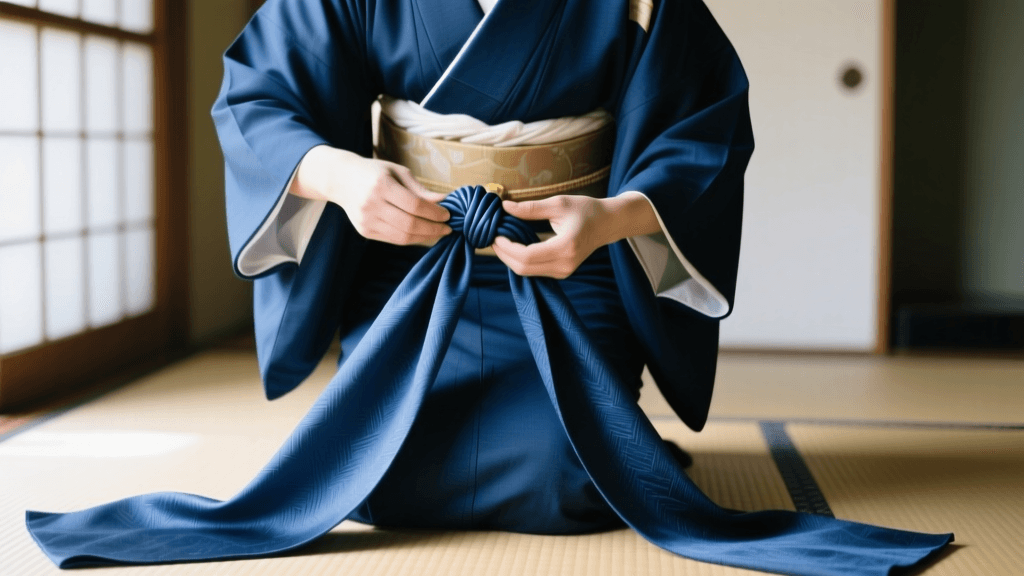
Because the kimono wraps across the body, it does not restrict the bust or hips with fixed seams. However, curvy figures may experience the front panels pulling apart at the hips. The secret to a secure, flattering fit lies in the undergarments. A well-fitted hadajuban (undershirt) and a wrap-style susoyoke (half-slip) are essential. The susoyoke prevents the legs from catching on the silk and ensures modesty if the outer panels shift. To secure the wrap, plus-size wearers should utilize multiple datejime (thin, stiff tying belts) around the waist and hips before applying the decorative obi. For the obi itself, a wider fukuro obi tied in a structured taiko musubi (drum knot) provides excellent back support and balances the visual weight of the outfit beautifully.
Breaking Gender Norms in Kimono Fashion
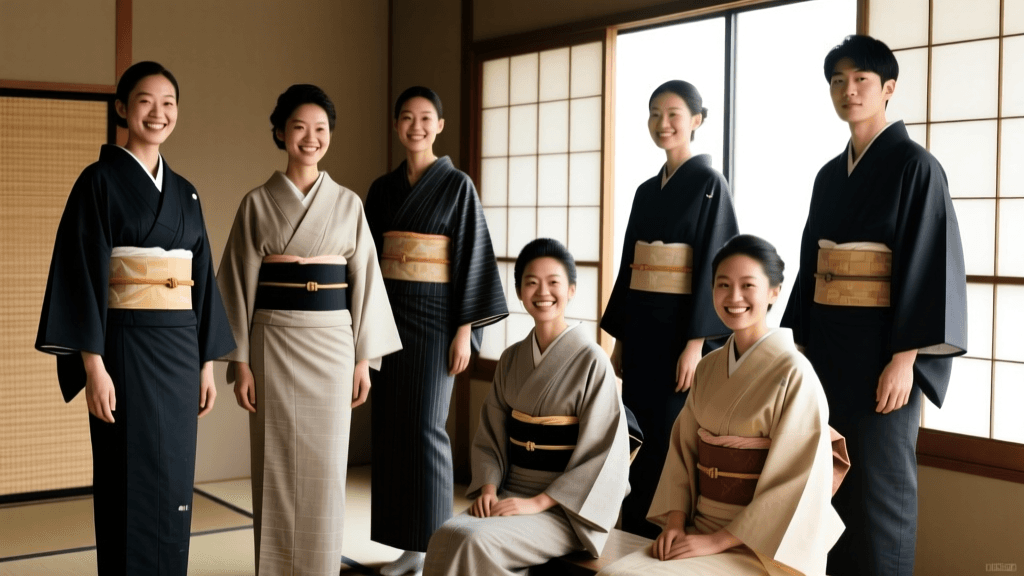
Traditionally, gender expression in kimono was delineated by sleeve length, color palettes, and motif choices. Women wore furisode (long, swinging sleeves) with vibrant florals, while men wore kimono with shorter sleeves, subdued colors, and family crests (mon). Today, the modern kimono movement is actively dismantling these boundaries, embracing a fluid approach to traditional dress.
Masculine and Gender-Neutral Styling
Women and non-binary individuals increasingly adopt menswear silhouettes for a sharp, gender-neutral aesthetic. The haori (a hip- or thigh-length kimono jacket) is a cornerstone of this look. Worn open over a solid-colored kimono and paired with a simple, narrow kaku obi tied in a flat kai-no-kuchi (clam-shell) knot, the silhouette becomes boxy, relaxed, and inherently androgynous. Motifs like kadomatsu (pine and bamboo), geometric asanoha (hemp leaf), or subtle shibori tie-dye offer sophisticated alternatives to traditional floral patterns. This styling is highly practical for active days, as the lack of a bulky obi bow makes sitting and moving significantly easier.
Feminine Styling for All
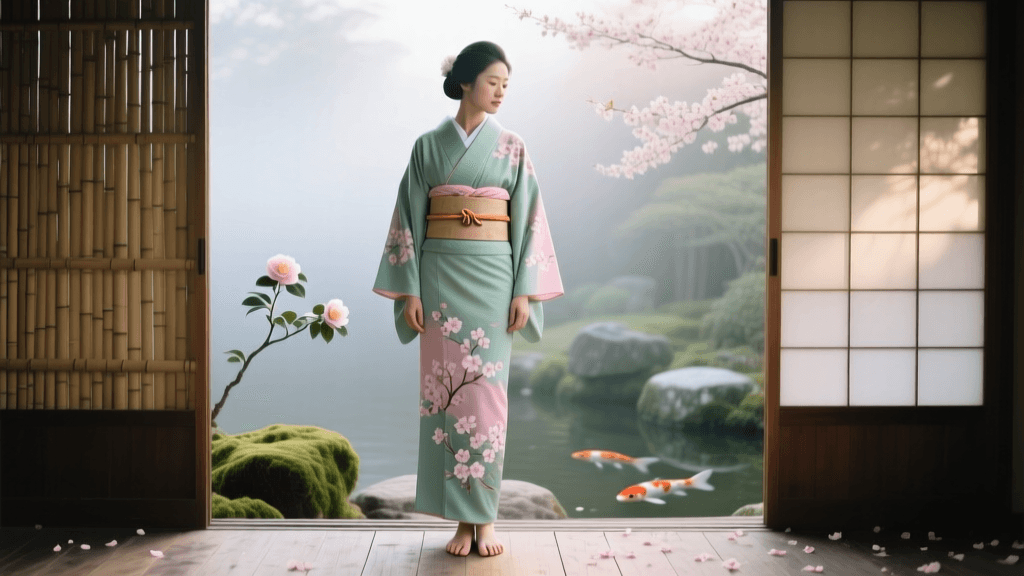
Conversely, men and masculine-presenting individuals are reclaiming the luxurious textiles and vibrant aesthetics historically reserved for women. The modern "genderless kimono" trend, frequently seen in fashion districts like Harajuku, encourages men to experiment with pastel silks, cherry blossom motifs, and elaborate brocade obi belts. The key to pulling off this look with confidence is contrasting the delicate textiles with structured, modern accessories, such as leather sandals or minimalist silver jewelry, creating a striking juxtaposition between traditional femininity and contemporary masculinity.
Measurement and Fitting Guide
Understanding kimono measurements is crucial for online shopping or communicating your needs to a rental stylist. Unlike Western clothing, kimono sizing relies on two primary metrics: Mitake (total length from shoulder to hem) and Yuki (sleeve length from the center back of the neck to the wrist). Below is a practical guide to matching your body measurements to standard kimono dimensions.
| Body Height | Ideal Mitake (Length) | Arm Span / Neck-to-Wrist | Ideal Yuki (Sleeve) | Styling Recommendation |
|---|---|---|---|---|
| 145 - 155 cm | 120 - 130 cm | 120 - 130 cm | 60 - 65 cm | Deep Ohashori; Komon patterns |
| 155 - 165 cm | 130 - 140 cm | 130 - 145 cm | 65 - 70 cm | Standard vintage fit; most Obi styles |
| 165 - 175 cm | 140 - 150 cm | 145 - 160 cm | 70 - 75 cm | Modern reproductions; Hakama styling |
| 175+ cm | 150+ cm (Rare) | 160+ cm | 75+ cm | Hakama mandatory; Custom tailoring |
Note: When measuring for Yuki, drape a tape measure from the prominent bone at the base of your neck, across your shoulder, and down to your wrist bone.
Practical Tips for Rentals and Purchases
If you are traveling to Japan and plan to rent a kimono, advance communication is your best tool. The Kyoto City Tourism Association oversees a vast network of rental shops, many of which are highly accommodating but require notice for non-standard sizes. When booking, explicitly state your height, bust, and hip measurements. Standard rental packages typically cost between 5,000 and 8,000 JPY ($35 to $55 USD). However, requesting plus-size garments, tall-length mitake, or specific gender-neutral styling may incur a premium fee of 2,000 to 5,000 JPY, as these items are often kept in separate, specialized inventories.
For those looking to purchase, the vintage market is a treasure trove for standard sizes but can be limiting for tall or plus-size buyers. If you fall outside the standard vintage parameters, consider investing in a modern, custom-tailored kimono. Many contemporary Kyoto-based tailors offer bespoke services starting around 80,000 JPY ($550 USD), allowing you to select your own silk bolt and dictate your exact mitake and yuki. Alternatively, modern washable polyester kimonos (often branded as sozai kimonos) are mass-produced in extended sizes and offer a budget-friendly, low-maintenance entry point for diverse bodies.
Conclusion
The kimono is not a static relic of the past; it is a living, breathing garment that evolves alongside the people who wear it. As highlighted by the Victoria and Albert Museum, the kimono’s journey through history is marked by continuous adaptation and cross-cultural exchange. By understanding the mechanics of the wrap, the purpose of the undergarments, and the fluidity of its gendered aesthetics, anyone can wear the kimono with authenticity and confidence. Whether you are adjusting an ohashori to suit a petite frame, donning a hakama to accommodate a tall silhouette, or mixing masculine and feminine elements to express your true identity, the kimono remains a profoundly inclusive canvas for personal expression.