Decoding Kimono Motifs: Seasonal Colors & Symbolism Guide
The Language of Silk: Understanding Kimono Motifs
Japanese traditional clothing is not merely fashion; it is a wearable canvas reflecting the natural world, philosophical beliefs, and strict social codes. At the heart of kimono aesthetics is the concept of kisetsukan (seasonal feeling). This principle dictates that a kimono’s motifs, colors, and even the weave of the fabric must align with—and slightly anticipate—the changing seasons. Wearing a cherry blossom motif in the dead of winter, or a maple leaf in the spring, is considered a significant faux pas in traditional dressing.
According to the Metropolitan Museum of Art, the evolution of kimono motifs is deeply intertwined with Japanese literature, poetry, and the natural environment. During the Heian period (794–1185), courtiers used layered colors and subtle nature motifs to convey unspoken emotions and romantic intent. By the Edo period (1603–1867), the merchant class developed highly sophisticated dyeing techniques, allowing for intricate, pictorial motifs that covered the entire garment.
Edo Period Sumptuary Laws and the Aesthetic of 'Iki'
To truly understand kimono symbolism, one must look at the Edo period's sumptuary laws. The Tokugawa shogunate frequently banned commoners from wearing lavish fabrics, bright colors, and overtly luxurious motifs. In response, the merchant class developed the aesthetic of iki (chic, understated elegance). As detailed by the Met Museum's Heilbrunn Timeline of Art History, commoners bypassed these restrictions by hiding incredibly expensive, hand-painted motifs inside the lining of their kimono, or by wearing komon (micro-patterns) that looked like solid colors from a distance but revealed intricate geometric or nature-inspired symbols upon close inspection. This historical context explains why many traditional motifs are highly subtle and rely on color placement rather than loud, obvious graphics.
Seasonal Rules: When to Wear Specific Patterns
The golden rule of kimono seasonality is to wear a motif just before the season or event it represents begins, never after it has passed. For example, you wear cherry blossoms in late February and March to anticipate the bloom, but once the petals begin to fall in April, wearing the motif is considered bad luck and aesthetically late.
Seasonal Motif & Color Timing Chart
| Season | Primary Motifs | Traditional Colors | Optimal Wearing Window |
|---|---|---|---|
| Spring (Haru) | Sakura (Cherry Blossom), Ume (Plum), Fuji (Wisteria), Cho (Butterfly) | Pale Pink, Spring Green, Soft Yellow, Lavender | February to Early April |
| Summer (Natsu) | Asagao (Morning Glory), Ayu (Sweetfish), Uchiwa (Fans), Hotaru (Fireflies) | Indigo, Aqua, Crisp White, Cool Blues | May to August |
| Autumn (Aki) | Momiji (Maple), Kiku (Chrysanthemum), Tsuki (Moon), Susuki (Pampas Grass) | Crimson, Gold, Ochre, Deep Purple, Brown | Late August to November |
| Winter (Fuyu) | Shochikubai (Pine, Bamboo, Plum), Yuki (Snow), Tsuru (Crane) | Evergreen, Pure White, Deep Red, Black | December to Early February |
Spring (Haru): Anticipating the Bloom
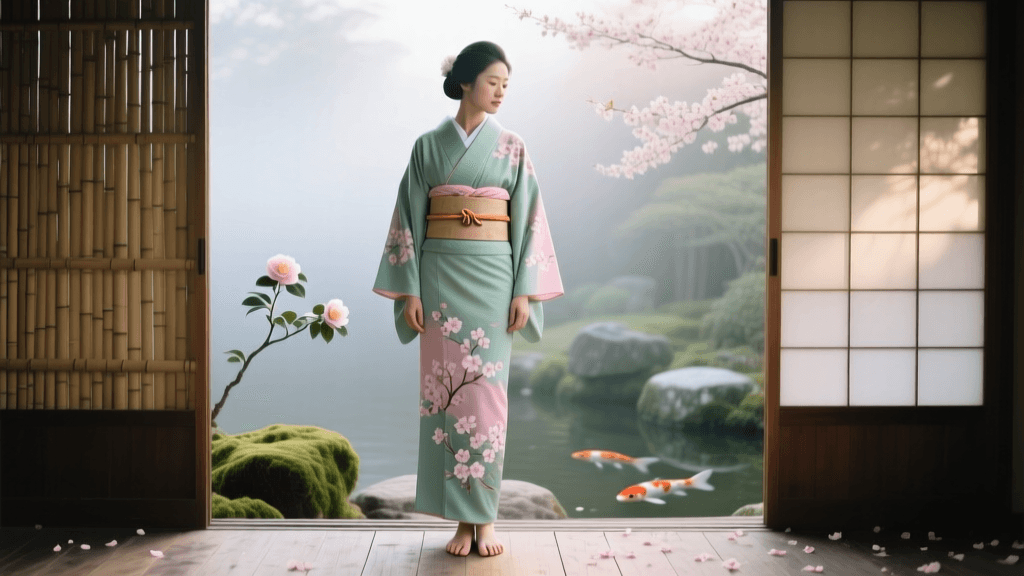
Spring motifs celebrate renewal. The sakura (cherry blossom) is Japan's most iconic flower, symbolizing the ephemeral nature of life. When selecting a spring kimono, look for yuzen dyeing techniques where the pink petals are outlined in white resist-dye. Pair these with a soft green or gold obi (sash) to represent the new leaves budding alongside the blossoms. Fuji (wisteria) is another popular spring motif, typically featuring cascading purple clusters that pair beautifully with silver or light grey obi.
Summer (Natsu): Coolness and Water
Summer kimono are designed to provide visual and physical relief from Japan's intense humidity. Motifs like ayu (sweetfish leaping over water), seigaiha (ocean waves), and uchiwa (round fans) evoke a sense of coolness. Colors are heavily skewed toward indigo, aqua, and stark white. In terms of fabric, summer requires ro (leno-weave) or sha (gauze) silk, which are semi-transparent and highly breathable. A cotton yukata with morning glory (asagao) motifs is the standard, actionable choice for summer festivals.
Autumn (Aki): The Colors of Transition
Autumn motifs focus on the harvest and the changing landscape. Momiji (maple leaves) and kiku (chrysanthemums) are paramount. The chrysanthemum is the imperial seal and symbolizes longevity and rejuvenation. Autumn palettes are rich and warm: crimson, burnt orange, gold, and deep purple. A highly sought-after autumn motif is tsukini-usagi (rabbits on the moon), which references the autumn harvest moon. Pair these warm-toned garments with a dark brown or deep burgundy obi to ground the vibrant leaf patterns.
Winter (Fuyu): Resilience and Auspicious Wishes
Winter motifs emphasize endurance and good fortune. The most prominent is shochikubai, a combination of pine (sho), bamboo (chiku), and plum blossom (bai). Together, they represent resilience, as pine and bamboo stay green in the snow, and plum blossoms bravely push through the frost. Winter garments are heavily lined, often made of thick, glossy silk like chirimen (crepe). Deep reds, evergreens, and pure whites dominate, often accented with gold and silver foil embroidery to catch the low winter sunlight.
Color Symbolism and the Five Elements (Gogyo)
Beyond the seasons, kimono colors are deeply rooted in the Gogyo (Five Elements) theory, which originated in China and profoundly influenced Japanese philosophy, medicine, and art. Understanding this allows you to choose colors that align with your personal intentions or the nature of an event.
- Wood (Moku) - Green/Blue: Represents growth, vitality, and youth. Often worn by young women or during coming-of-age ceremonies.
- Fire (Ka) - Red: Symbolizes passion, protection against evil spirits, and adulthood. The red uchikake (wedding overcoat) utilizes this protective and passionate energy.
- Earth (Do) - Yellow/Brown: Denotes stability, grounding, and transition. Frequently used in the background dyes of autumn kimono or in the obi of older, married women to project maturity.
- Metal (Kon) - White: Signifies purity, mourning, and the divine. Pure white is reserved for brides (shiromuku) and the deceased, though white accents are common in all garments to represent snow or clouds.
- Water (Sui) - Black/Dark Blue: Embodies wisdom, formality, and rest. Black is the ultimate color of formality in Japanese dress, seen in the kurotomesode, the most formal kimono worn by married women.
The Victoria and Albert Museum's extensive Kimono: Kyoto to Catwalk exhibition highlights how these color codes were rigidly enforced in historical contexts but have become more fluid and expressive in contemporary fashion, allowing modern wearers to blend traditional symbolism with personal style.
Practical Guide: Building a Seasonal Kimono Wardrobe
Building an authentic, seasonally appropriate kimono wardrobe requires strategic planning, an understanding of measurements, and smart budgeting. Here is actionable advice for collectors and wearers.
1. Mastering Measurements for Vintage Purchases
Unlike Western clothing, kimono are sold based on specific traditional measurements. When buying vintage or new, you must know your numbers:
- Mitake (Body Length): This is the length from the shoulder to the hem. Actionable Formula: Measure your total height and subtract 10 cm (approx. 4 inches). If you are 165 cm tall, look for a kimono with a mitake of 155 cm. A variance of +/- 3 cm is acceptable, as the waist fold (ohashori) can be adjusted.
- Yuki (Arm Span): Measured from the center back of the neck, over the shoulder, down to the wrist. Actionable Formula: Roughly 80% of your height. For a 165 cm person, the ideal yuki is around 64-66 cm. If the yuki is too short, your wrists will show, which is considered improper in formal settings.
- Haba (Width): The width of the front and back panels. Standard modern width is around 34-36 cm per panel. If you have a larger build, you must specifically search for hirohaba (wide-width) kimono.
2. Budgeting and Cost Expectations
You do not need to spend thousands of dollars to own beautiful, seasonally accurate silk garments. The vintage market is highly accessible if you know what to look for.
- Vintage Silk Komon (Everyday micro-patterns): $40 – $150. Excellent for practicing seasonal coordination without high financial risk.
- Vintage Silk Houmongi (Semi-formal, continuous motifs): $150 – $400. Look for garments with intact gold-leaf detailing and no structural stains on the collar.
- Vintage Haori (Jackets): $50 – $120. Haori are less restrictive regarding seasonal rules and can be worn over modern clothing or simple kimono to add a seasonal accent.
- New, Custom-Made Furisode (Formal, long-sleeved): $3,500 – $10,000+. Only necessary for unmarried women attending formal events like Coming of Age Day.
3. Timing the Market: When to Buy
Specialized kimono dealers and online auction sites operate on reverse-seasonal pricing. Actionable Strategy: Purchase winter chirimen silk kimono in July, and summer ro or sha gauze kimono in January. During these off-peak months, dealers clear out inventory, often marking down high-quality, hand-painted seasonal garments by 40% to 60%. Furthermore, buy your spring cherry blossom kimono in December; by March, the best vintage pieces will have been snapped up by collectors and tea ceremony practitioners.
Conclusion
Wearing a kimono is an exercise in mindfulness. By understanding the deep symbolism of seasonal motifs, the philosophical roots of traditional colors, and the practical metrics of garment construction, you transform the act of dressing into a profound connection with Japanese culture. Whether you are selecting a subtle komon for a quiet tea gathering or a vibrant houmongi for a spring wedding, respecting the language of the silk ensures you are always in harmony with the world around you.