Yukata vs Summer Kimono: The Ultimate Casual Wear Guide
Introduction to Japanese Summer Garments
As the humid heat of the Japanese summer sets in, the streets of Kyoto, Tokyo, and Kanazawa transform into vibrant displays of traditional textiles. Summer in Japan is synonymous with matsuri (festivals), hanabi (fireworks displays), and bon odori (traditional dances). For both locals and travelers, participating in these events often involves wearing traditional Japanese clothing. However, a common point of confusion arises when choosing between the two primary summer garments: the yukata and the summer kimono (natsu no kimono). While they may look similar to the untrained eye, their construction, layering systems, and appropriate occasions differ significantly. This comprehensive guide will help you navigate the nuances of Japanese summer casual wear, ensuring you dress appropriately, comfortably, and stylishly.
Historical Origins: From Bathhouse to Boulevard
To understand the yukata, one must look at its etymology. The word yukata is derived from yu-katabira, which translates to 'bathing robe.' During the Heian period (794-1185), aristocrats wore these unlined hemp or cotton robes to and from steam baths. By the Edo period (1603-1867), as public bathhouses became widespread and cotton cultivation flourished, the garment evolved into everyday loungewear and eventually into the festive streetwear we recognize today. According to the Victoria and Albert Museum, the democratization of cotton allowed the yukata to become a canvas for intricate dyeing techniques, such as shibori (tie-dye) and yuzen (resist dyeing), making it a staple of working-class and merchant fashion.
The summer kimono, conversely, retains its status as formal or semi-formal outerwear. It is a direct seasonal adaptation of the standard lined kimono, engineered specifically to provide the elegance of silk while mitigating the oppressive Japanese summer humidity.
Fabric and Construction: Cotton vs. Silk Gauze
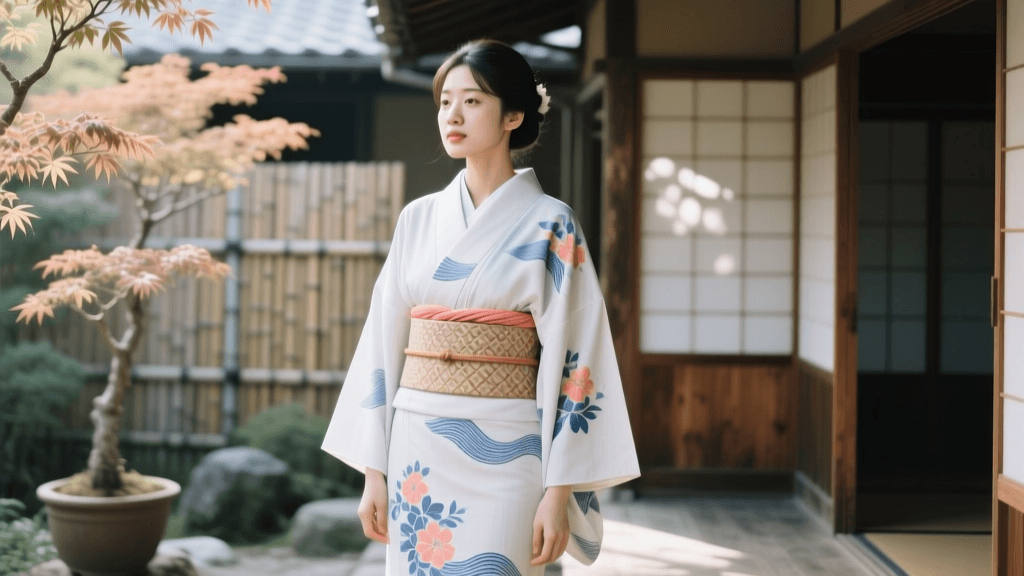
The most fundamental difference between a yukata and a summer kimono lies in the textile. A traditional yukata is made from unlined cotton (mokomen) or, in modern iterations, a cotton-polyester blend. The fabric is opaque, absorbent, and designed to be worn directly against the skin or over a simple slip. The patterns are often bold, featuring fireworks, morning glories, or geometric shapes, and are typically dyed using indigo or vibrant synthetic colors.
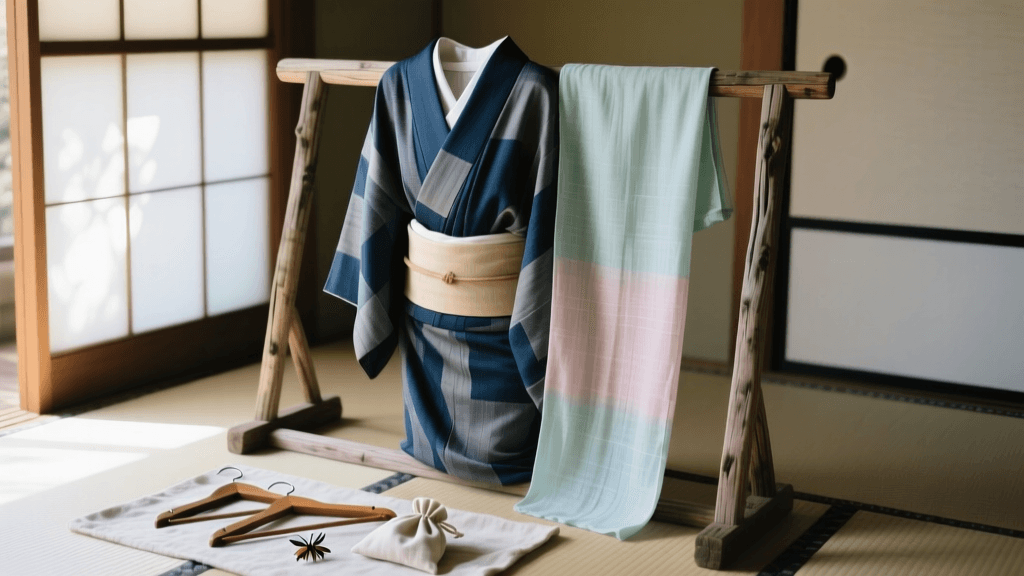
Summer kimonos are crafted from specialized lightweight materials. While high-quality cotton or linen (jofu) can be used, the most prized summer kimonos are made from silk woven in specific open-weave techniques. The two most prominent weaves are:
- Ro (Leno Weave): Characterized by a distinct horizontal ribbed texture, ro silk is sheer, highly breathable, and possesses a subtle sheen. It is typically worn in July and August.
- Sha (Gauze Weave): Even lighter and more sheer than ro, sha features a net-like structure that allows maximum airflow. It is considered highly formal and is often reserved for tea ceremonies or elite gatherings.
- Komon (Fine Pattern): Lightweight, unlined silk or synthetic fabrics featuring repeating micro-patterns, suitable for casual daytime summer wear.
The Layering System: Undergarments and Opacity
Because the yukata is unlined and made of opaque cotton, the layering system is minimal. Wearers typically don a hadajuban (a thin, short-sleeved cotton undershirt) and a susuyoke (a wrap skirt) or modern kimono slip to absorb sweat and protect the garment. No collar is visible beneath the yukata's neckline.
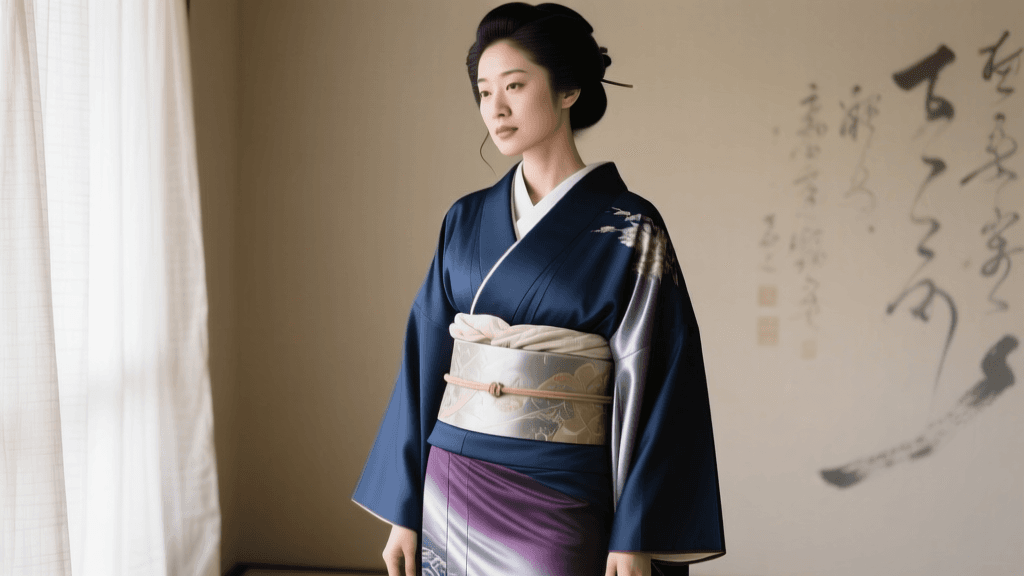
The summer kimono, particularly those made of sheer ro or sha, requires a more complex layering system to maintain modesty and protect the delicate silk from body oils. A nagajuban (full-length under-kimono) is mandatory. For summer, this undergarment is made from sheer or lightweight unlined (hitoe) materials, often featuring a beautifully dyed or embroidered han-eri (detachable collar) that peeks out from the neckline of the outer kimono. The interplay between the sheer outer kimono and the opaque under-kimono is considered a hallmark of sophisticated Japanese summer aesthetics.
Comparison Chart: Yukata vs. Summer Kimono
| Feature | Yukata | Summer Kimono (Ro / Sha) |
|---|---|---|
| Primary Fabric | Cotton or Cotton-blend | Silk (Leno or Gauze weave) |
| Lining | Unlined (Hitoe) | Unlined, but sheer |
| Undergarments | Hadajuban and Susuyoke (Slip) | Nagajuban (Full under-kimono) |
| Collar Appearance | Single collar (Garment only) | Double collar (Garment + Under-kimono) |
| Obi (Sash) Type | Hanhaba (Half-width) or Kaku | Nagoya or Fukuro (Formal) |
| Footwear | Geta (Wooden clogs), barefoot | Zori (Woven sandals) with Tabi socks |
| Approx. Rental Cost | 3,000 - 5,500 JPY | 7,000 - 12,000 JPY |
The Art of the Obi: Hanhaba vs. Nagoya
The obi (sash) is the anchor of any kimono ensemble, and its type dictates the formality of the outfit. For yukatas, the standard choice is the hanhaba obi (half-width obi), which measures approximately 15 cm in width and 360 cm in length. It is easy to tie, requires no additional accessories like obiage (sash scarf) or obijime (sash cord), and is typically tied in playful knots like the bunko (butterfly bow) or karuta styles.
Summer kimonos demand wider, more structured obi. A Nagoya obi (approx. 30 cm wide) is standard for casual to semi-formal summer wear, tied in the classic taiko musubi (drum knot). For formal summer events, a sheer sha kimono might be paired with a lightweight, unlined Fukuro obi, requiring the full suite of tying accessories and the expertise of a professional kitsuke (kimono dresser).
Occasions and Etiquette: Matsuri to Tea Ceremonies
Understanding when to wear which garment is crucial for respecting Japanese cultural norms. As noted by the Japan Guide, the yukata is inherently casual. It is the undisputed uniform for summer fireworks festivals (hanabi taikai), neighborhood bon odori dances, and casual evening strolls through tourist districts like Asakusa or Higashiyama. Wearing a yukata to a formal tea ceremony, a summer wedding, or a high-end kaiseki dinner is considered underdressed and culturally inappropriate.
The summer kimono bridges this gap. A cotton komon summer kimono is perfectly acceptable for nice restaurants and daytime sightseeing. A silk ro or sha kimono, properly layered and accessorized, is required for formal summer gatherings, traditional arts performances, and upscale hospitality settings. For a deeper look into the festival environments where these garments shine, exploring guides on traditional Japanese festivals can help you align your wardrobe with specific regional events.
Practical Guide: Renting and Buying in Japan
For tourists, renting is the most practical way to experience traditional summer wear. Rental shops are heavily concentrated in cultural hubs. In Kyoto, areas around Kiyomizu-dera and Gion offer hundreds of shops. A standard yukata rental package (including garment, obi, geta, and a small bag) costs between 3,000 and 5,500 JPY. Upgrading to a summer kimono with full undergarments and professional dressing services will cost between 7,000 and 12,000 JPY. Always book in advance during peak matsuri seasons in July and August.
For those looking to purchase, vintage and recycle shops offer incredible value. Stores like Chicago in Tokyo's Shimokitazawa or Kyoto's Kawaramachi district sell authentic, pre-owned cotton yukatas starting at just 3,000 JPY. When buying a vintage yukata, measure the yuki (sleeve-to-center-back length) to ensure it reaches your wrist bone, and check the mitake (total length) to ensure it wraps comfortably around your hips.
Footwear and Accessories: Geta, Zori, and Kinchaku
No summer ensemble is complete without the correct footwear. Yukatas are paired with geta—elevated wooden clogs that keep the cotton hem away from damp streets and produce a distinctive, nostalgic clicking sound. Modern rental shops often provide rubber-soled geta for comfort. Because geta are worn barefoot or with specialized toe-socks, they reinforce the casual nature of the yukata.
Summer kimonos require zori (flat, woven sandals made of vinyl, straw, or brocade) paired with tabi (split-toe socks). The tabi sock elevates the formality of the outfit and protects the feet. Finally, because traditional garments lack pockets, a kinchaku (drawstring pouch) is essential. For yukatas, a simple cotton or rattan basket bag is ideal; for summer kimonos, a silk or brocade pouch complements the elegance of the silk weaves.
Conclusion
Choosing between a yukata and a summer kimono is ultimately a decision based on occasion, budget, and desired formality. The yukata offers a breezy, accessible, and deeply festive experience, perfect for the vibrant energy of Japanese summer nights. The summer kimono provides a window into the meticulous, layered artistry of Japanese textiles, showcasing sheer weaves and sophisticated styling. By understanding the fabrics, undergarments, and etiquette outlined in this guide, you can confidently step into the Japanese summer, honoring centuries of sartorial tradition while staying cool in the heat.