Murasaki Shikibu’s Junihitoe: Heian Fashion Legacy & Modern Rentals
The Literary Icon Who Defined Heian Elegance
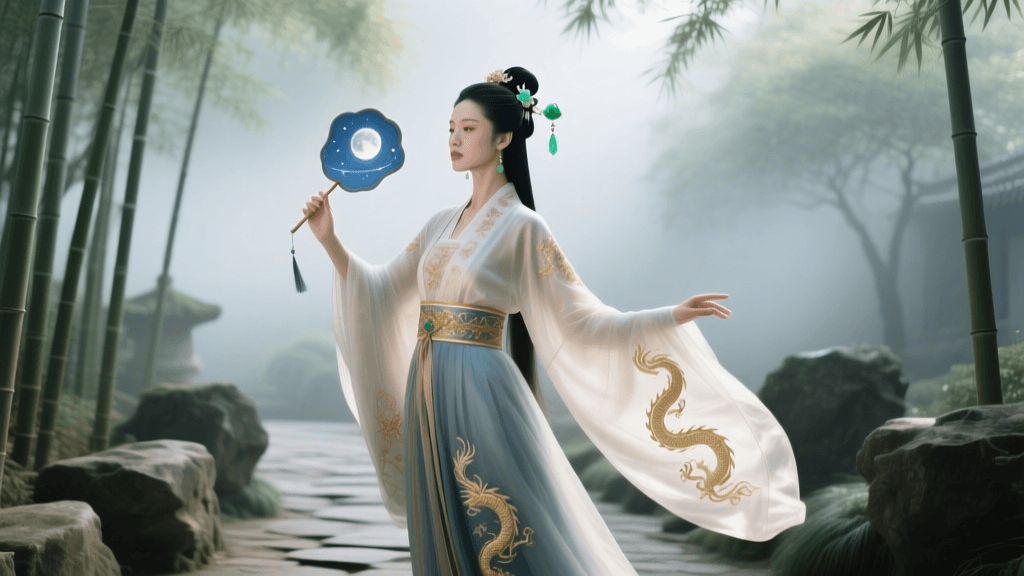
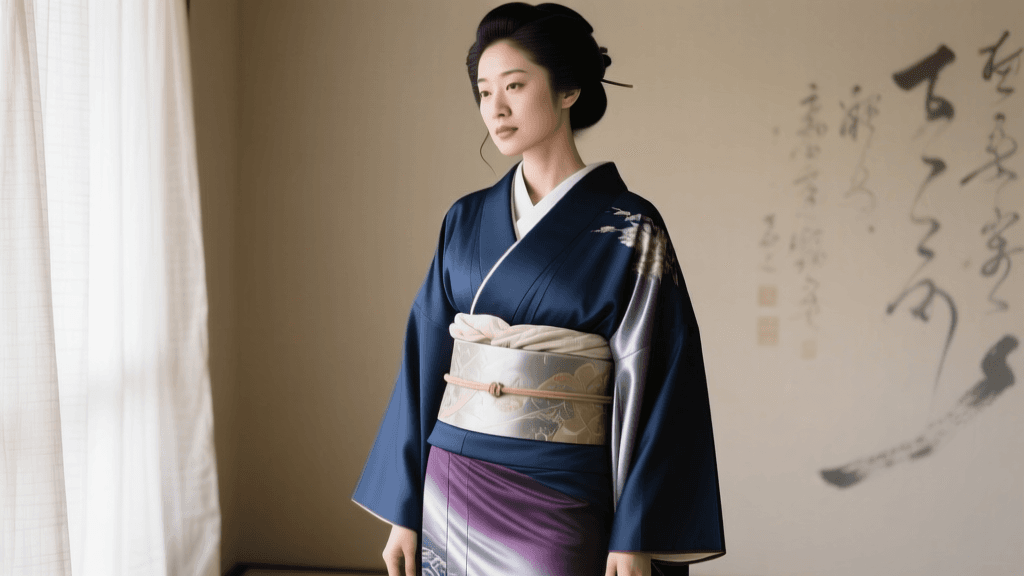
When we trace the lineage of traditional Japanese clothing, few historical figures cast as long and influential a shadow as Murasaki Shikibu (c. 978 – c. 1014). Best known as the author of The Tale of Genji, the world’s first novel, Murasaki was not merely a passive observer of Heian-period court life; she was a central architect of its aesthetic sensibilities. Through her meticulous literary descriptions, she codified the concept of miyabi (courtly elegance) and forever immortalized the junihitoe, the legendary twelve-layered kimono worn by high-ranking noblewomen. Her fashion legacy transcends mere clothing, representing a profound intersection of literature, seasonal awareness, and textile artistry that continues to influence Japanese fashion today.
According to the Metropolitan Museum of Art's Heilbrunn Timeline of Art History, the evolution of Japanese garments during the Heian period (794–1185) marked a deliberate shift away from Chinese-influenced silhouettes toward a uniquely indigenous aesthetic. Murasaki Shikibu’s writings serve as the primary historical ledger for this transition, detailing how the arrangement of silk layers, the subtle gradation of colors at the cuffs, and the sweeping trains of the junihitoe were used to communicate a woman's rank, emotional state, and refined taste. Today, her legacy lives on not only in museums but in the specialized artisan workshops and rental studios of Kyoto, where modern enthusiasts can experience the breathtaking weight and beauty of Heian fashion firsthand.
Anatomy of the Junihitoe: Layers, Colors, and Seasonality
Despite its name, which translates to 'twelve-layered robe,' the junihitoe is not strictly defined by a count of twelve. Rather, it refers to a highly specific, formalized system of layering unlined and lined silk garments. The ensemble is a masterclass in textile engineering, designed to create a cascading waterfall of color at the sleeves, hems, and neckline. A traditional Heian-era ensemble, as chronicled in Murasaki’s diaries, consists of the following foundational layers:
- Kosode: The foundational small-sleeved undergarment, typically made of plain white silk, serving as the base layer against the skin.
- Nagabakama: Long, pleated silk trousers that extend well past the feet, creating a sweeping train that dictates the wearer's gliding gait.
- Hitoe: An unlined silk robe, usually in a deep, grounding color like dark red or navy, which provides a visual baseline for the layers above.
- Uchigi (The Itsutsu-ginu): A series of layered robes. While historically women might wear dozens of layers to display wealth, the formalized system eventually settled on five distinct uchigi layers, each slightly smaller and shorter than the one beneath it to reveal the cuffs.
- Uwagi: The primary outer robe, often featuring intricate Nishijin-ori (brocade) weaving or shibori (tie-dye) patterns, signaling the wearer's high court rank.
- Karaginu: A short, hip-length jacket with dramatically swept-back sleeves, worn over the uwagi to frame the torso and add structural volume.
- Mo: The most visually striking element, an apron-like train tied at the waist that trails behind the wearer, often dyed with auspicious motifs and metallic threads.
The Kasane no Irome: The Art of Color Layering
Murasaki Shikibu’s greatest fashion contribution was her documentation of kasane no irome—the strictly regulated color combinations used in the uchigi layers. These combinations were intrinsically tied to the micro-seasons of the Japanese calendar. For example, the Yamabuki (Japanese kerria) combination featured layers of yellow, green, and brown to evoke early spring, while Kurenai (deep crimson) layered with shades of plum was reserved for late autumn. The Encyclopedia Britannica notes that the Heian court's obsession with these layered colors meant that a woman's taste was judged not by the surface of her garment, but by the millimeter-thick cross-sections of silk visible at her sleeves and hems. A mismatched or seasonally inappropriate kasane was considered a devastating social faux pas.
Experiencing the Junihitoe Today: A Practical Guide
For modern collectors, brides, and cultural enthusiasts, engaging with Murasaki Shikibu’s fashion legacy requires navigating the specialized world of Kyoto’s traditional garment industry. Authentic junihitoe are rarely sold off-the-rack; they are bespoke commissions or highly guarded rental assets. If you are planning to wear or acquire a Heian-style ensemble, here is the actionable advice you need regarding logistics, measurements, and costs.
Modern Rentals: Costs, Timing, and Logistics
Renting a junihitoe for a wedding, photoshoot, or cultural exhibition is a major logistical undertaking. Most reputable studios in Kyoto’s Nishijin textile district or the Higashiyama ward require advance booking.
- Timing: You must book your rental 4 to 6 months in advance. The dressing process requires a certified kitsuke (kimono dressing) master, and the garments themselves are often rotated between high-profile clients and museum exhibitions.
- Costs: A simplified, modern 'wedding' version (usually 5 to 7 layers) costs between ¥80,000 and ¥150,000 ($550 - $1,000 USD) for a full-day rental including dressing services. An authentic, museum-grade 12-layer historical reproduction can cost upwards of ¥350,000 ($2,400 USD) for a single day.
- Location Constraints: Due to the sheer volume and fragility of the silk, most studios will not allow you to leave the premises. You will be dressed on-site and photographed in their traditional tatami studios or adjacent private gardens.
Measurements and the Physical Toll
The junihitoe is not tailored to the individual's body shape in the Western sense; it is a one-size-fits-all architectural structure padded and tied to create a uniform, cylindrical silhouette that obscures the human form. However, the physical toll on the wearer is significant.
- Weight: A full authentic ensemble weighs between 15 kg and 20 kg (33 to 44 lbs). The weight is distributed unevenly, pulling heavily on the shoulders and lower back.
- Mobility: The nagabakama and mo extend up to 2 meters past the wearer's feet. Walking requires the suriashi (sliding step) technique, where the feet never fully leave the tatami mat to avoid stepping on the hems.
- Posture: Wearers must maintain a rigid, upright posture with the chin slightly tucked to prevent the heavy karaginu collar from slipping backward. Dressing takes 45 to 90 minutes with the help of two professional assistants.
Data Table: Junihitoe Rental & Purchase Comparison
| Feature | Simplified 'Wedding' Junihitoe | Authentic Historical Reproduction | Bespoke Museum Commission |
|---|---|---|---|
| Number of Layers | 5 to 7 layers | 10 to 12 layers | 12+ layers (Custom) |
| Average Weight | 8 - 12 kg | 15 - 20 kg | 20+ kg |
| Estimated Cost | ¥80,000 - ¥150,000 (Rental) | ¥250,000 - ¥400,000 (Rental) | ¥3,000,000+ (Purchase) |
| Lead Time | 2 - 3 months | 4 - 6 months | 12 - 18 months |
| Best Use Case | Modern weddings, brief photoshoots | Theatrical performances, high-end shoots | Archival preservation, institutional display |
Fabric Seasonality, Care, and Artisan Workshops
Murasaki Shikibu’s era demanded that textiles reflect the ephemeral nature of the seasons, a philosophy that modern Nishijin weavers still uphold. Authentic junihitoe layers are woven using nama-ito (raw, unspun silk threads) which give the fabric a distinctive stiff, papery rustle known as kinu-nari (the 'voice of silk'). This stiffness is crucial for maintaining the separation between layers, preventing the heavy silks from collapsing into a single mass.
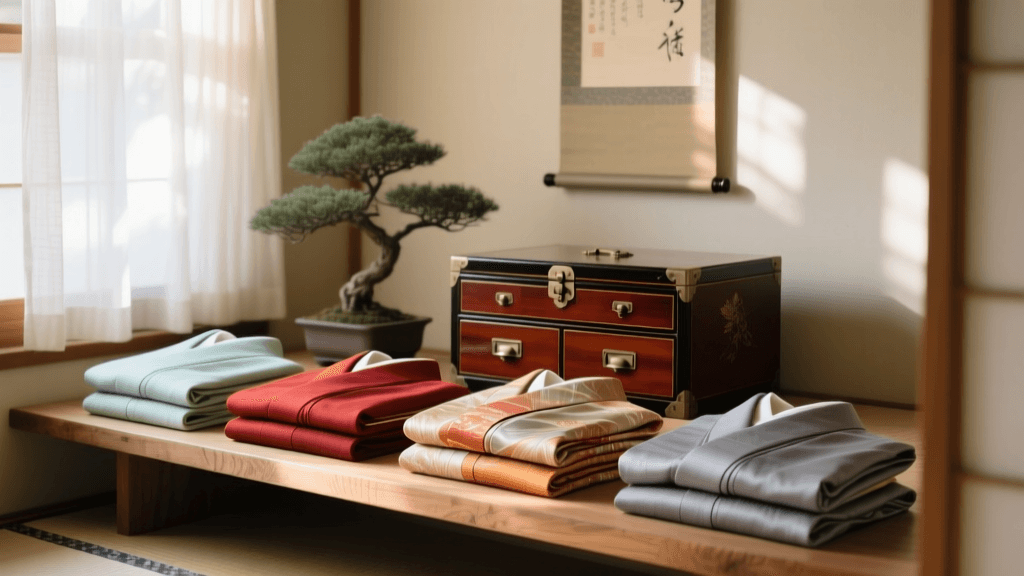
Caring for these garments requires strict adherence to traditional preservation methods. Because the kasane colors are achieved through meticulous vat-dyeing and layered weaving, exposure to direct sunlight will cause irreversible fading within hours. Furthermore, the silk must be stored in kiri-tansu (paulownia wood chests). Paulownia is naturally hygroscopic, expanding in high humidity to seal the drawers shut and protect the silk from moisture and mold, and contracting in dry weather to allow the garments to breathe. The Kyoto National Museum frequently utilizes these exact storage methodologies to preserve extant Heian and Edo-period court textiles in their archives.
For those looking to invest in a piece of this legacy without commissioning a full ensemble, purchasing a single, authentic uchigi layer from a Nishijin artisan workshop is a highly actionable alternative. Priced between ¥100,000 and ¥300,000, these individual robes can be framed as textile art or integrated into modern formal kimono styling as an uchikake (outer robe), allowing Murasaki Shikibu’s brilliant color theories to step out of the 11th century and into the modern wardrobe.
Conclusion: A Legacy Woven in Silk
Murasaki Shikibu did not invent the junihitoe, but she gave it a soul. Through her literary genius, she transformed a cumbersome display of aristocratic wealth into a profound language of color, season, and emotion. Today, whether you are studying the kasane no irome in a Kyoto museum, enduring the beautiful, heavy burden of a 20-kilogram rental for a wedding, or simply admiring the rustle of raw silk, you are participating in a fashion legacy that has survived for over a millennium. The junihitoe remains a testament to the idea that true elegance is not just about what you wear, but how deeply you understand the world around you.