Mastering Kimono Storage and Seasonal Wardrobe Rotation
The Tradition of Koromogae (衣替え)
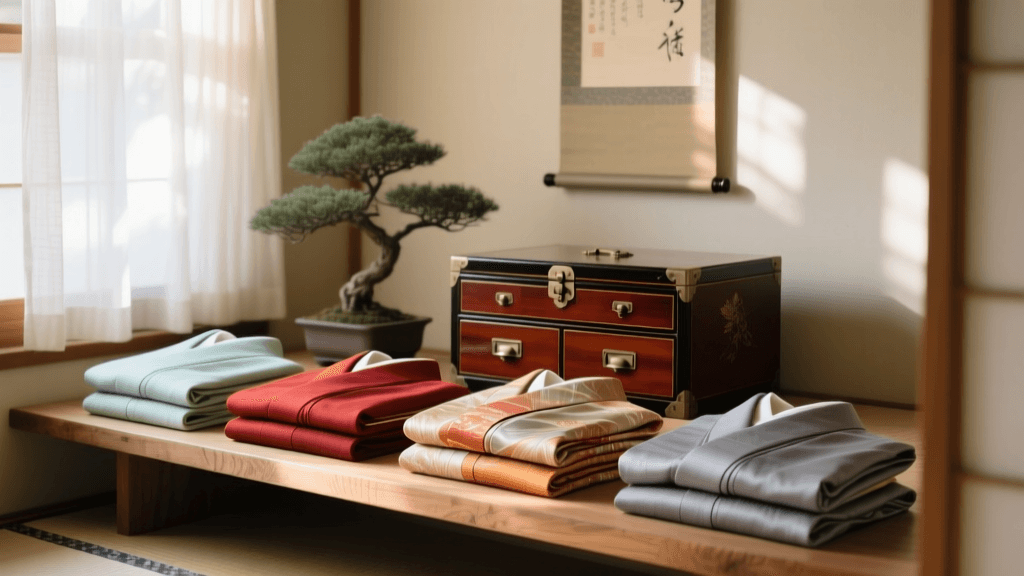
Owning a traditional Japanese kimono is not merely about possessing a beautiful garment; it is an ongoing relationship with the changing seasons and the meticulous care of delicate textiles. At the heart of kimono wardrobe organization is the concept of koromogae (衣替え), the seasonal rotation of clothing. Dating back to the Heian period (794–1185), when court nobles would ceremonially transition their wardrobes to reflect the shifting climate, koromogae remains a vital practice for modern collectors and practitioners of traditional arts. According to Smithsonian Magazine's exploration of Kimono history, the garment is deeply intertwined with Japan's seasonal aesthetics, making proper rotation and storage essential not just for preservation, but for cultural authenticity.
In the modern era, the official dates for koromogae are generally recognized as June 1st (transitioning to summer wear) and October 1st (transitioning back to winter wear). However, proper wardrobe organization requires more than simply swapping out garments. It demands a strategic approach to folding, wrapping, and environmental control to protect natural silk fibers from humidity, mold, and permanent creasing.
The Seasonal Kimono Rotation Chart
To effectively organize your kimono wardrobe, it is crucial to categorize your garments by their seasonal weight and lining. Below is a structured guide to help you plan your biannual koromogae transitions:
| Season | Garment Type | Fabric and Lining | Wearing Period | Storage Transition Date |
|---|---|---|---|---|
| Winter and Spring | Awase (Lined) | Silk crepe, Rinzu, fully lined | October 1 to May 31 | Store by June 1 |
| Early Summer and Early Autumn | Hitoe (Unlined) | Silk, Ro, Sha (no lining) | June 1 to June 30 / Sept 1 to Sept 30 | Store July 1 / Oct 1 |
| Mid-Summer | Usumono (Sheer) | Sheer Ro, Sha, Hemp | July 1 to August 31 | Store by September 1 |
Essential Storage Materials and Investments
Proper kimono storage requires specific archival materials. Storing silk in standard Western closets or wire hangers will lead to irreversible shoulder distortion and fiber degradation. Here are the essential tools for a dedicated kimono wardrobe:
1. Tatou-shi (Wrapping Paper)
Every kimono, obi, and haori must be individually wrapped in tatou-shi, a specialized, acid-free paper designed to protect textiles from dust, light, and acidic off-gassing. Standard dimensions are approximately 65cm x 85cm, allowing for the complete envelopment of a folded kimono. Cost: $20 to $40 per pack of 10 sheets. Never use standard tissue paper, as it often contains lignin and acids that will yellow silk over time.
2. Kiri-bako (Paulownia Wood Boxes)
The gold standard for kimono storage is the kiri-bako, a box crafted from Paulownia wood. Paulownia is highly hygroscopic, meaning it naturally absorbs and releases moisture to maintain a stable microclimate inside the box, protecting the silk from Japan's notoriously humid summers. A standard double-width kiri-bako (approx. 33cm x 20cm x 85cm) can hold 10 to 15 folded garments. Cost: $150 to $400+ depending on craftsmanship and joinery.
3. Natural Camphor (Shounou)
To deter silverfish and carpet beetles, natural camphor (shounou) is traditionally placed in the corners of the storage boxes. Warning: Avoid synthetic naphthalene or paradichlorobenzene mothballs. These chemicals can cause severe discoloration and degrade metallic threads (such as those used in formal obi and furisode). Cost: $15 to $25 for natural camphor chips.
Environmental Controls: What the Experts Say
Silk is a protein fiber, making it highly susceptible to environmental fluctuations. According to the Victoria and Albert Museum's guide on Caring for Textiles, maintaining a stable relative humidity (RH) is the single most critical factor in preventing mold growth and fiber embrittlement. The V&A recommends an RH between 40% and 50%, with temperatures kept stable between 15°C and 20°C (59°F–68°F).
Furthermore, the National Trust's advice on textile preservation emphasizes the danger of UV light and dust. Silk dyes, particularly natural indigo and safflower, are highly fugitive and will fade rapidly if exposed to ambient sunlight. This is why tatou-shi and opaque wooden boxes are non-negotiable for long-term archival storage. If you must store garments in a room with windows, ensure the boxes are kept in a dark, interior closet away from exterior walls where condensation can form.
The Art of Hondatami (Folding) and Mushi-boshi (Airing)
Hondatami: The Standard Fold
Kimonos are constructed from straight bolts of fabric (tanmono) with minimal cutting. This allows them to be folded along their original seam lines using a method called hondatami. This specific folding technique ensures that no stress is placed on the silk, preventing permanent creases that can eventually cause the fibers to shatter. When folding, always use clean, dry hands, and avoid dragging the silk across surfaces. The final folded rectangle should measure roughly 32cm x 80cm, fitting perfectly inside a standard tatou-shi wrap.
Mushi-boshi: Biannual Airing
Even with perfect storage, garments must be aired out—a practice known as mushi-boshi. This is typically done during late autumn (November) and early spring (March), when the air is cool and dry. Unwrap the kimonos and lay them flat on a clean cotton sheet or over a specialized kimono airing rack (ikou) in a shaded, well-ventilated room. Never hang a silk kimono on a hanger during this process, as the weight of the fabric will stretch the shoulders. Allow them to breathe for 4 to 6 hours before refolding them with fresh tatou-shi and replacing the camphor.
Modern Organization Hacks for Small Spaces
Not everyone has the space or budget for a traditional tansu (cedar chest) or a stack of kiri-bako. For urban dwellers and international collectors, modern organizational solutions can be adapted safely:
- Plastic Storage Bins: Brands like IRIS OHYAMA or Sterilite offer stackable, snap-lock bins that keep out dust and pests. Crucial Step: Plastic does not breathe and can trap moisture. You must line the bottom and sides of the bin with acid-free tatou-shi or unbleached muslin to create a barrier, and include silica gel desiccant packets (replaced every 6 months) to control humidity.
- Muslin Garment Bags: For haori (jackets) or juban (undergarments) that are worn more frequently, unbleached cotton muslin bags are an excellent alternative to plastic dry-cleaning bags, which emit gases that yellow silk.
- Never Vacuum Seal: While vacuum-sealed bags save space, they compress the silk fibers, creating sharp, unnatural creases that cannot be steamed out without professional intervention. Silk must be allowed to rest in its natural folded state.
Conclusion
Organizing and rotating a kimono wardrobe is a meditative practice that connects the wearer to the rhythm of the natural world. By honoring the tradition of koromogae and investing in the proper archival materials—from acid-free tatou-shi to hygroscopic Paulownia wood—you ensure that these magnificent textiles survive for future generations. Whether you are preserving a vintage Meiji-era uchikake or a modern silk komon, meticulous seasonal rotation and climate-conscious storage are the ultimate expressions of respect for the artisan's craft.