Celestial Garments: Decoding Chinese Mythological Hanfu
The Allure of the Divine: Understanding Mythological Hanfu
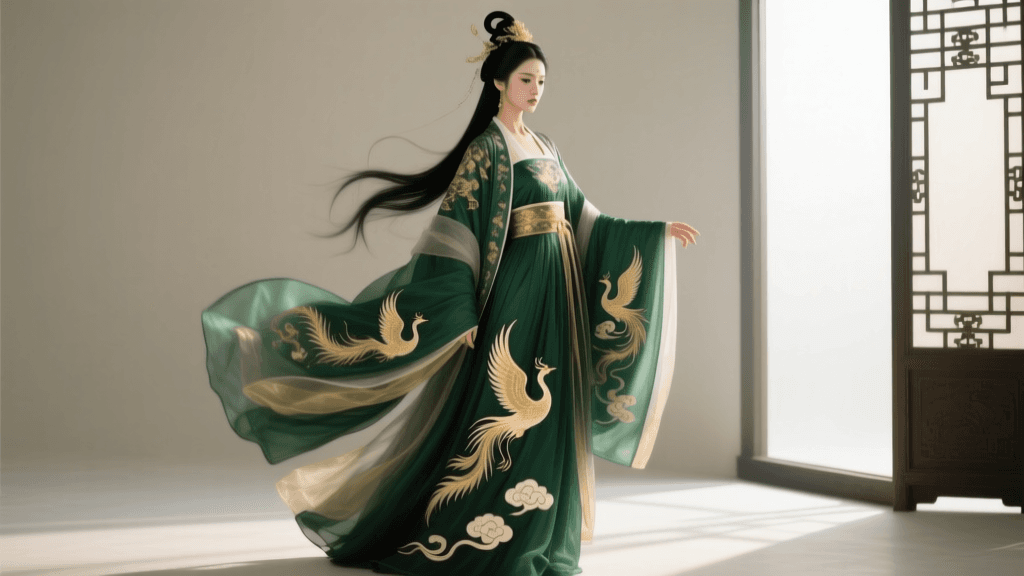
The intersection of traditional Chinese clothing and mythology has given rise to one of the most visually stunning subgenres within the modern Hanfu movement: mythological and deity-inspired garments. Rooted in centuries of folklore, Daoist philosophy, and classical literature like Journey to the West and Investiture of the Gods, these garments are designed not merely to replicate historical daily wear, but to capture the ethereal, otherworldly essence of immortals (Xian), spirits, and celestial deities. According to the World History Encyclopedia, Chinese mythology is deeply intertwined with nature spirits, celestial bureaucrats, and Daoist immortals, each possessing distinct visual markers that translate beautifully into textile art and fashion.
For modern enthusiasts, cosplayers, and cultural practitioners, recreating these looks requires a departure from strict historical accuracy in favor of theatricality, fluid movement, and symbolic color theory. Whether you are preparing for a cultural festival, a cosplay convention, or a themed photoshoot, mastering the art of mythological Hanfu requires an understanding of silhouette, fabric behavior, and divine iconography.
Signature Deities and Their Wardrobe Archetypes
To accurately portray a mythological figure, one must understand their domain and associated motifs. Below is a structured guide to the most popular deity archetypes and their corresponding Hanfu styles.
| Deity / Archetype | Primary Garment Style | Key Colors & Motifs | Essential Accessories |
|---|---|---|---|
| Nine-Tailed Fox Spirit (Huli Jing) | Wei-Jin cross-collar robe with ultra-wide sleeves | Crimson, Pearl White, Gold; floral and illusionary bead motifs | Fox ear hairpins, illusionary bead strings, forehead jewelry (Huadian) |
| Dragon King / Water Deity | Round-collar robe (Yuanlingpao) with structured shoulders | Azure, Deep Blue, Silver; wave, cloud, and dragon-scale patterns | Jade guan (crown), dragon-scale armor pieces, water-drop jade pendants |
| Chang'e (Moon Goddess) | Tang-style Qixiong Ruqun (chest-high skirt) with extra-long Pibo | Pale Yellow, Silver, Moonstone White; crescent moon and rabbit motifs | Crescent moon forehead jewelry, jade rabbit motif hair comb, flowing silk ribbons |
| Daoist Immortal (Xian) | Hechang (crane cloak) over a relaxed Daopao | Earthy tones, Slate Grey, Pine Green; crane, bamboo, and cloud motifs | Fuchen (fly-whisk), gourd, wooden peach-blossom sword, topknot with wooden pin |
Fabric Selection: Engineering the Ethereal Drape
The defining characteristic of mythological Hanfu is its defiance of gravity. Historical daily wear utilized heavier silks, linens, and hemp for modesty and durability. However, celestial garments demand fabrics that catch the wind and create a floating silhouette. The ethereal drape required for these garments relies heavily on traditional silk weaving techniques, as detailed in the Metropolitan Museum of Art's Heilbrunn Timeline of Art History on Chinese Silks, which highlights the evolution of lightweight gauzes and sheer silks used by the elite and in artistic depictions of the divine.
Recommended Textiles for Celestial Cosplay
- Silk Chiffon and Organza: Essential for the outer layers (Shao) and Pibo (ribbons). These fabrics provide volume without weight. Cost: $15–$30 per yard for high-quality polyester alternatives; $40–$80 per yard for pure mulberry silk.
- Tencel and Bamboo Silk Blends: Ideal for the inner layers (Zhongyi) and skirts. They offer a liquid drape, cooling properties for long convention days, and a subtle, pearlescent sheen. Cost: $20–$40 per yard.
- Brocade Accents: Use stiff, metallic brocades strictly for structural elements like waistbands (Yaolan), collars, and armor pieces to contrast with the flowing chiffon. Historically, the production of these luxurious textiles was a closely guarded secret, with Britannica noting that silk and complex brocades were reserved for the elite and divine representations.
Color Theory and Symbolism in Deity Wardrobes
Color in Chinese mythology is never arbitrary; it is deeply tied to the Five Elements (Wuxing) theory and cosmic balance. When selecting or commissioning your mythological Hanfu, adhering to these elemental colors will elevate the authenticity of your portrayal.
- Wood (Green/Azure): Associated with the East, spring, and dragons. Water deities and Dragon Kings are frequently depicted in deep azure and jade green, symbolizing the life-giving properties of rivers and oceans.
- Fire (Red/Crimson): Tied to the South, summer, and the Vermilion Bird. Fox spirits and fire-wielding immortals often wear layered crimsons and burnt oranges, representing passion, transformation, and illusion.
- Earth (Yellow/Brown): The center, representing stability and the Yellow Emperor. Earth deities and high-ranking celestial bureaucrats wear ochre and imperial yellow, though pure bright yellow was historically restricted to the mortal emperor.
- Metal (White/Silver): The West, autumn, and the White Tiger. Moon goddesses like Chang'e and sorrowful spirits are draped in pearlescent whites and silvers, embodying purity, the moon, and the ethereal realm.
- Water (Black/Deep Blue): The North, winter, and the Black Tortoise. Underworld deities and judges of the dead wear profound blacks and midnight blues, accented with silver thread to represent the stars and the night sky.
Measurements and Proportions: The Anatomy of the Immortal
Standard Hanfu measurements will not suffice for mythological garments. To achieve the "Xian" (immortal) aesthetic, you must exaggerate specific proportions.
- Sleeve Length (Shao): Standard Hanfu sleeves end at the fingertips or mid-calf. For deities, sleeves should extend 15 to 25 centimeters past the fingertips. This allows for the "water sleeve" (Shuixiu) effect, where the fabric ripples during martial arts or dance movements.
- Pibo (Ribbon) Dimensions: A standard Pibo is roughly 2 meters long. For a Moon Goddess or Apsara (Feitian) look, commission a Pibo that is at least 3.5 to 4 meters long and 30 centimeters wide. This allows the ribbon to loop over the arms and trail dramatically on the floor.
- Skirt Volume: A standard Tang-style chest-high skirt uses about 3 meters of fabric. For mythological styling, increase this to 4.5 or 6 meters to create a bell-shaped silhouette that looks like a blooming lotus when seated or spinning.
Practical Styling Hacks for Conventions and Photoshoots
Wearing 4 meters of silk chiffon in an outdoor environment or a crowded convention hall presents logistical challenges. Here are actionable solutions to maintain your divine composure.
Securing the Pibo
The most common issue with deity Hanfu is the Pibo slipping off the shoulders. Do not rely on friction. Use hidden magnetic clasps sewn into the inner collar of your Shao (outer robe) and the corresponding points on your Pibo. Alternatively, use double-sided fabric tape (such as Fearless Tape) along the collarbone area to anchor the silk organza directly to your skin or inner garment.
Managing Floor-Trailing Skirts
While trailing skirts look magnificent in photographs, they are hazardous in crowds. Incorporate a hidden drawstring or a discreet wrist-loop (using a clear elastic band) attached to the inner hem of the skirt. When walking through crowded areas, simply slip your thumb through the loop to hitch the skirt up to ankle length, releasing it instantly when it is time to pose.
Hair and Crown Stability
Mythological headpieces, such as the Dragon King's jade guan or the Fox Spirit's elaborate gold combs, are notoriously heavy. Always prep the hair with a texture spray or dry shampoo to create grip. Anchor the base of the crown with U-shaped hairpins driven directly into a braided crown base, rather than relying solely on the decorative prongs of the headpiece.
Sourcing and Commissioning: A Buyer's Timeline
If you are purchasing off-the-rack mythological Hanfu from platforms like Taobao or independent Etsy artisans, timing is critical. Custom embroidery and specialized dyeing processes require significant lead times.
- 6 Months Out: Begin your research and finalize your mood board. Identify the specific deity and gather reference art from classical paintings and modern Xianxia dramas.
- 4 Months Out: Place your commission. Provide the artisan with exact measurements (bust, waist, high-waist, arm length, and total height in centimeters). Specify your fabric choices and request a digital mock-up of the embroidery placement.
- 2 Months Out: The garment should be completed and shipped. International shipping via EMS or DHL typically takes 2 to 4 weeks.
- 1 Month Out: Receive the garment and conduct a full dress test. This is the time to tailor the hem, add the hidden magnetic clasps, and practice tying the Pibo and sash knots.
By treating your mythological Hanfu not just as a costume, but as a piece of wearable cultural art, you honor the rich tapestry of Chinese folklore. The meticulous attention to fabric flow, symbolic color, and exaggerated proportions bridges the gap between ancient legend and modern sartorial expression.