Decoding Kimono Motifs: Japanese Seasonal Color Symbolism
The Philosophy of Kisetsukan: Wearing the Seasons
In the realm of traditional Japanese clothing, a kimono is far more than a mere garment; it is a wearable canvas that reflects the natural world, cultural philosophies, and the relentless passage of time. At the heart of this sartorial tradition is the concept of kisetsukan (seasonal awareness). Unlike Western fashion, which often operates on arbitrary seasonal collections, traditional Japanese dress demands a profound, almost poetic synchronization with nature. According to the Victoria and Albert Museum, the kimono serves as a vital medium for expressing Japanese aesthetic sensibilities, where the motifs and colors chosen must anticipate, reflect, or mourn the changing seasons.
Understanding the pattern color and motif symbolism of Japanese garments requires a deep dive into historical dyeing techniques, regional variations, and the strict etiquette of seasonal timing. Whether you are a collector of vintage silk, a practitioner of tea ceremony, or a cultural enthusiast, mastering this visual language is essential for wearing these garments with authenticity and respect.
The Language of Colors: From Heian Courts to Edo Streets
The foundation of Japanese color symbolism in textiles can be traced back to the Heian period (794–1185), specifically the practice of Kasane no Irome (layered color combinations). Aristocratic women would layer silk robes with specific color gradations visible at the cuffs and hems to signify the exact month and season. For example, a layering of pale green over deep crimson represented the budding of plum blossoms in late winter.
By the Edo period (1603–1867), sumptuary laws restricted the commoner class from wearing overtly luxurious fabrics and bright colors. This led to the subtle, sophisticated aesthetic of Iki and Shibui, where commoners wore muted, earthy tones like nezumi (mouse grey), cha (tea brown), and ai (indigo), reserving vibrant reds, purples, and golds for the lining of the garment or the under-kimono (juban), creating a hidden flash of color known as ura-masari.
Decoding Flora and Fauna: A Motif Dictionary
Motifs on Japanese garments are rarely purely decorative; they carry auspicious meanings, literary references, and strict seasonal boundaries. Below is a structured guide to the most prominent motifs and their associated color palettes.
Spring: Anticipation and Renewal
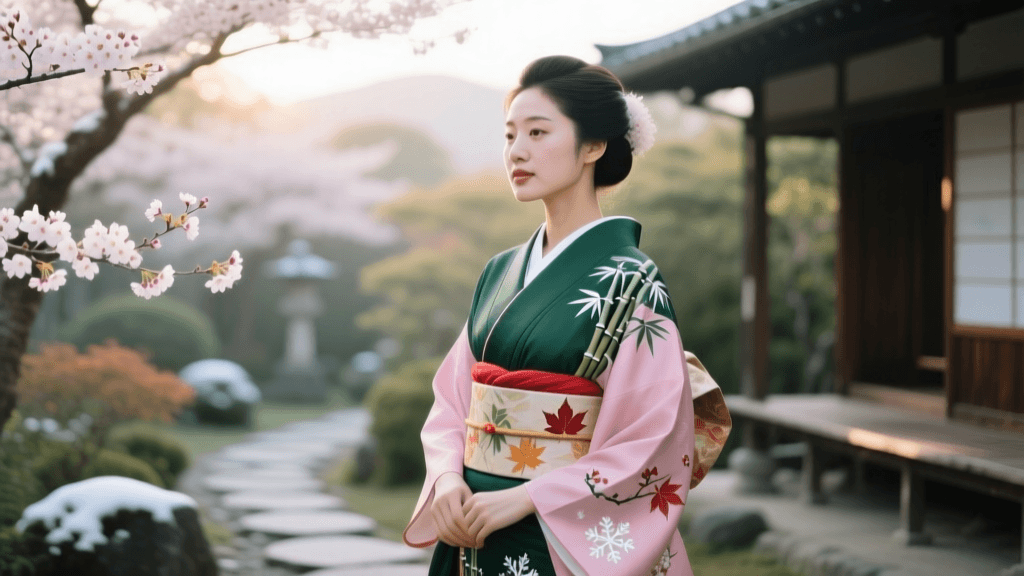
- Sakura (Cherry Blossom): The most iconic Japanese motif. It is typically rendered in soft pinks and whites, often paired with a pale yellow or mint green background to represent the hazy spring air.
- Ume (Plum Blossom): Worn in late winter to early spring. Plum motifs feature deep crimson or bright white flowers against dark, contrasting backgrounds, symbolizing resilience and perseverance through the cold.
- Sho-chiku-bai (Pine, Bamboo, and Plum): An auspicious trio worn during the New Year and winter months. Pine (matsu) represents longevity, bamboo (take) represents flexibility and strength, and plum (ume) represents renewal.
Summer: Coolness and Flowing Water
- Ayame (Iris) and Kaki-tsubata (Water Iris): Depicted in deep indigos and purples, these motifs are meant to evoke a sense of coolness during the humid Japanese summer.
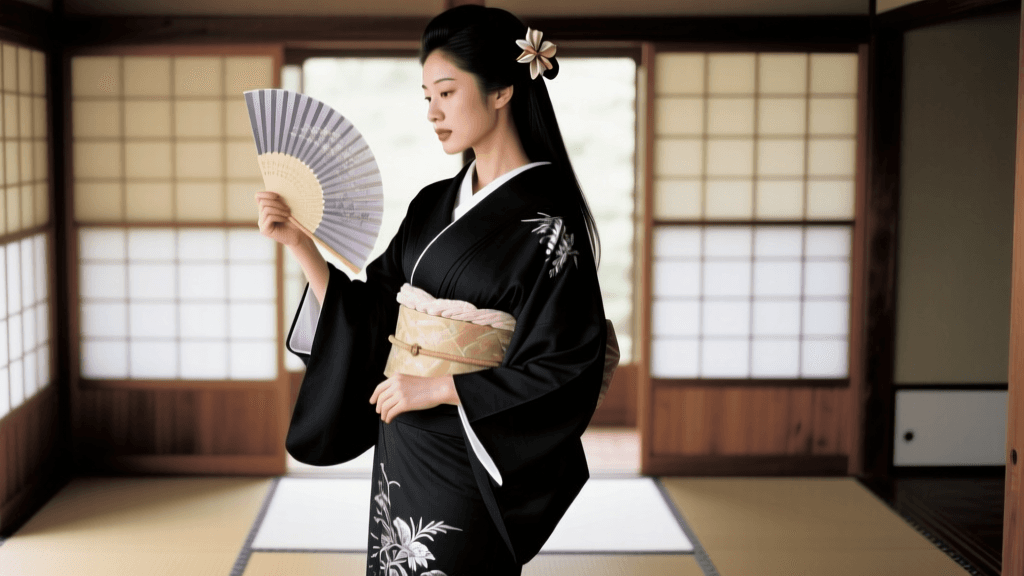
- Uchiwa (Fans) and Natsu-gawa (Summer Streams): Geometric and flowing water motifs in cool blues, silvers, and whites are worn to visually lower the temperature of the viewer.
Autumn: Melancholy and Harvest
- Momiji (Maple Leaves): Rendered in fiery reds, burnt oranges, and golds. Maple motifs are often paired with flowing water to represent the Tatsuta River, a famous poetic trope of autumn leaves floating downstream.
- Kiku (Chrysanthemum): The symbol of the imperial family and longevity. Chrysanthemums are depicted in rich yellows, whites, and purples, dominating the late autumn wardrobe.
Regional Contrasts: Ainu and Ryukyuan Symbolism
While mainland Japan focuses heavily on the four temperate seasons, the indigenous and regional minorities of the Japanese archipelago developed entirely different symbolic vocabularies based on their unique environments and spiritual beliefs.
Ainu Textiles: Protection and the Spirit World
The Ainu people of Hokkaido and northern Honshu traditionally crafted garments from attush (elm bark fiber) and cotton traded from the mainland. Ainu motifs are highly abstract and geometric, serving a deeply spiritual purpose rather than a seasonal one. The most prominent motif is the moreu (a spiral or thorn-like curve) and the aiushi (bramble pattern). These patterns are placed strategically at the vulnerable openings of the garment—the collar, cuffs, and hem. According to the Kyoto Costume Institute, these intricate, thorn-like appliqués were believed to tangle and ward off evil spirits (kamuy) from entering the wearer's body. The colors are predominantly stark contrasts: deep indigo or black cotton appliquéd with undyed white or cream fibers.
Ryukyuan Bingata: Subtropical Vibrancy
In the southern Ryukyu Islands (modern-day Okinawa), the traditional bingata dyeing technique reflects a subtropical climate and a history of maritime trade with China and Southeast Asia. Unlike the muted, seasonally restrained palette of mainland Edo, Ryukyuan garments explode with vibrant, saturated colors: brilliant yellows (historically reserved for royalty), vivid reds, and deep blues. Motifs include tropical flora like the hibiscus and peony, alongside exotic fauna such as koi fish, dragons, and swallows. The symbolism here focuses on prosperity, fertility, and the abundance of the ocean and sun, entirely divorced from the four-season melancholy of the mainland.
Seasonal Motif and Color Matrix
To assist collectors and wearers in selecting the appropriate garment, refer to the following data table outlining the strict seasonal matrix for mainland Japanese kimono.
| Season | Primary Motifs | Dominant Colors | Timing Rule (When to Wear) |
|---|---|---|---|
| Early Spring | Ume (Plum), Wakana (Young Greens) | Crimson, Pale Green, White | February to early March |
| Mid Spring | Sakura (Cherry Blossom), Wisteria | Pink, Lavender, Soft Yellow | Mid-March to early April |
| Summer | Ayame (Iris), Uchiwa (Fans), Water | Indigo, Silver, Aqua, White | June through August |
| Autumn | Momiji (Maple), Kiku (Chrysanthemum) | Burnt Orange, Gold, Deep Purple | September through November |
| Winter | Sho-chiku-bai, Yukiwa (Snowflakes) | Black, Navy, Forest Green, White | December and New Year |
Practical Guide: Sizing, Purchasing, and Timing
Acquiring and wearing motif-specific kimono requires practical knowledge of sizing, market values, and the nuanced etiquette of timing. The golden rule of Japanese seasonal dressing is sakidori (anticipation). You should wear a motif slightly before the season peaks in nature, never after. Wearing cherry blossoms when the trees are already bare is considered a faux pas; instead, wear them in late February to invite the spring.
Essential Measurements for the Perfect Fit
Kimono are constructed from straight bolts of fabric (tanmono) and are highly adjustable, but finding a vintage piece that fits your frame requires knowing two critical measurements:
- Yuki (Arm Span/Shoulder to Wrist): Measured from the center back of the neck, over the shoulder, down to the wrist bone. Formula: Your height × 0.4 + 2cm. For a person 165cm tall, the ideal Yuki is roughly 68cm.
- Mitake (Back Length): Measured from the base of the neck down to the desired hemline (usually the ankle). Formula: Your height × 0.4. A 165cm person should look for a Mitake of roughly 66cm, allowing for the ohashori (the waist fold that adjusts the length).
Cost Breakdown and Market Timing
Whether you are buying for a collection or for active wear, understanding the market will save you from overpaying for mass-produced synthetics disguised as artisanal silk.
- Vintage Silk Komon (Everyday Patterned Kimono): Expect to pay between $40 and $120 USD. The best time to purchase these is during the bi-monthly Oedo Antique Market in Tokyo or via specialized online vendors like Ichiroya. Look for hand-painted Yuzen dyes, identifiable by the thin white resist outlines (itome-nori) around the motifs.
- Artisan Houmongi (Visiting Wear with Flowing Motifs): New, hand-dyed silk garments featuring continuous motifs that flow across the seams cost between $800 and $3,000+ USD. These are investments meant for formal tea ceremonies or weddings.
- Vintage Ainu Attush: Authentic, mid-20th-century elm bark garments are rare museum pieces. When they surface at specialized ethnographic auctions, expect starting bids of $1,500 to $5,000 USD. Always verify the presence of traditional cotton appliqué work.
Caring for Your Seasonal Silk
Preserving the vibrant colors of natural dyes requires meticulous care. Never wash silk kimono in water. Instead, after wearing, hang the garment in a well-ventilated, shaded area for 24 hours to allow moisture to evaporate. Store your kimono folded in acid-free tatoushi paper, and include natural camphor or cedar blocks to deter insects. For garments featuring heavy metallic gold leaf (surihaku), ensure the folds do not press directly against the gold, as the friction will cause the leaf to flake and degrade over time.
'The Japanese aesthetic is not merely about observing nature, but about internalizing its transience. To wear the maple leaf in autumn is to acknowledge the beauty of things as they fade.'
By understanding the intricate symbolism of colors and motifs, and respecting the regional diversity from the snowy landscapes of Hokkaido to the coral reefs of Okinawa, you transform the act of wearing a kimono from simple costuming into a profound dialogue with Asian cultural history.