Yukata vs Jinbei: 2026 Japanese Summer Wear Guide
Introduction to Japanese Summer Casual Wear in 2026
Summer in Japan is a season of dazzling fireworks, lively street festivals, and sweltering humidity. As we navigate the summer of 2026, choosing the right traditional garment is no longer just about aesthetics; it is a matter of comfort, cultural appreciation, and climate adaptation. For both locals and international travelers, the debate often centers on two iconic pieces of casual Japanese clothing: the yukata and the jinbei. While both are deeply rooted in Japanese heritage, they serve distinctly different purposes and offer unique styling opportunities. In this comprehensive guide, we break down the yukata vs jinbei comparison to help you decide which garment best suits your 2026 summer itinerary.
Understanding the Yukata: Elegance Meets Tradition
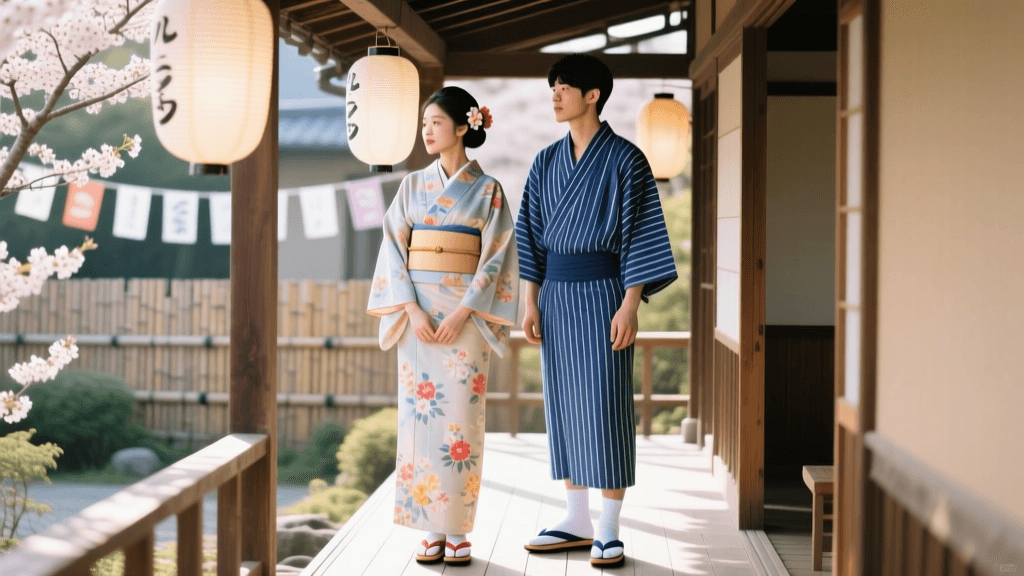
The yukata is a lightweight, unlined cotton kimono that originated as a bathing robe for the aristocracy during the Heian period. Today, it is the quintessential festival garment. According to cultural historians at the Metropolitan Museum of Art, the yukata transitioned from private loungewear to public streetwear during the Edo period, a shift that cemented its place in Japanese summer culture.
In 2026, the yukata market has seen a surge in sustainable and tech-enhanced fabrics. While traditional indigo-dyed cotton remains popular, modern weavers are incorporating cooling synthetic blends and organic hemp to combat rising urban temperatures. A standard yukata consists of a single wrap-around robe secured by a thin sash called an obi. It requires specific undergarments, such as the hadajuban, and is typically paired with wooden geta sandals.
Exploring the Jinbei: The Ultimate Summer Lounger
If the yukata is the elegant cousin, the jinbei is the relaxed, practical sibling. The jinbei is a two-piece garment consisting of a short-sleeved, wrap-style top and matching drawstring shorts or trousers. Originally worn by men as indoor loungewear or workwear, the jinbei has evolved into a universally loved summer staple for all genders and ages.
For the 2026 season, fashion brands in Tokyo and Kyoto are releasing jinbei sets featuring bold, contemporary prints, including pop-art motifs and minimalist geometric patterns. The two-piece design allows for maximum airflow and unrestricted movement, making it the superior choice for navigating crowded food stalls or relaxing at a ryokan. Travel resources like Japan Guide frequently recommend lightweight cotton separates for tourists seeking comfort without sacrificing cultural immersion.
Head-to-Head Comparison: Yukata vs. Jinbei
To help you make an informed decision, we have compiled a detailed comparison chart highlighting the core differences between these two garments based on 2026 market trends and traditional guidelines.
| Feature | Yukata | Jinbei |
|---|---|---|
| Garment Structure | One-piece wrap robe | Two-piece top and shorts/trousers |
| Formality Level | Semi-casual to Smart-casual | Strictly Casual / Loungewear |
| Best Occasions | Fireworks festivals, temple visits, dates | Local street food stalls, onsen resorts, relaxing at home |
| Ease of Wearing | Moderate (requires obi tying skills) | Very Easy (drawstring and simple wrap) |
| Average Price (2026) | $40 - $150 USD (Retail) | $25 - $80 USD (Retail) |
| Footwear Pairing | Geta (wooden clogs) with tabi socks | Setta, sandals, or barefoot indoors |
Fabric Innovations for the 2026 Summer Heat
With global temperatures continuing to rise, the textile industry in Japan has adapted its traditional weaving techniques to prioritize breathability. When shopping for either a yukata or jinbei in 2026, look for shijira-ori. This traditional seersucker-like weave creates intentional puckering in the fabric, reducing the surface area that touches the skin and allowing air to circulate freely.
Another major trend this year is the use of washi (traditional Japanese paper) woven into cotton yarns. Washi blends are incredibly lightweight, possess natural moisture-wicking properties, and dry much faster than pure cotton. For those attending outdoor events from dusk until dawn, a washi-blend jinbei or yukata will keep you significantly cooler than standard synthetic alternatives.
Styling and Accessorizing Your Summer Look
Accessories are what elevate your traditional garment from simple clothing to a complete cultural ensemble. For the yukata, the obi is the centerpiece. In 2026, pre-tied obi belts with magnetic clasps are incredibly popular among international tourists, offering the intricate look of a traditional butterfly knot without the steep learning curve. Pair your yukata with a woven rattan bag and a folding sensu fan to complete the silhouette.
Styling a jinbei is much more straightforward. Because it is inherently casual, accessories should be minimal and functional. A simple cotton tenugui (hand towel) draped around the neck or tied around the head is both a stylish nod to Edo-period merchants and a practical way to wipe away sweat. For footwear, leather setta sandals or modern sports sandals are widely accepted and highly comfortable for walking.
Scenario Guide: When to Wear Which
Choosing between a yukata and a jinbei often comes down to your specific itinerary. Here is a quick scenario guide to ensure you are dressed appropriately for your summer activities:
- Major Fireworks Festivals (Hanabi Taikai): Wear a Yukata. These events are highly social and romantic, and the yukata provides the perfect level of festive elegance.
- Onsen (Hot Spring) Resort Strolls: Wear a Jinbei or the provided resort yukata. If you are walking from your room to the communal baths or the local village, a jinbei is highly appropriate and comfortable.
- Temple and Shrine Visits: Wear a Yukata. While temples are generally relaxed in the summer, a yukata shows a higher degree of respect for the sacred space than a two-piece casual set.
- Casual Izakaya Hopping: Wear a Jinbei. If you are spending the evening jumping between crowded, lively drinking establishments, the breathability and ease of the jinbei are unmatched.
Sizing and Fit Tips for International Buyers
Traditional Japanese clothing does not rely on the complex sizing matrices found in Western fashion. Instead, garments are typically sized by height and hip circumference. When purchasing a yukata in 2026, the standard rule of thumb is that the hem should fall right at your ankle bone. If the garment is too long, it can be folded at the waist using a technique called ohashori.
Jinbei sizing is slightly more forgiving due to the drawstring waist, but the top should still drape loosely without restricting shoulder movement. Always consult the specific brand's size chart, as modern streetwear brands may offer oversized fits compared to traditional textile makers.
Conclusion
Whether you choose the flowing elegance of the yukata or the breezy practicality of the jinbei, both garments offer a beautiful way to connect with Japanese culture during the vibrant summer months. By understanding the nuances of fabric, formality, and function, you can confidently navigate the festivals and streets of Japan in 2026, staying cool while honoring centuries of sartorial tradition.