Dressing the Divine: Recreating Chinese Mythology Hanfu
The Intersection of Myth and Textile
Chinese mythology is a vast, intricate tapestry of gods, immortals, mythical beasts, and cosmic forces. From the ancient texts of the Shan Hai Jing (Classic of Mountains and Seas) to the sprawling pantheon of Daoist deities, the visual language of the divine has profoundly influenced traditional Chinese art, literature, and, most notably, clothing. Today, the modern Hanfu movement and the booming Xianxia (immortal heroes) fantasy genre have sparked a massive resurgence in recreating these mythological garments. According to comprehensive studies on Chinese mythology, the visual representation of deities often relies heavily on elemental symbolism, ethereal movement, and celestial motifs. For modern enthusiasts, translating these legendary aesthetics into wearable, historically inspired Hanfu requires a deep understanding of textile behavior, historical silhouettes, and symbolic color theory.
Recreating a mythological ensemble is not merely about putting on a historical costume; it is about capturing the 'Qi' (spiritual energy) of the archetype. Whether you are aiming to embody the moon goddess Chang'e, the nine-tailed fox spirit, or a celestial dragon deity, the garments must flow, shimmer, and command respect. This guide provides actionable, practical advice for sourcing fabrics, structuring silhouettes, and budgeting for your own divine wardrobe.
Decoding the Divine Wardrobe: Elements and Colors
In Chinese cosmology, the Wu Xing (Five Elements) theory dictates the balance of the universe. Deities and mythical creatures are intrinsically linked to these elements, which in turn dictate their color palettes and material associations. When designing or commissioning a mythological Hanfu set, aligning your fabric choices with the Five Elements adds a layer of cultural authenticity and visual harmony to your ensemble.
| Mythological Archetype | Element | Primary Color Palette | Recommended Fabric | Est. Commission Cost |
|---|---|---|---|---|
| Celestial Maiden (Feitian) | Metal / Air | White, Silver, Pale Blue | 8mm Silk Chiffon, Organza | $350 - $550 |
| Dragon King / Water Deity | Water | Deep Azure, Black, Teal | 22mm Silk Charmeuse, Brocade | $450 - $800 |
| Nine-Tailed Fox Spirit | Fire / Earth | Crimson, Gold, Burnt Orange | Silk Damask, Tulle overlays | $300 - $600 |
| Earth Goddess (Nuwa) | Earth | Ochre, Terracotta, Jade Green | Linen blends, Heavy Crepe | $250 - $450 |
| Woodland Immortal | Wood | Emerald, Willow Green, Brown | Raw Silk, Cotton-Silk blends | $200 - $400 |
Practical Guide to Sourcing and Styling
Fabric Selection for Ethereal Movement
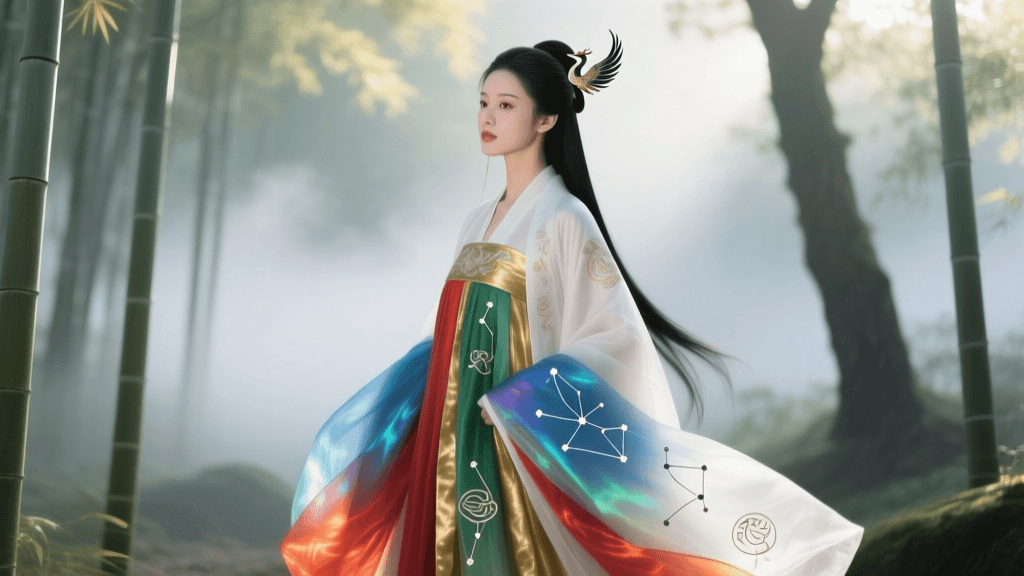
The hallmark of mythological and Xianxia clothing is its supernatural movement. Deities are often depicted floating on clouds or riding the wind, meaning the fabric must catch the air gracefully. The history of silk production in China provides the foundation for these ethereal garments. For the outer layers, such as the Pibo (stole) and Daxiushan (large-sleeve robe), you must prioritize lightweight, translucent fabrics.
- 8mm to 10mm Silk Chiffon: Ideal for the Pibo. It drapes beautifully, catches the wind, and remains lightweight enough not to pull down the neckline of your inner garments.
- Silk Organza: Perfect for structural fantasy elements, such as exaggerated lotus-shaped collars or stiffened sleeve cuffs that mimic wings or petals.
- 19mm to 22mm Silk Charmeuse: Use this for the inner layers, such as the Qixiong Ruqun (chest-high skirt). The heavy, lustrous drape provides a grounding contrast to the sheer outer layers and ensures the skirt does not fly up in a breeze.
The Anatomy of a Goddess Ensemble
To achieve a recognizable mythological silhouette, you must layer specific historical garments in a stylized manner. Here is the essential anatomy of a celestial goddess ensemble, complete with precise measurements for custom tailoring or DIY sewing:
- Hezi Qun (Tube Skirt) or Qixiong Ruqun: The foundation. For a chest-high skirt, the waistband should be 15cm wide and heavily interfaced to support the weight of the skirt. The skirt circumference should be at least 300cm to allow for dramatic pleating and sweeping movement.
- Daxiushan (Large Sleeve Robe): The defining outer layer. For a mythological look, the sleeves should be excessively long and wide. Aim for a sleeve circumference of 120cm to 150cm at the wrist, and a sleeve length that extends 20cm past the fingertips. This creates the iconic 'waterfall' effect when the arms are raised.
- Pibo (Celestial Ribbon): Essential for the 'Feitian' (flying apsara) aesthetic. A standard Pibo should measure exactly 250cm in length and 40cm in width. Drape it over the arms and secure it lightly at the elbows with hidden snaps or decorative armbands to prevent it from slipping off during movement.
- Yunjiian (Cloud Shoulder): A highly decorative, embroidered capelet worn over the shoulders. For mythological beings, look for cloud shoulders featuring motifs of cranes, peonies, or the Shan Hai Jing beasts, heavily fringed with silk tassels measuring 10cm in length.
Accessorizing the Immortals: Hair and Adornments
No mythological Hanfu is complete without an elaborate hairstyle and divine accessories. Historical Chinese dress and adornment were strictly codified, but mythological styling allows for creative, gravity-defying interpretations.
Hairpins and Crowns
For a celestial updo, structural integrity is key. You will need a base of hairpieces (such as a braided bun or a wire-frame halo) to support the weight of the ornaments.
- Buyao (Dangling Hairpins): Purchase brass or resin Buyao with stems measuring at least 15cm to 20cm in length. This ensures they can penetrate deep into the hairpiece and remain secure. Look for designs featuring trembling kingfisher feathers (Tian-tsui) or faux pearls to mimic the oceanic treasures of the Dragon Palace.
- Guan (Crowns): For male deities or warrior goddesses, a metal or carved wood Guan is essential. Ensure the crown has two horizontal holes for a 25cm hair stick (Zan) to pass through, anchoring it to the topknot.
Mythological Makeup: The Huadian
Facial adornment bridges the gap between human and divine. The Huadian (floral applique) is a staple of Tang Dynasty fantasy styling. To recreate this, purchase pre-cut gold leaf flakes or delicate resin floral decals. Apply them directly to the center of the forehead, between the eyebrows, using a dab of spirit gum or cosmetic eyelash glue. For a fox spirit aesthetic, extend the eyeliner outward and upward by 2cm, and apply a dusting of crimson or gold eyeshadow at the outer corners of the eyes to mimic a feline, otherworldly gaze.
DIY vs. Commissioning: Timelines and Budgets
Deciding whether to sew your mythological Hanfu or commission a professional atelier depends on your budget, timeline, and technical skills. Here is a practical breakdown to help you plan your project.
The DIY Route
Sewing your own garments offers total control over the fabric and fit, but requires a significant time investment.
- Material Costs: $80 to $150. (Sourcing directly from wholesale silk markets or specialized online Hanfu fabric vendors can reduce costs. Expect to buy at least 8 meters of chiffon and 4 meters of charmeuse).
- Timeline: 3 to 5 weeks. (Allow one week for washing and pre-shrinking silks, two weeks for pattern drafting and cutting, and two weeks for sewing, hemming, and attaching embellishments).
- Skill Level Required: Intermediate. You must be comfortable working with slippery, sheer fabrics and sewing rolled hems on chiffon.
The Commission Route
Hiring a specialized Hanfu tailor or a cosplay atelier ensures historical accuracy and professional embroidery, though it comes at a premium.
- Costs: $350 to $800+. (The price scales heavily based on embroidery. Hand-embroidered Suzhou silk motifs will push the price to the higher end, while machine-embroidered brocades remain more affordable).
- Timeline: 2 to 4 months. (Reputable ateliers often have waitlists, and intricate hand-embroidery alone can take 40 to 60 hours to complete).
- Actionable Tip: When commissioning, always provide the tailor with a 'mood board' that includes both historical artifact references (like Tang dynasty murals from the Dunhuang caves) and modern fantasy illustrations. This ensures they understand the balance between historical grounding and mythological exaggeration you are aiming for.
'The clothing of the immortals is not bound by the mortal need for warmth or modesty; it is a manifestation of their spiritual cultivation. When we recreate these garments today, we are not just wearing silk—we are draping ourselves in the poetry of the cosmos.'
— Modern Hanfu Styling Manifesto, Community Archive
Conclusion
Recreating traditional clothing from Chinese mythology is a deeply rewarding journey that bridges ancient folklore with modern sartorial expression. By understanding the elemental color theories, selecting the correct weights of silk to achieve supernatural movement, and meticulously planning your accessories, you can bring the legends of the Shan Hai Jing and the celestial courts to life. Whether you are painstakingly sewing a 300cm chest-high skirt yourself or commissioning a master embroiderer for a cloud shoulder, the result is a wearable tribute to one of the world's richest mythological traditions. Step into the divine, and let your garments tell a story that has captivated humanity for millennia.