Edo Period Kimono: History, Yuzen Dyeing & Buying Guide
The Golden Age of Japanese Textile Arts
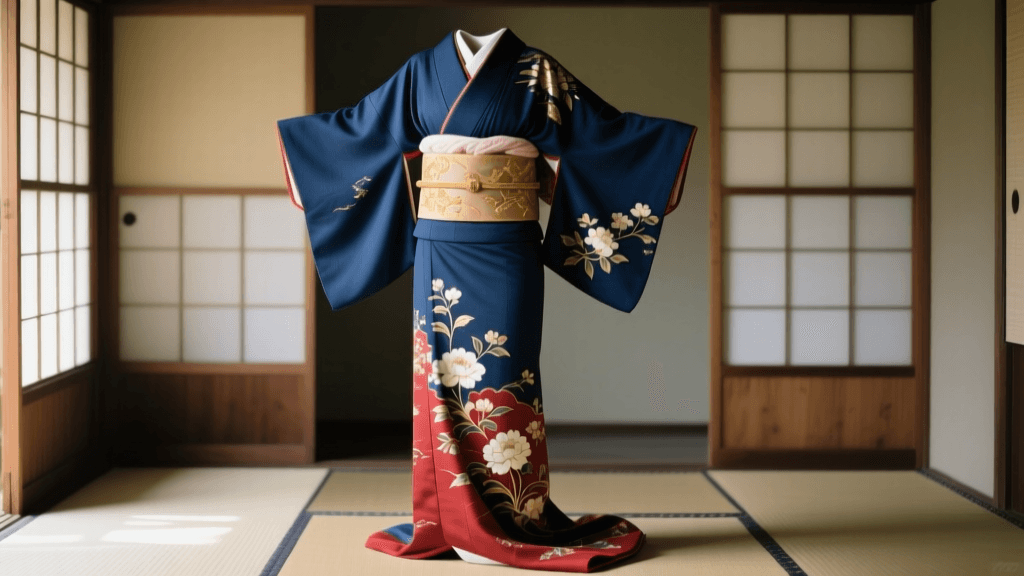
The Edo period (1603–1867) stands as the undisputed golden age of Japanese textile arts and fashion. During this era of prolonged peace and economic growth under the Tokugawa shogunate, the kosode—a garment with small sleeve openings that was previously worn as an undergarment—evolved into the primary outerwear for both men and women. This transformation laid the direct foundation for the modern kimono. For contemporary collectors, historians, and enthusiasts, understanding the Edo period is not merely an academic exercise; it is the key to identifying, valuing, and wearing authentic vintage garments today. According to the Metropolitan Museum of Art's Heilbrunn Timeline on Japanese Dress, the Edo period saw an unprecedented explosion of dyeing techniques and motif development that continue to dictate the rules of modern kitsuke (kimono dressing).
The Historical Shift: From Kosode to Kimono
Prior to the Edo period, the aristocratic classes favored the elaborate, multi-layered junihitoe or the sweeping, wide-sleeved garments of the Muromachi period. However, as the merchant class (chonin) gained economic power in the newly established urban centers of Edo (Tokyo), Kyoto, and Osaka, their practical yet highly decorative kosode became the canvas for fashion innovation. The sleeve openings remained relatively small compared to later furisode styles, but the body of the garment widened, and the obi (sash) began to transition from a simple, thin cord to a wider, more prominent fashion accessory.
This era also birthed the concept of 'iki'—an aesthetic ideal of understated elegance and subtle sophistication. Because the shogunate frequently enacted sumptuary laws forbidding the merchant class from wearing overtly luxurious fabrics or bright colors, commoners developed ingenious ways to display wealth. They wore muted, conservative colors on the outside of their garments while lining them with exorbitantly expensive, hand-painted silk. Today, when shopping for vintage Edo-style garments, collectors often look for these historical markers of 'iki', such as subtle crepe silk (chirimen) with hidden interior luxury.
Masterful Dyeing Techniques: Yuzen and Komon
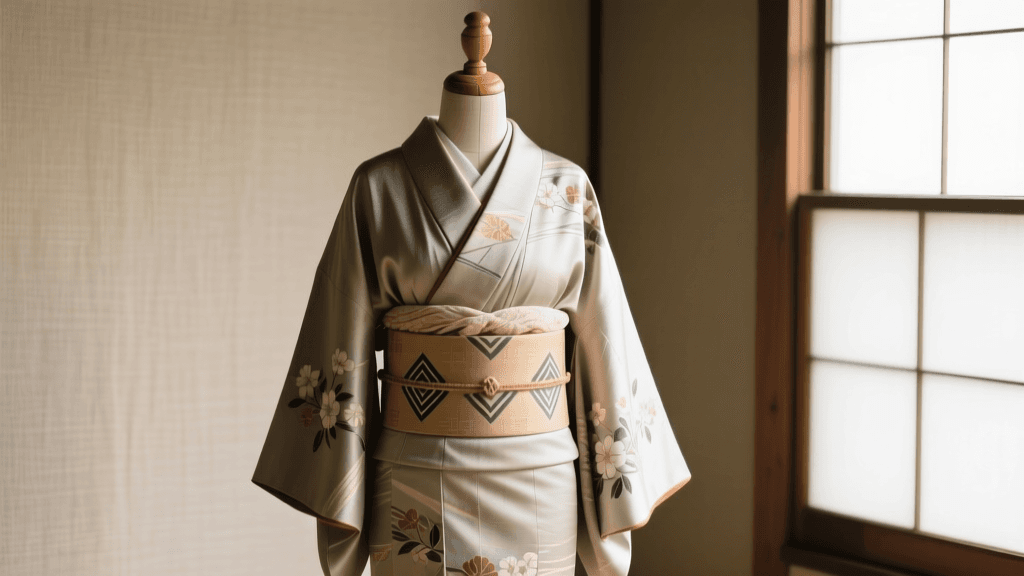
The most significant technical breakthrough of the Edo period was the invention of Yuzen dyeing, attributed to the fan painter Miyazaki Yuzensai in the late 17th century. Yuzen allowed artisans to draw intricate, multi-colored pictorial designs directly onto silk using a rice-paste resist method. This technique liberated kimono design from the geometric constraints of earlier weaving and tie-dyeing methods. As noted by the Victoria and Albert Museum's comprehensive archive on the Kimono, Yuzen dyeing transformed the garment into a wearable canvas, featuring sweeping landscapes, flowing rivers, and detailed flora.
Simultaneously, the strict sumptuary laws gave rise to Edo Komon, a micro-pattern dyeing technique originally used for the leather kamishimo (formal trousers) of the samurai class. Using incredibly fine paper stencils (katagami), artisans dyed thousands of microscopic dots per square inch onto silk. From a distance, an Edo Komon kimono appears to be a solid, conservative color, but up close, it reveals a breathtaking, precise geometric pattern. This was the ultimate expression of Edo-period rebellion and refined taste.
Actionable Guide: Buying, Sizing, and Pricing
Acquiring an authentic Edo-period or early-Showa vintage kimono that reflects these historical techniques requires an understanding of traditional measurements and market pricing. Vintage garments were tailored to the specific individual, meaning standard modern sizing rarely applies. When purchasing historical pieces, you must focus on two critical measurements: the 'yuki' (the length from the center back of the neck, across the shoulder, to the wrist) and the 'take' (the total length from the nape of the neck to the hem).
Most surviving vintage Edo Komon and early Yuzen garments feature a shorter 'yuki' (typically 64cm to 67cm) compared to modern garments (which average 70cm or more). If you are taller than 5'4" (162cm), you will need to employ a traditional kitsuke technique called 'karinui' or 'age', which involves tacking and folding the excess fabric at the shoulder and waist to maintain the historical silhouette without altering the original seams. Below is a practical comparison chart to guide your purchasing decisions and budget allocation.
| Garment Type | Historical Era | Avg. Vintage Cost (USD) | Standard Yuki (Sleeve) | Best Obi Pairing |
|---|---|---|---|---|
| Edo Komon | Mid-Edo | $150 - $450 | 64cm - 66cm | Nagoya Obi |
| Kyo Yuzen | Late-Edo / Meiji | $400 - $1,200 | 65cm - 68cm | Fukuro Obi |
| Kaga Yuzen | Mid-Edo | $600 - $2,000+ | 66cm - 69cm | Fukuro Obi |
| Shibori Kosode | Early-Edo | $800 - $3,500 | 62cm - 65cm | Maru Obi (Antique) |
Timing Your Purchase
To secure the best prices on vintage Edo-style textiles, time your purchases around the traditional Japanese retail calendar. The 'Hatsu-uri' (first sales of the New Year) in early January often feature deep discounts on vintage kimono dealers in Kyoto's Shijo and Gion districts. Additionally, the mid-year summer sales in July are ideal for purchasing unlined 'hitoe' or lightweight 'ro' and 'sha' summer garments from the Edo and Meiji periods, as dealers clear inventory before the autumn season.
Practical Advice for Modern Wearers and Styling
Wearing an Edo-period inspired garment today requires strict adherence to the seasonal calendar, a practice that was codified during the Tokugawa era. The Japanese aesthetic dictates that motifs must anticipate the season, appearing on your garment roughly two to three weeks before the actual natural event occurs, and must be retired the moment the season peaks.
- Sakura (Cherry Blossom): Begin wearing sakura motifs in late February. You must strictly retire them by mid-April once the actual blossoms begin to fall. Wearing cherry blossoms in May is considered a major sartorial faux pas.
- Ayame (Iris) and Shobu: Appropriate for late April through early June, coinciding with the rainy season and the Boys' Day festival.
- Suzumushi (Bell Cricket) and Susuki (Pampas Grass): Wear these autumn motifs from late August through September to evoke the cooling breezes of early autumn.
- Momiji (Maple Leaves): Strictly reserved for October and November. Look for vintage Yuzen pieces that utilize the 'bokashi' (gradation) technique to show the leaves turning from green to deep crimson.
Selecting the Proper Accessories
When styling an Edo Komon or Yuzen piece, the choice of obi is paramount. For Edo Komon, which was historically semi-formal, a 'Nagoya obi' featuring a subtle woven metallic thread or a dyed 'Kyo-Yuzen' pattern is appropriate. For the highly formal, pictorial Kaga Yuzen or Kyo Yuzen garments, you must pair them with a 'Fukuro obi'—a fully patterned, heavy brocade sash. Ensure your obijime (decorative cord) and obidome (brooch) reflect the same seasonal motifs as your kimono, creating a cohesive, historically grounded ensemble.
Preserving the Legacy
Collecting and wearing Edo-period inspired garments is an act of cultural preservation. The meticulous craftsmanship of Yuzen artisans and the rebellious subtlety of Edo Komon dyers represent a pinnacle of human textile achievement. By understanding the historical context, mastering the precise measurements, and respecting the seasonal rules of kitsuke, modern enthusiasts can ensure that the sophisticated legacy of the Tokugawa era continues to thrive in the contemporary world.