The Kimono in Global Pop Culture: Cinema to Streetwear
The traditional Japanese kimono is far more than a historical artifact confined to museum archives or ceremonial occasions. Over the past century, this iconic T-shaped garment has transcended its geographical and cultural borders to become a profound influence on global pop culture, Western cinema, high fashion, and modern streetwear. From the sweeping robes of sci-fi epics to the eclectic layers of Harajuku street style, the kimono's silhouette continues to captivate designers, costume makers, and fashion enthusiasts worldwide.
The Cinematic Journey: From Hollywood to Sci-Fi Epics
Hollywood's fascination with Japanese aesthetics dates back to the early 20th century, but it was in the latter half of the century that the kimono's structure began to heavily influence global costume design. According to the Victoria and Albert Museum's landmark exhibition 'Kimono: Kyoto to Catwalk', the garment's structural versatility allowed it to be reimagined for Western audiences while retaining an aura of mystique and elegance.
Perhaps the most famous pop-culture adaptation of traditional Japanese clothing is found in the Star Wars franchise. Costume designer John Mollo drew direct inspiration from the kimono and the pleated hakama when creating the iconic Jedi robes. The wrap-around silhouette, secured with a simple sash, mirrors the informal yukata and martial arts uniforms, embedding Japanese sartorial philosophy into the DNA of modern science fiction. Similarly, films like Memoirs of a Geisha (2005) brought the intricate layers of the formal silk kimono to mainstream Western audiences, while Quentin Tarantino's Kill Bill recontextualized the happi coat and kimono-inspired silhouettes for gritty, stylized action cinema.
The Runway to Streetwear Pipeline
In the realm of high fashion, designers like Alexander McQueen, Yves Saint Laurent, and John Galliano have frequently referenced the kimono's flat-pattern cutting and voluminous sleeves. However, it is the translation of these runway concepts into everyday streetwear that marks the kimono's true pop-culture triumph. As detailed in BBC Culture's exploration of the kimono's Western conquest, the garment's transition into Western wardrobes began with the 'dressing gown' in the 19th century but has evolved into the modern 'kimono jacket' or haori cardigan.
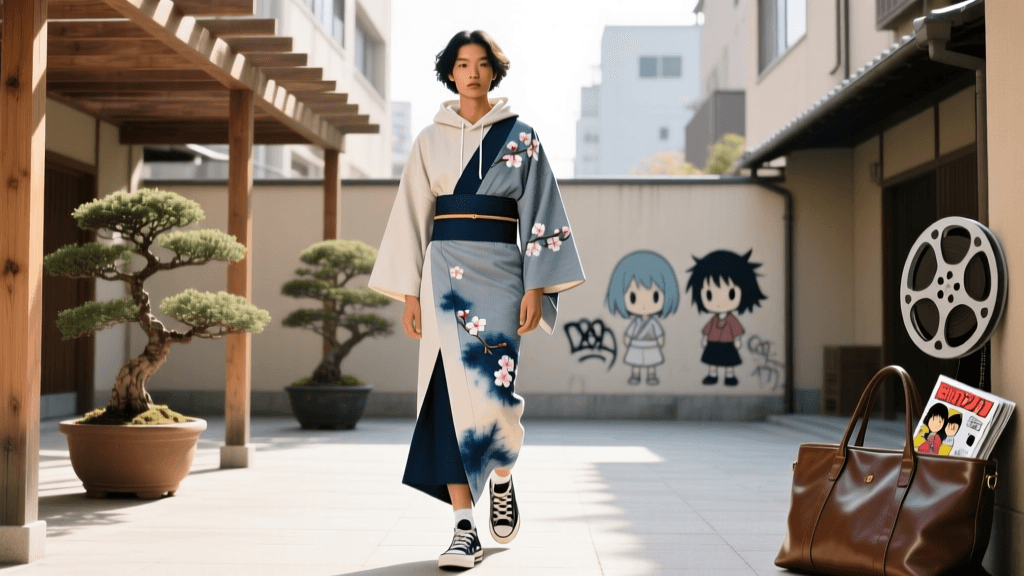
Today, the haori—a traditional hip-length kimono jacket—is a staple in global streetwear. Enthusiasts pair vintage silk haori with graphic tees, denim, and chunky sneakers. In Tokyo's Harajuku district, subcultures like 'Kimono Girls' mix antique Meiji-era textiles with Dr. Martens boots and gothic accessories, proving that traditional garments can thrive in rebellious, youth-driven pop culture spaces.
Anime, Gaming, and Cosplay Culture
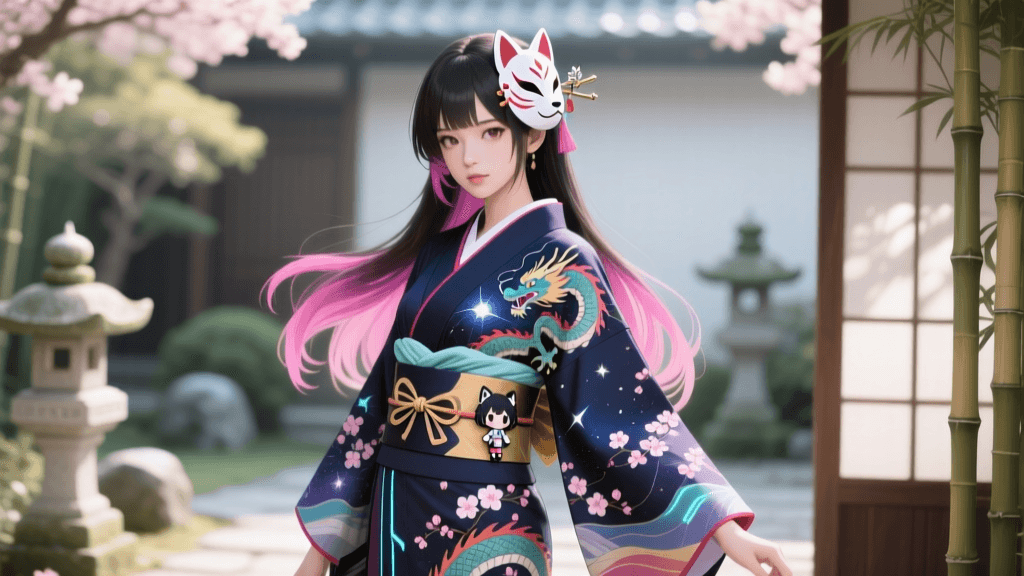
The global explosion of Japanese anime and video games has introduced millions to specific traditional garments, often stylized for fantasy settings. Characters in series like Demon Slayer (Kimetsu no Yaiba) wear modified haori and hakama, sparking massive global demand for screen-accurate replicas. Cosplayers frequently utilize the hakama (pleated trousers) and obi (sash) to construct dynamic, movement-friendly outfits for conventions. Anime character design heavily relies on the color theory of the obi and outer layers to represent elemental traits or personality archetypes, making these garments instantly recognizable to fans. This media-driven exposure has created a booming niche market for accessible, machine-washable traditional garments tailored specifically for the international cosplay community, often utilizing breathable linen-cotton blends to survive crowded, warm convention halls.
Traditional vs. Pop-Culture Styling: A Comparison
When adapting traditional garments for modern pop-culture events, conventions, or streetwear, the rules of wear shift dramatically. Below is a comparison of traditional styling versus modern pop-culture adaptations.
| Garment Element | Traditional Rule | Pop-Culture / Streetwear Adaptation |
|---|---|---|
| Collar (Eri) | Crossed strictly left over right, pulled tight to the nape of the neck. | Relaxed fit, layered over turtlenecks, hoodies, or graphic tees. |
| Obi (Sash) | Silk sash tied in complex knots (e.g., Taiko musubi) at the back. | Replaced with leather belts, corset belts, or simple fabric sashes tied at the front. |
| Footwear | Zori or Geta sandals worn with split-toe Tabi socks. | Chunky sneakers, combat boots, or platform shoes. |
| Haori (Jacket) | Secured with a braided Haori-himo cord, worn over formal kimono. | Worn open like a duster coat over jeans and streetwear basics. |
Practical Guide: Sourcing, Measuring, and Styling
For fans of Japanese media, cosplayers, and streetwear enthusiasts looking to incorporate authentic pieces into their wardrobes, navigating the vintage and reproduction market requires specific knowledge. The Metropolitan Museum of Art's Heilbrunn Timeline of Art History notes the kimono's unique straight-line cutting method, which makes it remarkably adaptable to various body types, a key reason for its enduring global appeal.
1. What to Buy for Pop-Culture and Streetwear Styling
- Vintage Silk Haori ($40 - $120): The most versatile piece. It functions as an open-front cardigan. Look for bold linings featuring traditional motifs (like cranes or waves) that can be shown off by rolling up the sleeves.
- Hakama Pants ($60 - $150): Ideal for anime cosplay or avant-garde streetwear. Synthetic blends are highly recommended for pop-culture events as they resist wrinkling and are machine washable, unlike authentic silk.
- Happi Coats ($30 - $80): Short, informal jackets often bearing festival or clan crests. Perfect for casual summer streetwear or layering over tank tops at conventions.
2. Sizing and Measurements
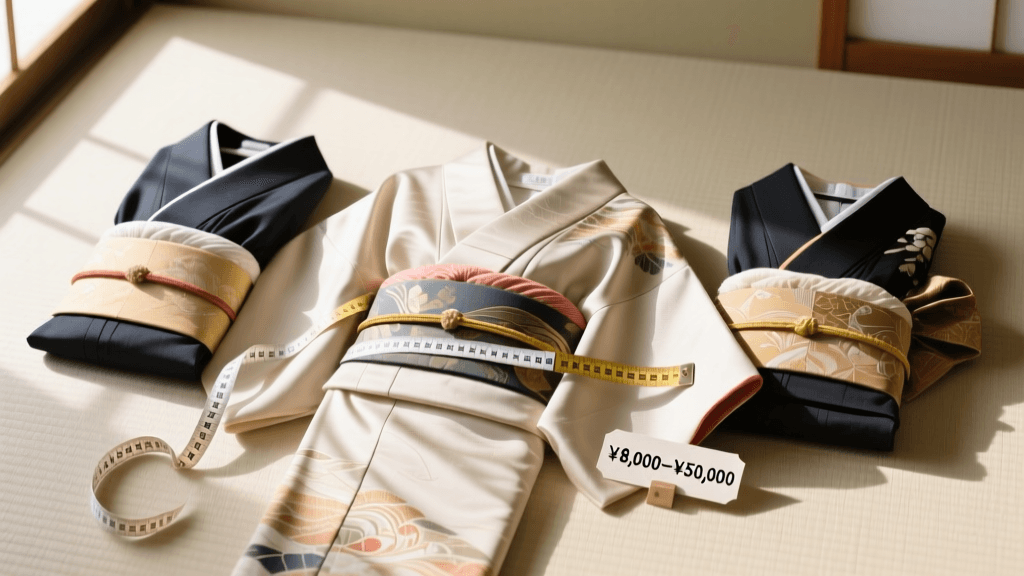
Unlike Western clothing, kimono are not sized by standard S/M/L metrics. They are measured by Yuki (center of back neck to wrist) and Mitake (back length).
- For Haori: Aim for a back length (mitake) between 30 to 34 inches (76 to 86 cm) for a modern hip-length fit. The shoulder span should roughly match your natural shoulder width, though a dropped-shoulder look is highly acceptable in streetwear.
- For Hakama: Measure from your navel (where the obi sits) down to your ankle bone. Standard sizes range from 85cm to 95cm. Ensure the front and back ties are at least 100 inches long to allow for proper wrapping and secure knotting.
3. Styling for Conventions and Events
When attending anime conventions or pop-culture festivals, comfort and mobility are paramount. Pair a synthetic yukata with modern leggings and combat boots. Use a wide leather belt instead of a traditional obi to secure the waist, which prevents the garment from loosening during long days of walking. For cosplayers replicating Demon Slayer uniforms, purchase a reproduction haori made from cotton-polyester blends; these cost between $35 and $60 online and offer the necessary drape without the fragility of vintage silk.
4. Care and Maintenance for Event Wear
Authentic vintage silk should never be machine washed or placed on wire hangers, which will distort the straight shoulder seams. Instead, store your haori folded flat or hung on wide, padded wooden hangers inside breathable cotton garment bags. For synthetic cosplay replicas and cotton happi coats, gentle machine washing on a cold cycle with mild detergent is sufficient. Always air dry to prevent heat damage to any metallic threads or screen-printed clan crests.
Cultural Appreciation in the Modern Era
As the kimono continues to permeate global pop culture, the line between appreciation and appropriation is frequently debated. The key to respectful engagement lies in understanding the garment's context and supporting authentic sources. Rather than purchasing mass-produced, culturally disconnected 'kimono cardigans' from fast-fashion retailers, enthusiasts are encouraged to purchase genuine vintage textiles from Japanese exporters or reputable international kimono vendors. This not only preserves the craft but honors the artisans who originally wove and dyed the silk.
Whether you are drawing inspiration from the Jedi archives, stepping onto the cosplay floor, or layering a Meiji-era haori over your favorite streetwear ensemble, the kimono remains a testament to the power of traditional Asian garments to continuously reinvent themselves on the global stage.