The Ultimate Kimono Buying Guide: Types, Sizing, and Costs
Introduction to the World of Kimono
The kimono is arguably the most recognizable symbol of Japanese culture. Translating literally to 'thing to wear' (ki = wear, mono = thing), this T-shaped robe has evolved over centuries from the simple kosode of the Heian period into a complex, highly codified garment that communicates age, marital status, seasonality, and social occasion. According to The Metropolitan Museum of Art's Heilbrunn Timeline of Art History, the kimono's transformation into a canvas for exquisite textile arts occurred primarily during the Edo period (1615–1868), where sumptuary laws and a booming merchant class drove incredible innovation in dyeing and weaving techniques.
For modern collectors, tourists, and fashion enthusiasts, buying an authentic kimono can be an overwhelming experience. The market is flooded with everything from mass-produced tourist souvenirs to priceless antique silks. This comprehensive buying guide will demystify the different types of kimono, provide exact formulas for finding your perfect fit, and break down the costs associated with building a high-quality collection.
Decoding Kimono Formality: A Comparison Chart
Before making a purchase, it is crucial to understand that not all kimono are created equal. The Japanese concept of TPO (Time, Place, and Occasion) strictly dictates which garment is appropriate. Below is a comparison chart of the five most common types of kimono you will encounter when shopping.
| Kimono Type | Formality Level | Sleeve Length (approx.) | Ideal Occasion | Average Price (USD) |
|---|---|---|---|---|
| Yukata | Casual | 49 cm | Summer festivals, lounging, ryokan stays | $40 - $150 |
| Komon | Informal | 49 - 55 cm | Casual outings, dining, theater | $50 - $300 |
| Houmongi | Semi-Formal to Formal | 55 - 70 cm | Tea ceremonies, weddings, parties | $150 - $800 |
| Furisode | Formal (Unmarried) | 75 - 114 cm | Coming of Age Day, wedding attendance | $300 - $2,500+ |
| Kurotomesode | Formal (Married) | 49 - 55 cm | Close relative weddings | $200 - $1,500+ |
Yukata: The Gateway Garment
The yukata is the most accessible entry point into traditional Japanese dress. Originally worn as a bathrobe by the nobility, it evolved into the standard summer festival wear for all classes. Yukata are made from unlined cotton or synthetic blends, making them breathable, easy to wash, and relatively simple to tie. They are worn with a simple hanhaba obi (half-width sash) and geta (wooden sandals).
Komon: Everyday Elegance
Translating to 'fine pattern', the komon features a repeating design across the entire garment. It is the quintessential 'street wear' kimono. While historically worn as casual clothing, in the modern era where kimono are largely reserved for special events, a komon is considered appropriate for nice dinners, casual gallery visits, or New Year's shrine visits. Vintage komon from the mid-20th century are highly sought after for their incredible silk crepe (chirimen) textures and bold, retro patterns.
Houmongi: The Art of Visiting
The houmongi (visiting wear) is defined by its 'eba' pattern—a continuous design that flows seamlessly across the seams of the shoulders, sleeves, and hem. This requires the fabric to be meticulously dyed while temporarily basted together, making it a labor-intensive and expensive garment. It is highly versatile; depending on the obi and accessories chosen, it can be worn by both married and unmarried women to weddings, tea ceremonies, and formal parties.
Furisode: Unmarried Formality
Instantly recognizable by their dramatically long, swinging sleeves, furisode are the most formal kimono for young, unmarried women. The sleeves can measure anywhere from 75 cm to over 110 cm in length. Historically, the swinging sleeves were thought to ward off evil spirits and also served as a subtle signaling device to suitors. Today, they are primarily rented or purchased for the Seijin no Hi (Coming of Age Day) ceremony.
Kurotomesode: The Pinnacle of Married Formality
The kurotomesode is the most formal kimono for married women. It is always black and features five family crests (kamon). The defining characteristic is the pattern, which is restricted only to the area below the waistline. Mothers of the bride and groom typically wear kurotomesode at weddings, paired with gold and silver obi and pristine white undergarments.
The Science of Sizing: How to Measure for a Kimono
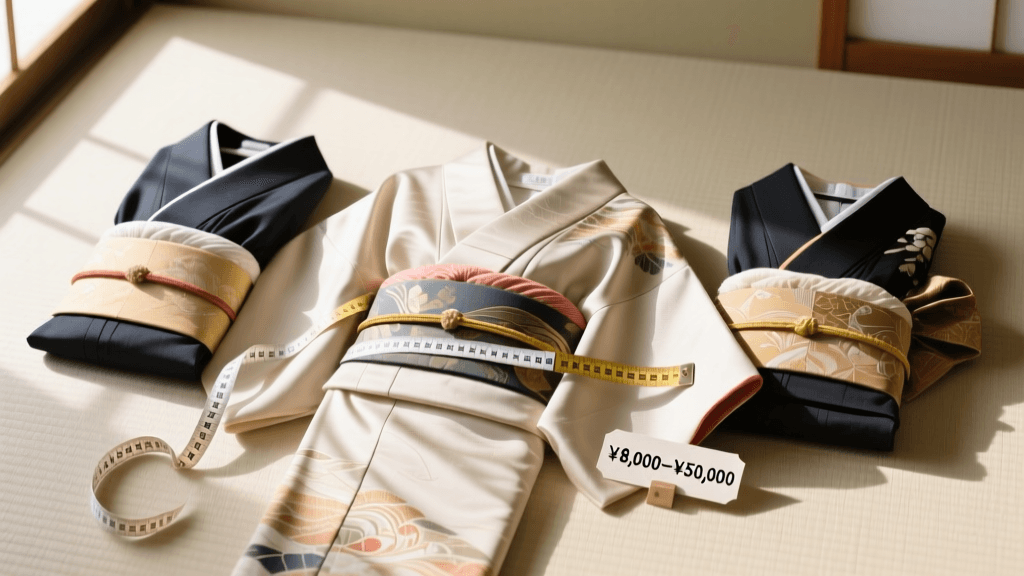
Unlike Western clothing, kimono do not come in standard sizes like Small, Medium, or Large. They are wrapped, folded, and tied to fit the wearer's specific body dimensions. When buying online or at vintage markets, you must know your measurements. The Victoria and Albert Museum notes that the structural geometry of the kimono relies on straight seams and standard fabric bolt widths, meaning the fit is achieved entirely through the wrapping technique.
Understanding the Ohashori
For women, the most critical element of kimono sizing is the ohashori—the horizontal fold of fabric tucked under the obi at the waist. This fold allows a single kimono to accommodate different heights and ensures the hem falls perfectly at the ankle. Men's kimono, by contrast, are worn without an ohashori and are tied at the hips, meaning men's kimono must be tailored much closer to the wearer's exact height.
Key Measurements for Women
- Total Fabric Length (Takenaga): This is the length of the kimono from the back of the collar to the bottom hem. Formula: Your exact height + 10 to 15 cm. This extra length creates the ohashori fold and the hem allowance.
- Worn Length (Mitake): This is how long the kimono will be when worn (from the back of the neck to the ankle). Formula: Your height x 0.85.
- Sleeve Length (Yuki): Measured from the center seam at the back of the neck, over the shoulder, and down to the wrist. Formula: (Your total arm span / 2) + 2 to 3 cm. The sleeve should ideally cover the wrist bone when your arms are resting at your sides.
- Width (Haba): Standard vintage kimono are cut from bolts roughly 34-36 cm wide, resulting in a total circumference of about 128-136 cm. If your hip circumference exceeds 100 cm, you will need to specifically search for hirohaba (wide-width) kimono or modern custom-sized garments to ensure the front panels overlap sufficiently at the hips.
Fabric Matters: Silk, Cotton, and Synthetics
The material of your kimono dictates not only its formality but also its maintenance requirements and longevity.
Silk remains the gold standard for formal and semi-formal kimono. Varieties include chirimen (a heavily textured crepe that resists wrinkling), rinzu (a smooth, lustrous damask often used for wedding garments), and tsumugi (a rustic, slubbed pongee silk). Silk kimono must be professionally dry-cleaned and stored carefully with moth repellents.
Cotton is reserved almost exclusively for yukata. It is highly breathable, machine washable, and softens beautifully with age. High-end cotton yukata, such as those made from kurume gasuri (a traditional indigo-dyed ikat cotton), can be quite expensive and are prized by collectors.
Polyester and Synthetics have revolutionized modern kimono wear. While traditionalists may scoff, high-quality polyester kimono are a godsend for beginners. They are machine washable, impervious to rain, and resist wrinkling. Many modern brands produce polyester houmongi and komon that are visually indistinguishable from silk to the untrained eye, making them perfect for tourists and frequent wearers.
Navigating the Market: Pricing and Where to Buy
According to the Japan National Tourism Organization (JNTO), experiencing and purchasing traditional clothing is a highlight for many visitors to Japan, with dedicated shopping districts catering to both tourists and serious collectors.
Buying Vintage vs. New
The most cost-effective way to build a high-quality silk collection is through the vintage market. Due to changing lifestyles, many Japanese families are liquidating heirloom kimono, flooding the market with pristine, mid-century silk garments at a fraction of their original cost.
- Vintage Komon: $50 to $300. You can frequently find stunning 1970s silk komon in excellent condition for under $100 at flea markets.
- Vintage Houmongi/Furisode: $150 to $800. Look for garments with intact gold foil and vibrant, unfaded dyes.
- New Custom Kimono: Purchasing a brand new, silk houmongi from a traditional department store in Kyoto or Tokyo will easily cost between $2,000 and $10,000, as it involves selecting the silk bolt, custom dyeing the family crests, and hand-stitching the seams.
Top Shopping Destinations
If you are shopping in Japan, Kyoto is the undisputed capital of kimono retail. The streets surrounding the Yasaka Shrine and the Gion district are lined with both high-end boutiques and vintage recyclers. For bargain hunters, the Toji Temple Flea Market (held on the 21st of every month in Kyoto) and the Hanazono Shrine Flea Market in Tokyo offer mountains of vintage kimono where you can dig for silk treasures for as little as $10 to $20.
For international buyers, reputable online dealers such as Ichiroya (based in Osaka) and Yamato provide meticulously photographed vintage pieces with detailed condition reports and exact measurements, bridging the gap between Japanese thrift markets and global collectors.
Final Thoughts on Building Your Collection
Buying a kimono is an investment in wearable art. Start your journey with a well-fitted cotton yukata or a machine-washable polyester komon to practice your wrapping and tying techniques. Once you are comfortable with the mechanics of the ohashori and the obi, graduate to vintage silk. By understanding the strict hierarchy of formality, mastering your personal measurements, and knowing where to hunt for vintage treasures, you can curate a stunning, authentic collection that honors centuries of Japanese textile mastery.