Xiangyunsha: China's Intangible Heritage Silk Craft Guide
The Legacy of Gambiered Canton Gauze
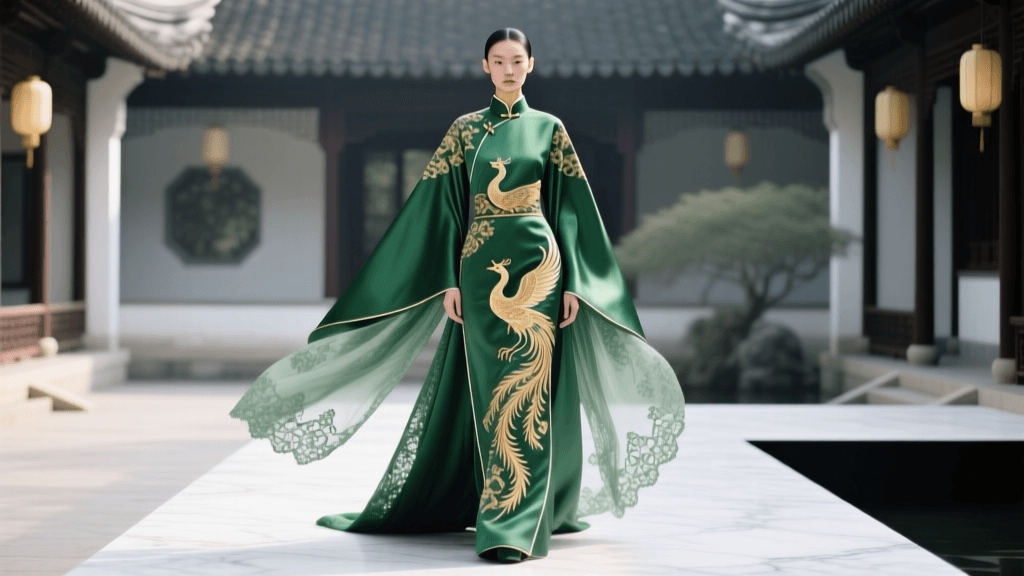
In the pantheon of Asian traditional garments and textiles, few fabrics possess the mystique, complexity, and profound cultural weight of Xiangyunsha (香云纱), also known globally as Gambiered Canton Gauze. Originating from the humid, sun-drenched river deltas of Foshan in Guangdong Province, this extraordinary silk is not merely woven; it is cultivated through a grueling, months-long alchemy of botanical dyes, river mud, and relentless sunshine. Recognized as a National Intangible Cultural Heritage of China in 2008, Xiangyunsha represents the pinnacle of Chinese textile artisanship, bridging the gap between ancient agrarian practices and high-end contemporary fashion.
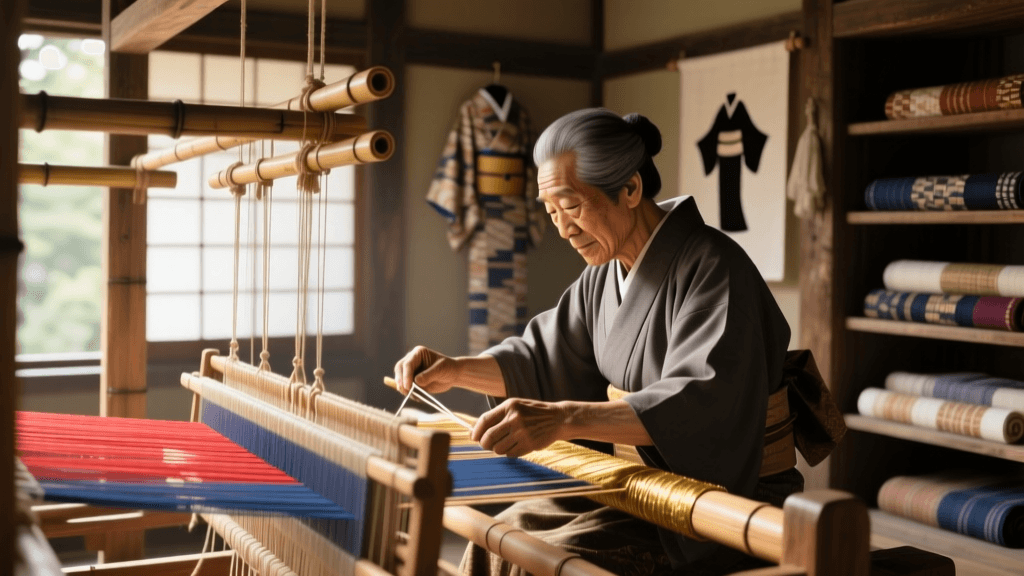
For enthusiasts of traditional Chinese clothing, particularly the Hanfu revival movement, understanding Xiangyunsha is essential. Unlike mass-produced silks that rely on synthetic chemical dyes, this heritage fabric demands the expertise of master dyers who can read the weather, the soil, and the subtle shifts in tannin oxidation. According to comprehensive historical records documented in Wikipedia's extensive archive on Gambiered Canton Gauze, the fabric's unique properties—its crisp drape, its natural water resistance, and its distinctive crackling sound when worn—have made it a prized possession among scholars, merchants, and nobility since the Ming and Qing dynasties.
Today, as the global fashion industry grapples with sustainability, Xiangyunsha stands as a testament to eco-friendly, slow-fashion heritage. The entire process utilizes natural, biodegradable materials, leaving no toxic runoff. However, the shrinking number of master artisans and the intense physical labor required to produce the silk threaten its survival. This guide delves deep into the artisan process, provides actionable advice for sourcing authentic pieces, and outlines the meticulous care required to preserve these wearable artifacts.
The Alchemy of Mud, Sun, and Tannins
The creation of authentic Xiangyunsha is strictly bound by geography and season. It can only be produced in the Foshan region, where the specific iron-rich mud of the Pearl River delta reacts with the tannins of the local Shulang plant (Dioscorea cirrhosa). Furthermore, production is limited to the sweltering, sun-intensive months between April and October. The process is a masterclass in natural chemistry and endurance, requiring over thirty distinct steps.
The Step-by-Step Artisan Process
- Juice Extraction: Artisans harvest the tubers of the Shulang plant, grinding them to extract a rich, reddish-brown juice packed with natural tannins.
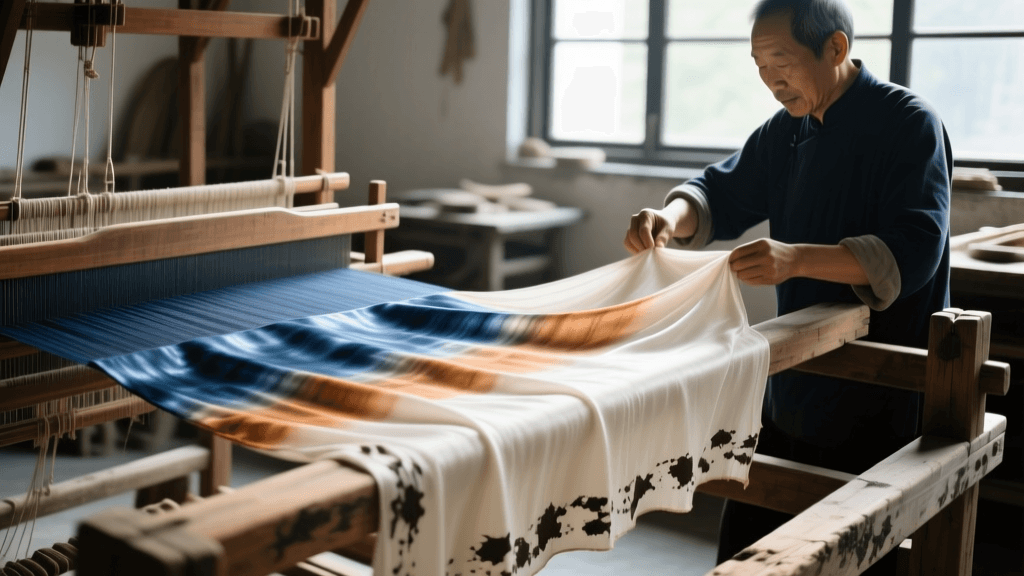
- Initial Dyeing: Plain white mulberry silk gauze is repeatedly soaked in the Shulang juice. After each soak, the silk is laid out on the grass to dry under the intense southern Chinese sun. This cycle is repeated up to 30 times, gradually turning the silk a deep, warm amber.
- The Mud Coating: In the early hours of the morning, before the sun rises, artisans spread a thick layer of iron-rich river mud over one side of the dyed silk. The iron ions in the mud react instantly with the tannins in the silk, creating a profound, pitch-black layer on the mud-facing side.
- Washing and Finishing: The mud is washed off in the clean waters of the Pearl River, revealing the fabric's signature dual-tone appearance: a glossy, black-coated side and a matte, brownish-amber underside.
- Aging: The finished silk is stored in dark, humid warehouses for several months to allow the colors to set and the fibers to soften, developing the coveted "crackle" texture on the black side.
This reliance on natural elements means that no two batches of Xiangyunsha are exactly alike. The intensity of the sun and the mineral composition of the mud on any given day impart subtle variations in color and texture, making every yard of fabric a unique fingerprint of its environment.
Sourcing Authentic Xiangyunsha: A Buyer’s Blueprint
As the popularity of Hanfu and traditional Chinese aesthetics grows, the market has been flooded with counterfeit Xiangyunsha. These imitations are often standard silk charmeuse printed with synthetic black and brown patterns to mimic the dual-tone effect. For collectors and garment makers, knowing how to identify and purchase authentic heritage silk is crucial.
Practical Buying Advice
Timing Your Purchase: Because the dyeing process is strictly seasonal, fresh batches of Xiangyunsha are typically released to the market in late autumn and winter. Purchasing during the winter months (November to January) ensures you are getting newly aged, high-quality stock rather than old inventory that may have been improperly stored.
Measurements and Yields: Authentic Xiangyunsha is traditionally woven on narrow looms. The standard width is usually 114 cm (approx. 45 inches), though some modernized looms produce widths up to 140 cm (55 inches). When planning a traditional Hanfu garment, such as a Mamianqun (horse-face skirt) or a round-collar robe, always calculate an extra 20% for fabric shrinkage and pattern matching, as the natural dyeing process can cause slight tension irregularities.
Cost Expectations: True intangible heritage craftsmanship commands a premium. Expect to pay between 800 RMB and 2,500 RMB ($110 to $350 USD) per meter for authentic, master-dyed Xiangyunsha. If you encounter fabric priced below 300 RMB per meter, it is almost certainly a synthetic imitation or a machine-printed shortcut that lacks the structural integrity and chemical benefits of the mud-dyeing process.
Visual and Tactile Verification: Authentic Xiangyunsha features a distinct "crackle" or subtle web-like pattern on the black side, caused by the drying mud. The black side should feel cool, smooth, and slightly waxy, while the brown underside should feel like raw, textured silk. When held to the light, the weave should be uniform, and the color transition between the two sides should be absolute, with no bleeding.
Fabric Comparison Chart
To understand where Xiangyunsha fits within the broader context of Asian traditional textiles, it is helpful to compare it against other prominent Chinese fabrics. The following table highlights the functional and economic differences to help you choose the right material for your specific garment needs.
| Fabric Type | Weight & Drape | Breathability | Price per Meter (USD) | Best Traditional Application |
|---|---|---|---|---|
| Xiangyunsha (Gambiered Gauze) | Medium-heavy, crisp, structured | Excellent (moisture-wicking) | $110 - $350 | Summer/Autumn outer robes, Mamianqun |
| Standard Mulberry Charmeuse | Lightweight, fluid, highly drapey | Good | $25 - $60 | Zhongyi (undergarments), flowing sleeves |
| Song Brocade (Songjin) | Heavy, stiff, highly textured | Low (dense weave) | $80 - $200 | Winter outerwear, formal collars, cuffs |
| Ramie Linen (Xia Bu) | Medium, crisp, slightly rough | Superior (cooling) | $30 - $90 | Everyday summer Hanfu, scholar robes |
Tailoring and Hanfu Applications
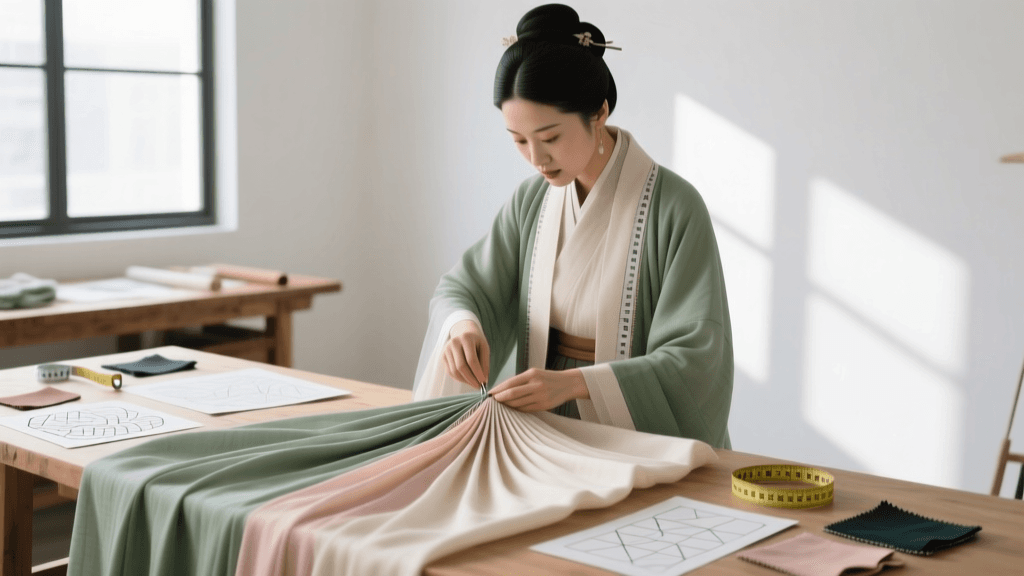
When commissioning or sewing Hanfu from Xiangyunsha, the fabric's structural properties must dictate the design. Because the mud-dyeing process gives the silk a crisp, almost paper-like stiffness, it is ill-suited for garments requiring soft, clinging drapes, such as inner layers or delicate pleated skirts that require soft folding. Instead, Xiangyunsha excels in structured outerwear.
It is the premier choice for the Pifeng (traditional cape or cloak) and the Banbi (half-sleeve jacket). Its natural water resistance and wind-blocking properties make it an excellent transitional fabric for early autumn. Tailors working with this heritage silk must use fine, sharp needles (size 60/8 or 70/10) to prevent snagging the dense, mud-coated fibers. Seams should be finished with traditional hand-rolled hems or bound edges to prevent fraying and to honor the historical construction methods of the garment.
Caring for Your Heritage Silk Garments
Owning a garment made from intangible heritage silk requires a commitment to specialized maintenance. The natural tannins and iron compounds that give Xiangyunsha its color and antibacterial properties can be degraded by modern, harsh laundry chemicals. To ensure your garment lasts for generations, adhere to the following care protocols.
Actionable Care Instructions
- Washing: Never machine wash or dry clean Xiangyunsha. The chemical solvents used in dry cleaning will strip the natural mud coating, ruining the fabric's luster and water resistance. Hand wash only in cool water (strictly below 30°C / 86°F).
- Detergent Selection: Use a neutral pH detergent specifically formulated for delicate silks, or traditional tea-seed powder. Avoid alkaline soaps, bleach, or enzymatic detergents, which will break down the tannin-iron bonds and cause the black color to fade to a muddy gray.
- Drying: Do not wring or twist the fabric. Gently press the water out by rolling the garment in a clean, dry cotton towel. Hang to dry in a well-ventilated, shaded area. Direct sunlight during the drying phase can cause uneven fading and brittleness.
- Ironing and Storage: If ironing is necessary, use the lowest heat setting and always place a damp cotton cloth between the iron and the silk. Store the garment in a breathable cotton garment bag in a cool, dry place. Avoid plastic covers, which can trap moisture and lead to mildew.
Preserving the Intangible Cultural Heritage
The survival of Xiangyunsha relies heavily on the continued patronage of conscious consumers and the institutional support of cultural preservation frameworks. The physical toll of the mud-dyeing process is immense; artisans spend their days wading in river mud and working under the blistering sun, leading to a generational gap as younger workers seek less grueling employment in urban centers.
Organizations and international bodies recognize the urgency of protecting such crafts. The principles outlined in the UNESCO Convention for the Safeguarding of the Intangible Cultural Heritage emphasize the importance of transmitting traditional knowledge to future generations while ensuring the craft remains economically viable for its practitioners. By choosing to invest in authentic, ethically sourced Xiangyunsha, buyers directly fund the workshops in Foshan that keep these ancient techniques alive.
Furthermore, institutions like The Metropolitan Museum of Art, which houses extensive collections of historical Chinese silk textiles, play a vital role in documenting and preserving the physical artifacts of the past. Studying these historical garments helps modern artisans and Hanfu designers accurately replicate historical cuts, dye depths, and weaving patterns, ensuring that the Xiangyunsha produced today remains faithful to its imperial roots.
Conclusion
Xiangyunsha is far more than a luxury textile; it is a wearable chronicle of Chinese history, geography, and human endurance. From the tannin-rich tubers of the Shulang plant to the iron-heavy mud of the Pearl River, every thread is deeply rooted in the landscape of Guangdong. For those passionate about Asian traditions and the Hanfu revival, incorporating authentic Gambiered Canton Gauze into your wardrobe is a profound way to honor the artisans who continue to practice this demanding, beautiful alchemy. By understanding its origins, respecting its material properties, and caring for it meticulously, we ensure that the crisp, crackling sound of Xiangyunsha continues to echo through the centuries.