Chinese Couture on the Global Runway: Style & Sourcing
The Evolution of Chinese Motifs in Haute Couture
The intersection of traditional Chinese sartorial heritage and modern international haute couture represents one of the most dynamic dialogues in contemporary fashion. For decades, Western fashion houses have looked to the East for inspiration, though early interpretations often leaned toward theatrical pastiche rather than authentic appreciation. Yves Saint Laurent’s seminal 1977 'Les Chinoises' collection and John Galliano’s cinematic 1997 Dior runway show introduced Chinese silhouettes to the Parisian elite, yet it was not until the 21st century that a true, respectful synthesis of traditional craftsmanship and modern couture construction was realized.
Today, the narrative is being reclaimed and elevated by Chinese designers and global houses alike. Guo Pei, the first Chinese national invited as a guest member by the Fédération de la Haute Couture et de la Mode, has redefined global luxury by marrying imperial Chinese embroidery techniques with European corsetry and voluminous crinolines. As highlighted by The Metropolitan Museum of Art's landmark exhibition, 'China: Through the Looking Glass', the influence of Chinese aesthetics on global fashion is not merely a passing trend, but a foundational pillar of modern luxury that continues to evolve through rigorous historical research and artisanal mastery.
Deconstructing Runway-Inspired Chinese Couture
To truly understand and source couture-level Chinese fashion, one must look beyond the surface-level motifs of dragons and lotus flowers. True haute couture integrates ancient textile techniques with avant-garde structural design.
The Silhouette: From Manchu Robes to Structured Corsetry
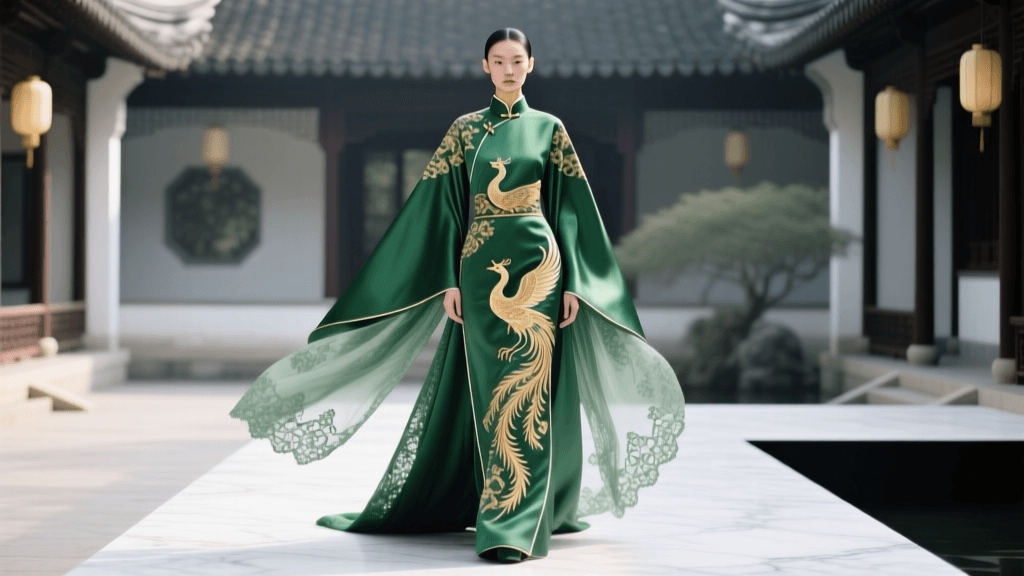
The traditional qipao (cheongsam) originated as a loose-fitting, A-line Manchu garment. In the 1920s and 1930s, Shanghai tailors modernized it into the form-fitting silhouette we recognize today. In the realm of international couture, this silhouette is further engineered. Designers now employ internal corsetry, hidden boning, and padded hips to create an hourglass shape that defies gravity, transforming the delicate silk dress into a piece of structural armor.
Textiles: Xiangyunsha and Kesi Tapestry
Couture houses are increasingly sourcing heritage textiles. Xiangyunsha, or gambiered Canton gauze, is a prized fabric dyed using the juice of the薯莨 (shuliang) yam and sealed with iron-rich river mud from the Pearl River Delta. The result is a crisp, rustling fabric with a dark, lustrous sheen that is highly sought after by luxury collectors. Similarly, Kesi (cut silk) tapestry, a weaving technique where the weft threads are cut and turned back at the edge of each color block, creates intricate, unbroken patterns that are frequently used in couture bodices.
Embroidery: The Mastery of Su Embroidery
Suzhou embroidery (Su Xiu) is the gold standard for couture embellishment. Master artisans split a single silk thread into up to 64 microscopic strands to achieve photorealistic gradients. In haute couture, double-sided embroidery is often utilized on sheer silk organza collars and cuffs, allowing the motif to be perfectly visible from both the interior and exterior of the garment.
Comparing Traditional Garments vs. Couture Interpretations
Understanding the distinction between everyday traditional wear and runway-level couture is crucial for collectors and stylists. The following table outlines the primary differences in construction, materials, and investment.
| Feature | Traditional / Ready-to-Wear | International Haute Couture |
|---|---|---|
| Base Fabric | Standard mulberry silk, brocade, cotton blends | Heritage Xiangyunsha, antique Song brocade, custom-woven Kesi |
| Construction | Flat pattern cutting, side-zip closures, darts | Internal corsetry, hand-molded draping, invisible structural boning |
| Embellishment | Machine embroidery, standard beadwork | Hand-split Su embroidery, jade micro-beading, gold-leaf couching |
| Production Time | 2 to 6 weeks | 6 to 14 months (multiple atelier fittings required) |
| Price Point | $200 - $2,500 USD | $15,000 - $150,000+ USD |
Sourcing and Commissioning Bespoke Couture
For collectors, red-carpet attendees, or bridal clients seeking a runway-level Chinese garment, commissioning a bespoke piece from a master tailor or a recognized couture house is the most authentic route. According to archival textile standards preserved at the Victoria and Albert Museum, the longevity of a garment is deeply tied to its bespoke construction and the quality of its natural fibers.
The Commissioning Process: Timelines and Costs
Commissioning a couture qipao or a Chinese-inspired evening gown requires patience and a significant financial commitment. Expect the process to take between 6 to 9 months. The cost breakdown typically includes:
- Base Textile Sourcing: $500 to $3,000 for premium heritage silks.
- Embroidery Labor: $150 to $500 per square inch, depending on the density and thread count of the Su embroidery.
- Atelier Tailoring & Fittings: $3,000 to $10,000 for structural engineering and hand-finishing.
Essential Measurements for a Couture Fit
Unlike Western tailoring, which often relies on standardized sizing, a master Chinese tailor requires a minimum of 18 precise measurements to ensure the garment moves flawlessly with the body. When preparing for a commission, ensure your tailor records the following critical data points:
- Nape to Waist: Measured from the prominent bone at the base of the neck to the natural waistline.
- Front & Back Waist Length: Crucial for balancing the hemline on asymmetrical couture gowns.
- Cross Shoulder: Taken from the edge of one shoulder bone to the other, dictating the drape of the mandarin collar.
- Bust Apex Distance: The exact distance between the highest points of the bust, essential for positioning embroidered motifs symmetrically.
- Armhole Depth & Bicep Circumference: Ensures the traditional cap sleeve does not restrict movement or pucker the delicate silk.
Styling Chinese Couture for Modern Galas and Events
Styling a piece of Chinese haute couture for a modern gala, Met Gala, or high-profile premiere requires a delicate balance. The garment itself is a masterpiece; the accessories should frame it, not compete with it.
Footwear and Hemlines
Couture qipaos and gowns often feature dramatic trains or intricate hemline embroidery. Avoid strappy, heavily embellished sandals that can snag on silk threads. Instead, opt for structural, closed-toe pumps or sleek, pointed-toe stilettos in a color that matches the base warp threads of the fabric. If the gown features a high slit, ensure the footwear is flawless, as the leg becomes an extension of the garment's silhouette.
Jewelry: Jade vs. Diamonds
The interplay between traditional jade and modern diamonds is a hallmark of contemporary Chinese red-carpet styling. Imperial green jadeite offers a rich, opaque contrast to the sheen of silk, but it can appear heavy if overused.
- For heavily embroidered gowns: Opt for minimalist, colorless diamond drop earrings and a single, high-carat jadeite cabochon ring. This allows the Su embroidery to remain the focal point.
- For minimalist Xiangyunsha silk gowns: Layered jade bead necklaces or intricate gold-and-jade hairpins (buyao) can introduce necessary texture and historical resonance to the look.
Hair and Makeup Architecture
Runway styling for Chinese couture frequently draws from Tang and Song dynasty aesthetics, modernized for the camera. Sleek, architectural updos that expose the nape of the neck are essential when wearing a high mandarin collar. Avoid soft, romantic waves, which can clash with the structured, geometric lines of the garment. A matte, porcelain base with a bold, lacquered red lip—specifically blue-based reds that complement the warm undertones of traditional silks—completes the couture vision.
Conclusion
Chinese fashion on the international runway is no longer just about borrowing motifs; it is about mastering the ancient techniques that created them. Whether you are studying the structural evolution of the qipao, investing in a bespoke Xiangyunsha gown, or styling a couture piece for the red carpet, understanding the deep historical and technical roots of these garments elevates your appreciation from mere consumption to true sartorial connoisseurship.