Nishijin-ori Weaving Workshops: Guide to Kyoto Kimono Textiles
The Legacy of Nishijin-ori in Kyoto
Nishijin-ori is not merely a fabric; it is the pinnacle of Japanese textile artistry and the foundational luxury material for high-end kimono and obi. Originating in the Nishijin district of Kyoto, this intricate weaving tradition represents over 1,200 years of continuous refinement. Unlike printed or dyed textiles such as Yuzen, Nishijin-ori relies on the complex interlacing of pre-dyed silk threads to create elaborate, multi-dimensional patterns. For collectors, cultural enthusiasts, and fashion historians, understanding the artisan workshops that produce these textiles offers a profound glimpse into Japan's living heritage.
The name 'Nishijin' translates to 'western camp,' a direct reference to the Onin War (1467-1477). During this devastating civil war, the western army set up camp in the area where many of Kyoto's weavers had settled. After the war, the artisans returned to this specific district to rebuild their looms, and the name became synonymous with the highest quality woven silk in Japan. Today, the district remains the beating heart of Japan's luxury kimono textile industry, housing hundreds of specialized artisan workshops.
The Structure of a Traditional Weaving Workshop
One of the most fascinating aspects of Nishijin-ori is its highly fragmented, collaborative production system. A single obi is rarely the product of one solitary genius or a single massive factory. Instead, the creation of a Nishijin textile involves a network of highly specialized artisans, each mastering a specific micro-craft. This division of labor ensures that every step of the process is executed with absolute precision.
The ecosystem typically includes the monya (designer), the itozome-shi (thread dyer), the soukou-shi (harness maker), and the ori-shi (weaver). According to The Metropolitan Museum of Art's Heilbrunn Timeline of Art History, the evolution of Japanese silk textiles has always relied on this meticulous specialization, allowing for the integration of complex foreign weaving techniques with indigenous Japanese aesthetics. When you visit a Nishijin workshop, you are usually witnessing just one phase of a much larger, district-wide collaboration.
Step-by-Step: The Artisan Weaving Process
Design and Thread Preparation
The process begins with the designer, who creates a detailed grid pattern called an isho. Historically, this design was translated into a series of punch cards for the Jacquard loom. Today, while computer-aided design (CAD) is used for commercial pieces, master artisans still hand-punch cards for bespoke, heritage-grade commissions. Meanwhile, raw silk threads are sent to the dyer. The dyer must achieve exact color matches, often boiling the silk in natural dyes or precise synthetic equivalents, ensuring the colors will not bleed when exposed to humidity or minor moisture.
The Jacquard Loom and Weaving
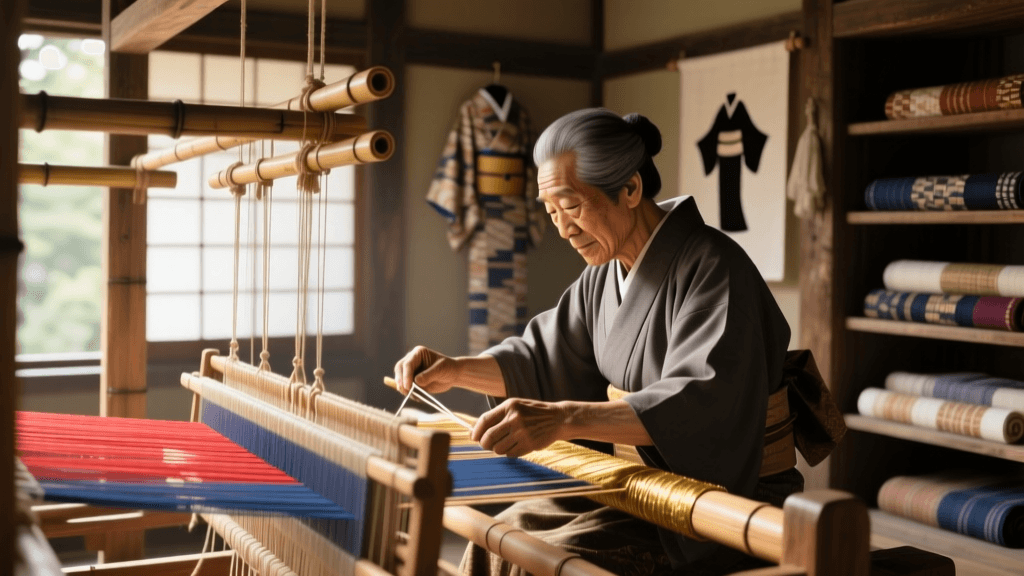
The defining feature of Nishijin-ori is the use of the Jacquard loom, introduced to Japan from France in the late 19th century. The Jacquard mechanism allows individual control of every single warp thread, enabling the creation of complex, asymmetrical, and highly detailed pictorial motifs. In traditional workshops, the rhythmic clacking of the wooden and metal looms creates a distinct auditory landscape. A master weaver operating a traditional hand-operated Jacquard loom may produce only 10 to 15 centimeters of intricate Kara-ori (Chinese-style weave) fabric per day, highlighting the immense labor value embedded in the textile.
Comparison of Nishijin-ori Textile Types
Nishijin-ori encompasses several distinct weaving techniques, each suited for different types of kimono garments and seasons. Below is a comparison of the most prominent styles produced in Kyoto workshops.
| Textile Type | Characteristics & Technique | Primary Kimono Use | Est. Cost (USD) | Production Time |
|---|---|---|---|---|
| Kara-ori | Thick, heavily brocaded fabric with floating weft threads that mimic embroidery. Often uses gold and silver leaf. | Formal Maru Obi, Noh theater costumes, imperial garments. | $5,000 - $15,000+ | 4 - 8 months |
| Donsu | Satin weave with a glossy surface and subtle, tone-on-tone patterns. Soft and highly drapable. | Fukuro Obi, high-end formal kimono, tea ceremony garments. | $1,500 - $4,000 | 2 - 4 months |
| Tsumugi | Woven from pre-dyed, spun silk noil. Has a nubby, rustic texture and matte finish. | Everyday kimono, casual Obi, men's formal wear. | $800 - $2,500 | 1 - 3 months |
| Fuutsu-ori | Double-cloth weave creating a reversible fabric with contrasting colors on each side. | Reversible Obi, modern fashion accessories, interior decor. | $1,200 - $3,000 | 2 - 5 months |
Practical Guide: Visiting Kyoto Artisan Workshops
For those traveling to Kyoto to study or appreciate these crafts, several institutions and workshops offer immersive experiences. Understanding where to go and what to expect is crucial for a meaningful visit.
- Nishijin Textile Center: This is the most accessible starting point. It offers free admission, daily kimono fashion shows, and live weaving demonstrations on massive Jacquard looms. You can also purchase certified textiles and book beginner weaving workshops (approx. 2,000 JPY for a 45-minute session).
- Orinasu-kan: A museum and workshop space dedicated to the preservation of Nishijin textiles. It features a beautiful traditional garden and offers deep-dive exhibitions into the history of the loom. Admission is typically around 500 JPY.
- Tatsumura Textile Arts: Founded by the legendary weaver Heizo Tatsumura, this private company specializes in restoring imperial textiles and creating bespoke luxury fabrics. While their main atelier is private, they occasionally host gallery exhibitions and have a retail space in Kyoto's Takashimaya department store where masterpieces can be viewed.
Commissioning Bespoke Kimono Textiles
Commissioning a bespoke Nishijin-ori obi or kimono bolt (tanmono) is a significant investment. If you are working with a workshop or a specialized kimono concierge in Kyoto, you must provide precise specifications.
Measurements and Specifications
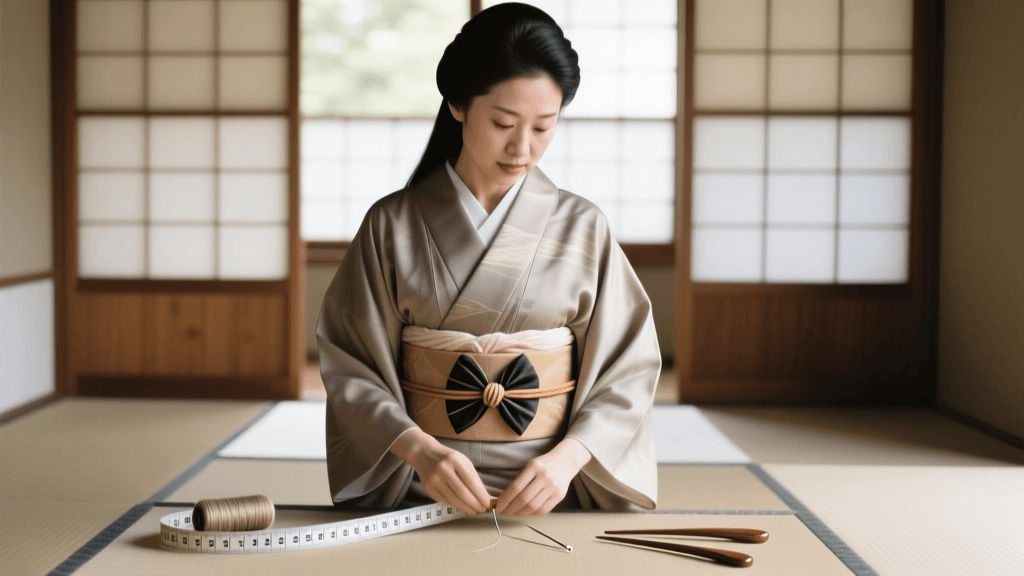
A standard bolt of kimono fabric (tanmono) measures approximately 36 to 38 centimeters in width and 12 meters in length. This specific width is dictated by the traditional cutting patterns of the kimono, which utilize straight seams to ensure the garment can be entirely deconstructed, washed, and resewn. For an obi, the standard Fukuro Obi (the most common formal obi today) requires a woven width of 31 to 33 centimeters and a length of 420 to 450 centimeters. You must also specify the gara (pattern placement), ensuring the motifs align perfectly with the traditional folding points of the obi knot (musubi).
Costs and Timelines
Bespoke commissions require a minimum lead time of 4 to 8 months. This accounts for the design approval, thread dyeing, loom setup, and the slow pace of hand-weaving. Costs vary wildly based on materials. A standard silk Fukuro Obi will start around $1,500 USD. However, if you request the integration of kinran (gold leaf thread) or ginran (silver leaf thread), or if the design requires a complex, asymmetrical pictorial motif that necessitates thousands of custom Jacquard punch cards, the price can easily exceed $10,000 USD.
Authentication and Caring for Woven Silk
When purchasing Nishijin-ori, authentication is paramount. The Japanese government, through the Ministry of Economy, Trade and Industry (METI), strictly regulates the use of the 'Nishijin-ori' designation. According to the Japan Traditional Crafts Center, authentic Nishijin-ori must meet rigorous criteria regarding the use of specific silk threads, traditional dyeing methods, and the geographic location of the weaving. Always look for the official METI certification seal (a small paper tag with a traditional craft mark) attached to the textile.
Furthermore, institutions like the Victoria and Albert Museum's Asia Collections emphasize the importance of proper conservation for historical silk textiles. To care for your Nishijin-ori, never store it in plastic, which traps moisture and promotes mold. Instead, wrap the obi or kimono in acid-free washi (Japanese paper) or untreated cotton. Store the textiles flat in a cedar chest (tansu), which naturally repels insects and regulates humidity. Avoid hanging heavy brocaded obi, as the weight of the gold and silver threads will distort the warp over time.
Preserving the Craft: Challenges and the Future
Despite its prestige, the Nishijin weaving industry faces severe challenges. The artisan population is aging rapidly, and the grueling physical nature of the work, combined with the long apprenticeship required, has led to a shortage of young weavers. A master weaver may spend ten years just learning to properly tension the warp threads on a Jacquard loom. To combat this, modern workshops are increasingly collaborating with contemporary fashion designers and interior architects, applying Nishijin techniques to modern accessories, upholstery, and wall art. By expanding beyond the traditional kimono market, these workshops are finding new economic models to sustain their heritage, ensuring that the rhythmic clack of the Kyoto looms continues to echo through the centuries.