Miao Traditional Dress: Guizhou Silver And Pleated Skirts
The Living Heritage of Miao Provincial Dress
Nestled in the misty karst mountains of southwestern China, Guizhou Province is home to one of Asia's most visually stunning and culturally rich ethnic groups: the Miao people. Known internationally as the Hmong, the Miao comprise over nine million individuals in China alone, with Guizhou serving as the cultural heartland. According to Wikipedia's comprehensive overview of the Miao people, their provincial dress is not merely a matter of aesthetic expression, but a profound system of cultural identification, spiritual protection, and historical record-keeping.
Unlike many ancient cultures that relied on written manuscripts to pass down their lineage and mythology, the Miao historically utilized their textiles as 'wearable books.' Every stitch, dye, and silver ornament encodes stories of ancient migrations, mythical origins, and clan affiliations. For textile enthusiasts, anthropologists, and collectors, understanding the regional folk dress of the Guizhou Miao offers a masterclass in indigenous craftsmanship, sustainable dyeing techniques, and metallurgical artistry.
Anatomy of the Outfit: Indigo, Batik, and Pleats
The Indigo-Dyed Pleated Skirt
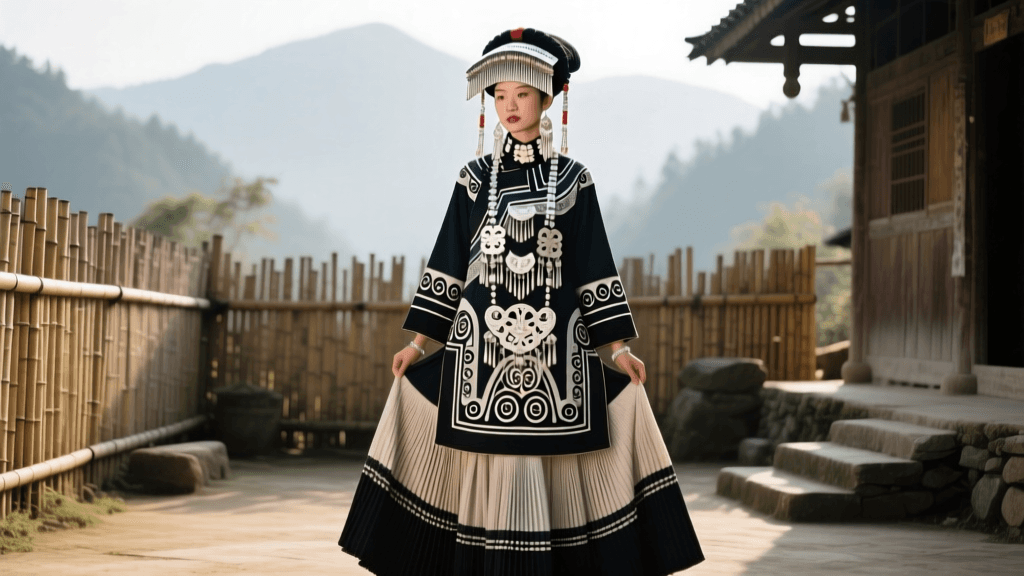
The most iconic element of the Miao woman's festival attire is the heavily pleated, indigo-dyed skirt. The creation of a single skirt is a monumental task that can take several months to complete. Artisans begin by cultivating cotton, spinning it into yarn, and weaving it on traditional backstrap looms. The fabric is then dyed using Strobilanthes cusia, a native indigo-bearing plant. The fermentation and dyeing process requires dipping the fabric into the indigo vat upwards of twenty times to achieve a deep, lustrous blue-black hue that is naturally resistant to insects and moisture.
The pleating process is where the skirt truly becomes a marvel of provincial engineering. A single skirt requires between 15 to 20 meters of woven cotton. Using only their fingernails and a specialized folding technique, Miao women compress this vast length of fabric into hundreds of microscopic, uniform pleats. The skirt is then tightly bound with cotton thread and steamed over a wooden vat to permanently set the folds. When worn, the skirt flares out dramatically, often weighing several kilograms, and is secured with a woven sash and a heavily embroidered apron.
Batik (Lahuan) and Embroidery (Xiu)
Before the indigo dyeing process begins, many Miao garments are treated with lahuan, or traditional beeswax batik. Using a specialized copper knife dipped in melted beeswax, artisans draw intricate geometric and natural motifs directly onto the raw cotton. When submerged in the indigo vat, the wax resists the dye. After boiling the fabric to remove the wax, a striking white-on-blue pattern emerges, characterized by beautiful, organic 'crackle' lines where the dye seeped through fractured wax.
Over this foundation, Miao women apply xiu (embroidery). The motifs are deeply symbolic. The 'Butterfly Mother' is a ubiquitous design, representing the mythical ancestor of the Miao people who hatched from a maple tree. Dragons, water buffalo, and river shrimp also feature prominently, reflecting the agrarian and riverine lifestyle of their ancestors.
Actionable Advice: Identifying Authentic Embroidery
When purchasing Miao embroidery, always examine the reverse side of the fabric. Authentic hand-embroidery (such as the complex seed stitch or couching techniques) will look nearly as neat on the back as on the front, with individual knots and thread transitions visible. Machine-made replicas will have a uniform, continuous bobbin thread on the back and lack the slight, organic tension variations of human handiwork.
The Weight of Tradition: Miao Silver Craftsmanship
No Miao festival outfit is complete without an astonishing array of silver jewelry. In Miao cosmology, silver represents the light of the moon, purity, and a powerful talisman against evil spirits. Silversmithing is a highly respected, traditionally male-dominated craft in villages around Kaili and Majiang. The jewelry is forged from pure silver, often melted down from silver coins or bullion, and hammered, twisted, and filigreed into elaborate shapes.
During major festivals, a Miao woman may wear up to 10 kilograms of silver, including horned headdresses, multi-layered neck rings, chest plates, and hairpins. The sound of the silver bells and pendants clinking together as the wearer dances is considered an essential part of the festival's musical landscape.
| Item | Average Weight | Estimated Cost (USD) | Best Location to Purchase |
|---|---|---|---|
| Silver Horn Headdress | 2.0 - 5.0 kg | $2,500 - $8,000+ | Shidong Silver Street, Taijiang |
| Multi-Layered Neck Rings | 1.0 - 3.0 kg | $1,200 - $4,000 | Kaili Silver Markets |
| Carved Hairpins/Combs | 100 - 300 g | $150 - $400 | Xijiang Artisan Shops |
| Child's Silver Cap/Bells | 200 - 500 g | $250 - $600 | Danzhai County Cooperatives |
Note: Prices fluctuate based on the global spot price of silver and the complexity of the filigree work. Authentic pieces will often bear the stamped mark of the master silversmith.
Practical Guide: Experiencing and Acquiring Miao Dress
Festival Timing and Locations
To witness these garments in their full, kinetic glory, timing your visit to align with local festivals is crucial. The Sisters' Meal Festival (Zimei Fan Jie) usually occurs in April or May, corresponding to the third lunar month. It is a celebration of youth, courtship, and spring, where women wear their finest pleated skirts and silver horns. The Lusheng Festival, held in the autumn after the harvest, features massive communal dances accompanied by the lusheng (a traditional pipe instrument), providing incredible opportunities for textile photography and cultural immersion.
While the Xijiang Qianhu Miao Village is the most famous and accessible destination, it is heavily commercialized. For a more authentic experience and direct access to artisans, visit Shidong for silver, Danzhai for batik cooperatives, and the remote villages of Leishan County for unadulterated embroidery traditions.
Buying Authentic Garments and Silver
For collectors looking to acquire genuine provincial dress, building relationships with local cooperatives is key. Vintage, handmade indigo jackets from the mid-20th century can be found in antique markets in Kaili or Guiyang, typically ranging from $300 to $1,500 USD depending on the condition and rarity of the embroidery stitches. When buying silver, insist on a purity test and a receipt detailing the weight in grams. Avoid 'Tibetan silver' or 'Miao silver' sold in tourist traps, as these are often copper-nickel alloys with no actual silver content.
Garment Care and Maintenance
Caring for regional folk dress requires specific knowledge to preserve the organic materials:
- Indigo Textiles: Never wash authentic indigo-dyed cotton in a machine or with harsh detergents. Hand wash separately in cold water with a pH-neutral soap. Expect some color bleeding in the first few washes. Dry in the shade, as direct sunlight will rapidly fade the natural plant dye.
- Embroidery: Store embroidered jackets flat or rolled in acid-free tissue paper. Hanging heavy, vintage garments can cause the antique silk threads to snap under their own weight.
- Silver Ornaments: Miao silver is meant to be worn, as the natural oils from the skin help maintain its luster. For storage, wrap pieces in anti-tarnish cloth. If oxidation occurs, avoid commercial chemical dips; instead, use a traditional paste of wood ash and water, or a soft jeweler's cloth to gently restore the shine.
Preserving the Craft in a Modern Era
The survival of Miao provincial dress is intrinsically linked to the survival of the villages that produce them. As younger generations migrate to coastal cities for industrial work, the transmission of complex skills like micro-pleating and beeswax batik faces severe threats. However, as noted by the Victoria and Albert Museum's Asian textile archives, there is a growing global appreciation for slow fashion and indigenous craftsmanship that is providing new economic incentives for Miao women to remain in their villages and form artisan cooperatives.
Furthermore, institutions like Encyclopedia Britannica's entry on Hmong/Miao culture highlight how the global diaspora has helped elevate the status of these textiles from regional folk wear to recognized masterpieces of human intangible heritage. By understanding the measurements, costs, and profound cultural weight of these garments, collectors and travelers can engage with Miao traditions respectfully, ensuring that the 'wearable books' of Guizhou continue to be written for generations to come.