Decoding Kimono Motifs: A Guide to Japanese Seasonal Colors
The Art of Kisetsukan: Wearing the Seasons
In the realm of traditional Japanese clothing, a garment is never merely a piece of fabric; it is a canvas that reflects the natural world, cultural philosophy, and the passage of time. The concept of kisetsukan (seasonal awareness) dictates that the motifs, colors, and even the weave of a kimono must align with the specific season, often anticipating the changing weather by a month. According to the Metropolitan Museum of Art, the kimono serves as a profound expression of Japanese aesthetics, where nature and artistry are inextricably linked through dyeing and weaving techniques.
Understanding the symbolism behind these patterns and color palettes is essential for collectors, enthusiasts, and anyone looking to wear traditional Japanese garments authentically. This guide decodes the seasonal motifs of the kimono and provides actionable advice for sourcing, measuring, and styling these exquisite pieces.
Spring: Ephemeral Beauty and Pastel Palettes
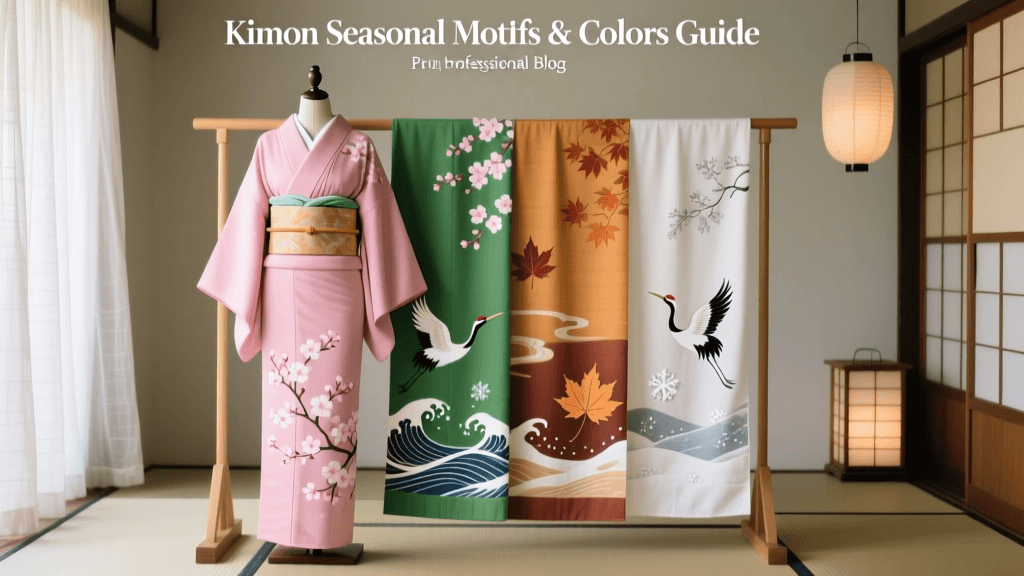
Spring in Japan is synonymous with renewal, celebrated through the fleeting beauty of blossoms. The most iconic motif is the sakura (cherry blossom), often depicted in soft pinks and whites, sometimes accompanied by the ume (plum blossom) in deeper crimson or pale yellow. Another beloved spring motif is fuji (wisteria), rendered in cascading purples and greens.
The color palette for spring leans heavily into pastels: sakura-iro (cherry blossom pink), moegi (fresh sprout green), and yamabuki (golden yellow). The Kyo-Yuzen dyeing technique, originating in Kyoto, is frequently used to create these vibrant, painterly floral scenes on silk.
Actionable Advice for Spring Garments
- Garment Type: Opt for a Homongi (visiting kimono) for formal spring events like weddings, or a Komon (everyday patterned kimono) for casual hanami (flower viewing) parties.
- Timing: Purchase spring kimono between January and February to secure the best selection before the peak March-April season.
- Cost Expectation: A high-quality vintage silk Homongi with hand-painted Yuzen sakura motifs typically ranges from $200 to $600 USD, depending on the condition and metallic leaf accents.
Summer: Cooling the Eye with Indigo and Sheer Silks
As the humid Japanese summer approaches, the visual language of the kimono shifts to evoke a sense of coolness. Motifs transition to water-associated imagery and summer flora: asagao (morning glory), ayame (iris), hotaru (fireflies), and seigaiha (ocean waves).
Colors are deliberately chosen to provide visual relief. Ai-iro (deep indigo) is paramount, not only for its cooling visual effect but also because traditional indigo dye repels insects. Whites, cool blues, and translucent greens dominate the palette. As noted by the Victoria and Albert Museum, the materiality of the summer kimono is just as important as its pattern, with sheer weaves designed to catch the breeze.
Actionable Advice for Summer Garments
- Fabric Weave: Look for Ro or Sha silk weaves, which feature intentional gaps in the threading for breathability. For casual wear, a cotton Yukata is the standard.
- Styling: Pair a sheer Ro kimono with a lightweight, unlined Nagajuban (under-kimono) made of hemp or ramie to maximize airflow.
- Cost Expectation: Authentic cotton Yukata from regions like Arimatsu (famous for Shibori tie-dye) cost between $80 and $150 USD. Vintage sheer silk kimono can be found for $50 to $120 USD.
Autumn: Melancholy and the Warmth of Maple
Autumn brings a rich, warm palette that reflects the changing foliage and the harvest. The momiji (maple leaf) is the undisputed king of autumn motifs, often shown drifting on water or clinging to branches in shades of crimson, gold, and burnt orange. The kiku (chrysanthemum), a symbol of longevity and the imperial family, is also heavily featured, alongside susuki (pampas grass) and tsuki (the harvest moon).
The colors of autumn are deep and grounded: kurenai (deep crimson), cha-iro (tea brown), and murakiki (dark green). The Edo-Komon technique, which uses incredibly fine stencils to create micro-patterns that look solid from a distance, is highly prized for autumn wear, offering subtle elegance.
Actionable Advice for Autumn Garments
- Garment Type: An Iromuji (single-color kimono) with a subtle woven autumn crest, or an Edo-Komon for tea ceremonies and refined gatherings.
- Obi Pairing: Contrast a dark crimson maple kimono with a gold or brocade Fukuro Obi featuring autumn grasses to elevate the formality.
- Cost Expectation: Vintage Edo-Komon silk kimono are highly collectible and range from $150 to $400 USD. Ensure the stencil dyeing is crisp and unfaded.
Winter: Resilience in the Snow
Winter motifs focus on resilience, longevity, and New Year celebrations. The shochikubai trio (pine, bamboo, and plum) is the ultimate auspicious winter motif, symbolizing steadfastness and perseverance. Other common motifs include the tsuru (crane) for longevity, kame (turtle), and nandina (heavenly bamboo) with its bright red berries peeking through snow.
The color palette is striking and high-contrast. Deep blacks (kuro), pure whites (shiro), and vibrant festive reds (aka) are prominent. Winter kimono are lined and made from heavy, textured silks like chirimen (crepe) to provide warmth.
'The kimono is not just a garment; it is a wearable landscape. To wear a winter crane motif in the height of summer would be considered a profound breach of aesthetic etiquette in traditional Japanese society.' — BBC Culture
Seasonal Motif and Color Quick Reference Guide
| Season | Primary Motifs | Dominant Colors | Ideal Garment Type | Approx. Vintage Cost (USD) |
|---|---|---|---|---|
| Spring | Sakura, Ume, Wisteria, Butterflies | Pastel pink, light green, soft yellow | Homongi, Tsukesage | $200 - $600 |
| Summer | Morning Glory, Iris, Water, Fireflies | Indigo, white, cool blue, translucent | Yukata, Ro/Sha Silk | $50 - $150 |
| Autumn | Maple, Chrysanthemum, Pampas Grass | Crimson, gold, burnt orange, brown | Komon, Edo-Komon, Iromuji | $100 - $400 |
| Winter | Pine, Bamboo, Plum, Crane, Snow | Black, pure white, deep festive red | Kurotomesode, Heavy Chirimen | $300 - $1,000+ |
Practical Buyer’s Guide: Sourcing and Fitting
Acquiring a traditional kimono requires an understanding of Japanese sizing, which differs vastly from Western clothing. Kimono are not tailored to the individual's exact curves; instead, they are wrapped and folded to fit, relying on the ohashori (the fold at the waist) to adjust the length.
Crucial Measurements
- Mitake (Back Length): This is the most critical measurement. To find your ideal mitake, measure from the base of your neck (the prominent bone) down to your ankle bone. The kimono's back length should match this measurement almost exactly to allow for a proper ohashori.
- Yuki (Sleeve Length): Measured from the center back of the neck, across the shoulder, and down to the wrist. Standard vintage yuki is often around 62-64 cm, which may be short for taller Western buyers. Look for 'unsewn' or 'tacked' shoulder seams, which can sometimes be let out to add 2-4 cm to the sleeve length.
- Width (Okumi and Migoro): The standard width of a kimono bolt is about 36 cm. When wrapped, it should overlap comfortably at the front. If your hip measurement exceeds 100 cm, you may need a custom-made modern kimono or a vintage piece specifically noted as 'wide' (habahiro).
Sourcing and Care Tips
When buying vintage kimono online or at antique markets (like the famous Oedo Antique Market in Tokyo), always scrutinize the photos for yake (sun fading), which often appears as a stark color shift on the shoulders or sleeves. For silk garments, dry cleaning is risky as it can strip the natural sericin from the silk and ruin the kinpaku (gold leaf). Instead, invest in a traditional tatou-shi (acid-free kimono wrapping paper) and store the garments flat in a cool, dark, and dry environment with Japanese camphor wood (kusunoki) blocks to deter pests naturally.
By mastering the language of kisetsukan, you do more than just wear a beautiful garment; you participate in a centuries-old dialogue between human artistry and the natural world, honoring the fleeting beauty of each passing season.