Modern Kimono Styling Guide for Weddings and Galas
The Renaissance of the Kimono in Modern Formalwear
The kimono has transcended its historical boundaries, evolving from traditional Japanese daily wear into a striking statement of high fashion and formal elegance. Today, styling a kimono for modern occasions such as weddings, charity galas, and evening soirees requires a delicate balance between respecting centuries-old sartorial rules and embracing contemporary aesthetics. As global fashion increasingly draws inspiration from traditional Asian garments, understanding how to properly select, style, and accessorize a kimono for formal events is an invaluable skill. According to the Metropolitan Museum of Art, the kimono is not merely a garment but a canvas of cultural expression, where every fold, pattern, and accessory communicates a specific message about the wearer and the occasion.
For modern stylists and enthusiasts, the goal is to achieve a silhouette that feels both authentic and refreshingly current. This guide will walk you through the essential elements of kimono styling for modern formal occasions, providing actionable advice on fabric selection, proportion adjustments, and accessory curation.
Choosing the Right Silk: Formality Levels
The foundation of any formal kimono ensemble lies in selecting the correct type of garment. Japanese dress code is highly codified, and wearing the wrong level of formality to a wedding or gala can be considered a faux pas. For modern evening events and weddings, you will primarily choose between three types of formal silk kimono.
| Kimono Type | Formality Level | Pattern Placement | Best Modern Occasion |
|---|---|---|---|
| Homongi | High Formal | Continuous patterns across seams | Weddings, Red Carpet, Galas |
| Tsukesage | Semi-Formal | Patterns confined to specific panels | Tea Parties, Evening Dinners |
| Iromuji | Formal (Solid) | Solid color, subtle woven crests | Ceremonies, Conservative Events |
| Furisode | Highest Formal | Vibrant, long swinging sleeves | Unmarried Women at Weddings |
The Homongi (visiting wear) is the most versatile and popular choice for modern galas. Its defining feature is the 'eba' technique, where the pattern is dyed as a single continuous image that flows seamlessly across the seams. For a modern twist, look for vintage Homongi from the 1970s and 1980s, which often feature bold, abstract, or Art Deco-inspired motifs that pair beautifully with contemporary evening jewelry.
Modernizing the Silhouette: Collars and Proportions
Traditional kimono styling emphasizes a cylindrical, modest silhouette. However, modern formal styling often borrows from Western evening wear to create a more elongated and dramatic profile. The most critical adjustment happens at the collar, or eri.
The Deep V-Neck (Eri) Adjustment
In traditional styling, the collar is pulled tight and high against the nape of the neck. For modern evening events, stylists often employ a technique called eri-nuki, which involves pulling the back collar down to expose the nape and creating a deeper, more pronounced V-neck at the front. This not only elongates the neck but also provides space for a subtle, elegant necklace or allows the collarbone to show, mimicking the décolletage of a modern evening gown. The gap at the back of the neck should be roughly the width of a fist (about 8 to 10 centimeters) for an elegant, contemporary drape.
The Ohashori Fold
The ohashori is the horizontal fold of fabric tucked at the waist to adjust the kimono's length. Traditionally, this fold is quite thick and prominent. Modern stylists prefer a sleeker, lower-profile ohashori, usually measuring between 5 to 7 centimeters in visible width. By using modern kimono dressing tools like the korin belt and datejime (wide elastic ties), you can secure a smooth, flat fold that prevents bunching and creates a streamlined, column-like silhouette reminiscent of a modern sheath dress.
The Art of the Obi: Tying it for Evening Events
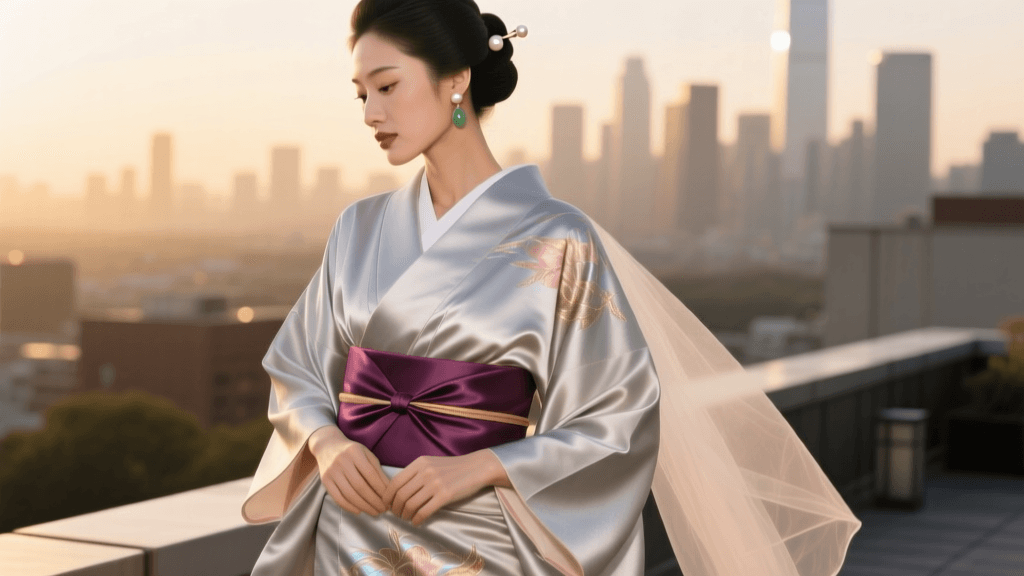
The obi is the sash that secures the kimono, and for formal events, it is the undisputed centerpiece of the ensemble. For weddings and galas, you must use a Fukuro obi (a formal bag obi woven with gold or silver threads) or, for the highest level of formality, a Maru obi (a heavily brocaded, double-sided obi).
While the standard Otaiko musubi (drum knot) is the default for married women and formal events, modern styling allows for more architectural and voluminous knots to make a statement. The Fukura-suzume (plump sparrow) knot, characterized by its large, wing-like bows, is highly appropriate for joyous occasions like weddings. To modernize the look, consider using an obiage (the silk scarf tied above the obi) in a contrasting, jewel-toned color like emerald green or deep sapphire, rather than the traditional pastel pink or white. As noted by The Japan Times in their coverage of the Victoria and Albert Museum's landmark Kimono exhibition, contemporary designers and stylists are increasingly treating the obi as a sculptural element, blending historical weaving techniques with avant-garde tying methods.
Accessories: Blending Tradition with Contemporary Elegance
Accessories are where you can most freely inject modern personality into a traditional kimono ensemble. The key is to balance the heavy, ornate nature of the silk with refined, minimalist, or unexpected contemporary pieces.
- Obijime and Obidome: The obijime is the decorative cord tied over the obi. Instead of traditional braided silk, opt for a pearl-encrusted obijime or a metallic leather cord. The obidome (the brooch threaded onto the cord) is an excellent place to feature vintage European brooches, cameos, or modern geometric resin pieces.
- Footwear: Traditional zori sandals are mandatory for formal kimono. However, modern manufacturers produce zori with elevated, contoured heels ranging from 5cm to 8cm. A higher heel alters the wearer's posture, forcing a graceful, elongated stride that complements modern evening wear. Ensure the hanao (thongs) are made of high-quality brocade or velvet rather than casual cotton.
- Bags: While a traditional hakoseko (small decorative pouch) is used in bridal wear, for a gala or evening party, a modern structured clutch or a vintage beaded evening bag is entirely acceptable and highly fashionable. Match the hardware of the bag to the metallic threads in your obi.
Hair, Makeup, and Cultural Etiquette
Wearing a kimono to a formal event requires a holistic approach to grooming. Loose, flowing hair is generally avoided as it distracts from the collar and obi. A sleek, low chignon or a modern, textured updo is preferred. Instead of overwhelming the hair with traditional, oversized kanzashi (hairpins), modern stylists often use a single, striking metallic hair stick or a minimalist pearl comb to anchor the updo.
True elegance in modern kimono styling lies in the restraint of accessories. Let the silk and the weave of the obi speak, using jewelry and hair ornaments merely as whispers of contemporary taste.
When attending a traditional Japanese wedding, it is crucial to remember that white is reserved exclusively for the bride (in the form of the shiromuku). Therefore, avoid all-white kimono or white obiage. Additionally, animal prints, overly revealing necklines, and casual cotton fabrics are strictly prohibited in formal settings.
Practicalities: Budgeting, Renting, and Tailoring
Acquiring a formal kimono ensemble is an investment. A brand-new, custom-tailored Homongi and Fukuro obi set can easily cost between $3,000 and $10,000 USD, depending on the complexity of the hand-dyeing (such as yuzen or shibori techniques) and the inclusion of gold leaf. For those attending a single gala or wedding, renting is a highly practical and cost-effective alternative.
High-end kimono rental boutiques in cities like Tokyo, Kyoto, and increasingly in major Western fashion capitals, offer formal styling packages ranging from $150 to $400 USD. These packages typically include the kimono, obi, all necessary undergarments (nagajuban), zori, and the services of a professional kitsuke (kimono dresser). If you choose to buy, the secondary vintage market is a treasure trove. Authentic, high-quality vintage silk Homongi can be sourced for $200 to $800 USD. However, vintage garments require careful inspection for silk degradation, stains, and structural weakness, especially along the shoulder seams and the ohashori fold line.
Conclusion
Styling a kimono for modern weddings and galas is an exercise in cultural appreciation and sartorial innovation. By understanding the foundational rules of formality, adjusting the silhouette to suit contemporary aesthetics, and thoughtfully curating accessories, you can transform this historic garment into a breathtaking piece of modern evening wear. Whether you are walking a red carpet or attending an intimate garden wedding, a well-styled kimono ensures you are draped in centuries of artistry, reimagined for the modern world.