Hanfu for Special Occasions: Weddings, Graduations, Festivals
The Hanfu Revival: Reclaiming Milestones Through Traditional Dress
Over the past decade, the Hanfu movement has transformed from a niche historical interest into a mainstream cultural phenomenon across the Chinese diaspora and within China. As noted by BBC News, millions of young people are now embracing traditional Han Chinese clothing not just as cosplay, but as a legitimate expression of cultural identity. Today, it is increasingly common to see Hanfu worn during major life milestones. From exchanging vows in a Ming Dynasty phoenix crown to walking across the graduation stage in a Song Dynasty robe, traditional garments are redefining modern formalwear.
According to cultural analysts at Sixth Tone, the shift toward wearing Hanfu for special occasions is driven by a desire for garments that carry deep ancestral symbolism, offering a bespoke, culturally rooted alternative to Western suits and white gowns. However, navigating the complexities of historical accuracy, layering, sizing, and sourcing can be daunting for newcomers. This comprehensive guide breaks down exactly how to select, style, and purchase Hanfu for weddings, graduations, and major festivals.
Hanfu for Weddings: Elegance, Symbolism, and Grandeur
A traditional Chinese wedding is a visual spectacle, and Hanfu bridal wear is among the most intricate and heavily symbolic clothing in the world. When selecting wedding Hanfu, couples typically look to the Ming or Tang dynasties for inspiration, as these eras represent the zenith of ceremonial formalwear.
Ming Dynasty Formalwear: Fengguan Xiapei and Aoqun
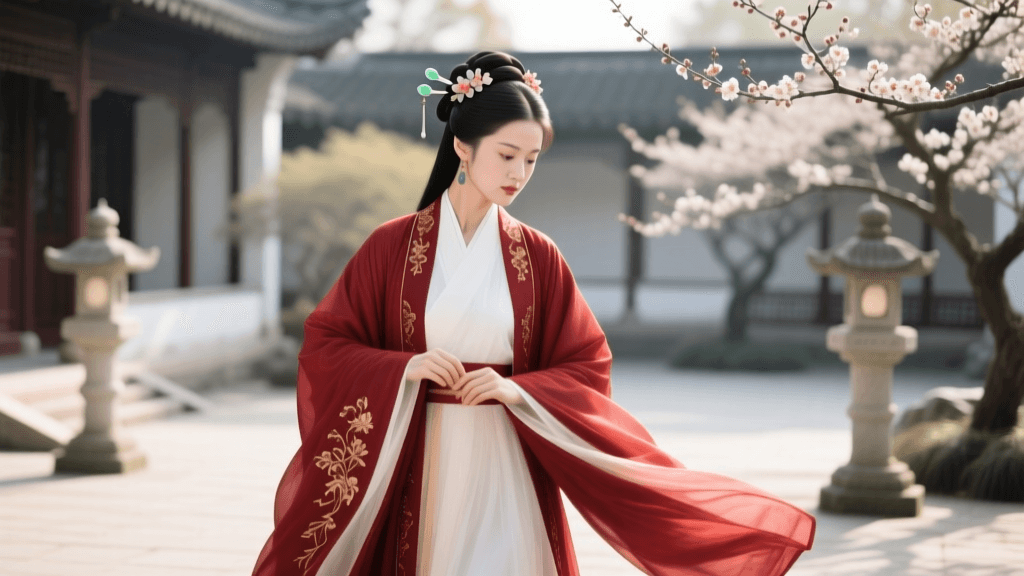
The most popular choice for modern Hanfu weddings is the Ming Dynasty style, characterized by its modest, structured silhouettes and opulent embroidery. The ultimate bridal ensemble is the Fengguan Xiapei (Phoenix Crown and Rosary). The bride wears a heavily embroidered Ao (a long, lined top jacket) over a Mamianqun (horse-face skirt). The Xiapei is a V-shaped ceremonial stole draped over the shoulders, weighted with jade or gold pendants at the bottom to ensure it hangs perfectly straight.
- Key Motifs: Dragons and phoenixes (Longfeng), peonies (wealth and honor), and pomegranates (fertility).
- Color Palette: Crimson red, deep emerald, and metallic gold.
- Estimated Cost: $300 to $1,500+ USD, depending on whether the embroidery is machine-made or hand-stitched with real gold thread.
- Timing: Custom or high-end Ming wedding sets require 2 to 4 months of lead time for production and international shipping.
Tang Dynasty Grandeur: Da Xiu Shan
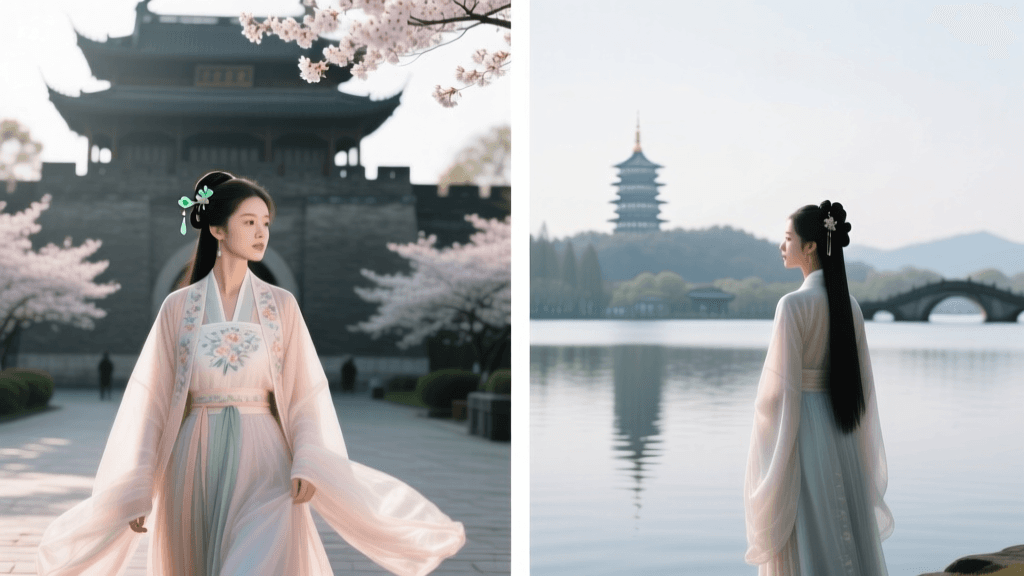
For brides seeking a more ethereal, flowing silhouette, the Tang Dynasty Da Xiu Shan (Large Sleeve Shirt) is a breathtaking choice. This style features massive, sweeping sleeves, a high-waisted Qixiong Ruqun (chest-high pleated skirt), and a sheer, lightweight shawl called a Pibo. While less structured than Ming formalwear, it requires meticulous draping and is best suited for spring or summer weddings.
Graduation Ceremonies: Academic Meets Ancestral
As the Hanfu movement permeates university campuses, many students are opting to wear traditional garments under or instead of Western academic regalia. The key to graduation Hanfu is balancing historical elegance with the practical need to sit for long periods, walk up stairs, and accommodate the academic hood and stole.
Song Dynasty Beizi and Pleated Skirts
The Song Dynasty aesthetic is renowned for its minimalism, intellectual refinement, and slender silhouettes. A Beizi (a long, open-front jacket with side slits) layered over a modest inner top and a flowing pleated skirt (Baidi Qun) is the perfect graduation ensemble. The straight lines of the Beizi provide an excellent, structured canvas for draping a university graduation stole without the fabric bunching awkwardly.
- Practical Tip: Choose a Beizi that falls just below the knee to prevent tripping on stage stairs.
- Footwear: Traditional cloud-toe shoes (Yuntouxie) or modern, minimalist leather loafers in white or black.
- Estimated Cost: $80 to $250 USD. Song Dynasty garments use less fabric and feature more subdued, woven patterns rather than heavy embroidery, making them highly affordable.
The Shenyi (Deep Robe)
For a more gender-neutral or universally academic look, the Shenyi is a one-piece robe that wraps around the body, symbolizing the unity of heaven and earth. Its dignified, sweeping lines command respect and photograph beautifully against the backdrop of a graduation hall.
Festivals and Lunar New Year: Vibrant Celebrations
Festivals like the Lunar New Year, the Mid-Autumn Festival, and the Qixi Festival (Chinese Valentine's Day) call for Hanfu that is vibrant, festive, and highly mobile. Unlike the heavy, restrictive layers of wedding wear, festival Hanfu prioritizes joy, movement, and seasonal appropriateness.
The Mamianqun (Horse-Face Skirt)
The Mamianqun has experienced a massive resurgence in everyday and festival fashion. Featuring flat front and back panels with deeply pleated sides, this skirt allows for a full range of motion, making it ideal for navigating crowded night markets, lantern festivals, and family banquets. Modern interpretations often feature metallic Zhuanghua (woven brocade) threads that catch the light of festival lanterns.
Seasonal Adjustments
- Winter (Lunar New Year): Opt for a Ming Dynasty Pi-Feng (cloak) lined with faux fur or fleece, worn over a thick, brocade Mamianqun.
- Summer (Qixi / Dragon Boat): Choose lightweight, breathable linen or chiffon Ruqun (cross-collar top and skirt) with floral embroidery to beat the heat.
- Accessories: Complete the look with a Buyao (dangling hairpin), a silk folding fan, and a beaded pouch.
Comparison Chart: Hanfu Styles by Occasion
Use the table below to quickly identify the best Hanfu styles, costs, and preparation times for your upcoming event.
| Occasion | Recommended Era & Style | Key Garments | Estimated Cost (USD) | Prep & Lead Time |
|---|---|---|---|---|
| Wedding (Bride) | Ming Dynasty Formal | Fengguan, Ao, Mamianqun, Xiapei | $400 - $1,500+ | 3 - 4 Months |
| Wedding (Groom) | Ming Dynasty Formal | Yuanlingpao (Round-collar robe), Wusha hat | $150 - $400 | 1 - 2 Months |
| Graduation | Song Dynasty Scholar | Beizi, Baidi Qun, Inner top | $80 - $250 | 3 - 4 Weeks |
| Lunar New Year | Ming Dynasty Winter | Pi-Feng (Cloak), Brocade Mamianqun | $120 - $300 | 1 - 2 Months |
| Summer Festivals | Tang / Wei-Jin | Qixiong Ruqun, Pibo (Shawl) | $50 - $150 | 2 - 3 Weeks |
Practical Buying and Sizing Guide
Purchasing authentic Hanfu, especially from overseas, requires an understanding of Chinese sizing and measurement terminology. Most authentic vendors operate on platforms like Taobao or specialized international sites like Newhanfu or Hanfu-C.
Essential Measurements
Hanfu sizing is generally more forgiving than Western tailoring due to wrap styles and tie-closures, but precise measurements are crucial for the correct drape and length. Vendors use centimeters (cm).
- Xiongwei (Bust): Measure around the fullest part of the chest. Add 4-6 cm for layering inner garments (Zhongyi).
- Yaowei (Waist): Crucial for high-waisted Tang skirts or Ming Ao that cinch at the natural waist.
- Tunwei (Hips): Essential for Mamianqun to ensure the flat panels lay correctly without pulling the pleats open.
- Jiankuan (Shoulder Width): Measured from the edge of one shoulder bone to the other. Critical for structured Ming tops and Song Beizi.
- Yichang / Qunchang (Garment/Skirt Length): Measure from the shoulder (for tops) or waist (for skirts) down to the desired hemline. For formal wear, the hem should graze the top of the foot (approx. 100-110 cm for average height).
Garment Care and Maintenance
Special occasion Hanfu is an investment. Proper care ensures these garments can become family heirlooms.
- Silk and Brocade: Never machine wash. Dry clean only, or gently spot clean with a damp cloth and mild silk detergent. Store folded in acid-free tissue paper inside a breathable cotton garment bag to prevent the metallic threads from oxidizing or tarnishing.
- Polyester and Chiffon: Modern, affordable Hanfu is often made from high-quality polyester jacquard. These can be hand-washed in cold water and hung to dry in the shade. Never wring out pleated skirts; instead, roll them in a towel to absorb excess water, then hang them with clips to let gravity reset the pleats.
Conclusion
Wearing Hanfu for weddings, graduations, and festivals is a profound way to connect with Asian heritage while celebrating personal achievements. By understanding the historical context of different dynastic styles, accurately taking your measurements, and allowing ample time for sourcing, you can ensure that your traditional formalwear is both authentic and breathtaking. Whether you are walking down the aisle in a crimson Ming dynasty robe or accepting a diploma in a refined Song dynasty jacket, Hanfu offers a timeless elegance that transcends generations.