Ultimate Kimono Care Guide: Cleaning and Storage Tips
The Art of Kimono Preservation
The kimono is far more than a simple garment; it is a wearable piece of Japanese history, art, and cultural heritage. Whether you have invested in a vintage silk furisode, purchased a casual cotton yukata for summer festivals, or inherited a precious family heirloom, proper maintenance is crucial to its longevity. Unlike Western clothing, which is routinely laundered and hung on wire hangers, traditional Japanese garments require a highly specific, mindful approach to care. According to the Metropolitan Museum of Art, the straight-line-cut construction of the kimono is not only a hallmark of its design but also a feature that historically allowed the garment to be taken apart, washed, and re-sewn. Understanding this unique architecture is the first step in mastering kimono care, cleaning, and storage.
Understanding Your Kimono Fabrics
Before applying any cleaning or storage method, you must identify the fabric of your garment. The fiber content dictates how the textile will react to moisture, light, and temperature fluctuations.
- Silk (Kinu): The most common and prestigious material for formal kimonos. Varieties include chirimen (crepe), rinzu (damask), and tsumugi (pongee). Silk is a protein fiber that is highly susceptible to water spots, UV degradation, and acidic environments.
- Cotton (Momen): Frequently used for yukata and everyday wear. Cotton is durable, breathable, and can generally withstand gentle hand washing or machine washing on delicate cycles.
- Polyester and Synthetic Blends: Modern kimonos often use polyester to mimic the look of silk while offering machine-washability and resistance to wrinkling.
- Wool (Uru): Often used for winter kimonos and haori jackets. Wool requires careful pest management as it is highly attractive to clothes moths.
Traditional and Modern Cleaning Methods
One of the most common mistakes new kimono owners make is attempting to wash a silk kimono as a whole, assembled garment. Doing so will cause the inner linings and outer fabrics to shrink at different rates, ruining the garment's shape and tension.
The Traditional Arai-Hari Method
For authentic silk kimonos, the traditional cleaning method is called arai-hari. This intricate process involves completely unpicking the seams of the kimono, returning it to its original flat panels of fabric. These panels are then washed, stretched on wooden frames called shinshi to dry and remove wrinkles, and finally re-sewn by a skilled artisan. Because this process is incredibly labor-intensive, professional arai-hari services typically cost between $150 and $300 USD per garment and are usually reserved for high-value heirlooms or heavily soiled vintage pieces.
Modern Dry Cleaning and Spot Treatment
For routine maintenance, specialized dry cleaning is the modern standard. However, you must seek out a dry cleaner who has explicit experience with traditional Japanese garments, as standard chemical solvents can strip the natural oils from silk or damage delicate metallic threads (surihaku) and hand-painted dyes (yuzen). For minor, localized stains, spot cleaning with a damp cloth and a pH-neutral textile detergent can be effective, but always test on an inconspicuous area, such as the inside of the sleeve, first.
The Proper Folding Technique: Tatou
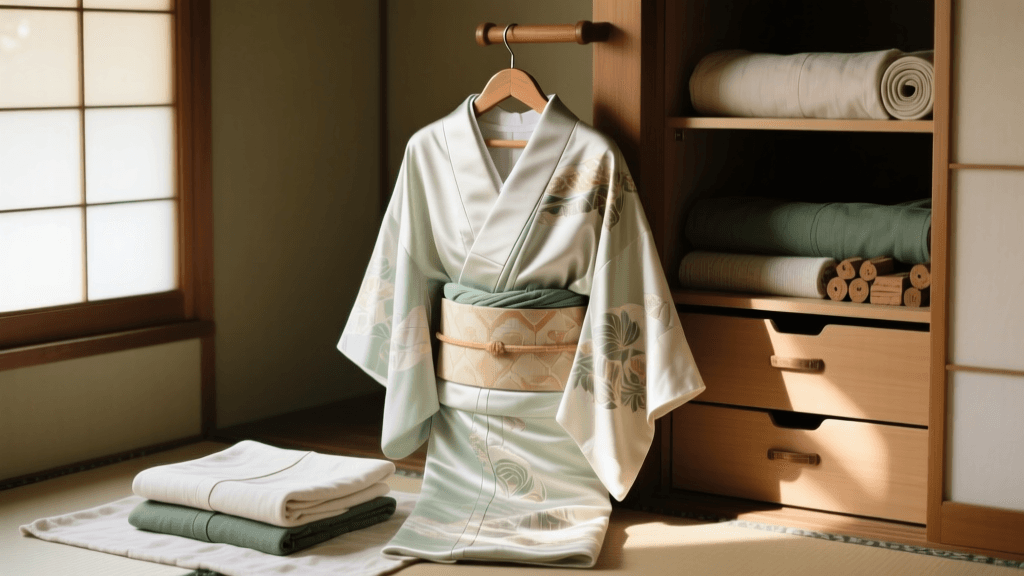
Never hang a kimono on a standard Western hanger for long-term storage. The weight of the wet or dry fabric will distort the shoulders and stress the delicate silk threads. Instead, kimonos are folded using a precise, standardized method known as tatou. This folding technique aligns the seams perfectly, ensuring that the garment rests without unnecessary tension and fits neatly into traditional storage boxes.
- Lay the kimono face down on a clean, dry surface.
- Fold the left front panel back along its center seam.
- Fold the right front panel over the left, aligning the center back seam.
- Fold the sleeves inward, matching the edges to the body of the garment.
- Fold the bottom hem up to the collar, creating a neat, rectangular package.
When folding, avoid pressing down hard on the edges. Sharp, permanent creases can cause silk fibers to crack and split over time. Instead, use the pads of your fingers to gently guide the folds.
Long-Term Storage Solutions
Proper storage is where the battle against time, moisture, and pests is won or lost. The Victoria and Albert Museum emphasizes that historic textiles require stable environments, free from extreme fluctuations in temperature and humidity.
Paulownia Wood Chests (Tansu)
In Japan, the gold standard for kimono storage is the tansu, a traditional chest made from Paulownia wood (kiri). Paulownia is lightweight, naturally resistant to insects, and uniquely hygroscopic—meaning it expands in high humidity to seal out moisture and contracts in dry conditions to let the wood breathe. If investing in an antique or new Paulownia chest is outside your budget, acid-free cardboard archive boxes or breathable cotton storage bags are acceptable alternatives.
Tatoushi Paper and Moisture Control
Each folded kimono should be wrapped in tatoushi, a specialized, acid-free, breathable paper that protects the silk from dust, light, and acidic off-gassing. Never store silk in sealed plastic bins; plastic traps moisture and emits chemical gases that will yellow and degrade the silk protein. Include silica gel packets in your storage area to maintain a relative humidity (RH) of around 50%. The Canadian Conservation Institute notes that keeping silk in a stable RH environment prevents the fibers from becoming brittle or fostering mold growth.
Fabric Care Comparison Chart
| Fabric Type | Washing Method | Ironing / Pressing | Ideal Storage Environment |
|---|---|---|---|
| Silk | Professional Arai-Hari or Specialty Dry Clean | Low heat, use a pressing cloth, no steam | Paulownia chest, acid-free paper, 50% RH |
| Cotton (Yukata) | Gentle hand wash or delicate machine cycle | Medium heat, slight steam acceptable | Cotton bag or drawer, avoid direct sunlight |
| Polyester | Machine wash cold, hang dry | Very low heat or steam only | Breathable garment bag or plastic bin with ventilation |
| Wool | Professional dry clean only | Medium heat with a thick pressing cloth | Cedar-lined box with natural moth repellents |
Caring for the Obi and Accessories
The obi (sash) and its accompanying accessories require their own specific care routines. Brocade and silk obi are heavily structured with stiff inner linings and should never be folded tightly or washed. They are best stored rolled loosely or folded in wide, shallow drawers to prevent the metallic threads and stiffeners from snapping. Accessories like obijime (decorative cords) should be untied, smoothed out, and stored flat, while delicate obidome (sash clasps) should be kept in individual soft pouches to prevent their prongs from snagging on silk fabrics.
Pest Control, Mold Prevention, and Mushiboshi
Silk and wool are organic proteins, making them a prime target for carpet beetles and clothes moths. To protect your collection, utilize natural repellents like camphor blocks, cedar wood chips, or dried lavender sachets. Avoid chemical mothballs, as their harsh fumes can permanently taint the silk and degrade the dyes.
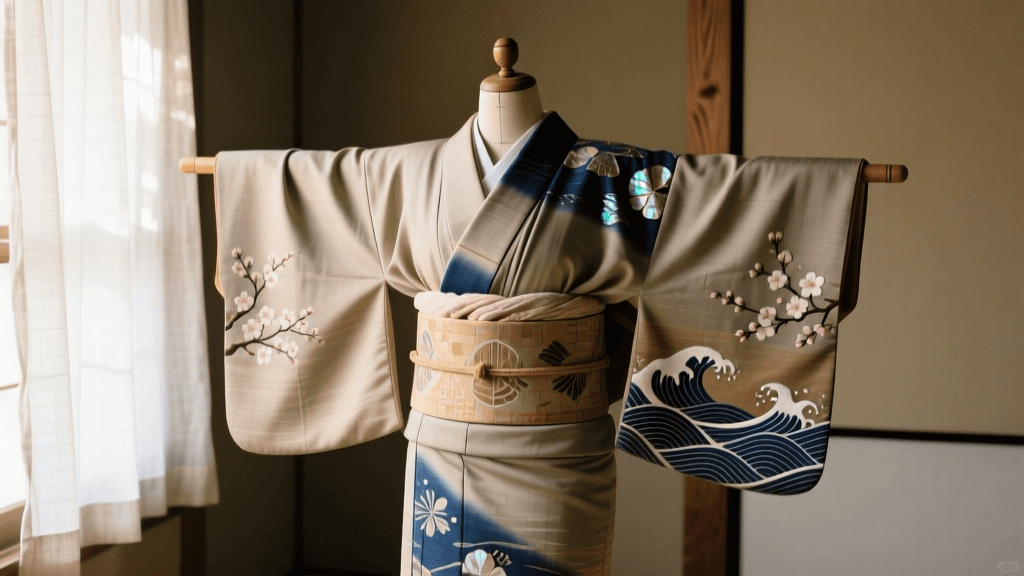
In Japan, there is a beloved winter tradition called mushiboshi (literally 'bug airing'). During the dry, cold days of late January and February, kimono collectors open their tansu chests, unfold their garments, and drape them over specialized bamboo poles in a shaded, well-ventilated room. This annual airing allows trapped moisture to escape, discourages mold spores from taking root, and gives the owner a chance to inspect the garments for early signs of pest damage or discoloration. If you live in a humid climate, replicating mushiboshi in an air-conditioned, dehumidified room once a year is a vital practice for preserving your collection.
Conclusion
Caring for a kimono is an act of respect toward the artisans who wove, dyed, and stitched the garment. By understanding the unique properties of traditional fabrics, utilizing the tatou folding method, and investing in proper climate-controlled storage, you can ensure that your kimono remains a vibrant, structural masterpiece for generations to come. Whether you are wearing it for a formal tea ceremony or preserving it as a textile artifact, mindful maintenance is the key to unlocking the enduring beauty of Japanese traditional fashion.