Chinese Bridal Guide: Qun Kwa vs Xiu He Fu Attire
The Evolution of Chinese Ceremonial Wedding Attire
Modern Chinese weddings are a beautiful amalgamation of ancient customs and contemporary flair. While many brides opt for a Western-style white gown for the main banquet, the traditional Chinese tea ceremony and morning door games demand an entirely different sartorial approach. For generations, the traditional Chinese wedding dress has served as a canvas for cultural heritage, familial blessings, and exquisite craftsmanship. Today, modern brides generally choose between two iconic silhouettes: the structured, heavily embroidered Qun Kwa (裙褂) and the flowing, romantic Xiu He Fu (秀禾服). Understanding the historical roots, structural differences, and practical considerations of these two garments is essential for any bride planning a traditional Chinese wedding.
According to cultural historians and bridal experts featured in Brides.com, the tea ceremony remains the most sacred ritual in a Chinese wedding, symbolizing the formal introduction of the families and the bride's respect for her elders. The attire worn during this ceremony is not merely decorative; it is steeped in auspicious symbolism designed to bring prosperity, fertility, and harmony to the newlyweds. Let us delve into the intricate world of Chinese bridal wear to help you make an informed, culturally resonant choice for your special day.
Understanding the Qun Kwa (裙褂): The Cantonese Masterpiece
The Qun Kwa, often simply referred to as the 'Kwa', is a traditional two-piece bridal outfit originating from the Guangdong and Fujian provinces of China. It consists of a tailored, structured jacket (the Kwa) and a straight, pleated skirt (the Qun). The defining characteristic of the Qun Kwa is its astonishingly dense embroidery, traditionally executed using metallic gold and silver threads on a base of heavy red silk satin.
The craftsmanship required to create a genuine Qun Kwa is staggering. A single, high-quality jacket can take a master artisan anywhere from six to eighteen months to complete by hand. The embroidery is so dense that the underlying red fabric is often entirely obscured. As noted by the South China Morning Post, the density of this gold and silver embroidery dictates the garment's classification, prestige, and price point. The hierarchy of Qun Kwa embroidery includes:
- Xiao Wu Fu (小五福): The entry-level tier, featuring approximately 30% to 50% embroidery coverage. The red silk base is clearly visible, offering a vibrant and traditional look.
- Zhong Wu Fu (中五福): A mid-tier option with 50% to 70% coverage, balancing the bright red silk with intricate metallic motifs.
- Da Wu Fu (大五福): A premium tier boasting 70% to 90% coverage. The garment feels substantially heavier and shines brilliantly under wedding lights.
- Gua Huang (褂皇): The absolute pinnacle of Qun Kwa craftsmanship. Translating to 'Emperor of Jackets', the Gua Huang features 100% embroidery coverage. Not a single thread of the red base fabric is visible, resulting in a breathtaking, solid-gold appearance that is often treated as a family heirloom.
The silhouette of the Qun Kwa is relatively rigid and boxy. The jacket is tailored to sit squarely on the shoulders, and the skirt falls straight down. This structure demands excellent posture and limits the bride's range of motion, but it projects an aura of imperial dignity and matriarchal authority.
The Xiu He Fu (秀禾服): A Modern Classic with Cinematic Roots
While the Qun Kwa boasts centuries of regional history, the Xiu He Fu is a relatively modern invention that has taken the broader Chinese wedding market by storm. Contrary to popular belief, the Xiu He Fu is not an ancient dynastic garment. Its design was popularized by the 2001 Chinese television drama 'Orange Turned Red' (橘子红了), in which the protagonist, Xiu He, wore a beautifully tailored, loose-fitting traditional gown. Brides and designers were so captivated by the on-screen aesthetic that the style was rapidly adopted for real-world weddings and named after the character.
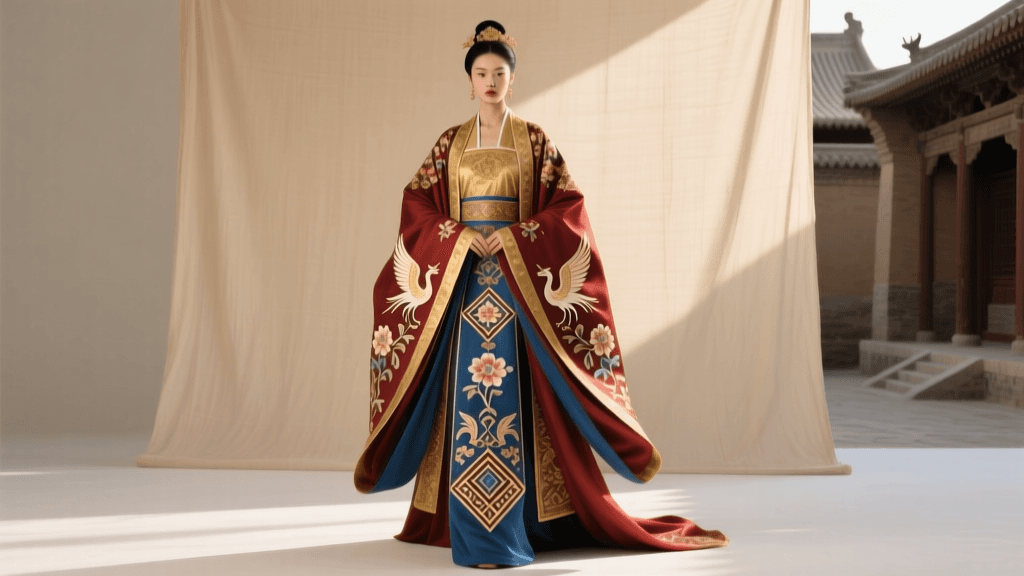
The Xiu He Fu typically features a looser, more relaxed A-line or flared silhouette. The jacket is often wider at the sleeves (resembling the 'horse-hoof' sleeves of the Qing Dynasty or the wide sleeves of Ming Dynasty Hanfu) and the skirt is a voluminous, pleated Mamianqun (horse-face skirt) or a sweeping A-line circle skirt. This relaxed fit makes the Xiu He Fu incredibly comfortable, allowing brides to sit cross-legged on the bridal bed during morning 'door games' and to move freely during outdoor photoshoots.
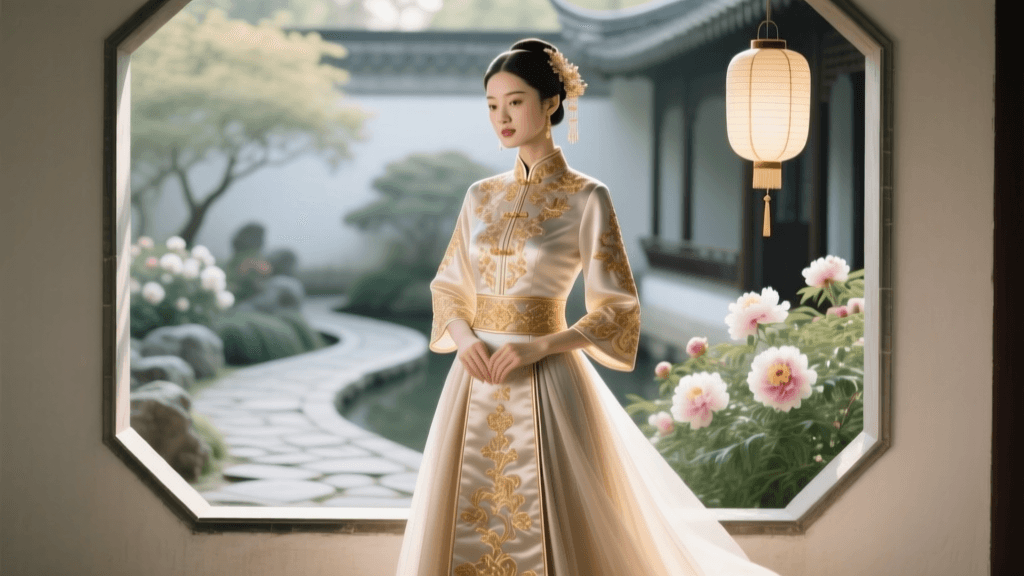
Unlike the rigid gold and silver threads of the Qun Kwa, the Xiu He Fu often utilizes colorful silk threads for its embroidery, incorporating vibrant hues of pink, green, blue, and gold against a red, burgundy, or even navy base. This allows for a softer, more romantic, and highly customizable aesthetic.
Qun Kwa vs. Xiu He Fu: A Comprehensive Comparison
Choosing between these two iconic dresses requires balancing tradition, comfort, budget, and visual preference. Below is a detailed comparison chart to guide your decision-making process.
| Feature | Qun Kwa (裙褂) | Xiu He Fu (秀禾服) |
|---|---|---|
| Origin & History | Centuries-old Cantonese/Fujian tradition. | Popularized by a 2001 TV drama; modern adaptation of Ming/Qing elements. |
| Silhouette | Structured, tailored jacket with a straight, narrow skirt. | Relaxed, flowing jacket with a wide, A-line or pleated skirt. |
| Embroidery Material | Metallic gold and silver threads (bouillon). | Colorful silk threads, sometimes accented with metallic wire or beads. |
| Weight & Comfort | Very heavy and rigid; restricts movement. | Lightweight and flexible; highly comfortable for sitting and moving. |
| Formality Level | Extremely formal; preferred for traditional tea ceremonies in Southern China. | Versatile; suitable for door games, tea ceremonies, and outdoor shoots. |
| Cost (Purchase) | $2,000 to $30,000+ USD (depending on embroidery density). | $500 to $3,000 USD (highly accessible for custom and retail). |
Practical Guide: Sourcing, Fittings, and Budgeting
Securing your dream Chinese wedding dress requires careful planning, especially if you are considering a custom-made garment or a high-end rental. Here is the actionable advice you need to navigate the procurement process.
Timeline and Lead Times
If you are renting a standard Xiu He Fu or a mid-tier Qun Kwa, you can secure your outfit 2 to 3 months before the wedding. However, if you desire a custom-made Da Wu Fu or Gua Huang, you must begin your consultations 8 to 12 months in advance. Hand-embroidering a Gua Huang requires thousands of hours of meticulous labor, and master artisans often have extensive waiting lists. For brides purchasing off-the-rack, allow at least 4 weeks for professional alterations to ensure the jacket fits perfectly across the shoulders.
Cost Breakdown: Rental vs. Custom Purchase
The financial investment varies wildly based on your chosen route. Renting a beautiful Xiu He Fu or a Xiao Wu Fu typically costs between $200 and $800 USD for a multi-day package, which is ideal for brides who want a stunning look without the burden of long-term storage. Purchasing a high-quality, machine-embroidered Xiu He Fu ranges from $500 to $1,500 USD. Conversely, investing in a hand-embroidered Qun Kwa is a major financial commitment. A genuine Da Wu Fu starts around $5,000 USD, while a flawless, 100% hand-stitched Gua Huang can easily exceed $25,000 USD. Many families view the purchase of a Gua Huang not as a wedding expense, but as an investment in a generational heirloom to be passed down to future daughters and daughters-in-law.
Essential Measurements for the Perfect Fit
When ordering a custom Qun Kwa, the tailor will require precise measurements. Unlike Western gowns that focus heavily on the bust and waist, the Qun Kwa relies on the shoulder and arm measurements to maintain its structured, boxy shape. Ensure your tailor records your shoulder width, sleeve length (measured from the center back of the neck to the wrist), and the desired jacket length, which traditionally should end just above the hipline to allow the intricate skirt waistband to show.
Decoding the Embroidery: Motifs and Symbolism
Every stitch on a Chinese wedding dress carries profound meaning. As highlighted by cultural reports in China Daily, traditional motifs are carefully selected to bless the couple's future. When selecting your dress, look for these auspicious symbols:
- The Dragon and Phoenix (Long Feng): The ultimate symbol of marital harmony. The dragon represents the groom (yang), and the phoenix represents the bride (yin). Together, they signify a perfectly balanced and powerful union.
- Bats (Fu): In Chinese, the word for bat sounds identical to the word for 'good fortune'. Five bats are often embroidered together to represent the 'Five Blessings': longevity, wealth, health, virtue, and a peaceful death.
- Pomegranates: Because a pomegranate is filled with hundreds of seeds, it is a potent symbol of fertility and the blessing of many children.
- Peonies: Known as the 'King of Flowers', the peony represents wealth, honor, and feminine beauty.
Styling and Accessories for the Tea Ceremony
The attire is only half the equation; traditional Chinese bridal styling requires specific accessories to complete the ceremonial look. For the Qun Kwa, brides traditionally wear their hair in a tight, elegant updo adorned with gold hairpins and a red silk veil. The jewelry is equally significant. The bride's parents and groom's family will gift her heavy gold bangles, most notably the 'Long Feng Zhuo' (Dragon and Phoenix bangles). It is common for brides to wear multiple pairs of these thick gold bangles stacked up their forearms, a display of the family's wealth and their blessings for the bride's future.
For the Xiu He Fu, the styling can be slightly more relaxed and romantic. Brides often opt for softer, braided updos adorned with jade hairpins, pearl tassels, and fresh flowers. A jade pendant or a pair of high-quality jadeite earrings is frequently chosen to complement the colorful silk embroidery of the Xiu He Fu, providing a cooling, elegant contrast to the vibrant red fabric.
Preserving Your Heirloom: Storage and Care
If you choose to purchase a hand-embroidered Qun Kwa, proper preservation is critical. The metallic threads used in traditional embroidery are susceptible to oxidation and tarnishing if exposed to humidity and light. Never store your Qun Kwa in a plastic garment bag, as trapped moisture will cause the silver threads to turn black. Instead, wrap the garment in acid-free tissue paper, place it in a breathable cotton storage box, and store it in a cool, climate-controlled environment. Include silica gel packets to absorb ambient moisture, ensuring that your magnificent bridal gown remains pristine for the next generation.
Conclusion
Whether you choose the imperial majesty and structural brilliance of the Qun Kwa or the romantic, flowing elegance of the Xiu He Fu, your traditional Chinese wedding attire will serve as a breathtaking tribute to your heritage. By understanding the history, craftsmanship, and practical logistics behind these garments, you can confidently select a dress that not only honors your ancestors but also makes you feel utterly radiant on your wedding day. Embrace the rich tapestry of Asian traditions, and let your bridal attire tell a story of love, prosperity, and enduring cultural pride.