Silk Road Influence on Tang Hanfu: Motifs and Sourcing
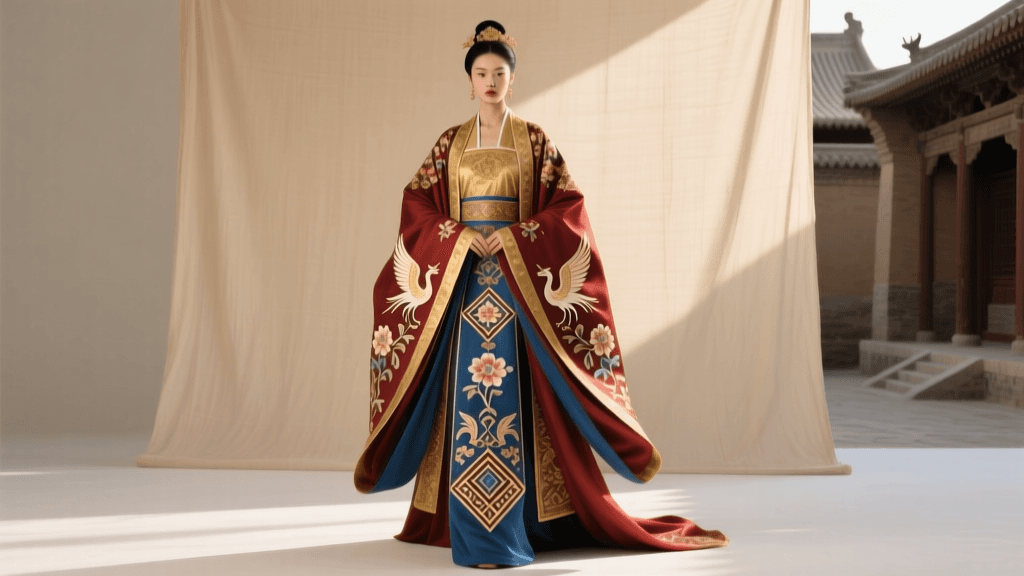
The Silk Road and the Transformation of Tang Dynasty Hanfu
The Tang Dynasty (618 to 907 CE) is widely celebrated as a golden age of Chinese cosmopolitanism, art, and global trade. At the heart of this cultural renaissance was the Silk Road, a vast network of trade routes that connected the Tang capital of Chang'an to Central Asia, Persia, and the Byzantine Empire. As merchants, diplomats, and artisans traversed these routes, they brought with them not only spices, glassware, and precious metals, but also revolutionary textile techniques and fashion sensibilities. According to the UNESCO Silk Roads Programme, this era was defined by an unprecedented synthesis of indigenous Han Chinese traditions and foreign 'Hu' influences, fundamentally altering the trajectory of traditional Chinese clothing.
For modern enthusiasts of Asian traditions and historical dress, understanding the Silk Road's impact on Tang Dynasty Hanfu is essential. The integration of Central Asian motifs, particularly those introduced by Sogdian merchants, resulted in garments that were vibrant, structurally innovative, and rich in cross-cultural symbolism. Today, the revival of these specific Tang-Silk Road fusion styles offers a unique niche within the broader Hanfu movement, appealing to those who appreciate the historical realities of cultural exchange.
Key Cross-Cultural Motifs and Textile Techniques
Before the Tang Dynasty, traditional Han Chinese textiles heavily favored warp-faced weaves and motifs rooted in indigenous mythology, such as dragons, phoenixes, clouds, and geometric patterns. The influx of Western and Central Asian textiles introduced new aesthetic paradigms that Chinese weavers rapidly adopted and adapted.
The Pearl Roundel (Lianzhu Wen)
One of the most iconic Silk Road motifs to permeate Tang Dynasty Hanfu is the 'Lianzhu Wen', or pearl roundel. Originating in Sassanid Persia and popularized by Sogdian weavers, this motif features a circular border made of small pearls or dots, enclosing confronting animals such as winged horses, boars, or ducks. In Tang China, this motif was woven into luxurious silks and used extensively in round-collar robes and official garments. The roundel symbolized cosmic harmony and royal authority, blending seamlessly with Chinese philosophical concepts of heaven and earth.
Sogdian Weaves and Samite
The Sogdians, the primary middlemen of the Silk Road, were master weavers of 'samite', a heavy, weft-faced compound twill silk. Unlike traditional Chinese warp-faced silks, samite allowed for larger, more complex, and polychrome patterns to be woven into the fabric. Chinese artisans in the imperial workshops of Chang'an and Luoyang studied these imported textiles and reverse-engineered the weaving techniques. The International Dunhuang Project highlights how textile fragments found in the Mogao Caves showcase this exact transition, revealing early Tang experiments with weft-faced compound weaves that mimicked Central Asian imports before evolving into distinct Chinese brocades (Zhijin).
Garment Silhouettes: Blending Han and Hu Styles
The cross-cultural exchange was not limited to surface-level patterns; it also dictated the cut and structure of Tang Dynasty garments. The concept of 'Hufu' (foreign dress) became highly fashionable among the Tang elite, particularly during the early to mid-Tang periods.
- Yuanlingpao (Round-Collar Robe): While the round collar existed prior to the Tang, its widespread adoption and specific tailoring were heavily influenced by nomadic and Central Asian riding coats. Tang Yuanlingpao often featured narrower sleeves than previous Han garments, allowing for greater mobility, and were fastened with leather belts rather than silk sashes.
- Banbi (Half-Sleeve Jacket): This short-sleeved outer jacket was worn over long-sleeved undergarments. Its origins are debated, but its popularity in the Tang court is closely tied to the practical layering styles of Silk Road travelers and nomadic horsemen.
- Lapels and Asymmetry: Influenced by Persian and Sogdian riding coats, some Tang garments featured asymmetrical lapels, a stark departure from the traditional Han Chinese 'Jiaoling Youren' (crossed collar, right lapel over left) standard.
Sourcing Authentic Silk Road-Inspired Hanfu Today
For collectors, reenactors, and cultural enthusiasts looking to acquire Tang-style Hanfu that accurately reflects these Silk Road influences, the modern market requires a discerning eye. Mass-produced Hanfu often defaults to later Ming or Song Dynasty silhouettes, or relies on generic fantasy motifs. To source authentic Tang-Silk Road revival garments, follow these actionable guidelines:
Keywords and Search Strategies
When shopping on platforms like Taobao, Etsy, or specialized Hanfu boutiques, use specific terminology. Search for 'Tang Dynasty Yuanlingpao' (唐制圆领袍), 'Lianzhu Wen brocade' (连珠纹织锦), or 'Sogdian motif Hanfu' (粟特纹样汉服). Look for makers who explicitly reference the 'Tang-Sui' era and utilize weft-faced brocades rather than digital printing on cheap polyester.
Cost Expectations and Material Reality
Authentic revival garments utilizing traditional Jacquard-woven silk brocades or heavy metallic-threaded textiles are an investment. Expect to pay between $120 and $350 USD for a high-quality, fully lined Tang Yuanlingpao featuring accurate pearl roundel motifs. Garments priced below $60 are typically made of printed chiffon or thin cotton, which completely fail to replicate the heavy, structured drape of historical Tang samite and brocade.
Measurement and Fit Guide for Tang-Style Robes
Tang Dynasty silhouettes differ significantly from the form-fitting Qipao or the voluminous, cascading sleeves of the Wei-Jin period. To ensure a proper fit for a Silk Road-inspired Yuanlingpao, take the following specific measurements:
- Shoulder Width: Tang robes often feature a slight 'drop shoulder' to accommodate the heavy fabric and allow for riding or archery. Add 4 to 6 centimeters to your natural shoulder measurement.
- Chest Width: The robe should sit comfortably over inner layers (like a Zhongyi). Measure the fullest part of your chest and add at least 15 centimeters for ease of movement and historical accuracy.
- Sleeve Length: Unlike the floor-dragging sleeves of ceremonial Hanfu, Silk Road-influenced Tang sleeves are practical. The sleeve should end at the wrist bone or slightly past it, allowing the hands to be free for holding reins or tools.
- Garment Length: A standard male or unisex Yuanlingpao should fall to the mid-calf or just above the ankle, historically designed to be worn with leather riding boots.
Fabric Comparison for Modern Tang Revival Garments
Choosing the right fabric is critical for capturing the essence of Silk Road textiles. Below is a comparison of fabrics commonly used in modern Tang-style Hanfu production.
| Fabric Type | Historical Accuracy | Drape and Weight | Cost Range (USD) | Best Use Case |
|---|---|---|---|---|
| Silk Brocade (Zhijin) | High | Heavy, structured, crisp | $150 - $350 | Winter outer robes, formal court wear, photography |
| Silk Samite Revival | Very High | Dense, soft sheen, thick | $200 - $400 | Museum-grade reenactment, high-end collecting |
| Cotton-Linen Blend | Low (for elite wear) | Light, breathable, matte | $40 - $80 | Summer casual wear, daily historical cosplay |
| Polyester Jacquard | Low | Slippery, artificially shiny | $30 - $60 | Budget stage performances, beginner cosplay |
Styling the Tang-Silk Road Look
A true Silk Road-inspired ensemble extends beyond the robe itself. The Tang elite accessorized their Hufu with items that reflected their cosmopolitan tastes. Pair your brocade Yuanlingpao with a leather 'Diexie' belt (a multi-tool belt featuring small metal rings and plaques, originally designed for nomadic horsemen to carry knives and flint). Footwear should consist of dark leather riding boots with upturned toes, rather than traditional Han cloth shoes. For headwear, the 'Putou' (a stiffened black gauze cap) was the standard for men, while women adopting male dress (a popular trend in the High Tang) often wore the same caps or wrapped their hair in vibrant, foreign-style silk turbans.
Caring for Heavy Brocade and Metallic Threads
Garments featuring Silk Road motifs often utilize metallic threads (historically gold or silver leaf wrapped around silk cores, modernly replaced by synthetic metallic yarns) and dense weaves. These textiles require specialized care:
- Cleaning: Never machine wash or hand-wash heavy silk brocades. The metallic threads will tarnish, and the dense weave will warp. Always seek a professional dry cleaner experienced with historical textiles or bridal silks.
- Storage: Do not hang heavy Tang robes on wire or thin wooden hangers, as the weight of the brocade will tear the shoulder seams. Store them folded, layered with acid-free tissue paper to prevent creasing, inside a breathable cotton garment bag.
- Environment: Keep the garments away from direct sunlight, which will rapidly fade the polychrome dyes used to replicate the vibrant Sassanid and Sogdian color palettes.
'The textiles of the Silk Road were not merely commodities; they were the physical manifestations of cultural dialogue, where the looms of Chang'an wove the dreams of Persia and the steppes into a single, magnificent fabric.' - Historical Textile Analysis, The Metropolitan Museum of Art.
By understanding the profound impact of the Silk Road on Tang Dynasty Hanfu, modern enthusiasts can move beyond superficial aesthetics and engage deeply with the rich, interconnected history of Asian traditions. Sourcing and wearing these garments is not just an act of fashion, but a celebration of the ancient world's most vibrant cross-cultural exchange.