Neo-Chinese Street Fashion: Mastering Douyin's Top Hanfu Trends
The Rise of Xin Zhongshi: Douyin's Neo-Chinese Revolution
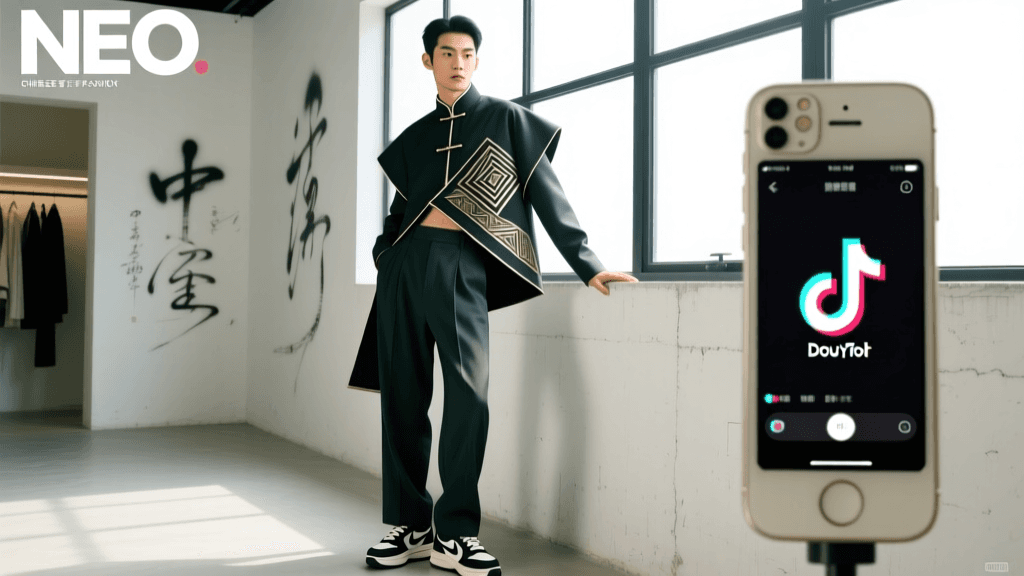
Over the past three years, the digital runways of Douyin (the Chinese counterpart to TikTok) have birthed a sartorial movement that is fundamentally altering the landscape of Asian streetwear. Known as 'Xin Zhongshi' (新中式), or Neo-Chinese style, this trend represents a sophisticated hybridization of traditional Hanfu elements and contemporary urban fashion. Unlike the strict historical reenactment seen in early Hanfu revivalist circles, Douyin's top fashion influencers treat traditional garments as a modular wardrobe, splicing ancient silhouettes with modern streetwear staples. According to a comprehensive report by Reuters on the Hanfu movement, this shift from historical purity to modern pragmatism has been the primary catalyst in transforming traditional clothing from a niche hobby into a multi-billion-dollar mainstream market.
The brilliance of the Douyin street style formula lies in its juxtaposition. Influencers are frequently seen pairing heavily embroidered Ming Dynasty skirts with oversized, distressed leather jackets, or layering sheer Song Dynasty outercoats over graphic crop tops and chunky sneakers. This aesthetic is not merely about visual contrast; it is a cultural statement. As noted by Vogue, the global fashion industry is increasingly looking to China's youth-driven 'Guochao' (national trend) movement, where domestic heritage brands and Neo-Chinese aesthetics are outpacing Western luxury houses in cultural relevance among Gen Z consumers.
Deconstructing the Douyin Street Style Formula
To successfully replicate the Neo-Chinese streetwear look, one must understand the structural rules that Douyin influencers follow. The core philosophy is 'One Traditional Anchor, Two Modern Supports.' This means selecting one historically accurate or heavily traditional garment as the focal point of the outfit, while the remaining pieces (footwear, outerwear, and accessories) are decidedly modern.
'Neo-Chinese style is not about wearing a costume; it is about extracting the cultural DNA of our ancestors and splicing it into the modern urban genome. The street is our runway, and pragmatism is our tailor.'
Color blocking is another essential tactic. While traditional Hanfu often relies on harmonious, nature-inspired palettes, Douyin street fashion embraces high-contrast urban tones. A common and highly effective combination is pairing a metallic jacquard Mamianqun (horse-face skirt) in deep bronze or emerald with a stark, matte black oversized blazer and white leather combat boots. This grounds the opulence of the traditional textile, making it wearable for daily urban commuting, cafe-hopping, or street photography.
The Essential Neo-Chinese Streetwear Wardrobe
Building a Xin Zhongshi wardrobe requires strategic investment in specific transitional pieces. Below is a comparison chart detailing how traditional garments are adapted for the Douyin street fashion ecosystem, complete with average market costs for high-quality, influencer-approved replicas.
| Garment | Traditional Context | Douyin Street Adaptation | Avg. Cost (USD) |
|---|---|---|---|
| Mamianqun (Horse-Face Skirt) | Ming Dynasty formal wrap skirt | Paired with oversized blazers, corsets, or graphic tees | $45 - $150 |
| Beizi (Slip Outercoat) | Song Dynasty formal outerwear | Worn as a sheer duster over denim or streetwear sets | $30 - $85 |
| Pan Kou (Knotted Buttons) | Qing Dynasty functional fasteners | Integrated into modern denim jackets, chokers, or belts | $10 - $40 |
| Yunjian (Cloud Shoulder) | Ceremonial collar accessory | Layered over plain turtlenecks or minimalist slip dresses | $25 - $70 |
1. The Mamianqun (Horse-Face Skirt)
The undisputed king of Douyin street fashion is the Mamianqun. Characterized by its flat front and back panels with deep, structured pleats on the sides, this skirt offers a dramatic silhouette that mimics the flow of a maxi skirt while providing the mobility required for streetwear. For a wearer who is 165cm (5'5') tall, the ideal Mamianqun length is 95cm to 100cm, ensuring the hem grazes the top of the foot without dragging on urban pavements. The waistband should be exactly 4cm wide to provide structural support without digging into the ribs when sitting.
When sourcing a Mamianqun for streetwear, prioritize woven jacquard fabrics over digital prints. Jacquard provides a subtle, tactile depth that catches the light during street photography, whereas flat prints often look cheap and costumey in natural daylight. Look for skirts with a high polyester-blend ratio (e.g., 80% polyester, 20% viscose) to ensure the pleats remain razor-sharp even after hours of walking.
2. The Song Dynasty Beizi (Outercoat)
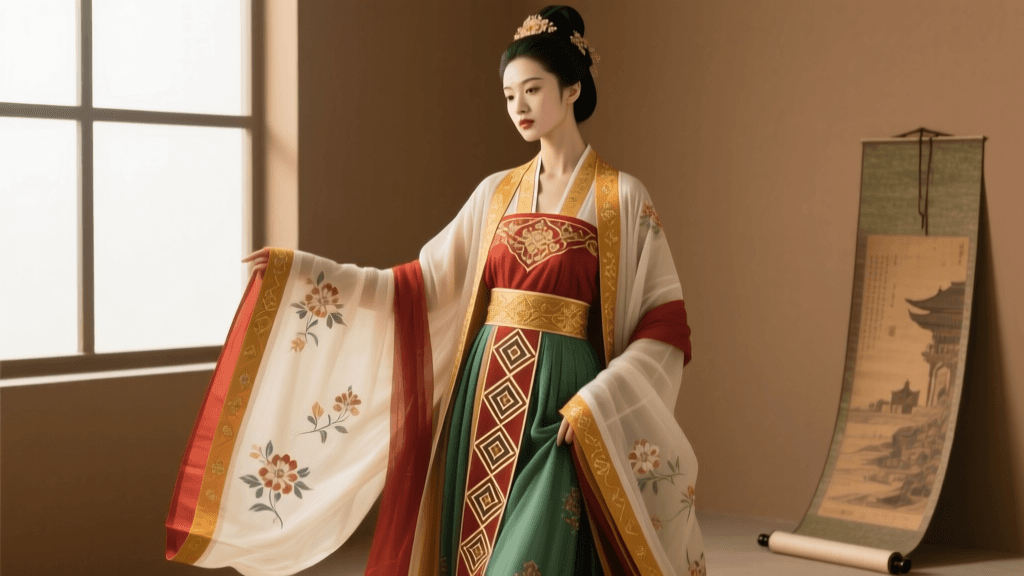
The Beizi is a straight-cut, open-front outercoat that traditionally features side slits extending up to the armpit. In the Douyin streetwear context, influencers utilize sheer organza or lightweight chiffon Bezi as modern dusters. A floor-length, translucent Beizi worn over a cropped tank top and baggy cargo pants creates a striking vertical line, elongating the body while adding an ethereal, kinetic element to the outfit as the wearer moves. The key to styling the Beizi is ensuring the inner layers are highly structured or form-fitting, preventing the outfit from looking shapeless.
3. Pan Kou (Knotted Buttons) and Mandarin Collars
For those who find full Hanfu skirts too bold for daily wear, integrating Pan Kou (intricate knotted frog buttons) into modern garments is a subtle nod to the trend. Douyin creators frequently purchase standalone Pan Kou sets and sew them onto the cuffs of oversized denim jackets or use them as asymmetric closures on modern corsets. The Mandarin collar (Liling) is also frequently adapted into sleek, sleeveless streetwear vests, offering a sharp, architectural neckline that pairs beautifully with layered silver chains.
Actionable Guide: Sourcing and Styling Your Look
Acquiring authentic, high-quality Neo-Chinese streetwear requires navigating specific e-commerce platforms and utilizing the correct terminology. While Western-facing sites like YesStyle or AliExpress offer entry-level pieces, serious enthusiasts turn directly to Taobao or specialized WeChat mini-programs for influencer-tier quality.
- Primary Search Terms: Use '新中式' (Xin Zhongshi / Neo-Chinese) or '改良汉服' (Modified Hanfu) rather than just 'Hanfu', which will yield strict historical reenactment garments unsuitable for street styling.
- Fabric Keywords: Search for '提花' (Jacquard) or '香云纱' (Xiangyunsha / Gambiered Canton Gauze) if you are looking for premium, breathable textiles that drape beautifully in urban environments.
- Timing Your Purchases: The most cost-effective times to build your wardrobe are during the 618 Shopping Festival (mid-June) and Singles' Day (November 11). During these windows, top-tier Taobao boutiques like 'Shisanyu' or 'Zhongzheng Hanfu' routinely offer 20% to 40% discounts, bringing a $150 Mamianqun down to the $90 range.
Hair, Makeup, and Accessories: The Finishing Touches
The Douyin Neo-Chinese aesthetic extends far beyond clothing; it requires a cohesive approach to grooming and accessories. Influencers typically avoid the heavy, theatrical makeup associated with traditional period dramas. Instead, the preferred 'street' makeup look features a matte, porcelain base, sharply defined eyebrows, and a blurred, gradient lip tint in muted terracotta or oxblood shades. This modern, slightly grungy makeup style prevents the traditional clothing from looking like a costume.
Hair is usually styled in effortless, messy updos secured with modern interpretations of traditional hairpins. A single, minimalist jade or white nephrite hair stick thrust through a chaotic claw-clip bun is a hallmark of the Douyin street style. For accessories, chunky silver jewelry with oxidized finishes pairs much better with streetwear than the delicate, bright gold filigree of traditional court jewelry. Brands like South China Morning Post have highlighted how local artisans are now blending ancient metallurgy techniques with brutalist, cyberpunk-inspired silverwork specifically to cater to this demographic.
Conclusion
The Neo-Chinese street fashion trend on Douyin is a masterclass in cultural evolution. By treating traditional garments not as sacred relics, but as living, breathing components of a modern wardrobe, Chinese youth are ensuring the survival and relevance of their sartorial heritage. Whether you are investing in a meticulously woven Mamianqun or simply adding a Pan Kou clasp to your favorite denim jacket, the Xin Zhongshi movement offers endless, actionable avenues for personal expression. It is a reminder that true tradition does not stagnate in a museum; it walks the streets, adapts to the concrete, and continually reinvents itself for the next generation.