Mastering Chinese Embroidery: Su, Shu, and Cantonese Techniques
The Legacy of Chinese Silk and Embroidery
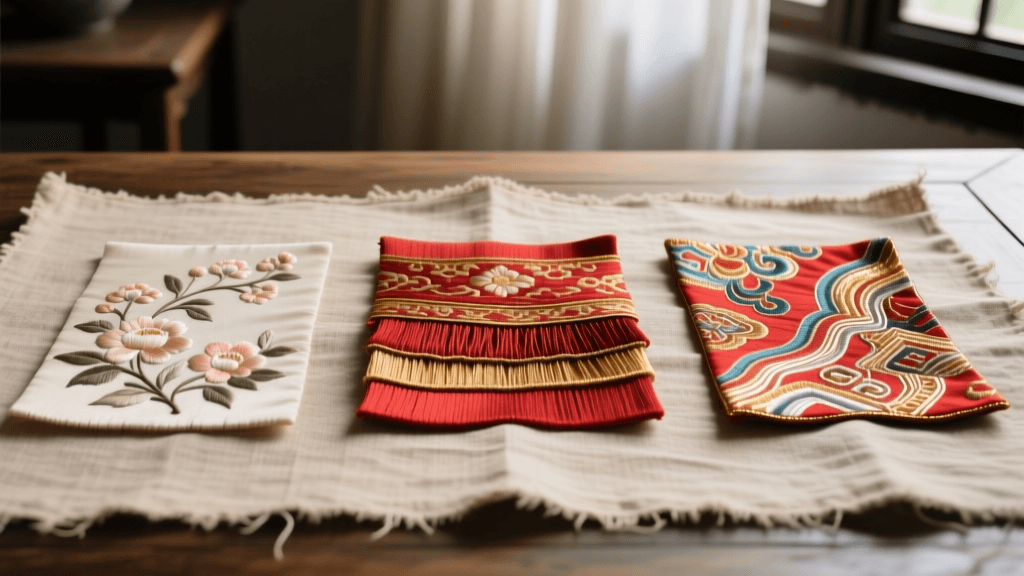
Chinese embroidery is a cornerstone of Asian sartorial heritage, transforming simple silk fabrics into breathtaking canvases of cultural storytelling. For enthusiasts of traditional Hanfu, Qing dynasty garments, and historical reenactment, understanding the regional nuances of needlework is essential. While China is historically celebrated for its 'Four Famous Embroideries' (Su, Shu, Xiang, and Yue), the most prominent styles influencing high-end traditional garments today are Su (Suzhou), Shu (Sichuan), and Yue (Cantonese/Guangdong). Each technique requires distinct materials, stitching methods, and care regimens. According to The Metropolitan Museum of Art, the mastery of silk and embellishment in China dates back millennia, evolving from simple structural stitches into highly complex artistic expressions that denoted social rank, regional pride, and philosophical beliefs.
Su Embroidery (Suzhou): The Pinnacle of Delicacy
Originating from the Jiangsu province, Su embroidery (Su Xiu) is renowned for its breathtaking delicacy, realistic imagery, and meticulous needlework. It is the preferred embellishment for Ming dynasty-inspired Aoqun (jacket and skirt sets) and delicate Song dynasty-style outerwear.
Key Techniques and Characteristics
- Thread Splitting: The hallmark of authentic Su embroidery is the splitting of a single silk thread into fractions as fine as 1/32 or even 1/64 of its original thickness. This allows for seamless color blending and hyper-realistic details, particularly in petals and fish scales.
- Double-Sided Embroidery (Shuangmian Xiu): A master-level technique where the piece looks identical on both the front and back, with all knots and thread ends hidden. This is often used for standalone screens but occasionally adapted for reversible Hanfu collars.
- Flat Sheen: Su embroidery utilizes a specific twisting method that flattens the silk thread, giving the finished piece a smooth, luminous, and painterly quality rather than a textured, raised surface.
Actionable Advice: When inspecting a Su embroidered Hanfu piece, look closely at the transitions between colors. Authentic hand-stitched Su work will feature 'water and ink' blending, where threads of different hues are interwoven to create a gradient, unlike the stark color blocks of machine embroidery.
Shu Embroidery (Sichuan): Vibrant Nature and Halo Effects
Shu embroidery (Shu Xiu) hails from the Sichuan province and is celebrated for its bold, vibrant colors and nature-inspired motifs. Historically used for everyday garments, quilts, and ceremonial robes during the Tang and Song dynasties, Shu embroidery brings a lively, dynamic energy to traditional wardrobes.
Key Techniques and Characteristics
- The Halo Effect (Yunzhen): Shu artisans use over 122 distinct needle techniques to create a 'halo' effect, where colors blend so smoothly that the transition is imperceptible, mimicking traditional ink wash paintings.
- Thick Satin Stitches: Unlike the ultra-fine threads of Suzhou, Shu embroidery often uses slightly thicker, tightly twisted threads and dense satin stitches, giving the motifs a raised, tactile, and three-dimensional quality.
- Signature Motifs: Carps, lotus flowers, pandas, and mountainous landscapes are ubiquitous. The carp motif, symbolizing perseverance and wealth, is particularly iconic in Shu bridal and festival Hanfu.
Actionable Advice: Shu embroidery is highly durable due to its dense stitching and robust silk satin base. It is an excellent choice for outerwear like Bixia (capelets) and Pifeng (open-front coats) that require structural integrity alongside visual impact.
Yue Embroidery (Cantonese): The Majesty of Gold and Silver
Yue embroidery (Yue Xiu), encompassing both Guangzhou and Chaozhou styles, is the most opulent of the regional techniques. Characterized by its heavy use of metallic threads, dense patterns, and dramatic motifs, it is the undisputed choice for ceremonial garments, Qungua (traditional wedding jackets), and opera costumes. The Victoria and Albert Museum notes that Cantonese textiles were highly prized in international trade, heavily influencing global perceptions of Chinese luxury and embellishment.
Key Techniques and Characteristics
- Goldwork Couching: Yue artisans rarely pass gold or silver threads through the fabric, as the metallic wrapping would fray. Instead, they lay the metallic thread on the surface and 'couch' it down with tiny, nearly invisible silk stitches.
- Relief Padding: To make dragons, phoenixes, and peonies pop, artisans pad the underlying fabric with cotton or wool before applying the metallic threads, creating a striking bas-relief effect.
- Dense Composition: Yue embroidery rarely leaves negative space. The background is often entirely filled with geometric patterns, clouds, or water motifs, resulting in a heavy, armor-like garment.
Actionable Advice: Because of the metallic threads and padding, Yue embroidered garments are heavy and stiff. They should never be folded, as the gold threads will crease, crack, and permanently tarnish. Always store Qungua and Yue robes flat or rolled.
Comparative Analysis: Su vs. Shu vs. Yue
| Feature | Su (Suzhou) | Shu (Sichuan) | Yue (Cantonese) |
|---|---|---|---|
| Primary Thread | Ultra-fine, split silk | Thick, twisted silk | Gold/silver metallic & silk |
| Visual Texture | Flat, smooth, painterly | Raised, tactile, vibrant | Heavily padded, 3D relief |
| Common Motifs | Cats, koi, delicate florals | Lotus, carps, landscapes | Dragons, phoenixes, lions |
| Best Hanfu Use | Ming Aoqun, delicate collars | Tang/Song outerwear, Bixia | Qungua, ceremonial robes |
| Avg. Cost (Handmade) | $800 - $5,000+ | $500 - $3,000 | $1,500 - $10,000+ |
Practical Guide: Sourcing Authentic Embroidered Hanfu
Navigating the market for authentic, hand-embroidered traditional garments requires a discerning eye. Machine embroidery has become incredibly advanced, but it lacks the soul and structural nuances of handwork.
- Examine the Reverse Side: Machine embroidery often uses a continuous bobbin thread, resulting in a messy or overly uniform back. Hand embroidery, particularly Su and Shu, will show deliberate, organized stitch paths on the reverse, even if hidden by a lining.
- Check the Thread Sheen: Authentic silk thread has a triangular prism-like structure that refracts light, creating a multi-dimensional shimmer. Synthetic rayon or polyester threads used in mass-market Hanfu will have a flat, plastic-like glare.
- Sourcing Hubs: For Su embroidery, look to artisans in Suzhou's Zhenhu town. For Shu, the Shujin Embroidery Museum in Chengdu offers verified pieces. For Yue, Chaozhou's historic牌坊街 (Paifang Street) is lined with master goldwork studios.
Archival Care and Maintenance
Preserving these textiles is critical. Silk is a protein fiber, highly susceptible to light, moisture, and acidic environments. The University of Washington's Silk Road Project highlights that historical silk preservation requires strict environmental controls, a principle that applies directly to modern collectors of high-end Hanfu.
Washing and Cleaning
- Never Machine Wash: Agitation will destroy the thread splitting in Su embroidery and crush the padding in Yue goldwork.
- Spot Cleaning: Use a pH-neutral silk detergent (like Eucalan or a specialized museum-grade cleaner) diluted in cold water (below 20°C / 68°F). Dab gently with a microfiber cloth; never rub.
- Dry Cleaning: For Yue embroidered Qungua, professional dry cleaning with a specialist who understands metallic thread preservation is the only safe option.
Storage Protocols
- Humidity Control: Maintain a relative humidity of 45% to 55%. High humidity will cause metallic threads to oxidize and silk to mildew.
- Rolling vs. Folding: Never fold heavily embroidered garments. Roll them face-out around acid-free, archival-quality cardboard tubes (minimum 3 inches in diameter) wrapped in unbleached muslin.
- Light Exposure: Store in total darkness. UV radiation will fade the vibrant dyes of Shu embroidery and degrade the silk protein chains over time.
Conclusion
Understanding the distinctions between Su, Shu, and Yue embroidery elevates the appreciation of traditional Asian garments from mere fashion to historical preservation. Whether you are investing in a delicate Su-embroidered Ming jacket, a vibrant Shu Pifeng, or a majestic Cantonese wedding robe, recognizing the artisan's technique ensures you can properly source, value, and preserve these wearable masterpieces for generations to come.