Miao Ethnic Clothing: Silverwork, Batik, and Buyer Guide
The Wearable History of the Miao People
The Miao people, widely recognized in international contexts as the Hmong, represent one of China's most culturally vibrant and historically rich ethnic minority groups. Primarily concentrated in the mountainous regions of Guizhou, Yunnan, and Hunan provinces, the Miao have cultivated a profound sartorial heritage. According to Encyclopedia Britannica's overview of the Miao people, their traditional clothing is not merely decorative; it serves as a vital historical archive. Because the Miao historically lacked a formalized written language, their history, mythology, and migratory patterns were meticulously encoded into the intricate embroidery and textile patterns of their garments. For collectors, cultural enthusiasts, and fashion historians, understanding Miao clothing requires a deep dive into their mastery of indigo batik, complex pleating techniques, and world-renowned silversmithing.
Miao Embroidery: Motifs, Stitches, and Mythology
Miao embroidery is celebrated globally for its complexity and vivid color palettes. The designs are heavily steeped in animistic beliefs and creation myths. The most prominent motif is the 'Butterfly Mother' (Mais Bangx), a central figure in Miao mythology who is believed to have given birth to the first humans, animals, and spirits. As highlighted in Sixth Tone's feature on Miao textile history, the creation of a single fully embroidered festival jacket can take a skilled artisan anywhere from one to three years to complete.
When examining authentic Miao embroidery, look for the distinctive 'braid stitch' and 'seed stitch,' which create a raised, three-dimensional texture on the fabric. Authentic vintage pieces often utilize hand-spun cotton and silk threads dyed with natural botanical pigments, including safflower for reds and indigo for blues. Modern reproductions, while beautiful, frequently rely on synthetic threads and machine-assisted stitching, which lack the tactile depth and historical resonance of heritage pieces.
Indigo Batik (Laran): Craftsmanship and Sizing
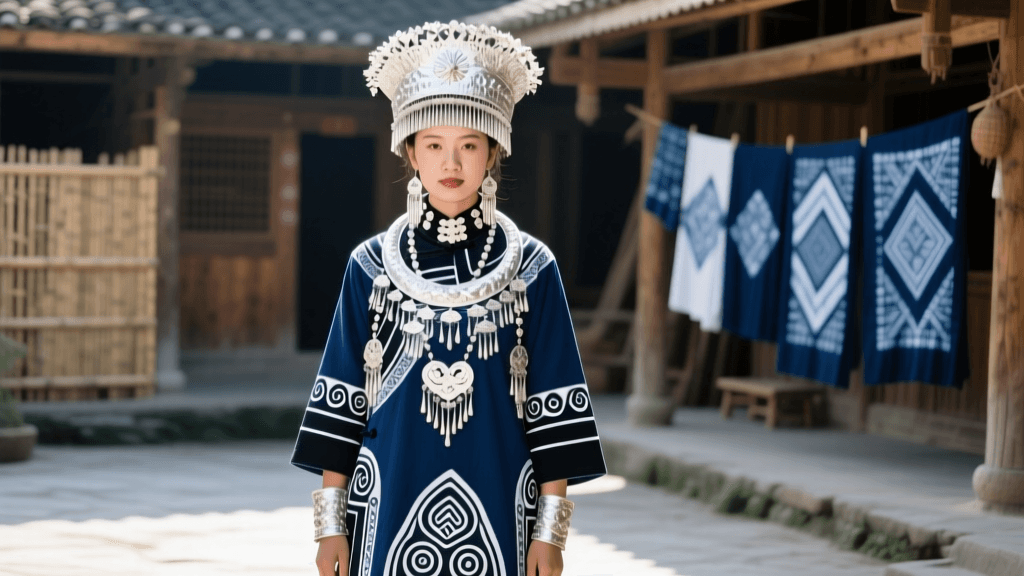
The Miao are masters of Laran, or indigo batik, a resist-dyeing technique that yields stunning geometric and floral patterns in deep, rich blues. The process, which shares roots with broader Britannica's guide to Batik techniques, involves using a specialized brass-tipped bamboo pen to apply melted beeswax onto raw cotton or hemp fabric. The fabric is then submerged repeatedly in vats of fermented indigo derived from the Strobilanthes cusia plant. Once the desired depth of blue is achieved, the cloth is boiled to melt away the wax, revealing the intricate white patterns beneath.
Actionable Advice for Buying Batik Garments
- Jackets and Tunics: When purchasing a traditional Miao batik wrap jacket, note that they are typically cut in a 'one-size-fits-most' T-shape. Look for a chest circumference of at least 48 inches to ensure the garment wraps comfortably across the front and can be secured with the attached cotton sash.
- Pleated Skirts: The iconic Miao pleated skirt is a marvel of engineering, often requiring over 20 yards of hand-woven indigo cloth. The pleats are permanently set using a traditional mixture of egg white and ox blood. If commissioning a skirt, request a natural waist measurement plus 2 inches for the cotton tie belt, and a standard length of 24 to 28 inches for modern wearability.
- Color Fastness: Authentic natural indigo will bleed slightly during the first few washes. This is a hallmark of natural dyes, not a defect. Avoid pieces that smell sharply of chemicals, as this indicates synthetic indigo and harsh mordants.
The Weight of Wealth: Miao Silver Jewelry
No Miao festival ensemble is complete without its staggering array of silver jewelry. Historically, silver was believed to possess the spiritual power to ward off evil spirits and bring good fortune to the wearer. It also served as a portable form of wealth for a historically migratory people. Miao silversmiths employ advanced techniques including filigree, repoussé, and chasing to craft elaborate headdresses, collars, and bracelets.
Below is a structured guide to the most common pieces of Miao silver jewelry, including average weights and current market valuations for authentic, hand-forged pieces (prices exclude mass-produced tourist souvenirs).
| Jewelry Item | Average Weight | Estimated Cost (USD) | Primary Occasion |
|---|---|---|---|
| Silver Horn Headdress (Yinjiao) | 1.5 kg - 3.5 kg | $800 - $2,500+ | Major Festivals, Weddings |
| Silver Neck Collar (Xiangquan) | 0.5 kg - 1.2 kg | $350 - $900 | Festive Wear, Dancing |
| Layered Silver Chest Chains | 0.8 kg - 1.5 kg | $400 - $1,000 | Festivals, Coming of Age |
| Engraved Cuff Bracelets | 0.2 kg - 0.5 kg (pair) | $150 - $400 | Everyday / Layering |
Buyer's Tip: Authentic Miao silver is rarely 99.9% pure, as pure silver is too soft to hold the intricate structural shapes of the headdresses. Traditional Miao silver is usually an alloy containing 60% to 80% silver, mixed with copper and zinc for durability. Always ask the artisan for the specific silver content and look for the maker's hallmark stamped on the inner clasp of collars.
Practical Buyer's Guide: Sourcing Authentic Garments
For serious collectors and textile enthusiasts, sourcing authentic Miao clothing requires traveling to the heart of Guizhou province. The city of Kaili and its surrounding villages, such as Xijiang Miao Village and Shidong, are the epicenters of the textile trade.
Where and When to Buy
- The Kaili Sunday Market: This is one of the largest and most authentic markets for vintage textiles. Arrive by 7:00 AM to sift through the estate pieces brought in by local villagers. Vintage embroidered jackets from the mid-20th century typically range from $300 to $1,500 USD, depending on the density of the stitching and the condition of the silk.
- Festival Timing: Plan your trip around the Lusheng Festival (usually occurring around the 9th lunar month) or the Sister's Meal Festival in the spring. During these times, villagers wear their finest heirloom pieces, providing an excellent opportunity to study the garments in motion and negotiate directly with local families looking to sell older pieces to fund new commissions.
- Verification: Examine the reverse side of embroidered panels. Hand-embroidered Miao textiles are often reversible or show incredibly neat, organized knotting on the back. Machine embroidery will show chaotic, continuous threading and a synthetic mesh backing.
Care and Maintenance for Textiles and Silver
Preserving the integrity of Miao garments requires specific care routines that respect the natural materials used in their creation.
Caring for Indigo and Embroidered Cotton
- Washing: Never use hot water or harsh alkaline detergents on natural indigo batik or silk embroidery. Use a pH-neutral detergent in cold water. Submerge the garment gently and avoid vigorous scrubbing, which can cause the wax-resist cracks in the batik to fray.
- Drying: Always dry Miao textiles flat in the shade. Direct sunlight will rapidly degrade natural botanical dyes, turning deep indigos into a washed-out grey.
- Storage: Store pleated skirts rolled rather than folded to maintain the structural integrity of the egg-white-set pleats. Wrap the garments in unbleached, acid-free muslin to allow the fibers to breathe.
Maintaining Miao Silver
- Polishing: Avoid commercial silver dips, as they will strip the dark, oxidized patina that Miao artisans intentionally leave in the crevices of filigree work to highlight the design's contrast.
- Cleaning: Use a soft-bristled toothbrush with a mild paste of baking soda and water to gently clean the raised surfaces, rinsing thoroughly and drying immediately with a microfiber cloth.
- Wear: The natural oils from your skin are actually beneficial for Miao silver alloys, helping to maintain a soft, lustrous shine on the high points of the metal. Wear your bracelets and collars regularly to keep the metal vibrant.
By understanding the profound cultural significance, the meticulous craftsmanship, and the practical realities of sourcing and caring for these garments, collectors and fashion enthusiasts can help preserve the extraordinary sartorial legacy of the Miao people for generations to come.