Hanfu Travel Photography: Ultimate Styling & Posing Guide
The Rise of Hanfu Tourism and Travel Photography
Over the past few years, China has witnessed a massive cultural revival centered around traditional clothing, giving birth to the phenomenon of 'Hanfu tourism.' According to cultural reports from Sixth Tone, what began as a niche subculture on university campuses has blossomed into a multi-billion-dollar industry, with millions of young travelers donning historical garments to visit ancient capitals, classical gardens, and heritage sites. For travel photographers and cultural enthusiasts, capturing the elegance of Hanfu against the backdrop of China's architectural marvels is an art form that requires careful planning, historical awareness, and technical skill.
Whether you are wandering through the illuminated pavilions of Xi'an's Datang Everbright City or gliding past the weeping willows of Hangzhou's West Lake, mastering Hanfu travel photography involves much more than simply pointing a camera at a beautiful garment. It requires an understanding of dynasty-specific aesthetics, fabric behavior, and the logistics of traveling with delicate historical clothing. This comprehensive guide will equip you with the practical styling, packing, and photography tips needed to create breathtaking, culturally respectful Hanfu travel portfolios.
Matching Dynasty Styles to Travel Destinations
Hanfu is not a monolith; it encompasses thousands of years of sartorial evolution. Pairing the correct dynasty style with the appropriate geographical and architectural backdrop is crucial for visual harmony and historical authenticity. Below is a strategic guide to matching your garment to your destination.
| Dynasty | Key Garment Style | Ideal Destination | Best Fabric Choice | Avg. Rental Cost (USD) |
|---|---|---|---|---|
| Tang (618–907) | Qixiong Shanqun (Chest-high skirt) & Pibo (Shawl) | Xi'an (Datang Everbright City, Wild Goose Pagoda) | Lightweight chiffon, silk, organza | $25 - $45 |
| Song (960–1279) | Beizi (Long outer jacket) & Baidi (Pleated skirt) | Hangzhou (West Lake), Suzhou (Humble Administrator's Garden) | Linen, light cotton, raw silk | $20 - $35 |
| Ming (1368–1644) | Mamianqun (Horse-face skirt) & Ao (Lined jacket) | Beijing (Forbidden City), Luoyang (Longmen Grottoes) | Brocade, jacquard, heavier woven cotton | $35 - $60 |
Tang Dynasty: Opulence and Movement
The Tang Dynasty represents a golden age of cosmopolitanism and wealth. The Qixiong Shanqun (chest-high tie skirt) paired with a flowing Pibo (silk shawl) creates a silhouette that is ethereal and highly kinetic. This style is perfect for the vibrant, neon-lit nighttime photography of Xi'an, a city that proudly celebrates its history as the Tang capital of Chang'an. When shooting Tang-style Hanfu, prioritize wide sleeves and lightweight fabrics that catch the wind, allowing for dramatic, sweeping movements.
Song Dynasty: Minimalist Elegance
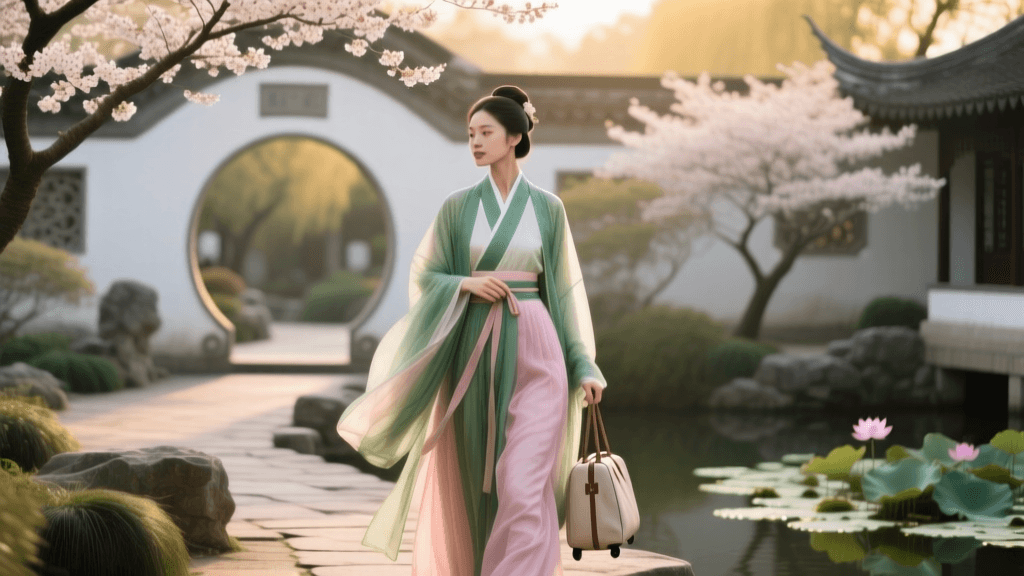
In stark contrast, Song Dynasty fashion favors understated elegance, slender silhouettes, and muted, nature-inspired color palettes. The Beizi, a long, open-front jacket worn over a camisole and pleated skirt, is ideal for the serene, misty landscapes of southern China. Photographing Song-style Hanfu in the classical gardens of Suzhou or along the lotus-filled banks of Hangzhou's West Lake allows the garment's refined tailoring and subtle embroidery to shine without competing with overly ornate architecture.
Ming Dynasty: Structure and Majesty
Ming Dynasty clothing is characterized by its structured layers, high collars, and the iconic Mamianqun (horse-face skirt), which features flat front and back panels with heavily pleated sides. This style commands authority and pairs magnificently with the imposing, symmetrical red walls and golden roofs of Beijing's Forbidden City. The heavier brocade fabrics used in Ming-style garments drape beautifully in cooler weather, providing a rich, textured look that translates exceptionally well on camera.
Packing Hacks for the Hanfu Traveler
Traveling with Hanfu presents unique logistical challenges. Unlike modern clothing, traditional garments feature extensive yardage, delicate pleats, and intricate embroidery that can easily be ruined by improper packing.
The Mamianqun Rolling Technique
The Ming Dynasty horse-face skirt is notorious for losing its crisp, knife-edge pleats if folded incorrectly. Never fold a Mamianqun in half. Instead, use the 'roll and wrap' method:
- Lay the skirt flat on a clean surface, aligning the pleats perfectly.
- Place a sheet of acid-free silk paper or a clean cotton bedsheet over the skirt.
- Starting from the waistband, roll the skirt tightly but gently toward the hem, keeping the pleats parallel.
- Store the rolled skirt in a dedicated 60x90cm cotton garment bag to allow the fabric to breathe while preventing friction.
Essential Travel Gear
Invest in a portable, handheld garment steamer (such as the Xiaomi Mi Handheld Steamer, typically costing around $25 USD). Steaming is vastly superior to ironing for Hanfu, as direct heat from an iron can melt synthetic brocades or crush delicate embroidery. Additionally, pack a small sewing kit, double-sided fashion tape (crucial for keeping Tang dynasty chest-high skirts secure during movement), and a lint roller for outdoor shoots.
On-Location Styling, Hair, and Makeup
A beautiful Hanfu outfit is incomplete without the appropriate historical styling. Modern travel photographers often collaborate with local Hanfu experience shops (汉服体验馆) found near major tourist sites, which offer full hair and makeup services for $20 to $50 USD. However, if you are styling yourself, pay attention to these details.
Hair and Accessories
Historical hairstyles rely heavily on volume. Purchase a jiabao (hair padding piece or bun base), which costs around $10-$15 online. Secure it using 5cm U-pins and a heavy-duty hair net. For accessories, the buyao (dangling hairpin) is a staple. To prevent the pins from slipping out during windy outdoor shoots, wrap the base of the pin with a small piece of cotton or use a silicone hair-grip spray on your natural hair before inserting the ornaments.
Dynasty-Specific Makeup
Tang Dynasty makeup is bold and experimental, often featuring huadian (forehead floral decals or painted markings) and heavy, sweeping blush that extends to the temples. Conversely, Song and Ming makeup leans toward a 'porcelain' aesthetic: a matte, flawless base, softly defined eyebrows, and subtle lip tints. Matching your makeup to your garment's era elevates the authenticity of your travel photographs and shows a deep respect for the culture.
Photography Techniques: Lighting and Posing
Capturing the essence of Hanfu requires mastering the interplay between light, fabric, and the human form. According to travel and cultural guides like TravelChinaGuide, heritage sites often have strict rules regarding commercial photography equipment, meaning you must rely on natural light and agile techniques.
Camera Settings for Flowing Fabrics
To capture the ethereal movement of a Pibo (silk shawl) or the wide sleeves of a Tang robe, you need a fast shutter speed. Set your camera to 1/500s or faster to freeze the fabric in mid-air without motion blur. Use a wide aperture (f/1.8 to f/2.8) on an 85mm prime lens to isolate your subject from the often-crowded tourist backgrounds, creating a creamy bokeh that emphasizes the intricate embroidery of the garment.
Posing: The Art of the Sleeve and Skirt
Hanfu posing is rooted in classical Chinese dance and opera. Avoid stiff, modern fashion poses. Instead, focus on continuous, fluid motion:
- The Sleeve Toss: Have the subject flick their wrists outward and upward, allowing the long sleeves to arc gracefully. Shoot in burst mode to capture the exact moment the fabric forms a perfect curve.
- The Skirt Sweep: For Mamianqun, the subject should perform a slow, gliding pivot. The flat front panel should remain facing the camera while the side pleats fan out dynamically.
- Hand Placement: Teach your subject the 'Orchid Fingers' (Lanhua Zhi) pose, where the thumb and middle finger lightly touch, and the other fingers splay elegantly. Hands should gently graze the waist, hold a paper fan, or adjust a hairpin.
Utilizing Golden Hour and Architecture
The best time for Hanfu photography is during the golden hours: 6:00 AM to 7:30 AM, or 5:00 PM to 6:30 PM (depending on the season). Early morning shoots are highly recommended for locations like the Forbidden City or West Lake, as you will avoid the massive crowds and capture soft, directional light that highlights the texture of brocade and silk. Use architectural elements—such as circular moon gates, carved wooden lattice windows, and stone bridges—as natural frames to draw the viewer's eye toward the subject.
Cultural Etiquette and Respect
As Hanfu tourism grows, so does the responsibility to wear and photograph these garments respectfully. While the modern Hanfu movement is largely inclusive and educational, it is important to understand the historical weight of the clothing. For instance, wearing garments featuring five-clawed dragon motifs (historically reserved exclusively for the Emperor) in casual or disrespectful settings is frowned upon by purists. Furthermore, when shooting at active temples or sacred heritage sites, always adhere to local photography restrictions and avoid blocking pathways or disturbing worshippers.
As noted in cultural analyses of the sartorial revival, such as those documented on Wikipedia's comprehensive Hanfu archives, the movement is deeply tied to a search for cultural identity and historical continuity. Approaching your travel photography with a mindset of reverence—taking the time to learn the difference between a left-over-right collar (the traditional Han Chinese style) and a right-over-left collar (historically used for the deceased or non-Han ethnic groups)—will not only improve your authenticity but also earn the respect of local enthusiasts.
Conclusion
Hanfu travel photography is a deeply rewarding pursuit that bridges the gap between ancient artistry and modern visual storytelling. By carefully selecting dynasty-appropriate garments for your destination, mastering the delicate art of packing and styling, and utilizing photographic techniques that honor the flow and structure of the fabric, you can create a stunning portfolio. Whether you are capturing the vibrant twilight of Xi'an or the quiet morning mists of Suzhou, the key lies in respecting the history woven into every thread while embracing the creative freedom of the journey.